
Why fashion photographers keep falling for costume
Teacher Zoé Wirgin and photographer Estelle Hanania on shooting first-year students’ costumes at Paris’s Lycée Paul Poiret, and the places where costume and fashion meet.
By 1 Granary Team
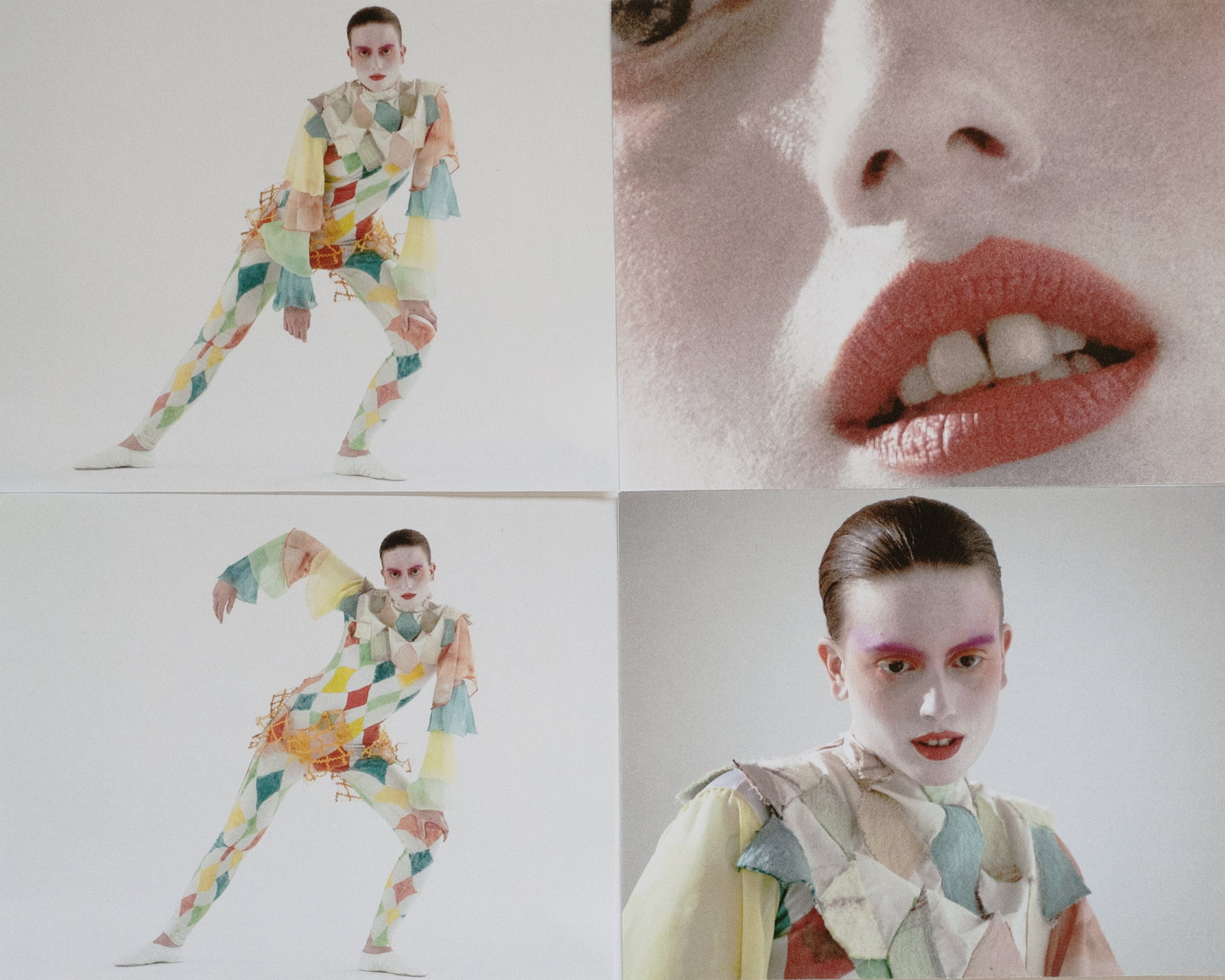
A few years ago, Zoé Wirgin asked her first-year costume students to make scarecrows. Over coffee, she showed photos of the work in progress to her friend, the stylist Léopold Duchemin, who told her they had to show them to Estelle Hanania. Estelle’s candid, documentary-style photographs have taken in European folk costume, drag queens and ventriloquists as often as fashion. She said yes on the spot, and the resulting shoot ran in Luncheon. This year, the pair worked together again, on four costumes the students made around the idea of ikebana.
The Lycée Paul Poiret is a small public school of around 300 students in Paris’s 11th arrondissement, housed in a building by Jean Prouvé. Its costume design pathway has run since 2000 and now receives around 800 applications a year for 14 places. Zoé, who also has a textile design and basketry practice, has taught there for five years. She brings photographers in early: they see the students’ material research long before the costumes exist, and only meet the finished silhouettes on the day of the shoot. Here, the two talk about those shoots, what costume can do that fashion can’t, and where costume students end up – from the Opéra Garnier to the Crazy Horse.
Estelle, Léopold pitched you the scarecrow shoot before you’d seen any of it. Why did you say yes?
Estelle Hanania: Léopold and I have always worked on offbeat projects. I was into it even before seeing the costumes, and even if the costumes had been bad, because I loved the idea of young people experimenting with scarecrow costumes, the idea of documenting that.
Zoé Wirgin: And you said yes to a project you knew nothing about, with 18-year-old students! We shot all the costumes in Estelle’s studio in Versailles, on Helena de Laurens, a dancer and actress, and then pitched the story to Luncheon. They selected all the photos! So we knew we would work together again.
This time it was ikebana – why flowers?
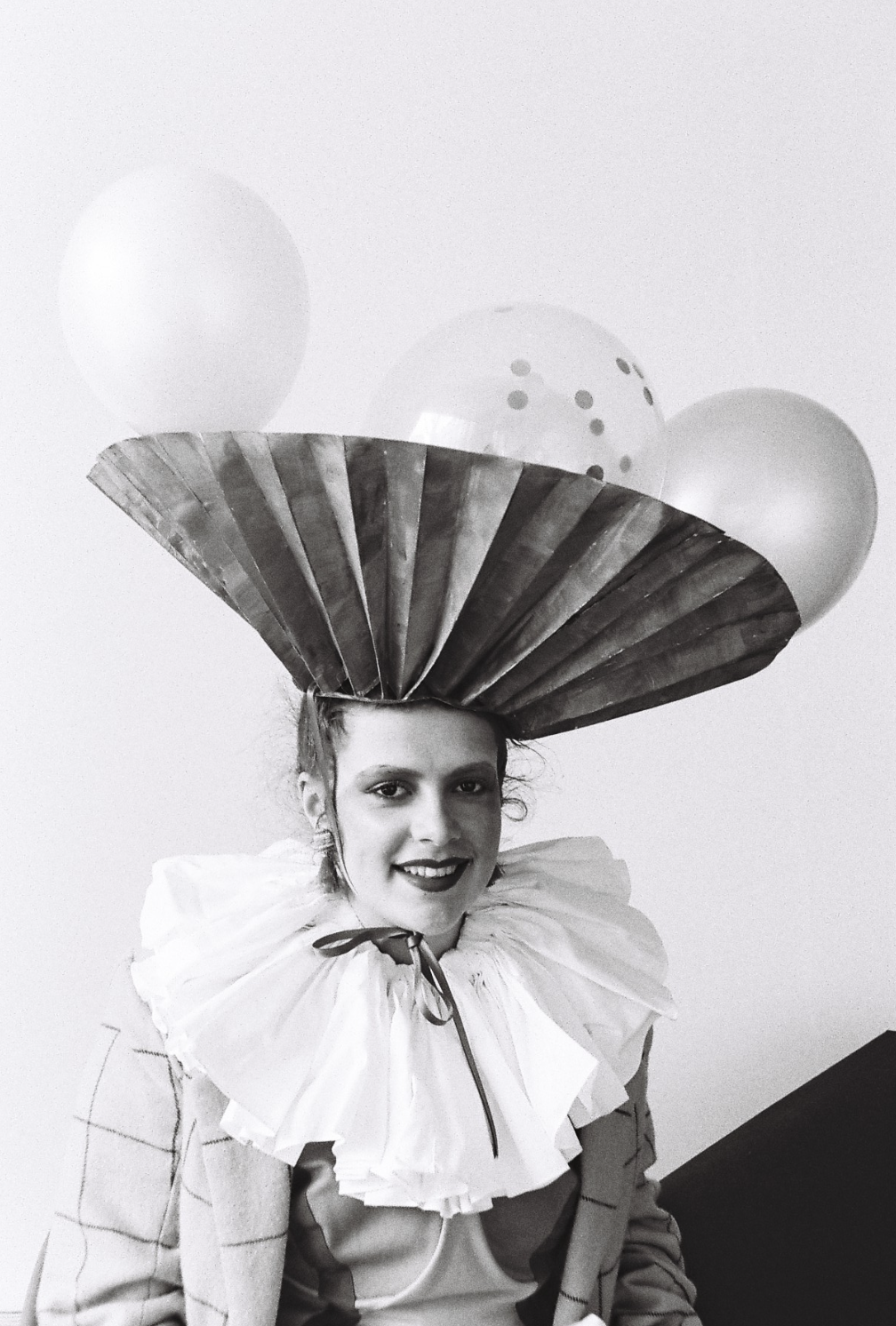
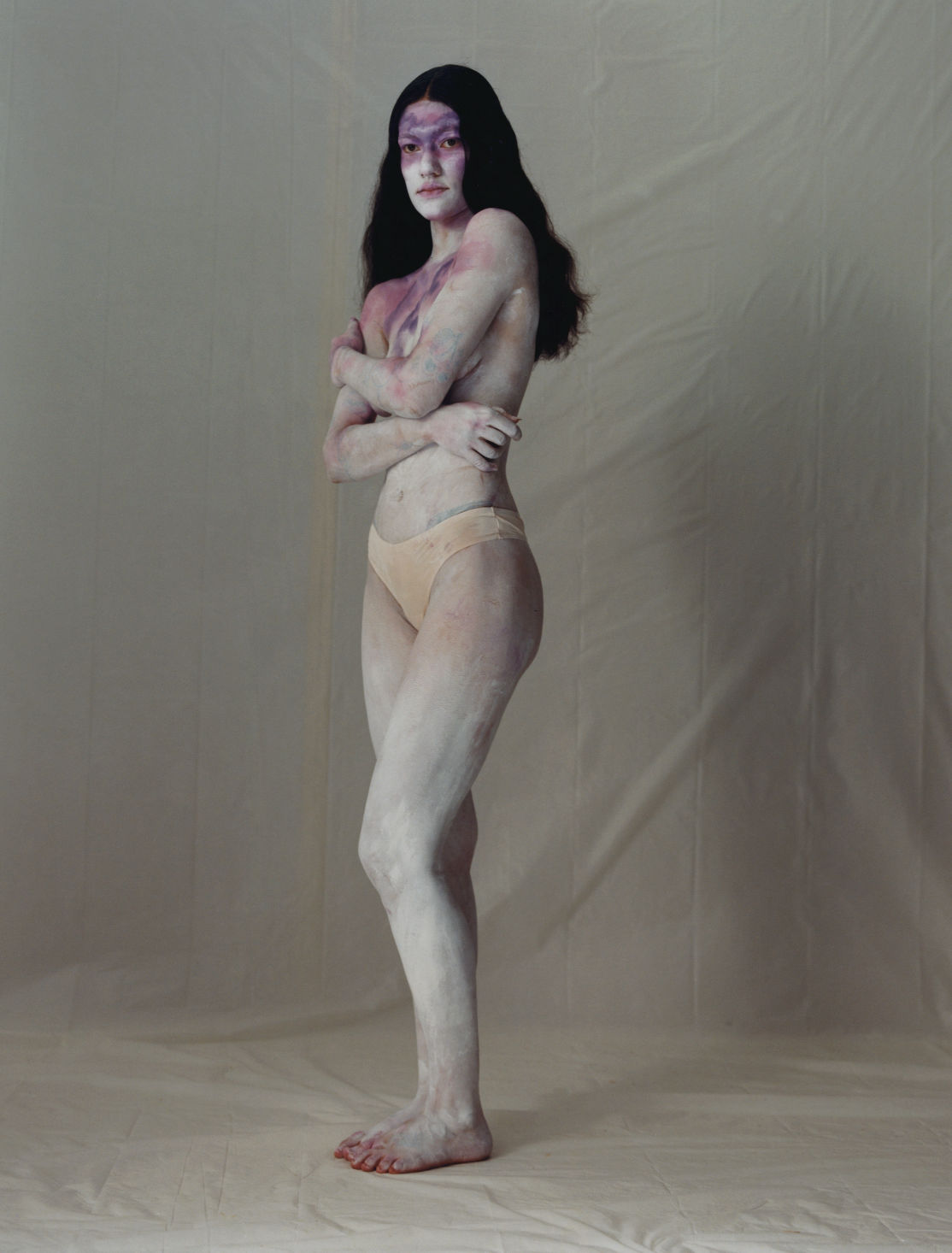
Zoé: The subject of flowers is kind of inevitable in costume design, and I wanted to make it somewhat different, which is why I chose the ikebana angle, to forgo the usual verticality of flowers and flower patterns. We also touched upon the idea of flower packaging. My guideline to my students was to create a costume that made the wearer unrecognizable, which created some pretty funny situations with my first-year students, who suddenly found themselves a little out of their depth. So the costumes were quite heavy; they felt more like sculptures. Even the models were taking very sculptural poses!
How did that change the way you shot, Estelle?
Estelle: The result was four very different costumes. We chose three models, who kind of vanished as they put the costumes on, transforming into pure movement. We chose a single background for all the pictures, and we did some body paint. To me, it felt more like a small theatre with characters sliding in and out of the scene than your typical, very coherent fashion shoot. I love abstract bodies and I’m not a rigid photographer, so I was happy not to anticipate anything, to just stand there and react to what was in front of me as the models improvised. I looked a lot at the movement, the graphic aspect of it, and at the characters that were unveiling as time went by.
What draws you to costume as a photographer? Do you shoot it differently to fashion?
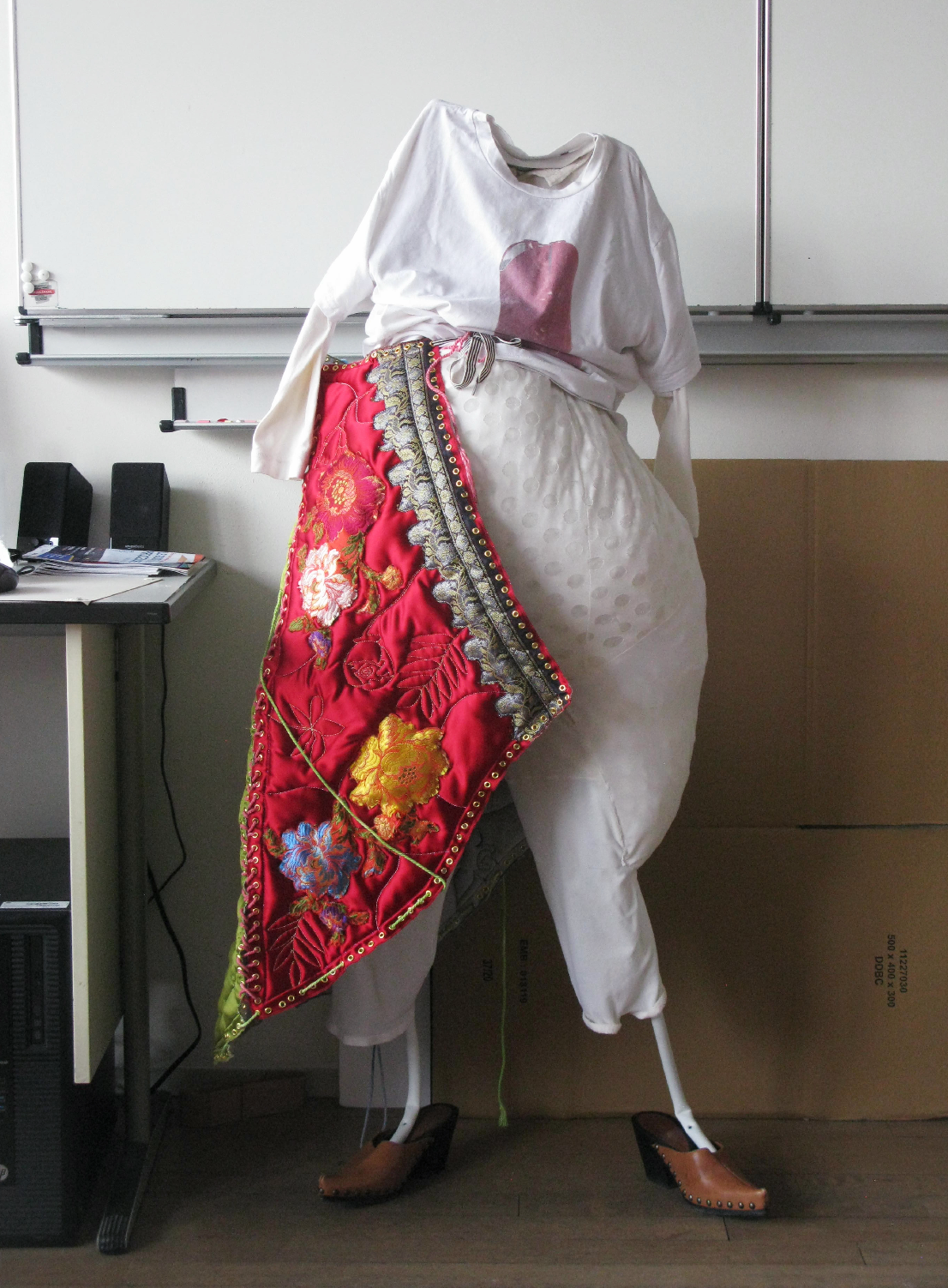
Estelle: To me, shooting costumes feels really natural, maybe because one of the first things I ever photographed was traditional costume, or because I photograph subjects like drag queens, where the concepts of “good” or “bad” taste are superfluous. It’s all about performance, originality and surprise, which I find very liberating. Whereas in fashion, you are preoccupied with taste, with trends. Even if I constantly navigate the fashion sphere, it’s far from my comfort zone.
Zoé: The best designers work in that realm. Rei Kawakubo, Christian Lacroix, Issey Miyake…
Estelle: Viktor & Rolf!
Zoé: And of course Paul Poiret, who, on top of designing fashion, was famous for his huge bals costumés. His creativity was based on a kind of metamorphosis from person to character.
Zoé, where do you start with first-year students? With characters?
Zoé: I start from the most elemental aspect of costume design, concentrating on things like materials, textile design and research. My students always work on a subject, but it’s often a very simple one, like flowers. Once they are familiar with the qualities of materials, we can start crafting a narrative around them. Later on they will have texts as a starting point, but it’s good for them not to limit themselves to that, because they might end up working in a more abstract context, like contemporary dance or performance art.
Estelle: I love that more ambiguous, abstract realm as a photographer as well, especially working with very young people, because everything they present to you is so unexpected.
What draws you to costume as a photographer? Do you shoot it differently to fashion?
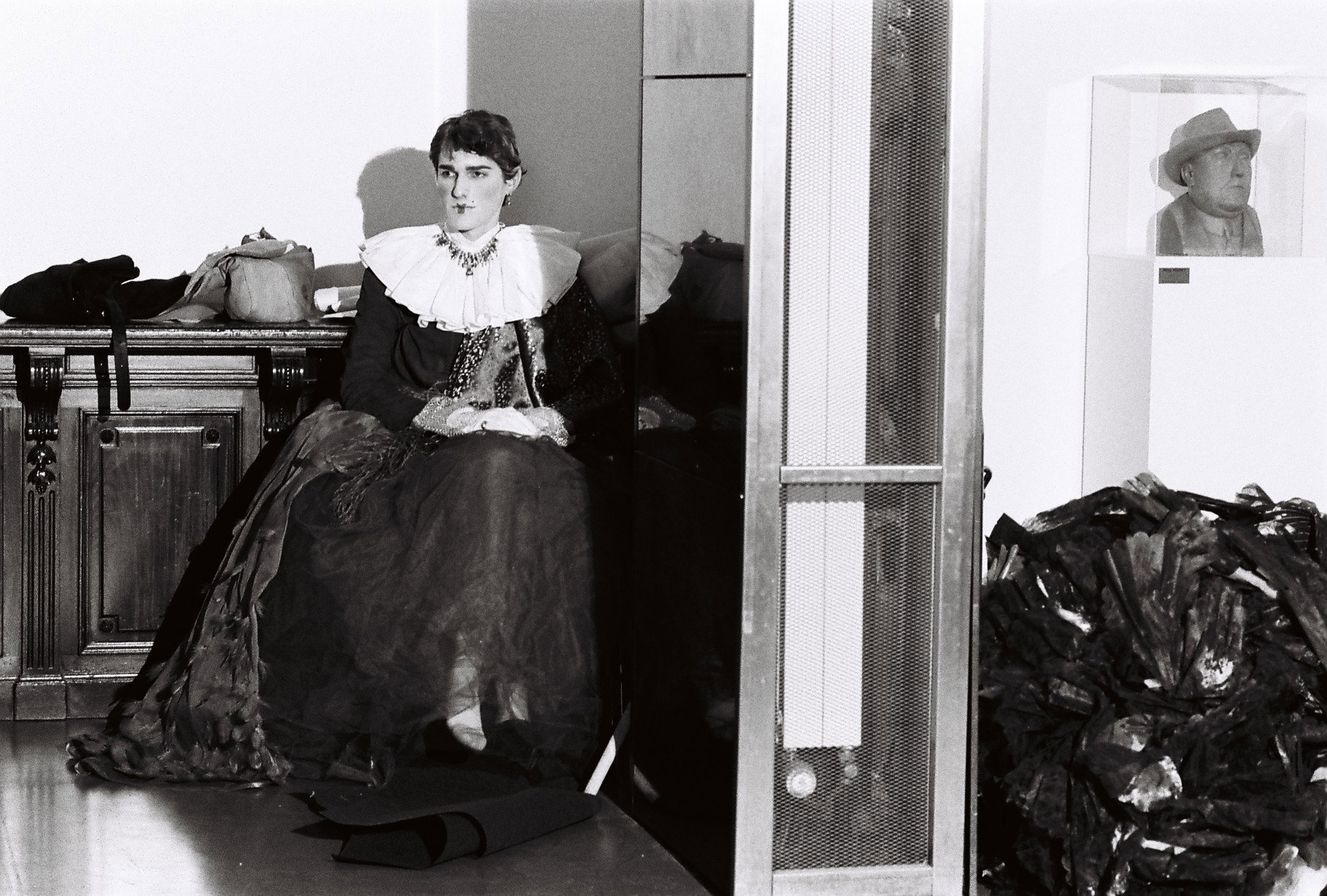
Estelle: To me, shooting costumes feels really natural, maybe because one of the first things I ever photographed was traditional costume, or because I photograph subjects like drag queens, where the concepts of “good” or “bad” taste are superfluous. It’s all about performance, originality and surprise, which I find very liberating. Whereas in fashion, you are preoccupied with taste, with trends. Even if I constantly navigate the fashion sphere, it’s far from my comfort zone.
Zoé: The best designers work in that realm. Rei Kawakubo, Christian Lacroix, Issey Miyake…
Estelle: Viktor & Rolf!
Zoé: And of course Paul Poiret, who, on top of designing fashion, was famous for his huge bals costumés. His creativity was based on a kind of metamorphosis from person to character.
Zoé, where do you start with first-year students? With characters?
Zoé: I start from the most elemental aspect of costume design, concentrating on things like materials, textile design and research. My students always work on a subject, but it’s often a very simple one, like flowers. Once they are familiar with the qualities of materials, we can start crafting a narrative around them. Later on they will have texts as a starting point, but it’s good for them not to limit themselves to that, because they might end up working in a more abstract context, like contemporary dance or performance art.
Estelle: I love that more ambiguous, abstract realm as a photographer as well, especially working with very young people, because everything they present to you is so unexpected.
Does it work the other way? Is historical costume becoming less historical?
Zoé: That is always a controversial subject among costume designers and in schools. At the Lycée Paul Poiret, we traditionally teach perfect historical accuracy, sometimes even learning and applying historical techniques. It’s a very purist approach.
Estelle: I feel like it’s kind of like art, in that you should know all the techniques and the history, and only then can you be emancipated from all of it.
Zoé: That idea of adapting historical costume to a new generation is very interesting, and it’s happening beyond our screens. Look at the streets: for the last couple of years, girls have been wearing all manner of corsets in their everyday lives!
Do costume students go big and theatrical to stand out, the way fashion students often do?
Zoé: The approach is completely different to that of fashion design, because our end-of-studies project is above all created to showcase technical skill and the way a certain text is interpreted.
Estelle: I feel like most of what makes a costume great is not necessarily instantly noticeable.
Zoé: Literally! In feminine costume, what is often most important is underwear, because it creates a very particular kind of body shape and movement. Of course, there are always students with a more extravagant style, but that’s not necessarily the most interesting thing about their costumes.
Where do your students end up working?
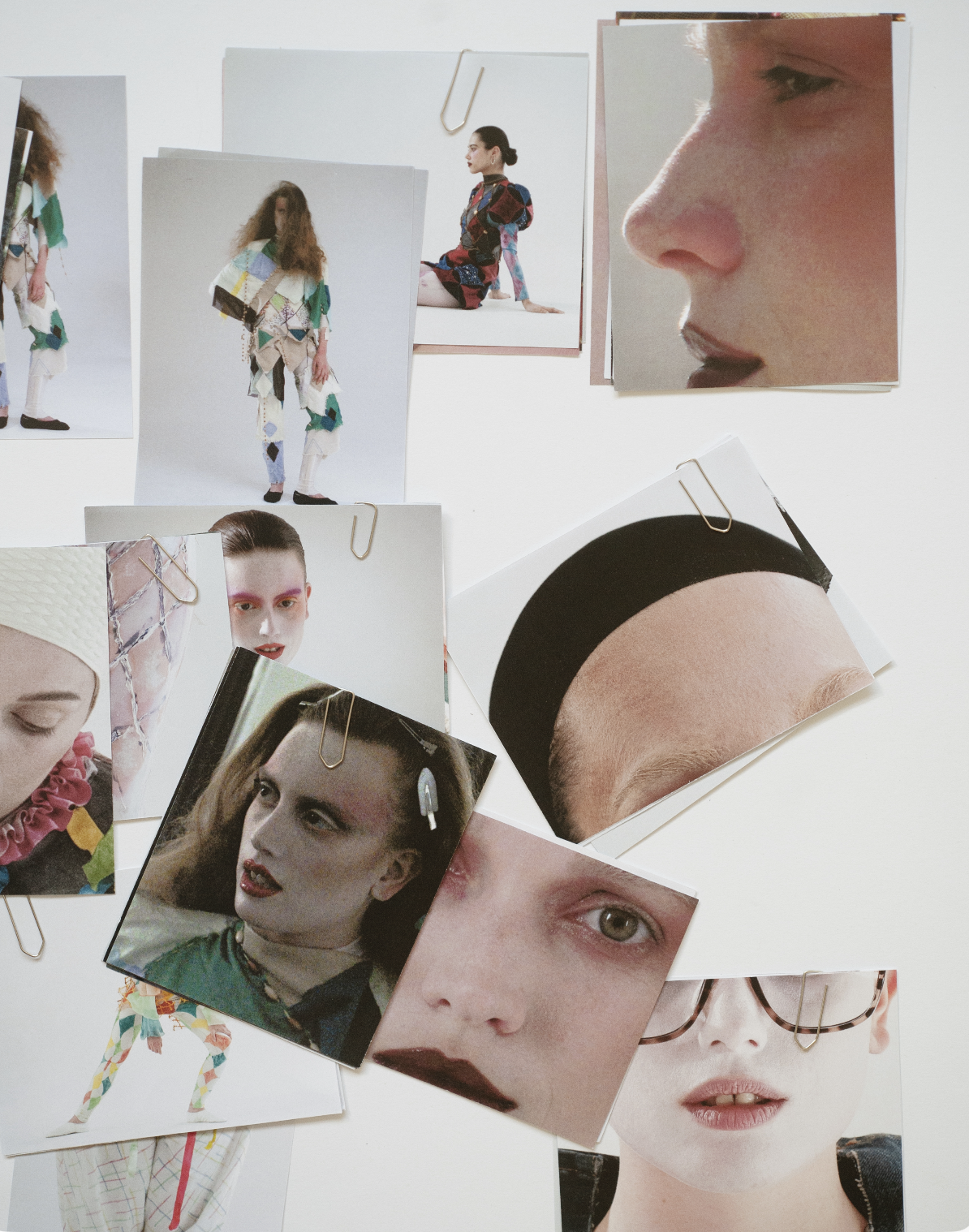
Zoé: They start working when they are still in school, doing three to four internships during their studies. A lot of them work at the Opéra Garnier, Opéra Bastille or Théâtre du Châtelet here in Paris, but we also encourage them to travel. They might go to Madrid to work with Cornejo (Pedro Almodóvar’s costume designers, among others), or to Venice or Milan, or to Montréal at the Cirque du Soleil, although there are so many costumes there it can feel a bit like a factory.
Estelle: Jobs come from quite unexpected places, don’t they?
Zoé: They really do. Disneyland Paris, for instance. Or Miss France. Or drag shows. Or, of course, the Moulin Rouge and the Crazy Horse. That’s quite particular work that requires a specific set of skills and DIY talent. You wouldn’t imagine how much work goes into a Crazy Horse G-string!
Jonathan Anderson has designed costumes for films including Challengers and Queer. What does costume offer a fashion designer?
Estelle: It makes so much sense for Jonathan Anderson to do costumes. Having often worked with Dior, I’ve had the chance to see his accessories up close, and there is such a playful, unexpected quality to them. I remember a dog made from thread reels.
Zoé: I guess there is a technical exploration that is quite interesting to a seasoned designer, because fashion designers are not necessarily trained to make things like corsets or crinolines. That, and the feeling of entering a dialogue with a film script, or a play, or a ballet. There’s a sense of ease to that which there isn’t in a typical fashion collection created to be sold.
Estelle: That’s it, the possibility of having a purely creative vehicle.
Zoé: I’m reminded of the work that Rei Kawakubo did with Merce Cunningham.
Estelle: Isn’t it funny how costumes like those end up becoming fashion history, to be referenced by fashion designers for decades afterwards?
Zoé: There is something very charming in bringing your pieces to life. Not that models don’t do that, they absolutely do! But they often wear the clothes for a few minutes and that’s it, as opposed to someone becoming a fully fledged character through your designs.