Representing the creative future

Towards Maximalist Menswear – New Waves: Wataru Tominaga

Transitioning to Central Saint Martin’s BA Fashion Print was not particularly violent to Wataru Tominaga. Originally from Japan, he had previously studied in two different design schools, and finds that every school had a different approach and strength. “I feel that CSM Fashion has no criteria for teaching fashion design, so basically students are encouraged to do anything they want,” he tells me, rather controversially (suggesting that the secret of the world’s best fashion education is no education at all): “That is really different from other schools.”

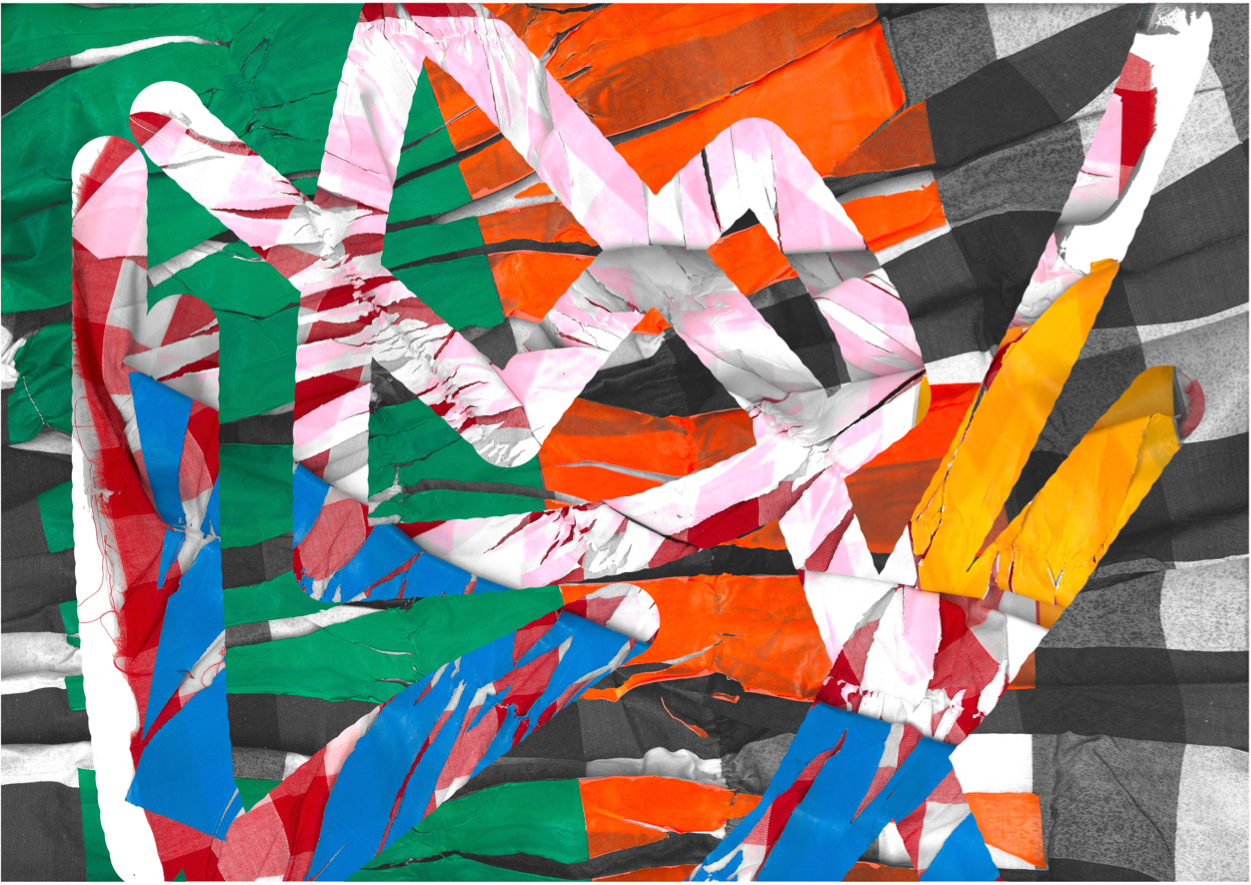
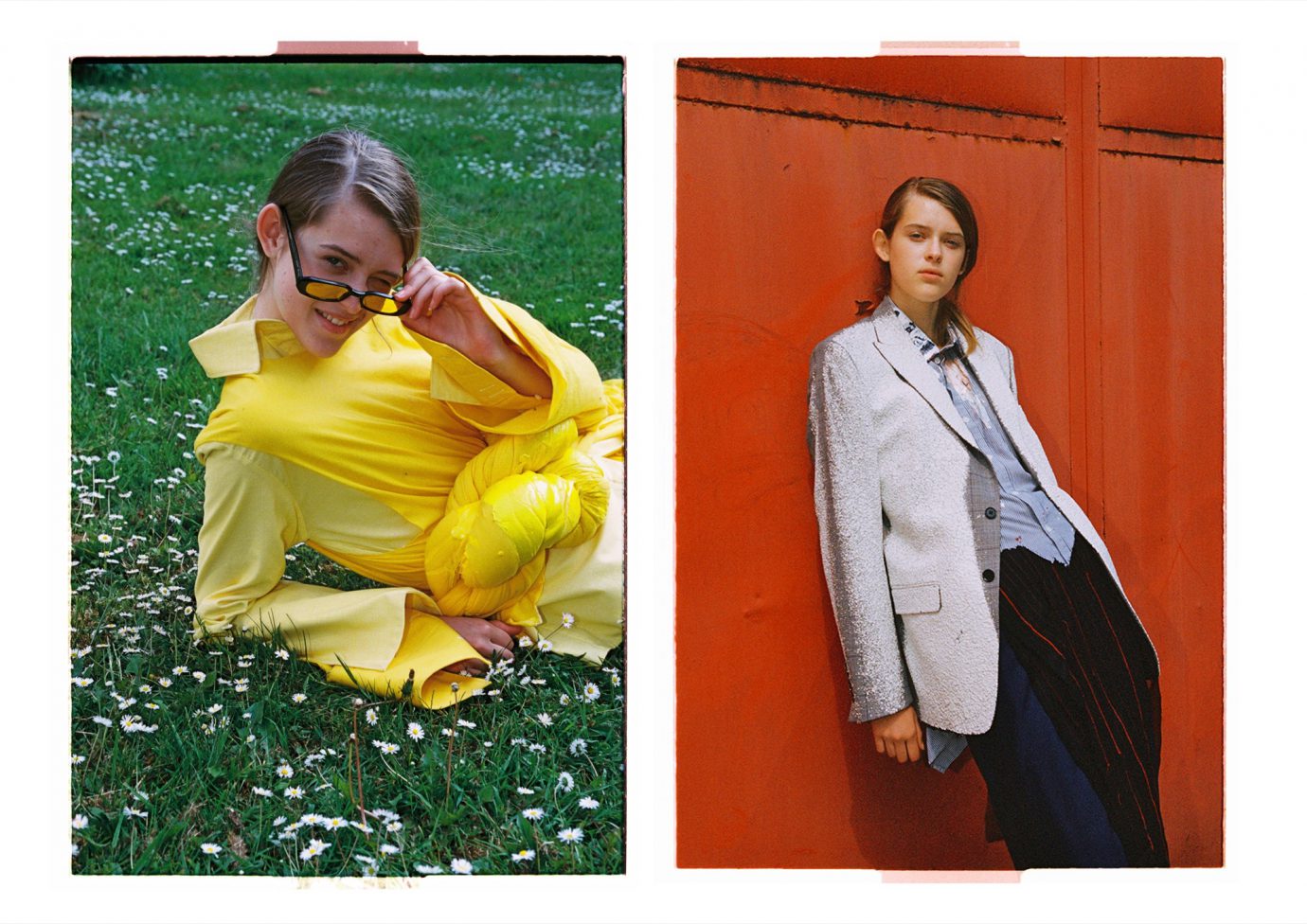
Opening the lookbook of Wataru Tominaga can best be described as a colour-explosion. He insistingly mix patterns, shapes, primary and secondary colours all at once: through his menswear, oversized black/yellow-checkered pants are not rarely paired with a bright green shirt with white finishing, and topped with a blue-collared cropped jumper in grey and printed in white and yellow stripes (yet, it’s that intense). Strangely enough, it works, and seem very sophisticated – he has an almost painterly approach to his medium, and actually usually takes more interest in fine art. “I feel the difference between art and fashion is not about an actual work or object itself, but it is how we see them in the different contextualized system,” he says. “So what I want to create is a combined system in which people can perceive various meanings from various types of works.”

Wataru’s hyper-saturated universe comes from a long-time interest in colours, as well as a previous education in printed textiles. However, as he himself points out, it’s difficult to successfully combine many colours and shapes in one look, so until his final year, Wataru had shied away from going all out in print, patterns, and graphics.
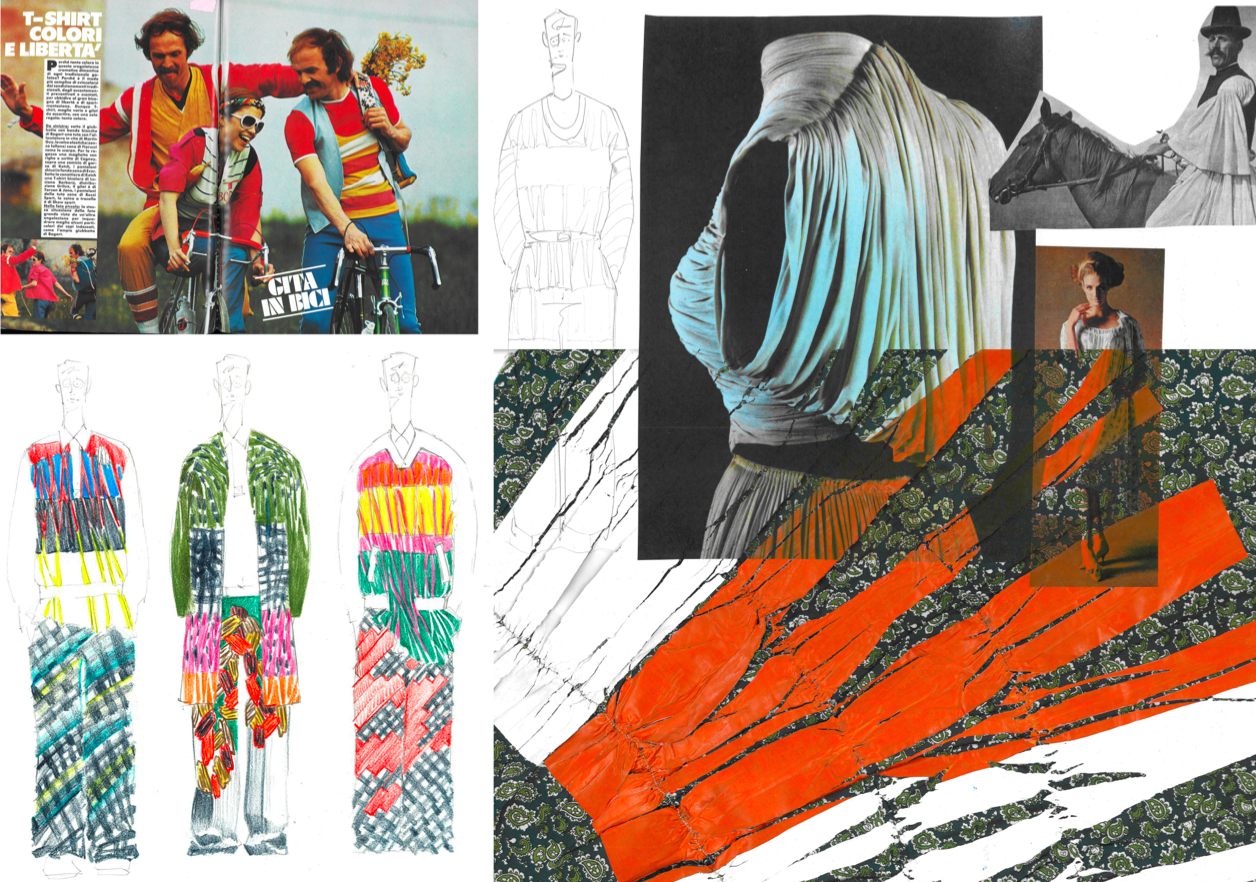
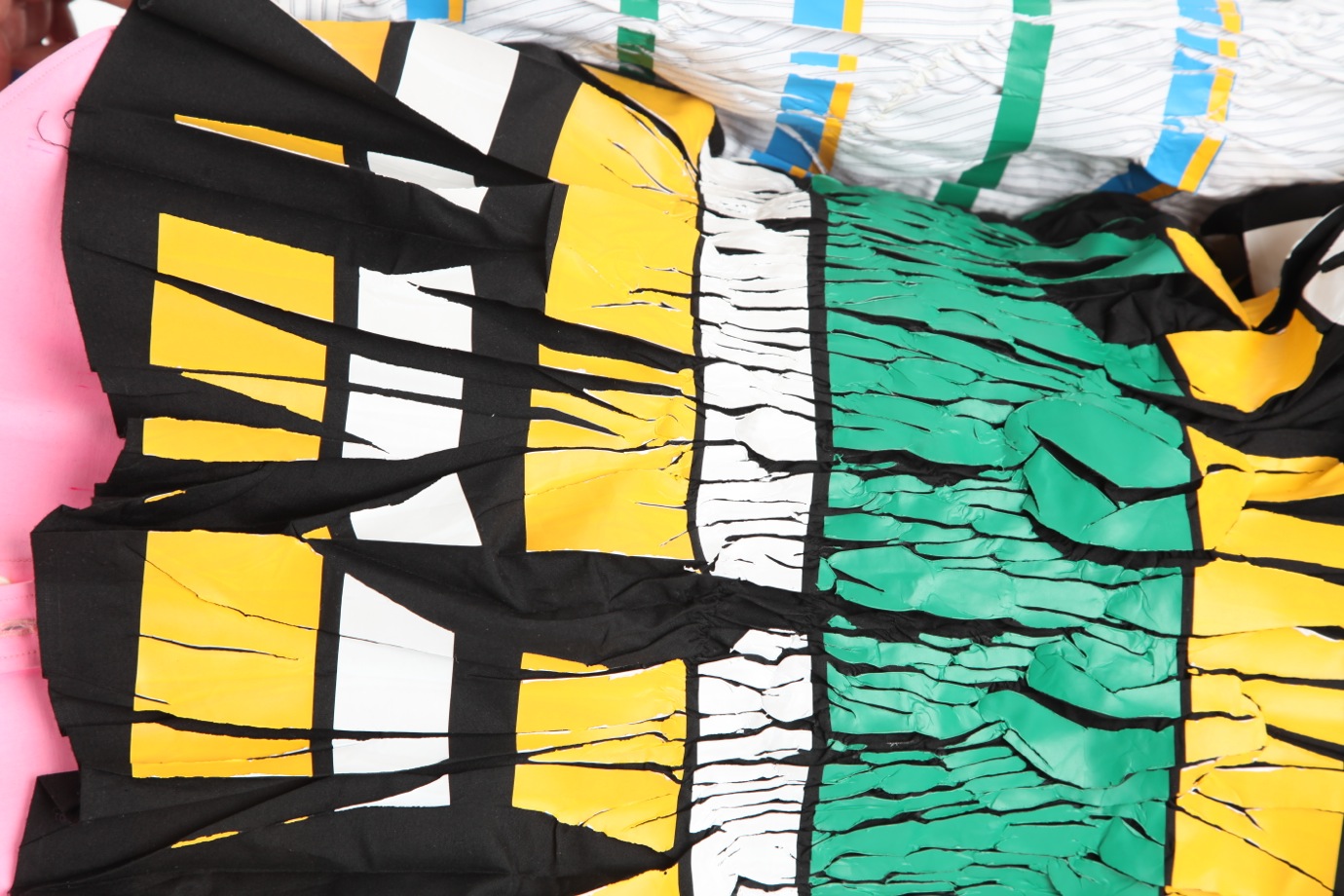
As an additional move towards maximalism, Wataru applies his loud textiles onto distorted menswear silhouettes, manipulating with volume and shape in the garments, reminiscent of early Japanese avant-garde. “Layering has always been a useful method to make an optical effect, and to make different styles easily,” he says. He began experimenting with shape and layering after using the elasticated printed fabric, and indeed, it looks as if elastic bands have been used to, unexpectedly, define waists or create exaggerated fits.

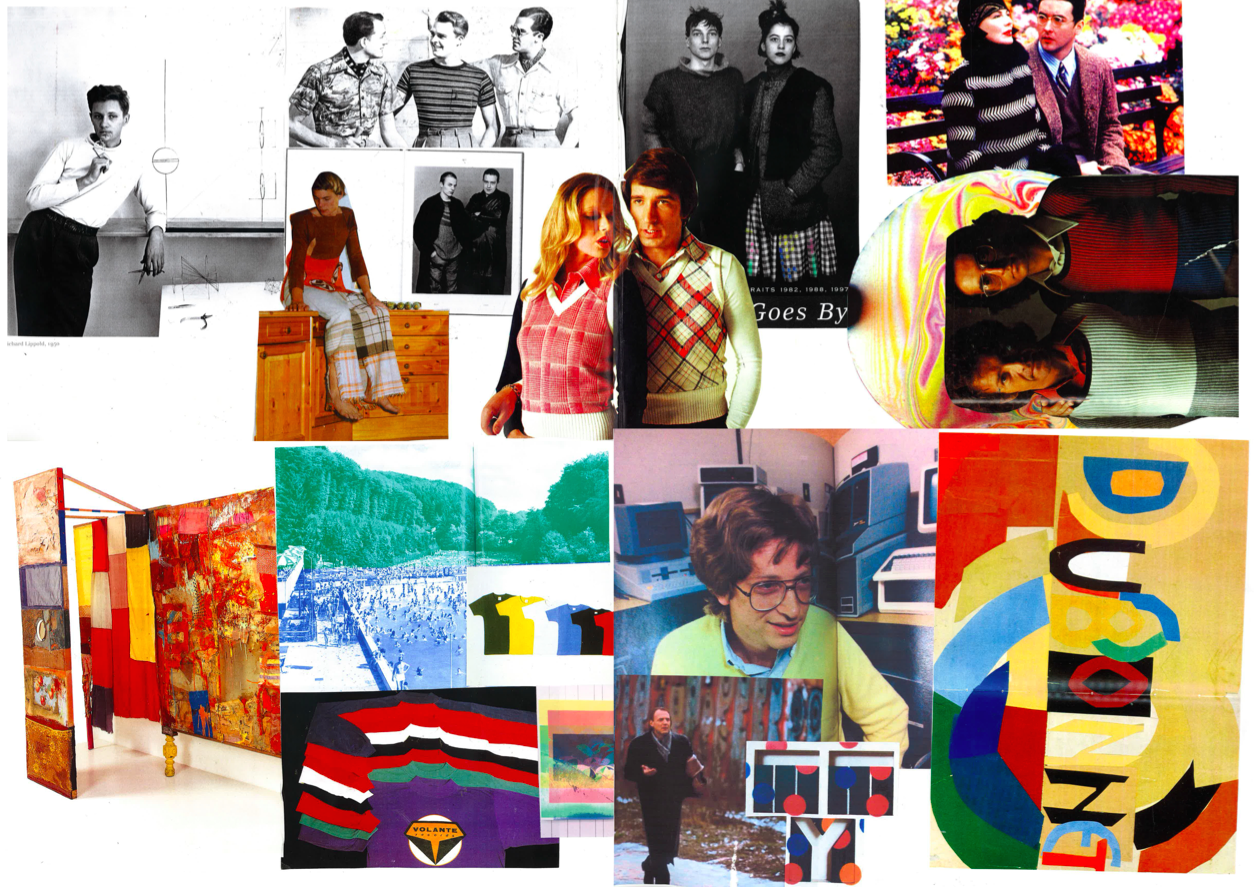
Insisting on having fashion-historical references in his graduate collection, Wataru began sourcing images from the most colourful decades in recent years. Fashion of the ’60s, ’70s and ’80s gave us the bright multi-coloured skiwear, the embrace of neon, the patterned knits – and it is between these references, with an added contemporary feel, that the universe of Wataru Tominaga exists. It is celebratory and ironic while presenting a new approach to the use and play with colour in contemporary menswear.

He constructed his textiles using elastic tapes to gather and manipulate the fabric, and applied it with a kind of film for textiles. In his garments, the graphic and the hand-made are negotiated, unified in an energetic amalgamation of colours, styles and expressions. “I always liked things or objects which have contradiction in them, so I always like graphical ornaments but with handmade textures,” he says of his textiles.

In his placement year, Wataru had the honour of interning for John Galliano in Paris, right before his re-entry into fashion via Margiela. Here, Wataru would spend his time researching historical menswear in museums, which was then used for later collections as references. “Spending time with John was funny and a memorable time for me,” tells me. “I think how Galliano is trying to design for Margiela is interesting, because it is a completely different aesthetic.”

Central to Wataru’s work is craftsmanship, and he hopes to establish a space for artists and designers who are working with a similar emphasis on quality and value. “I feel that craftsmanship is racking in artistic practice now, so I want to make a kind of space where people can share their practices.”