Representing the creative future

IED BA 2026: INTANGIBLE EXPERIENCE

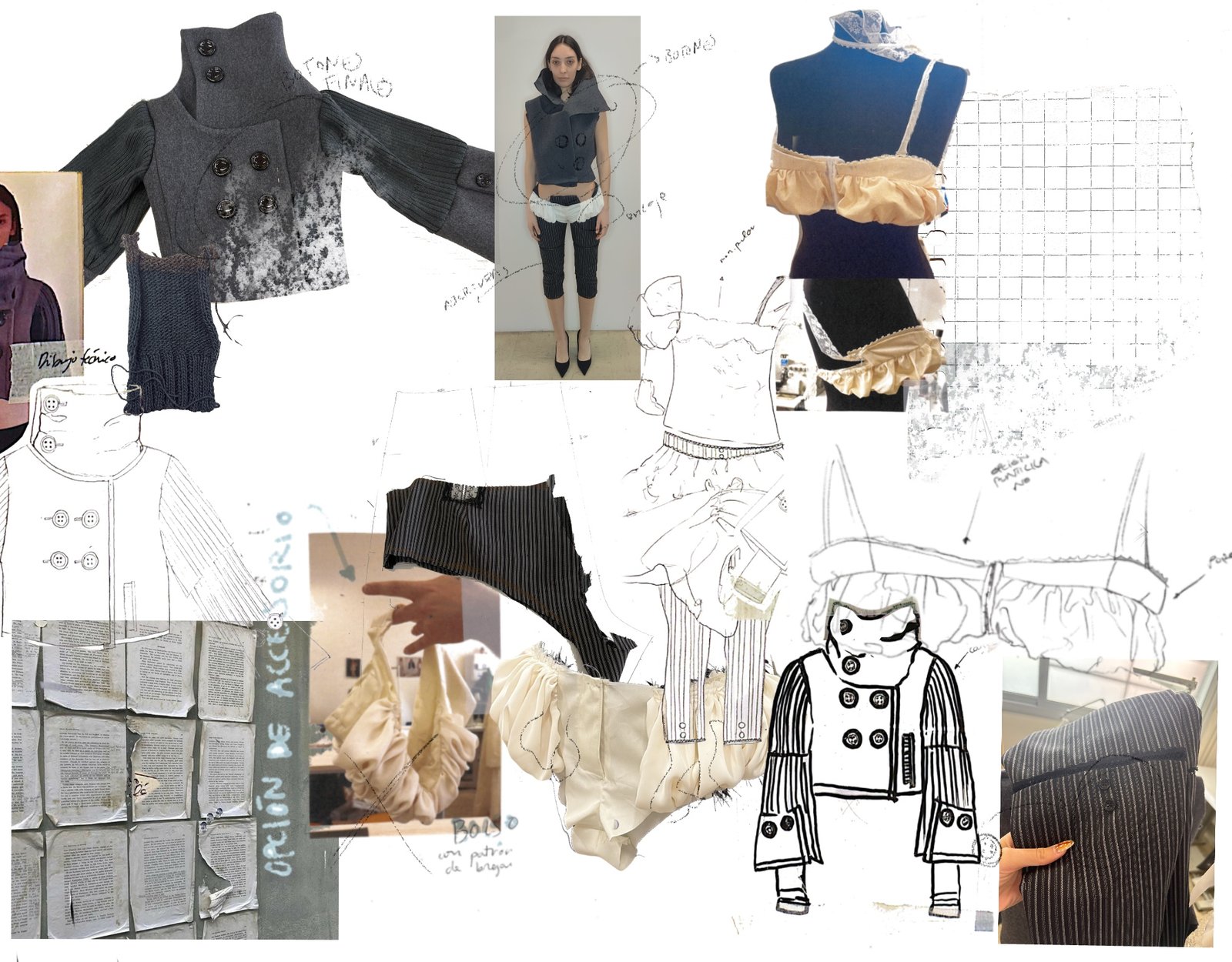
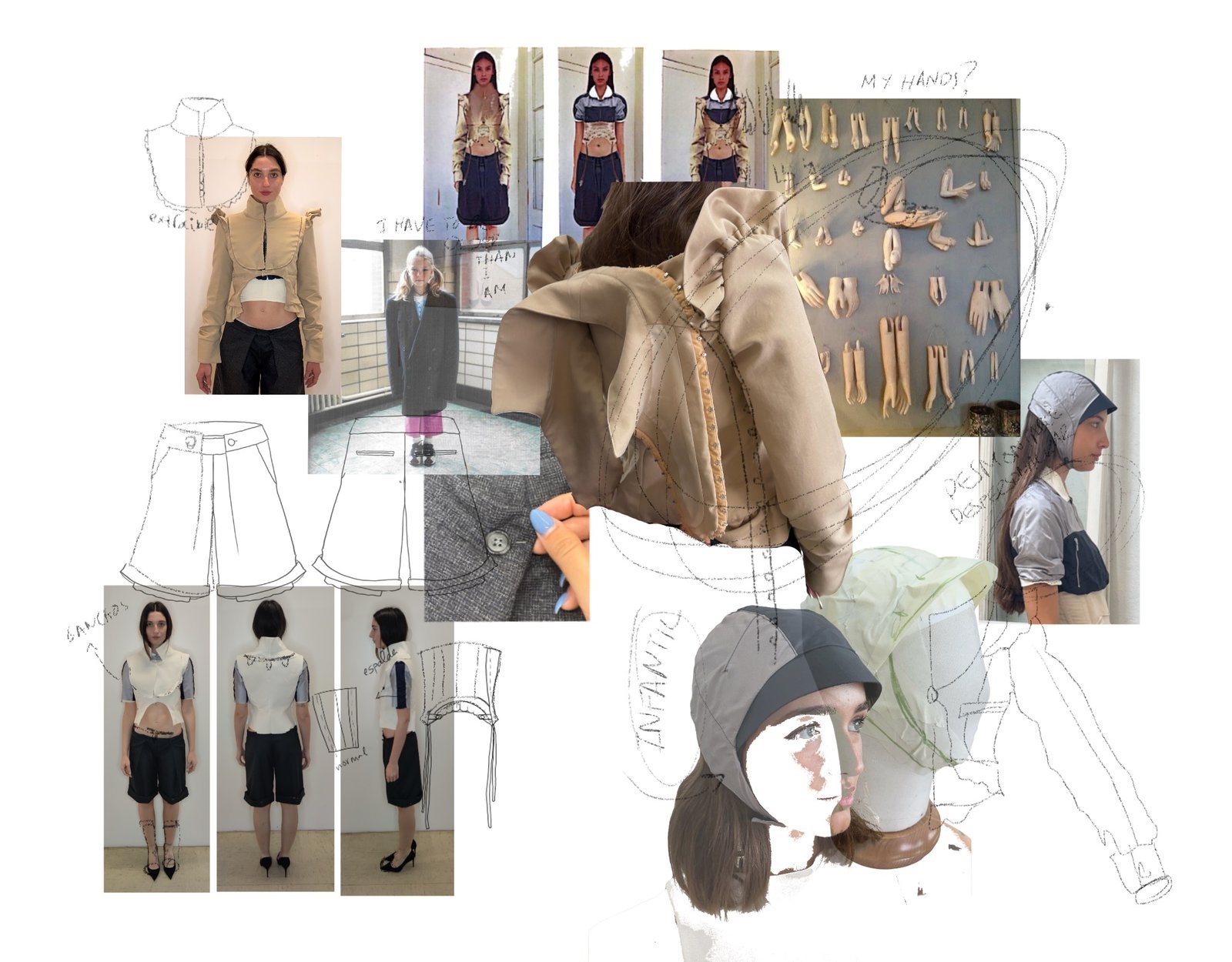
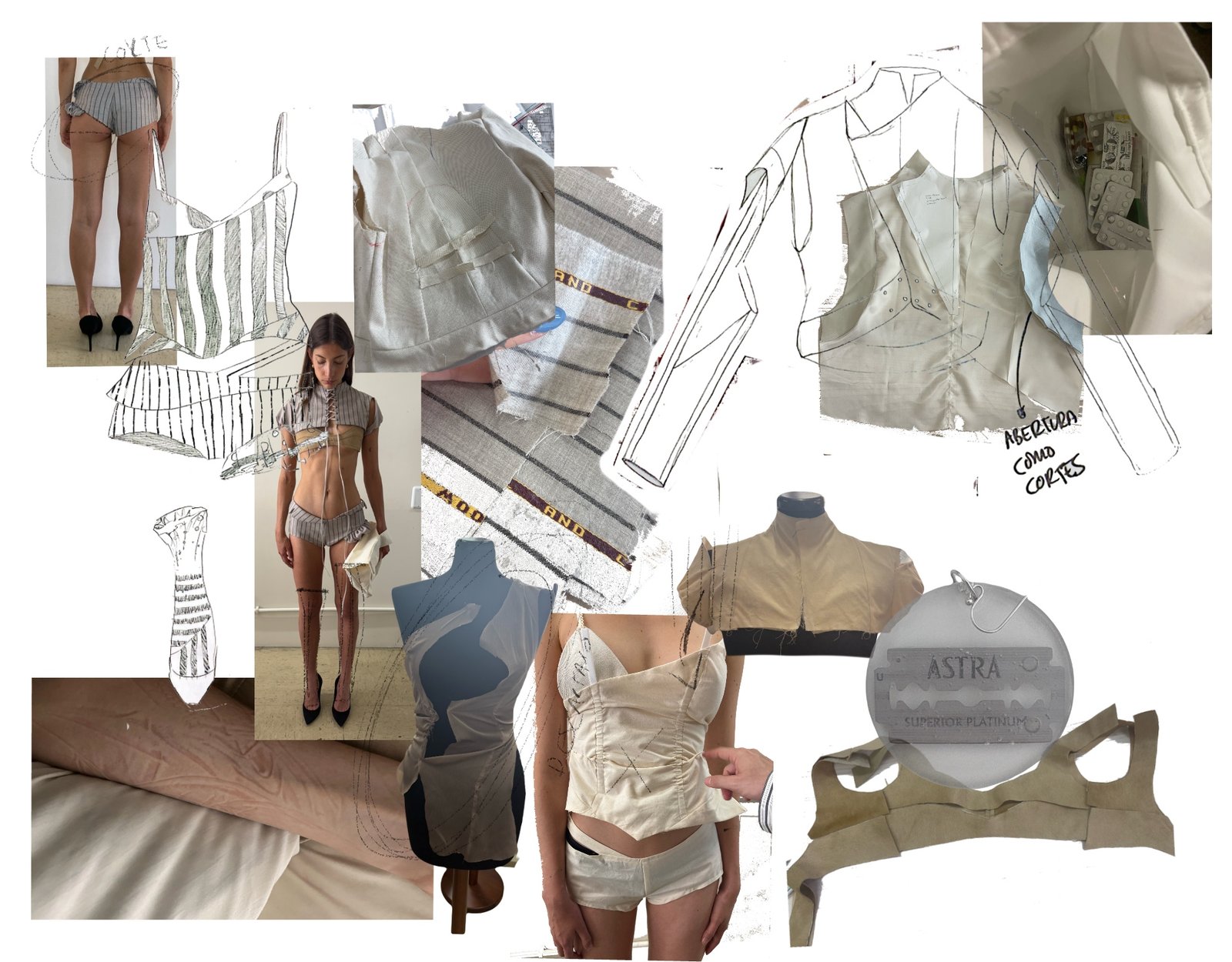
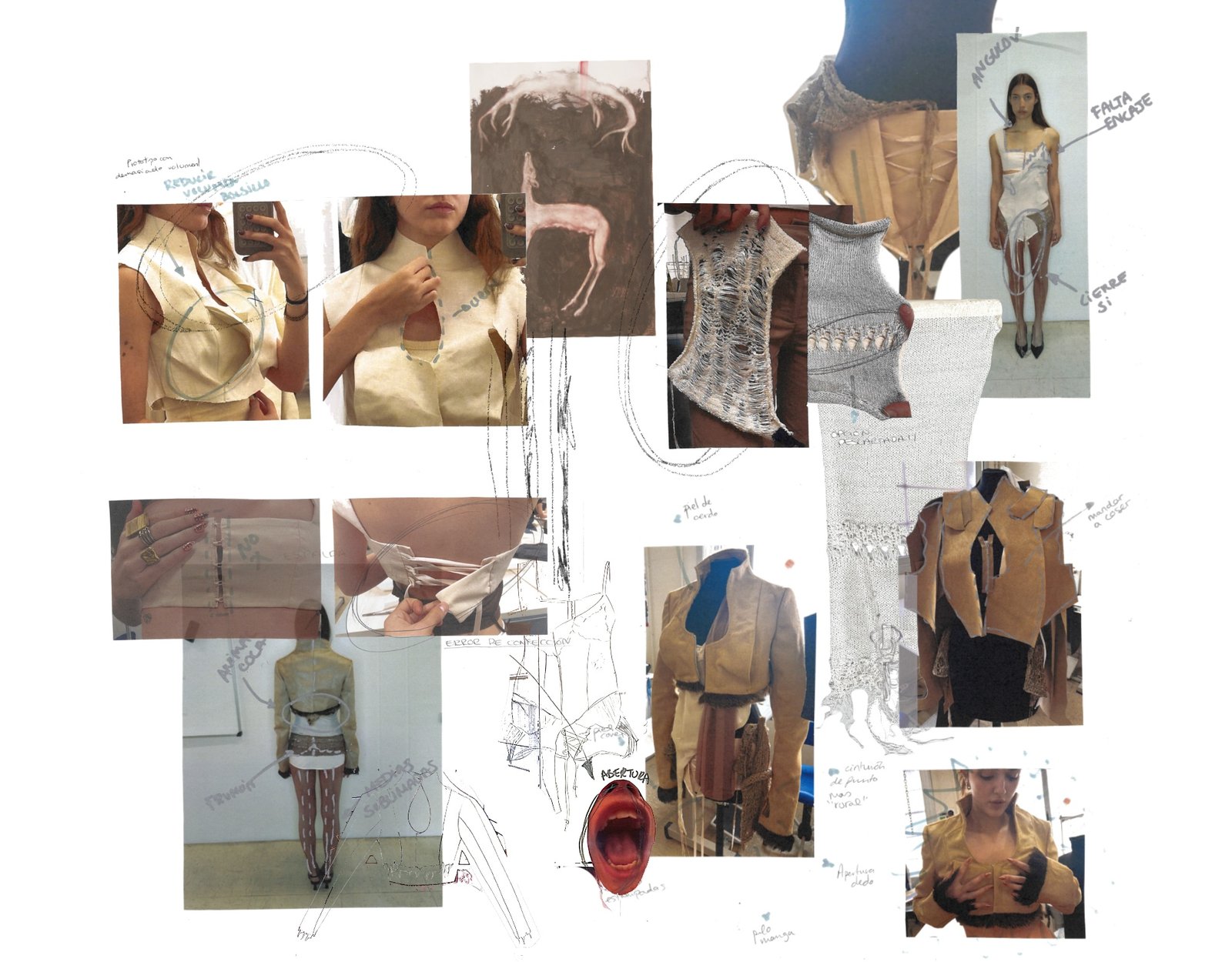
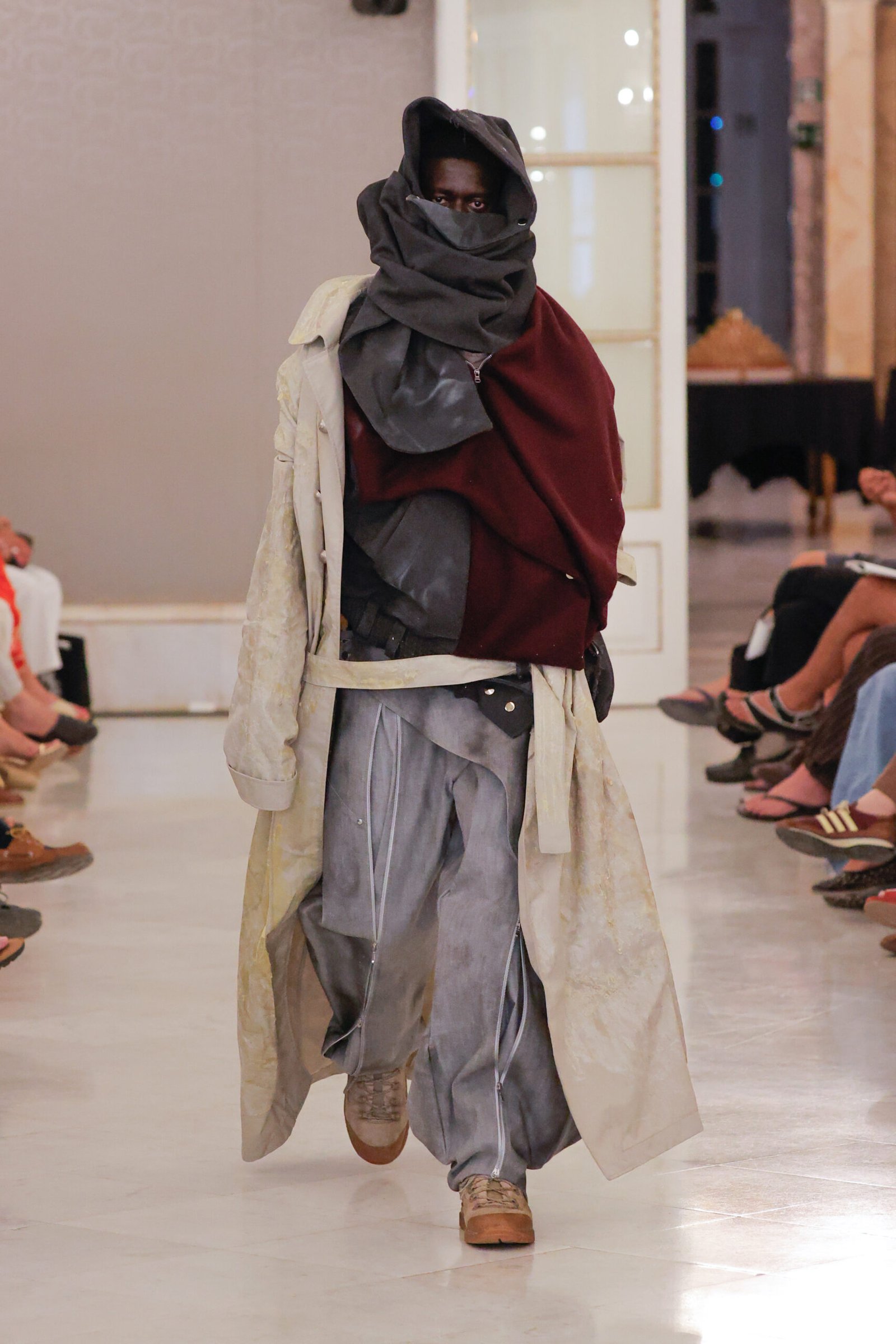
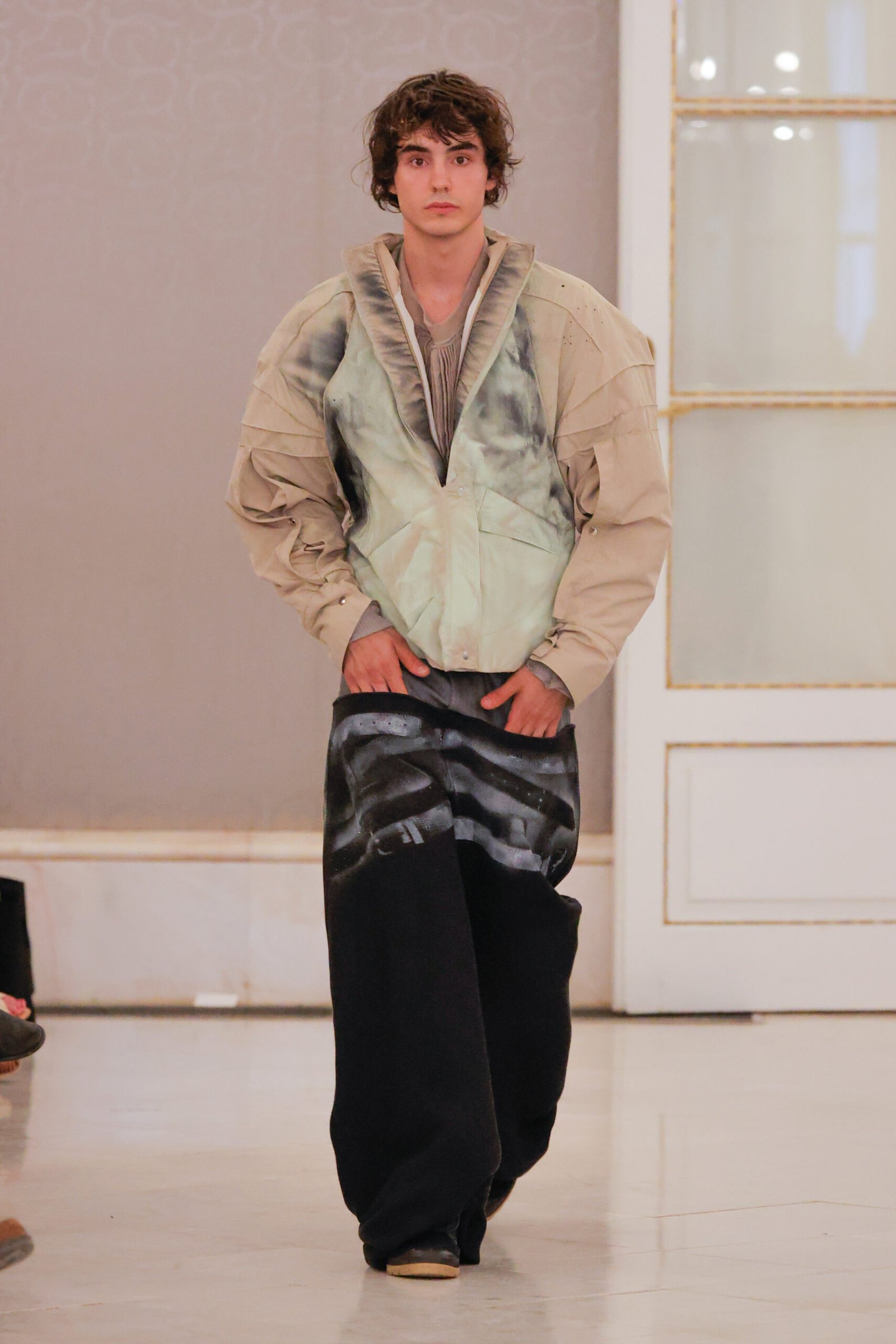
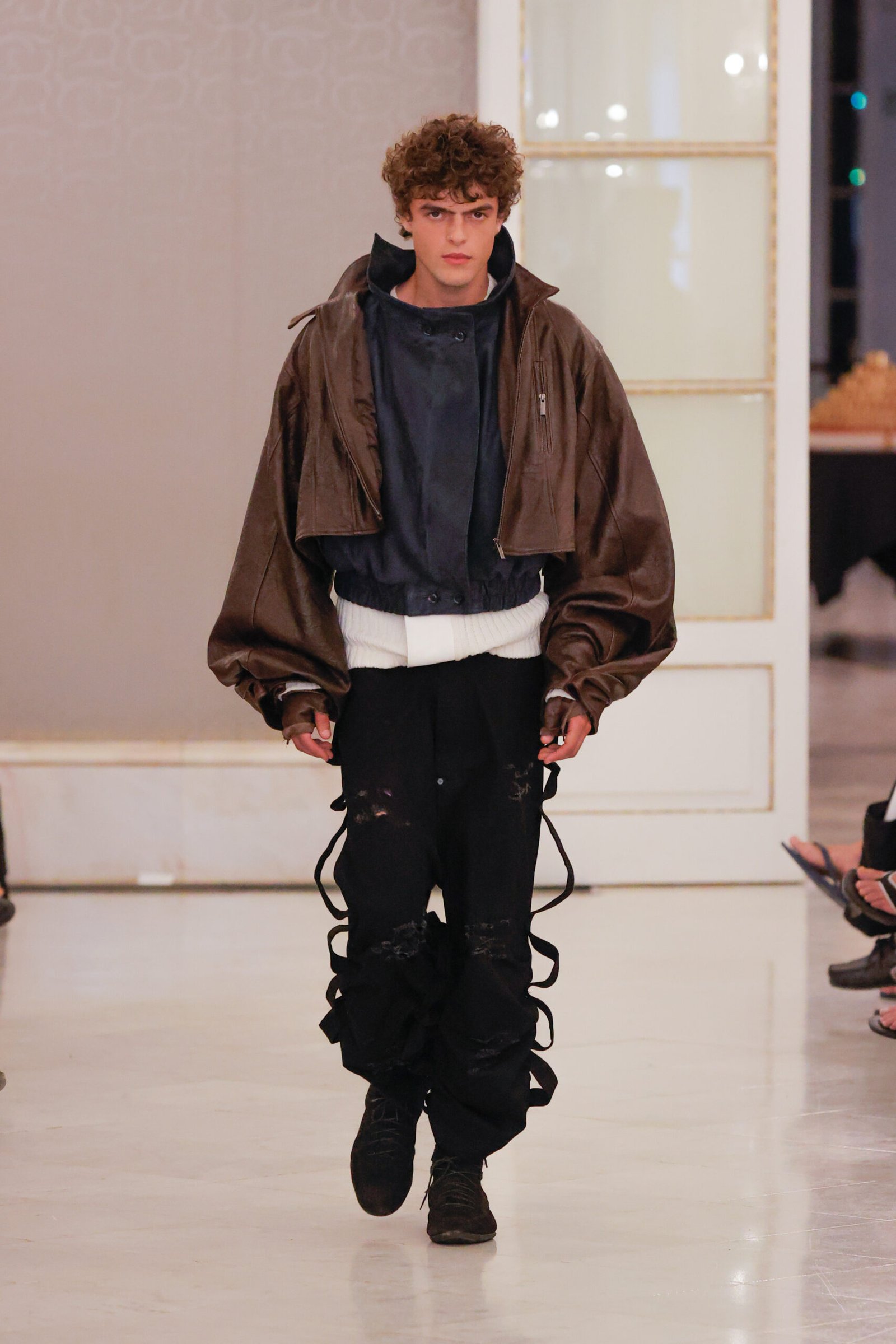
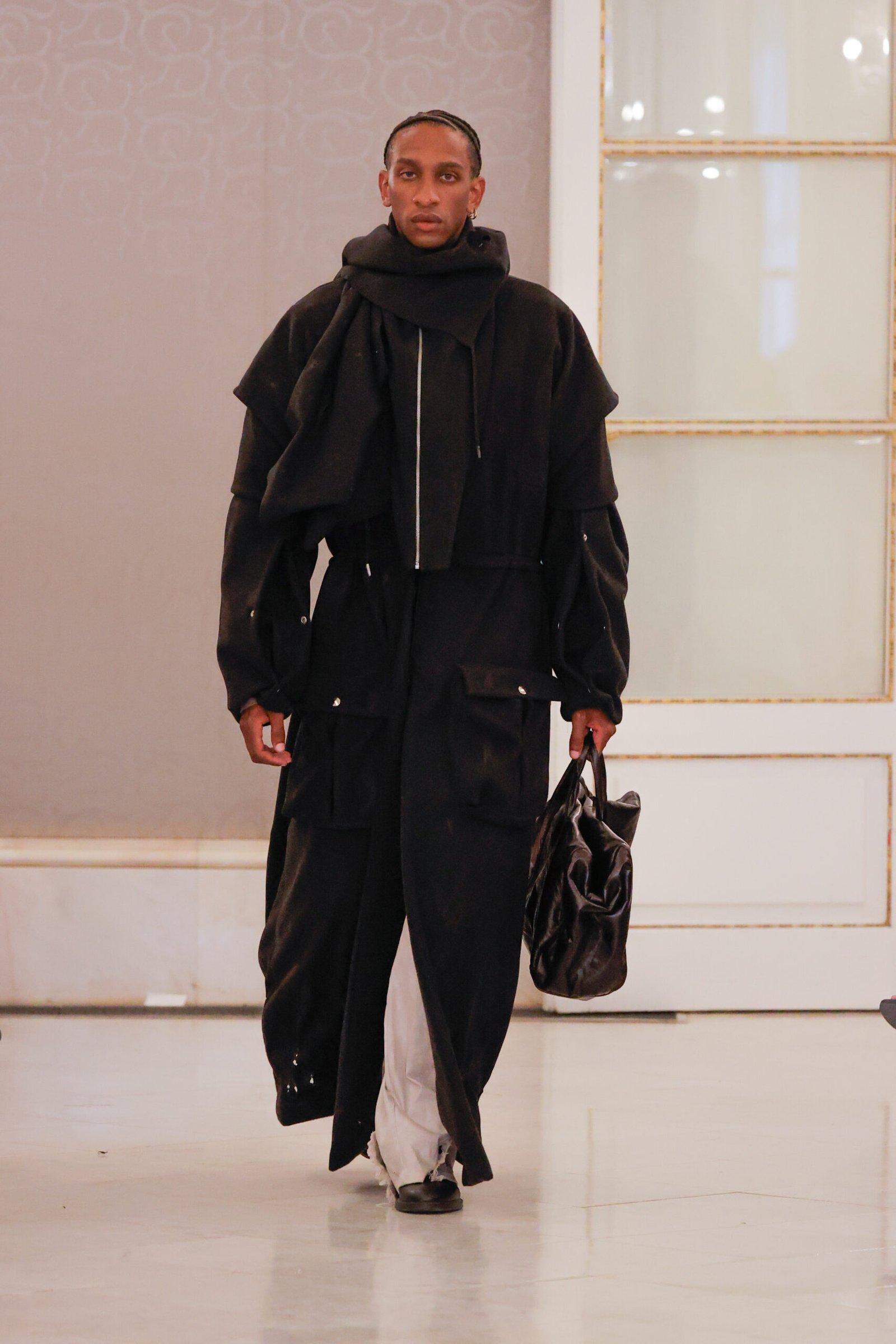
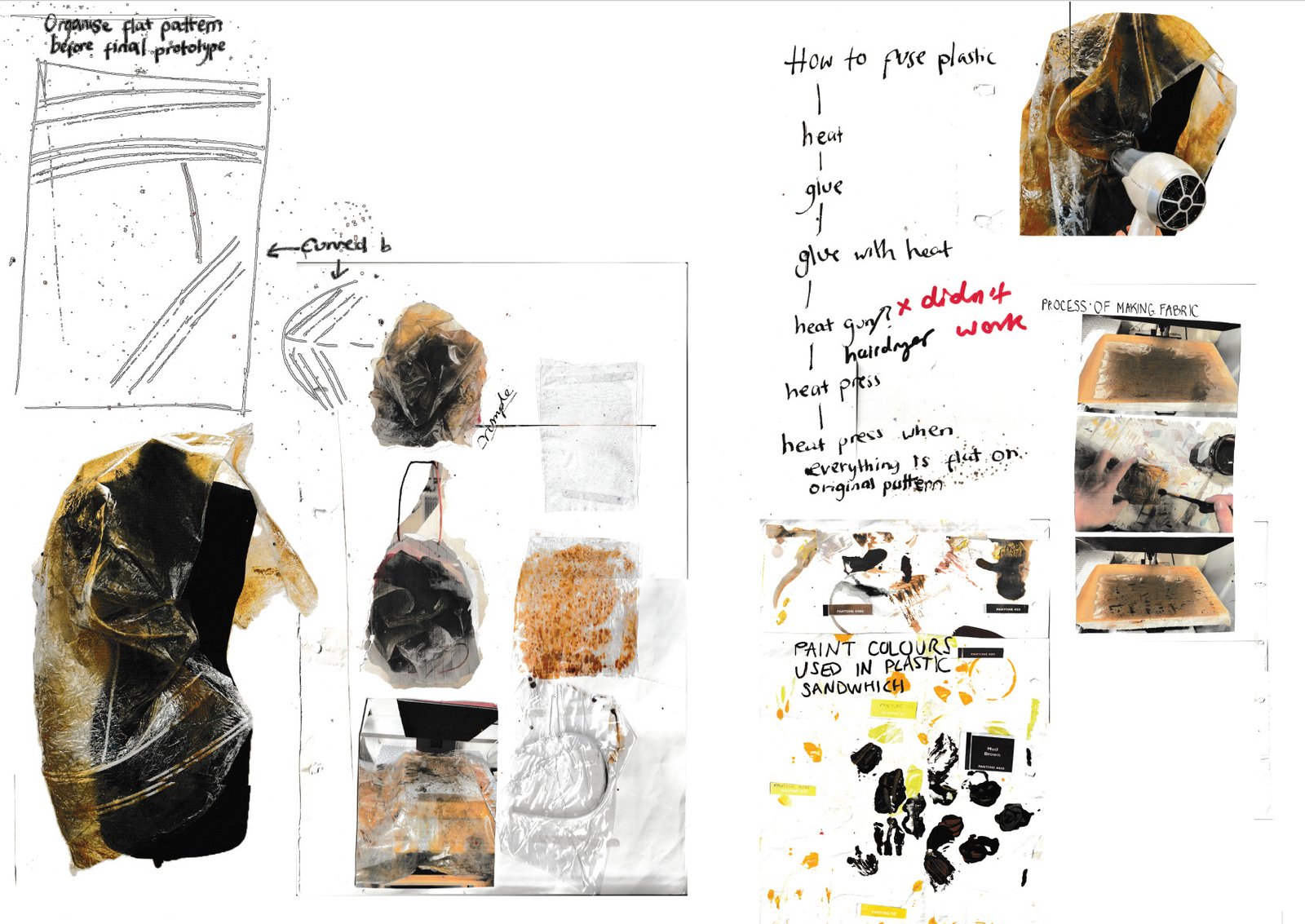
These collections from IED’s Fashion Design BA graduates are united by an interest in introspection, memory, and the ways clothing can give form to intangible experiences. The designers draw on subjects as varied as scent, digital identity, childhood, mental health, religious imagery, migration, performance, craftsmanship, and environmental responsibility, often grounding their work in deeply personal narratives. Material experimentation and construction play an equally important role throughout the work. Natural and synthetic fabrics sit alongside leather, organza, knitwear, embroidery, hand embellishment, laser-cut textiles, moulage, transparency, layering, and multifunctional design. Across the cohort, there is a recurring interest in slowing down, valuing process, and challenging fast-moving systems of production and consumption, resulting in collections that place as much emphasis on making and materiality as on the stories they tell.

Albert Porta

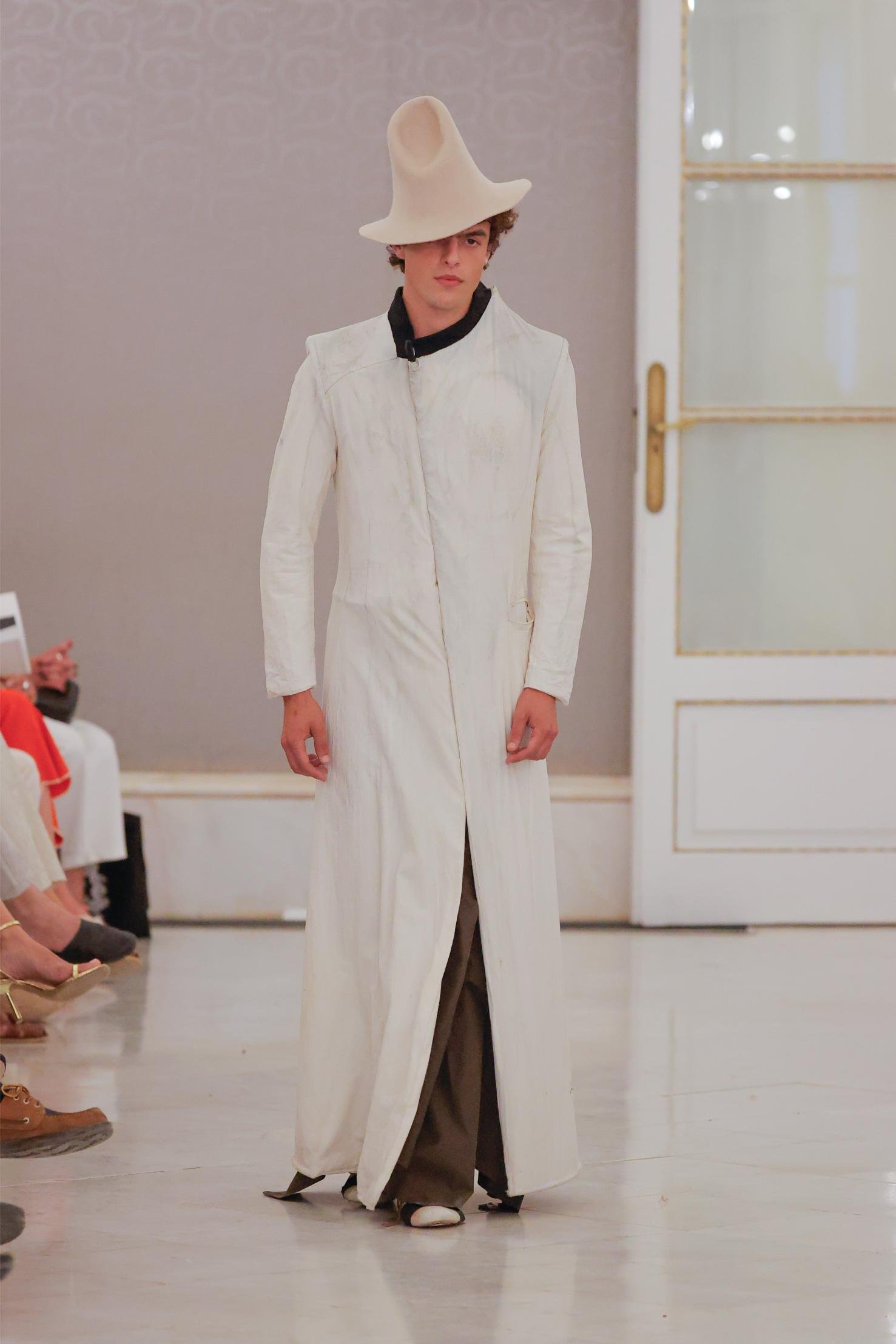
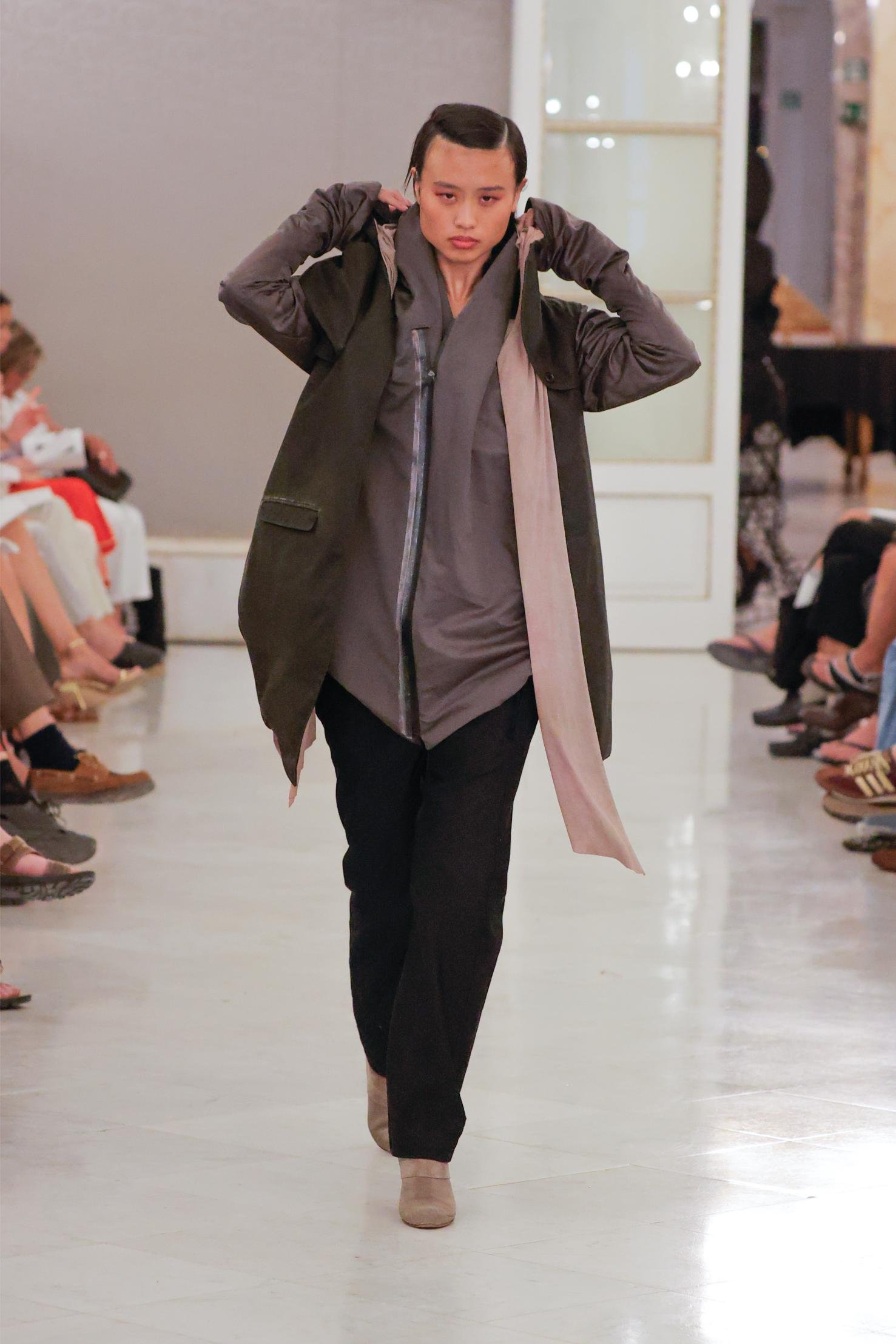
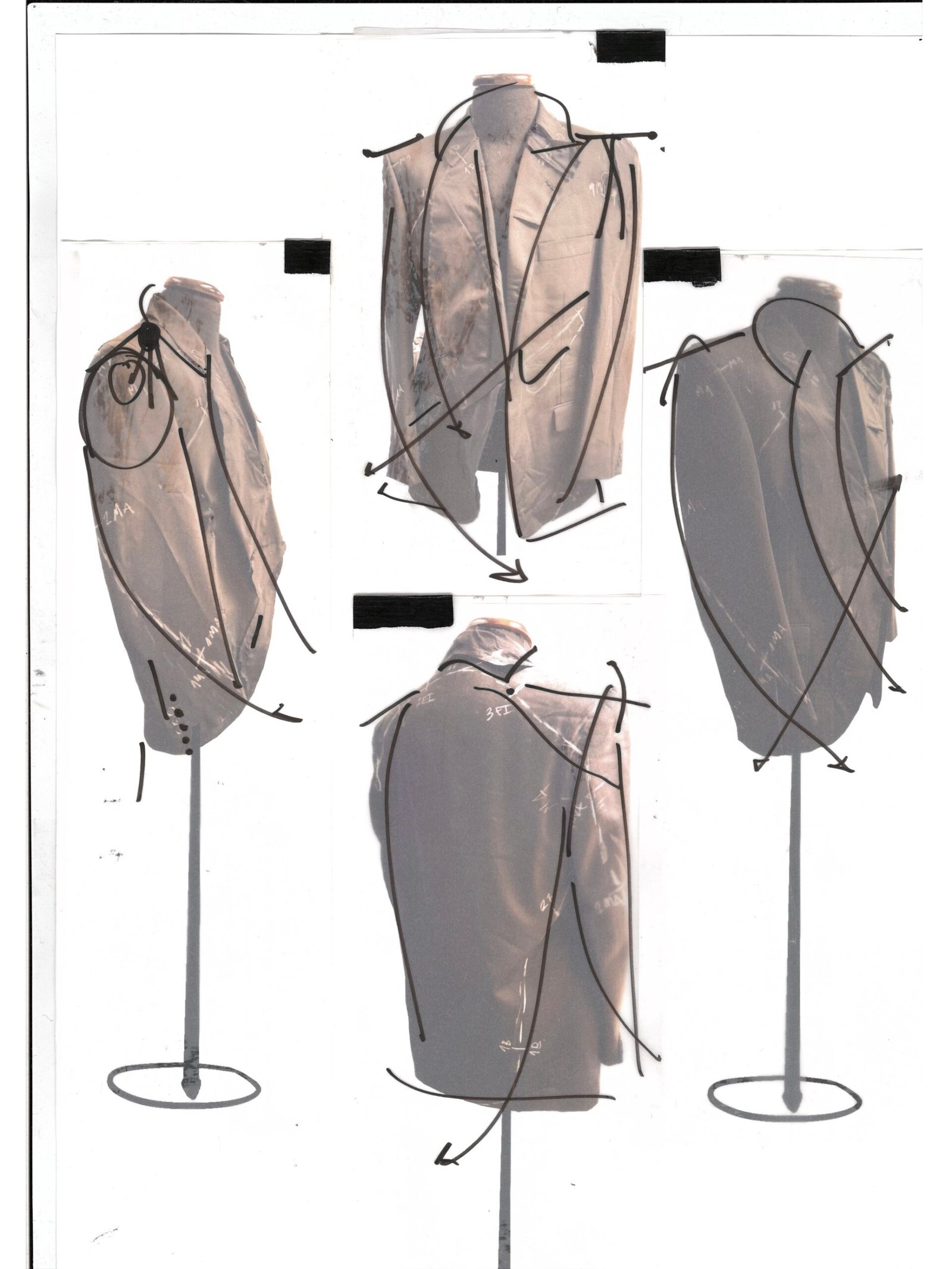
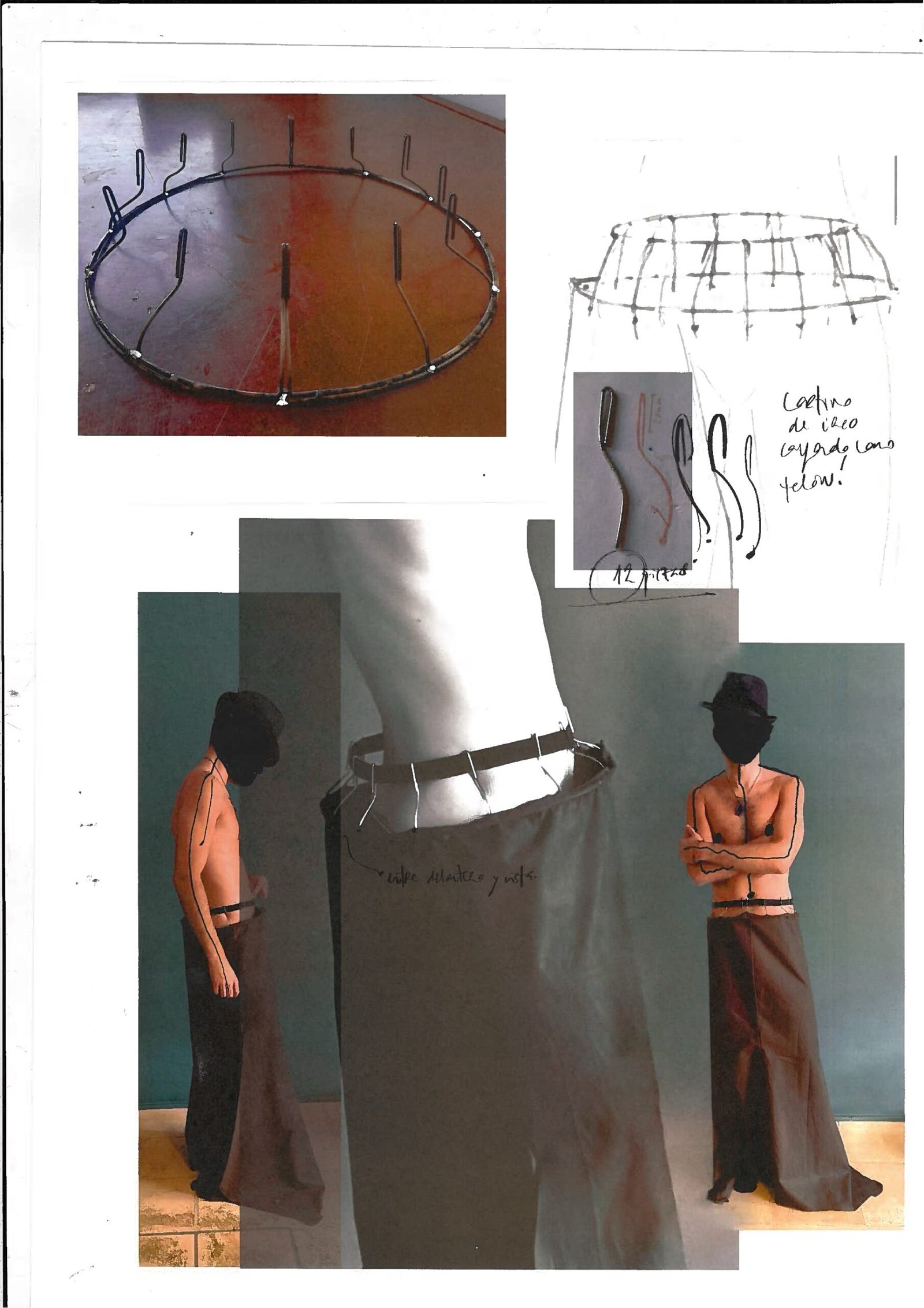
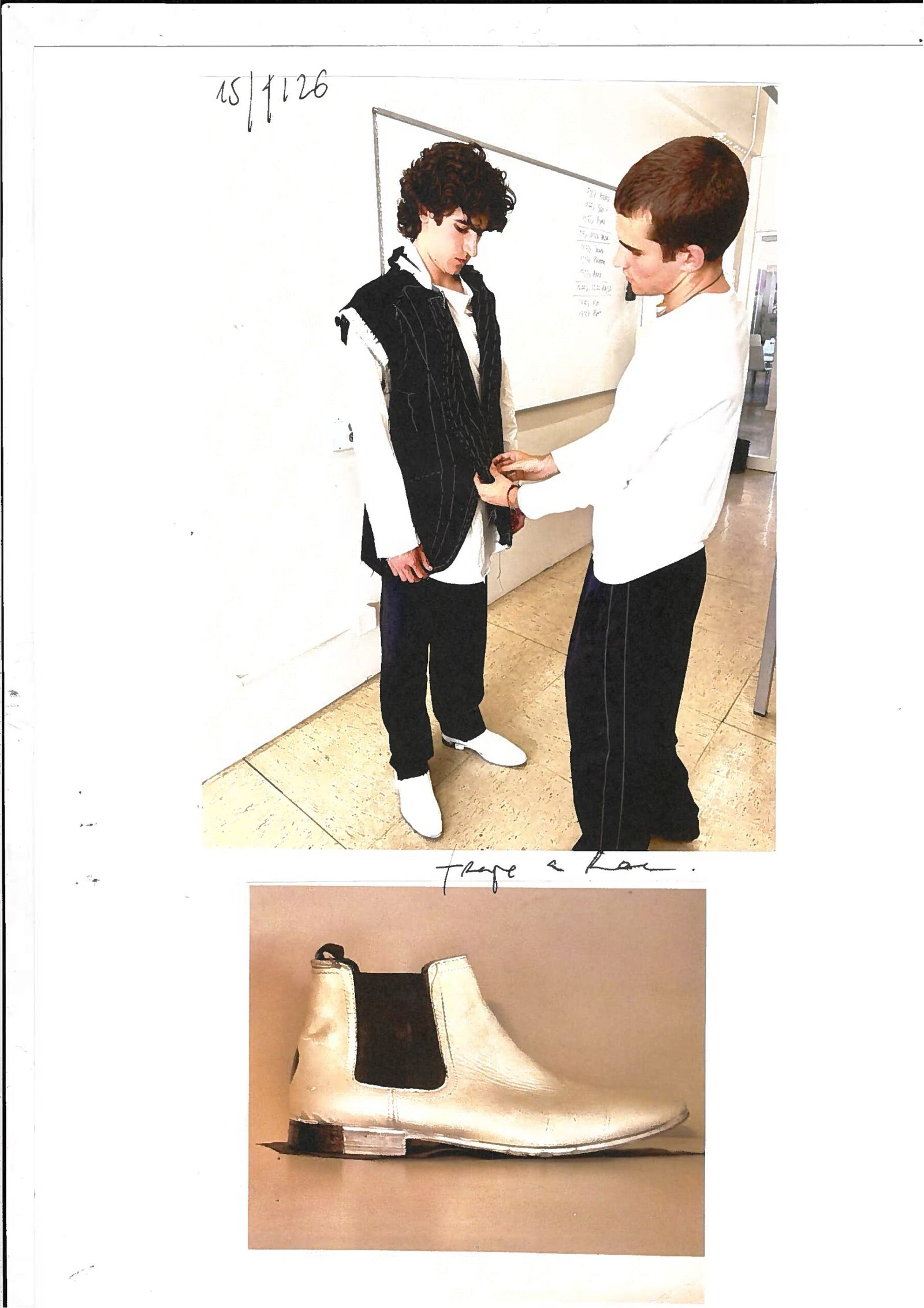
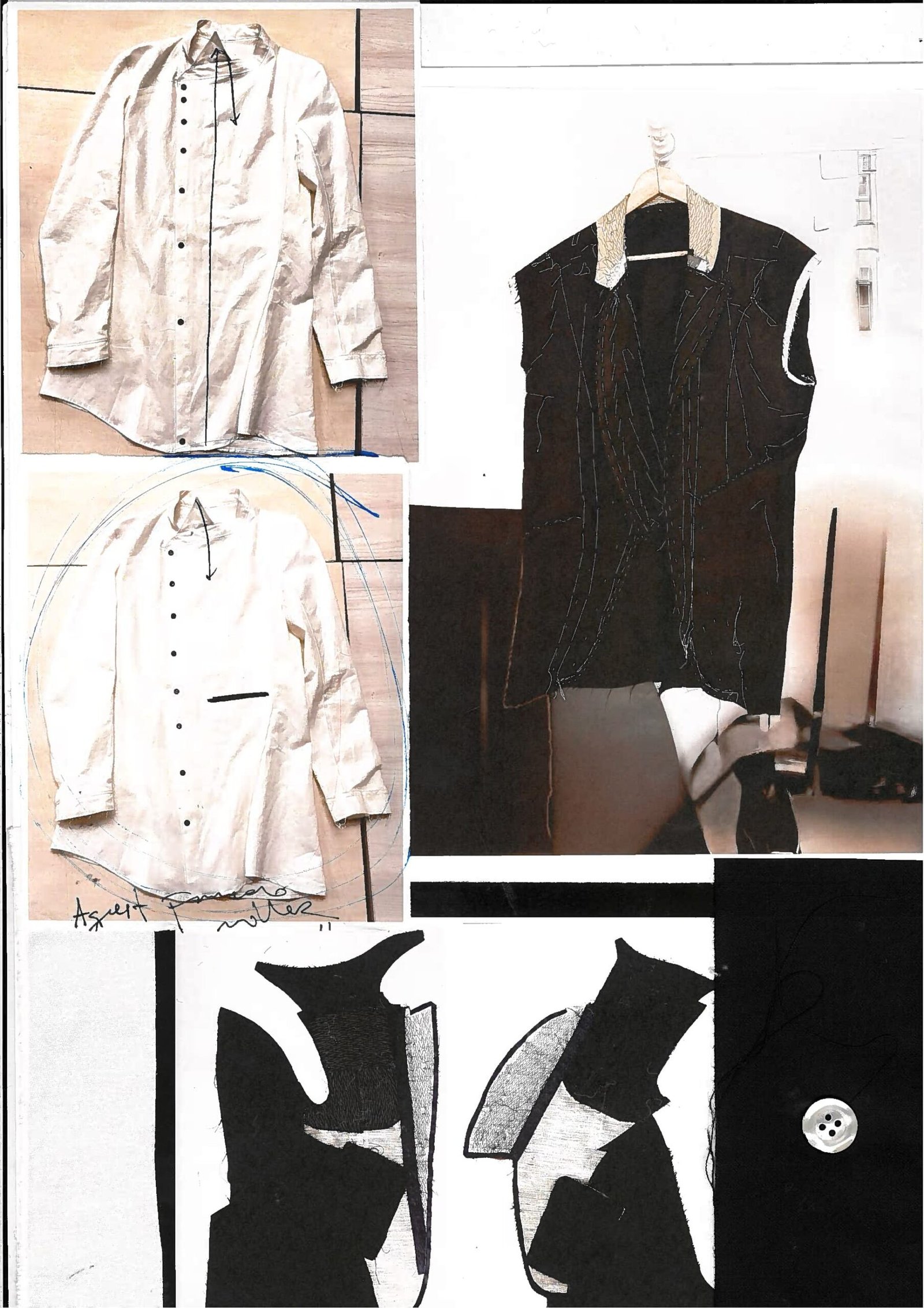
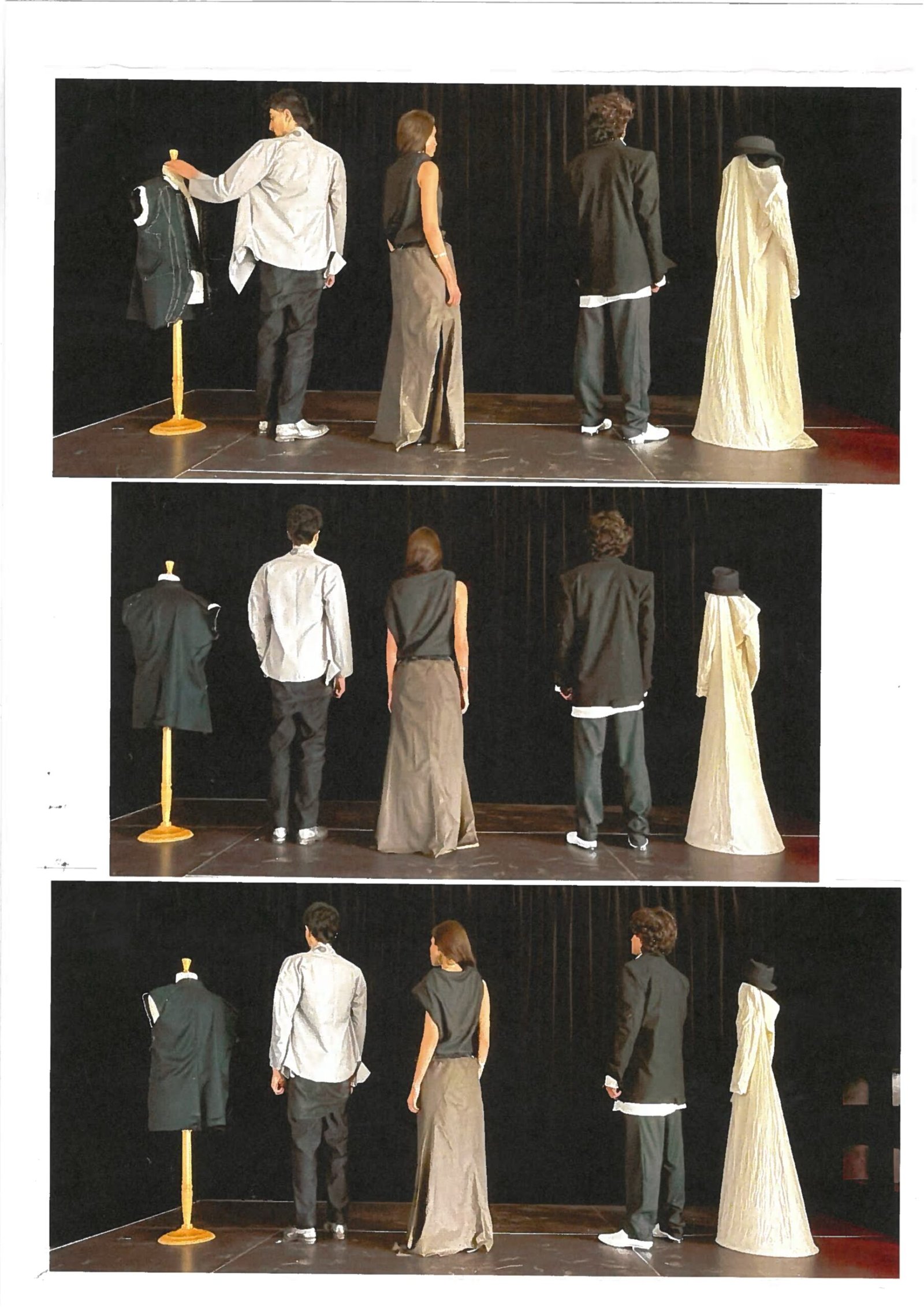
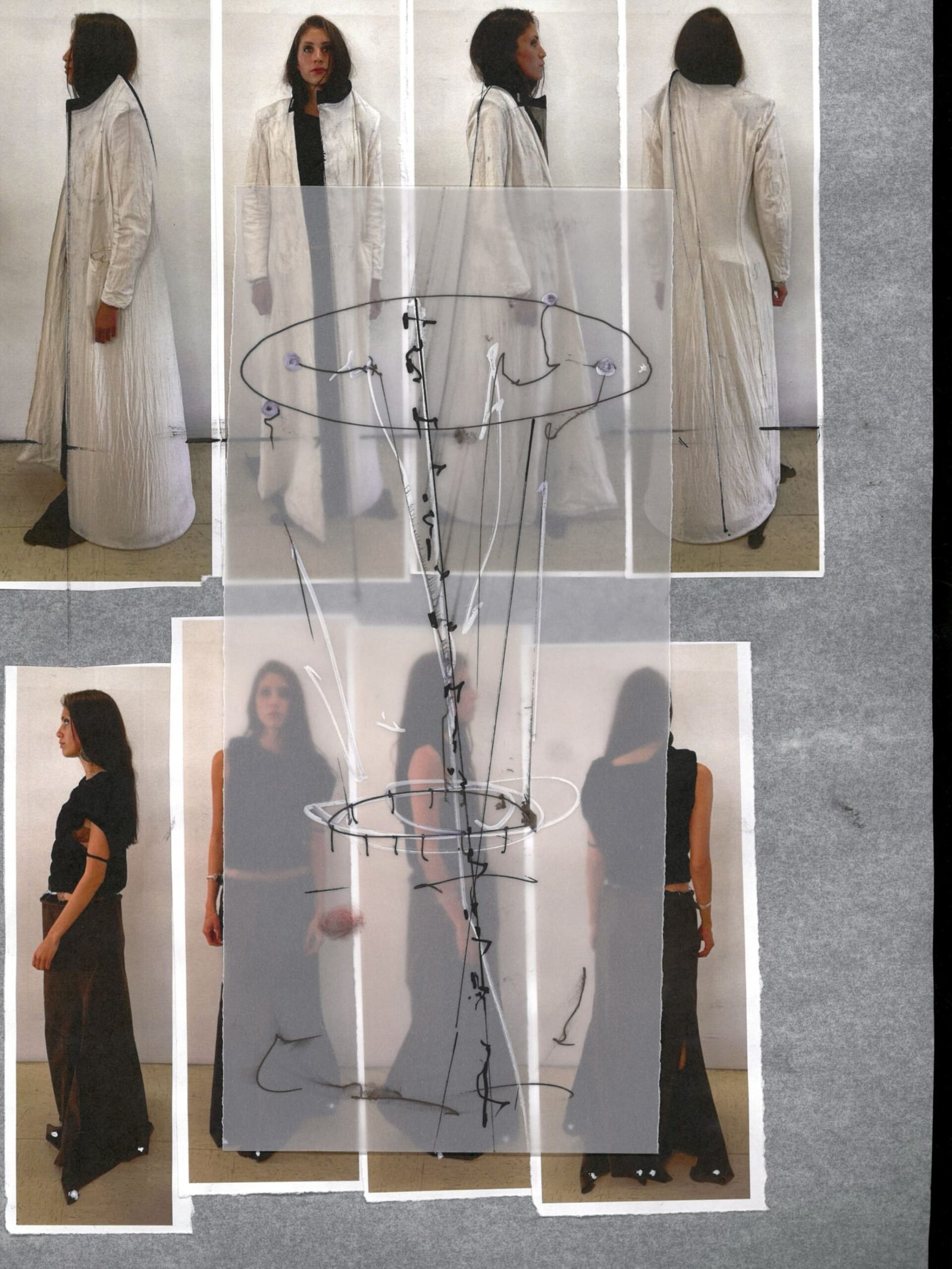
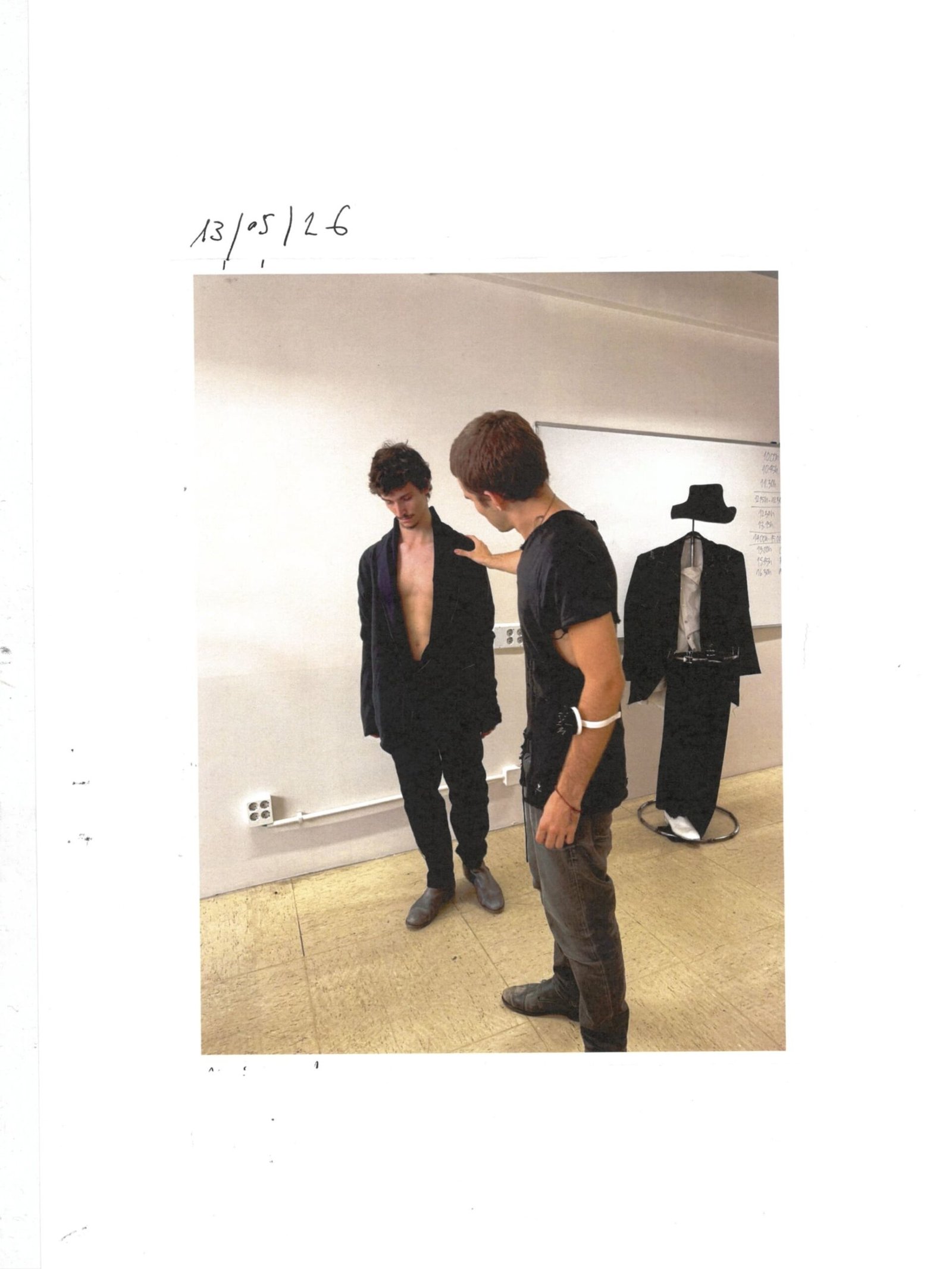
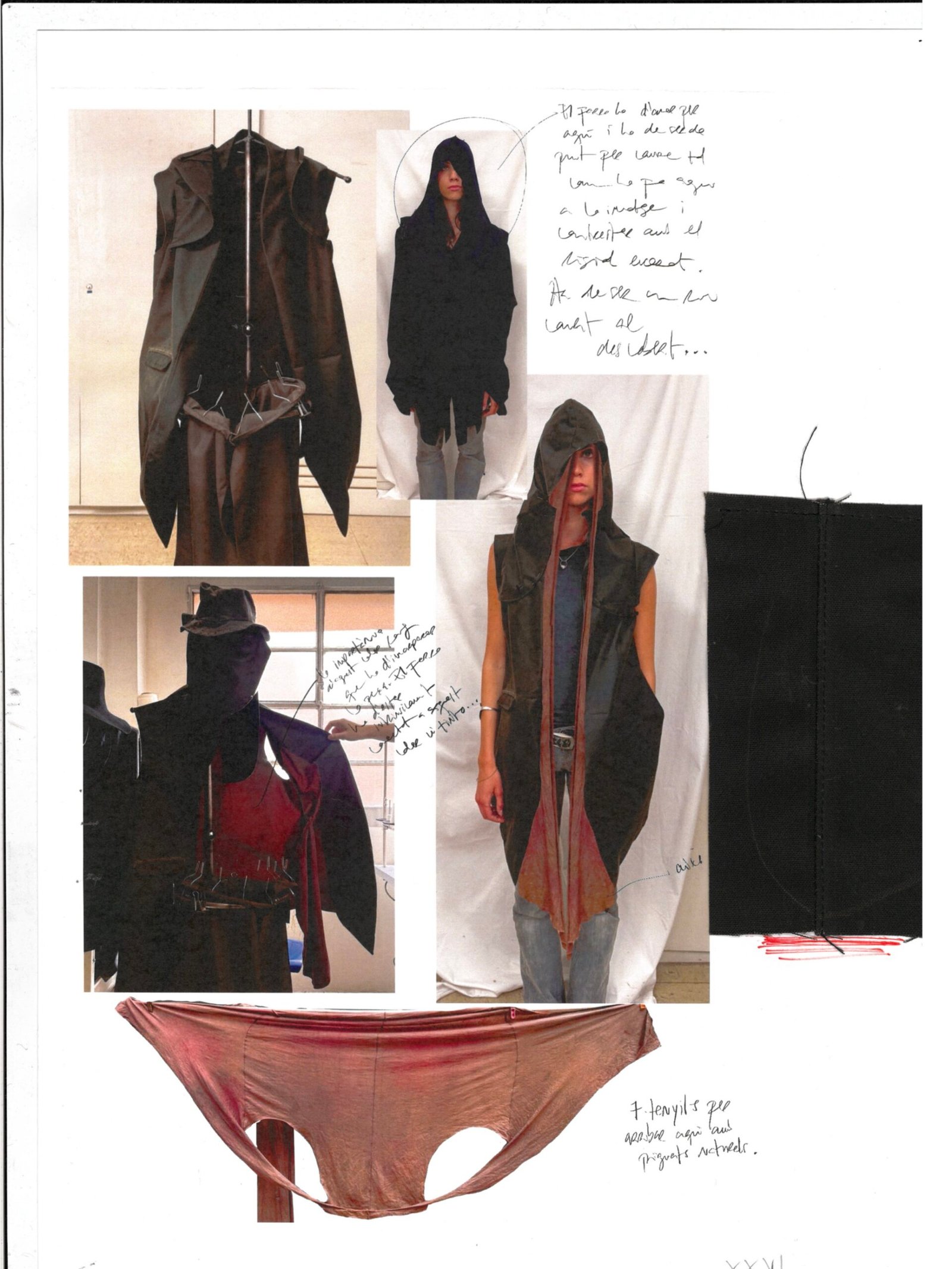
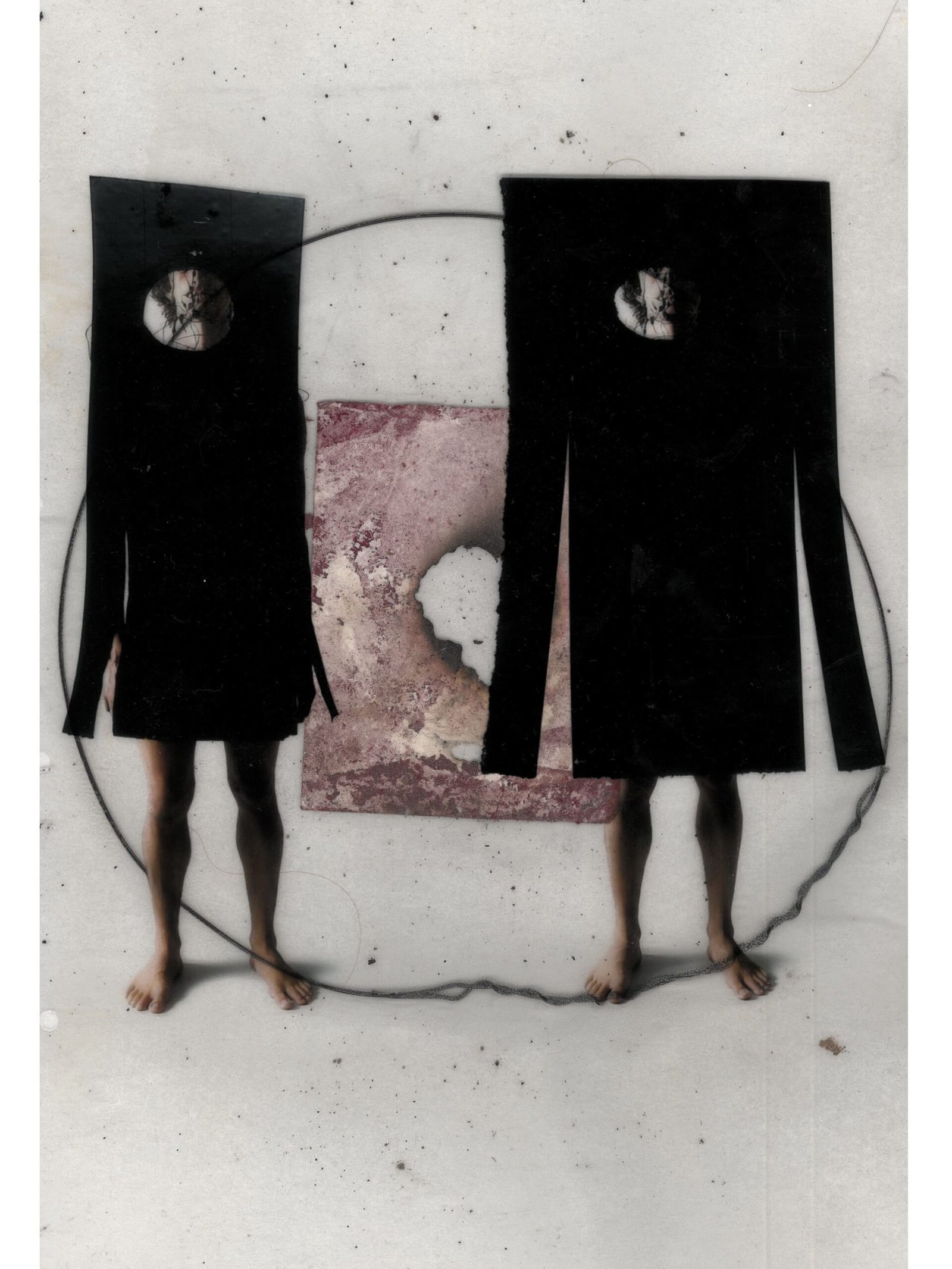
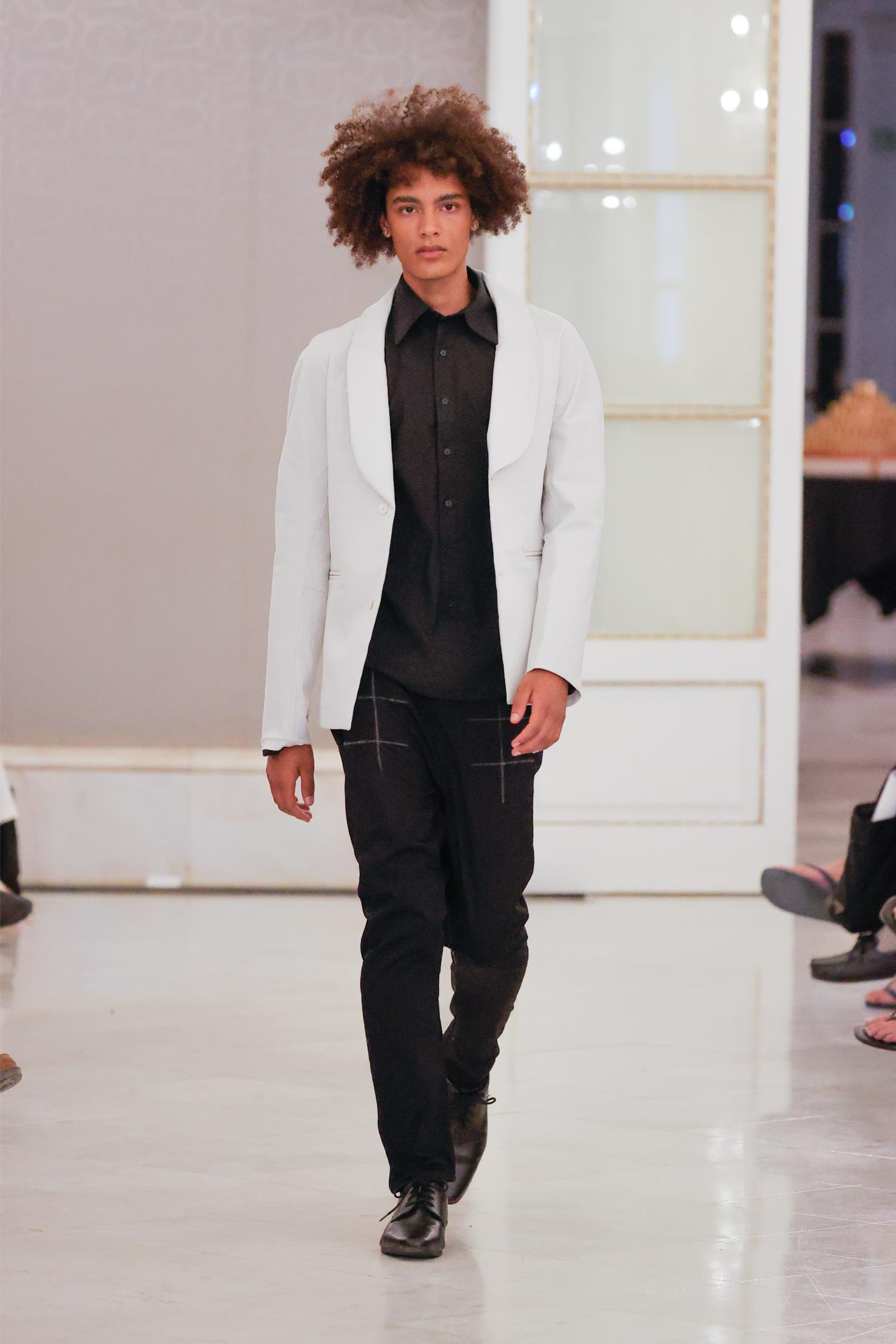
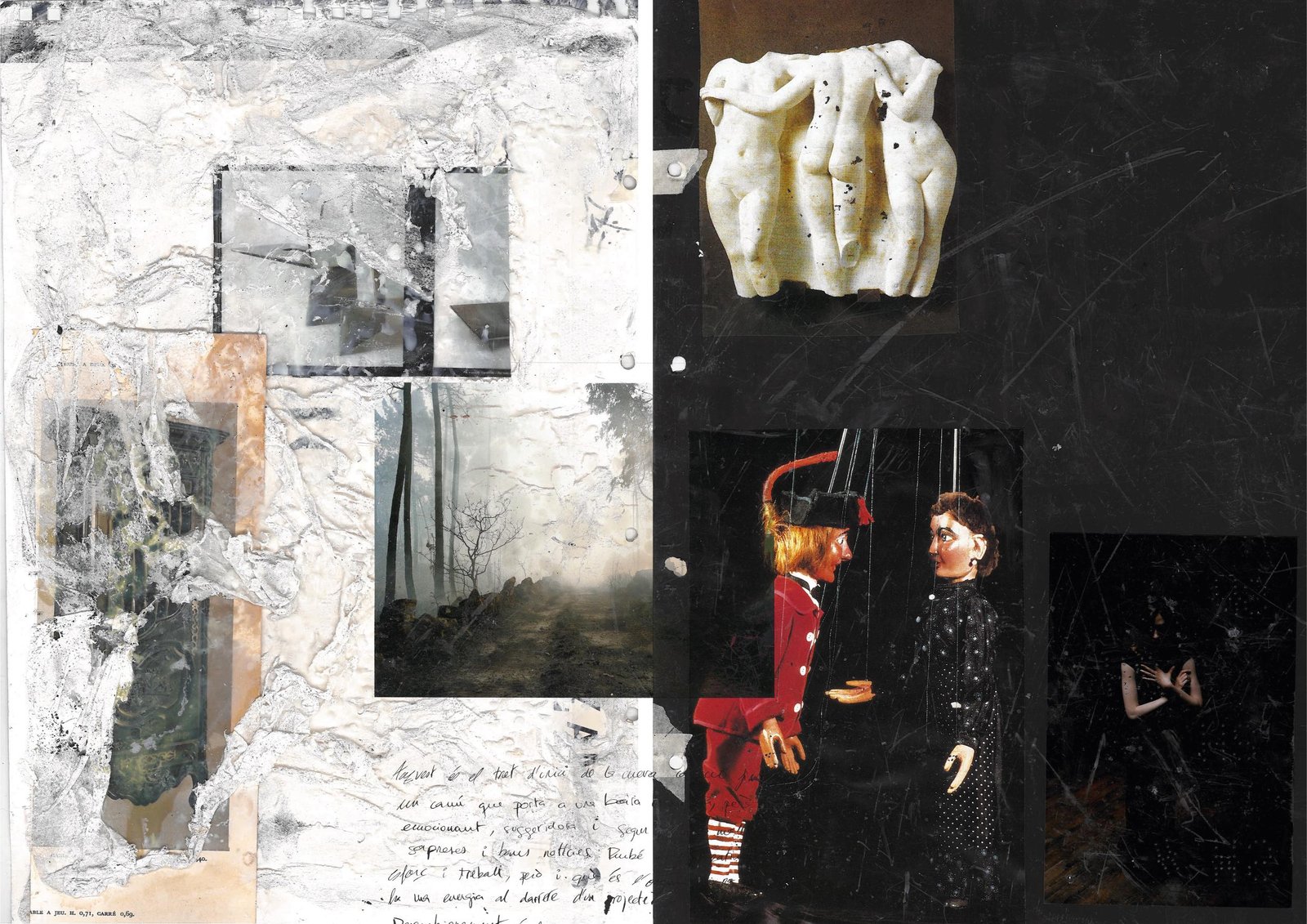
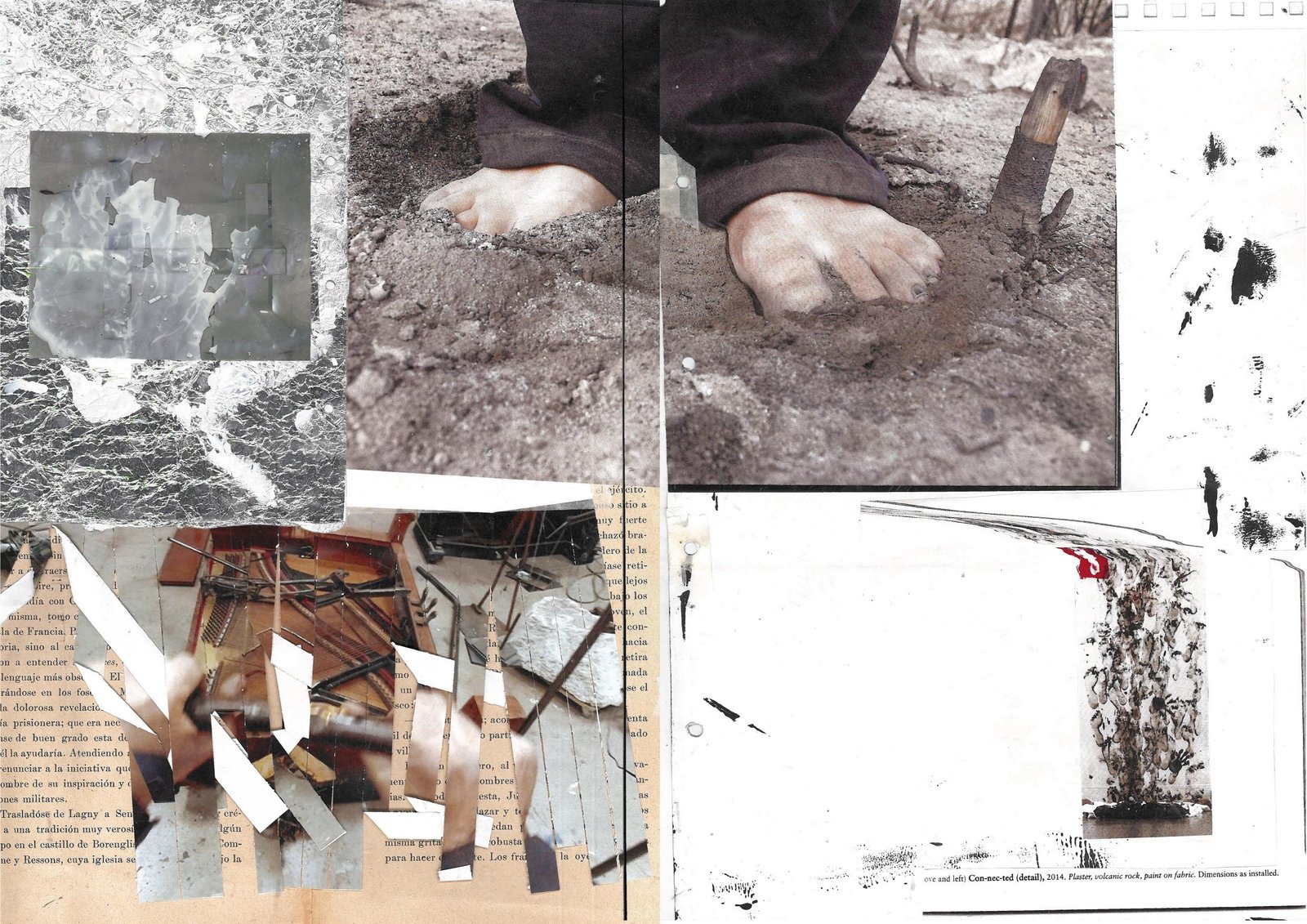
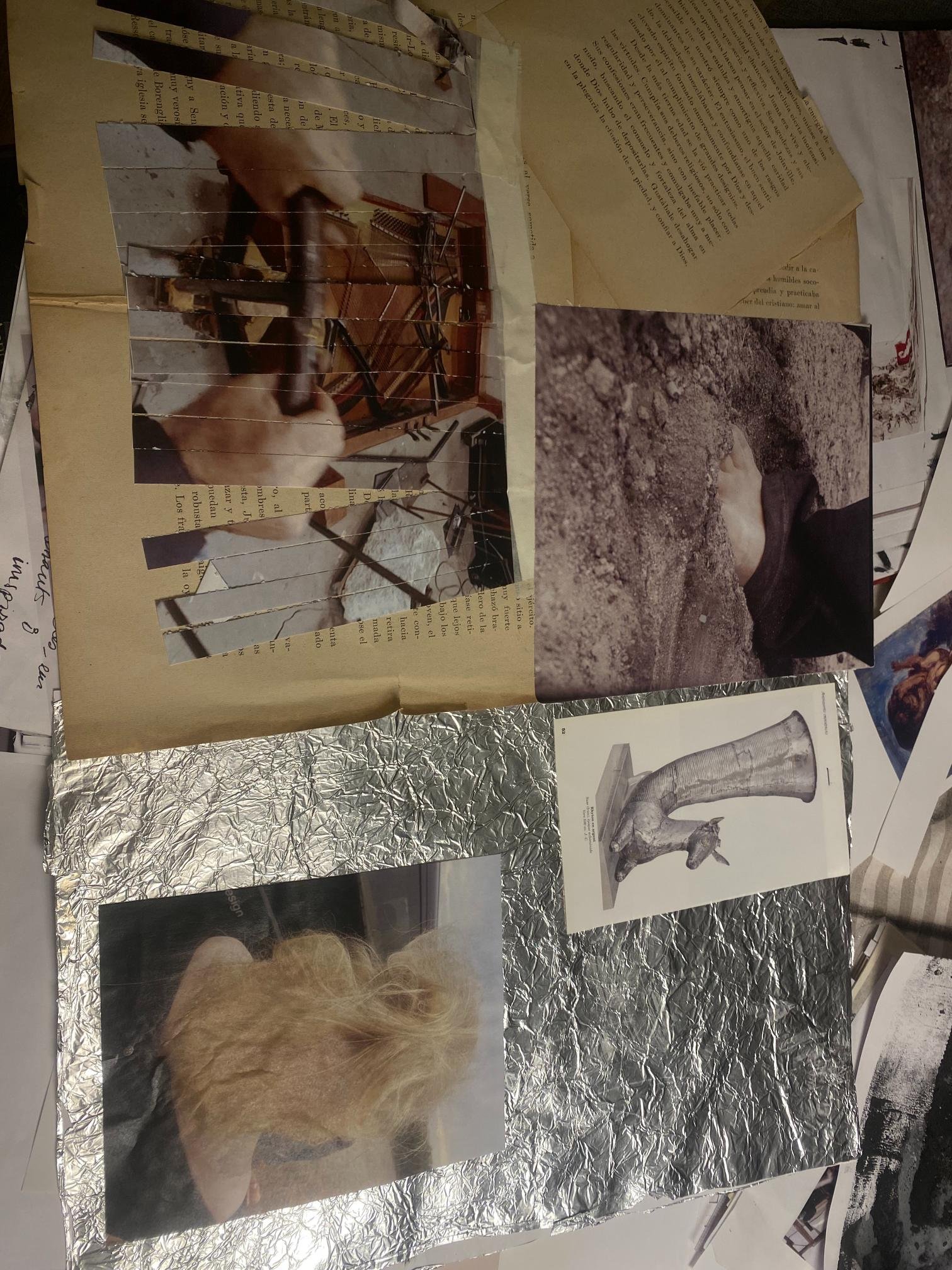
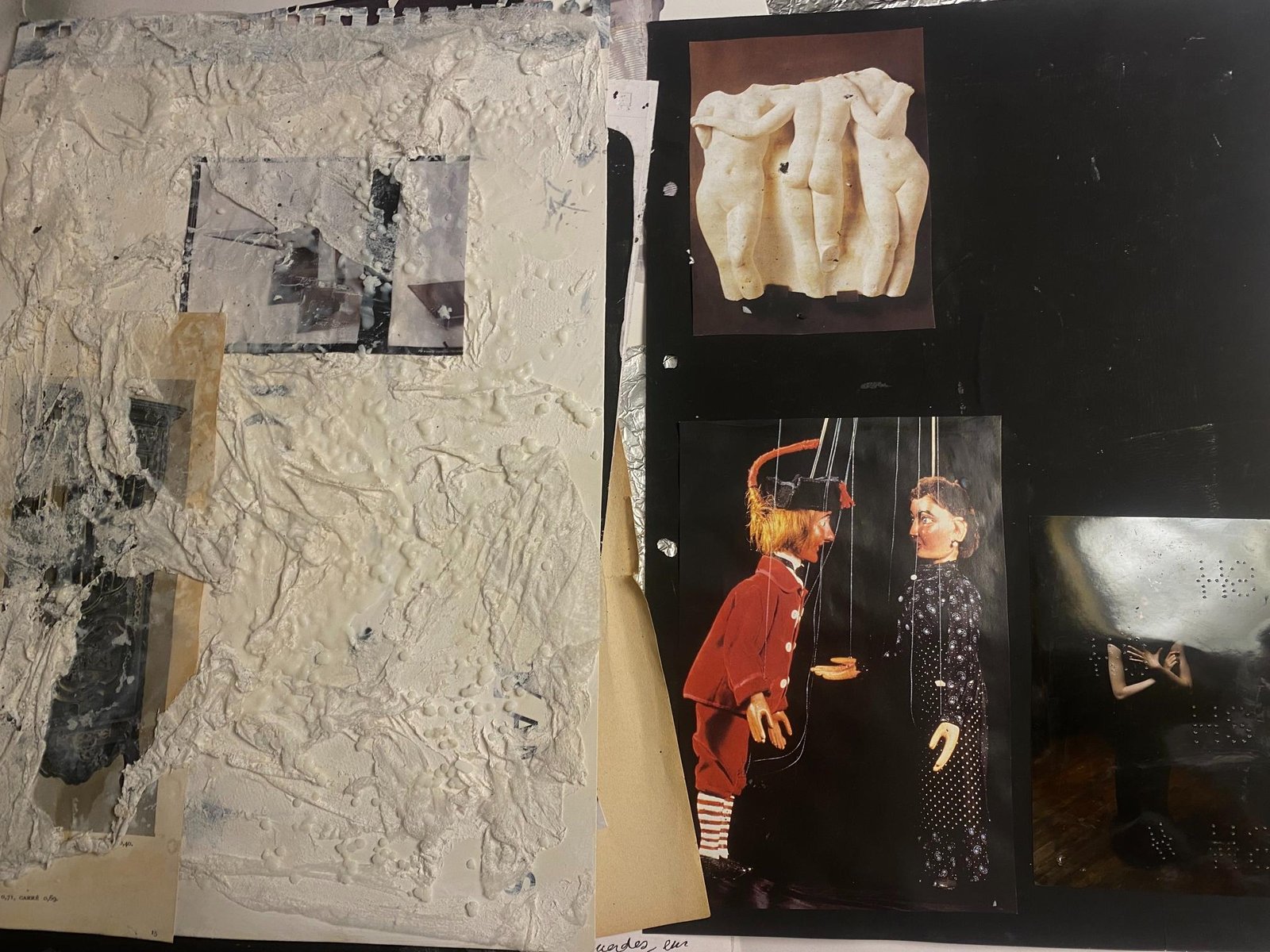
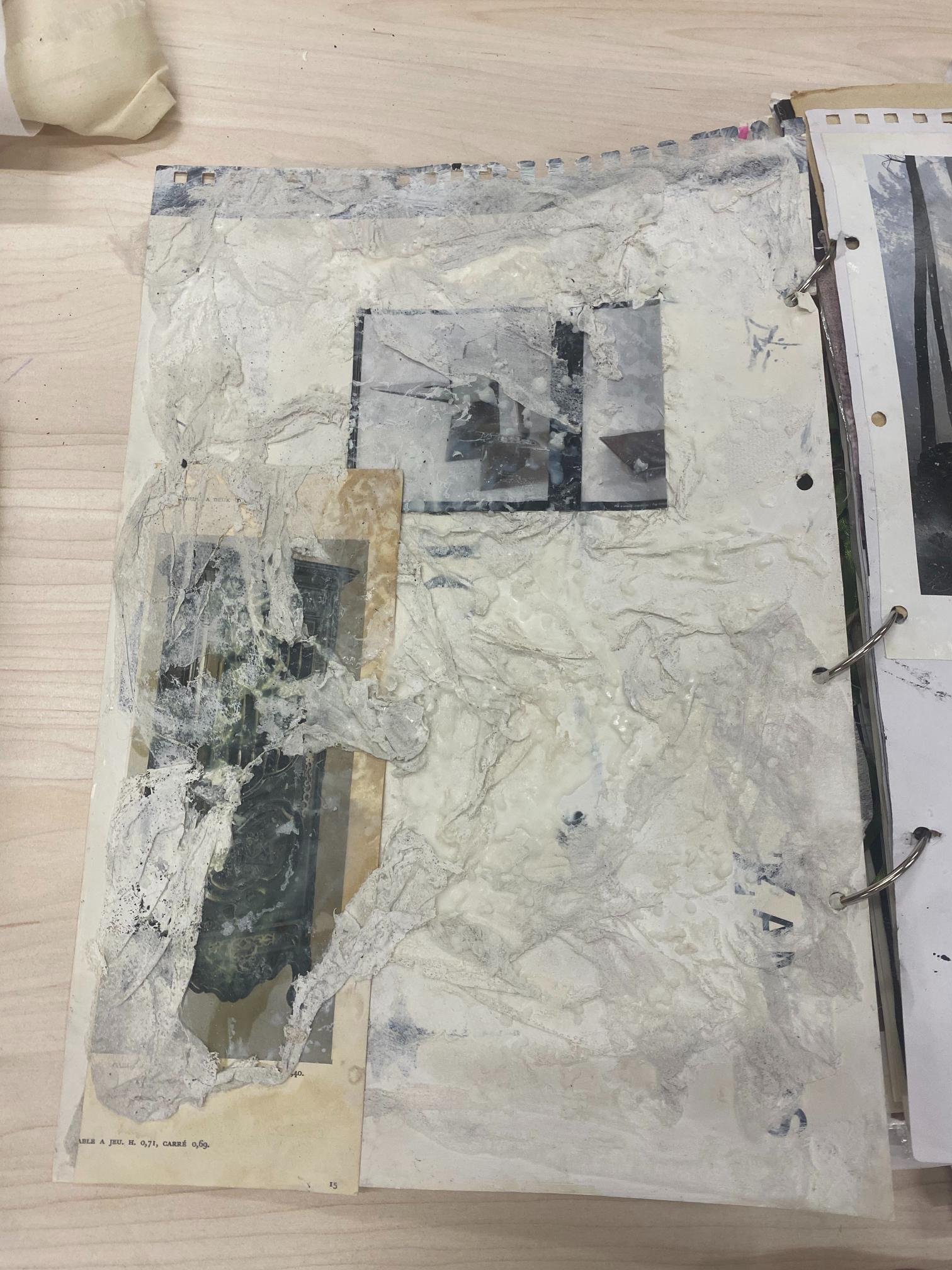
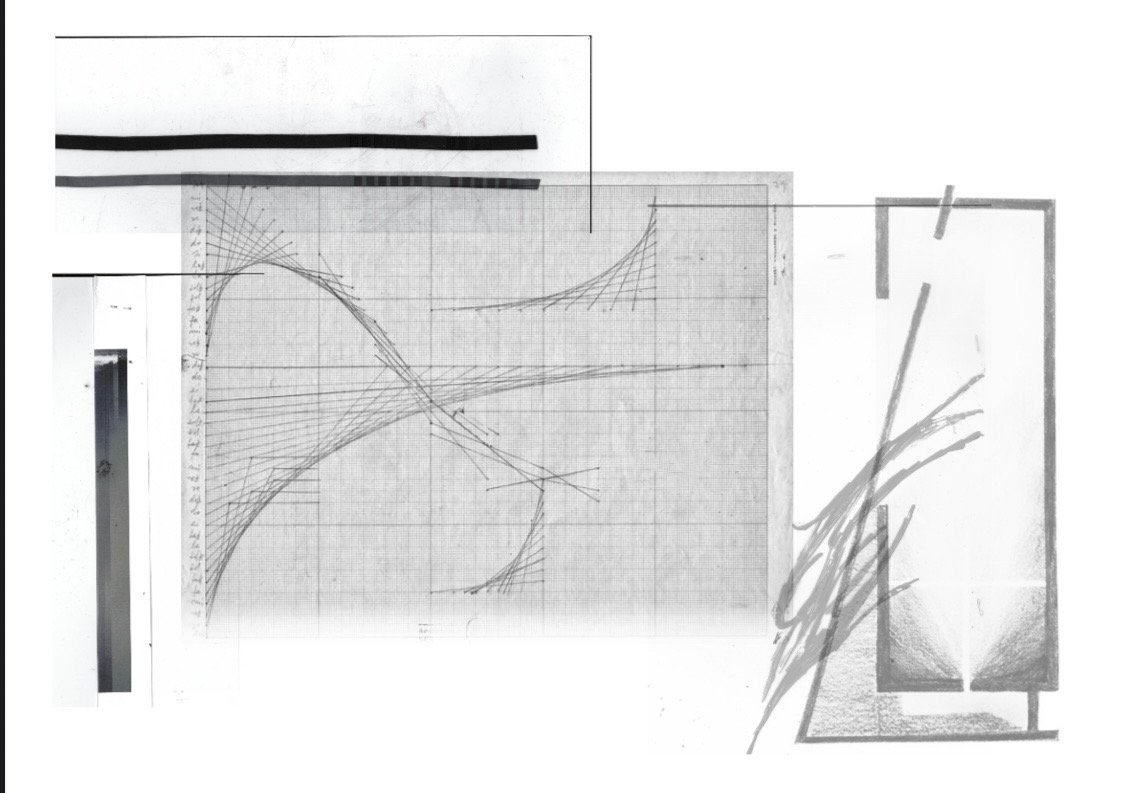
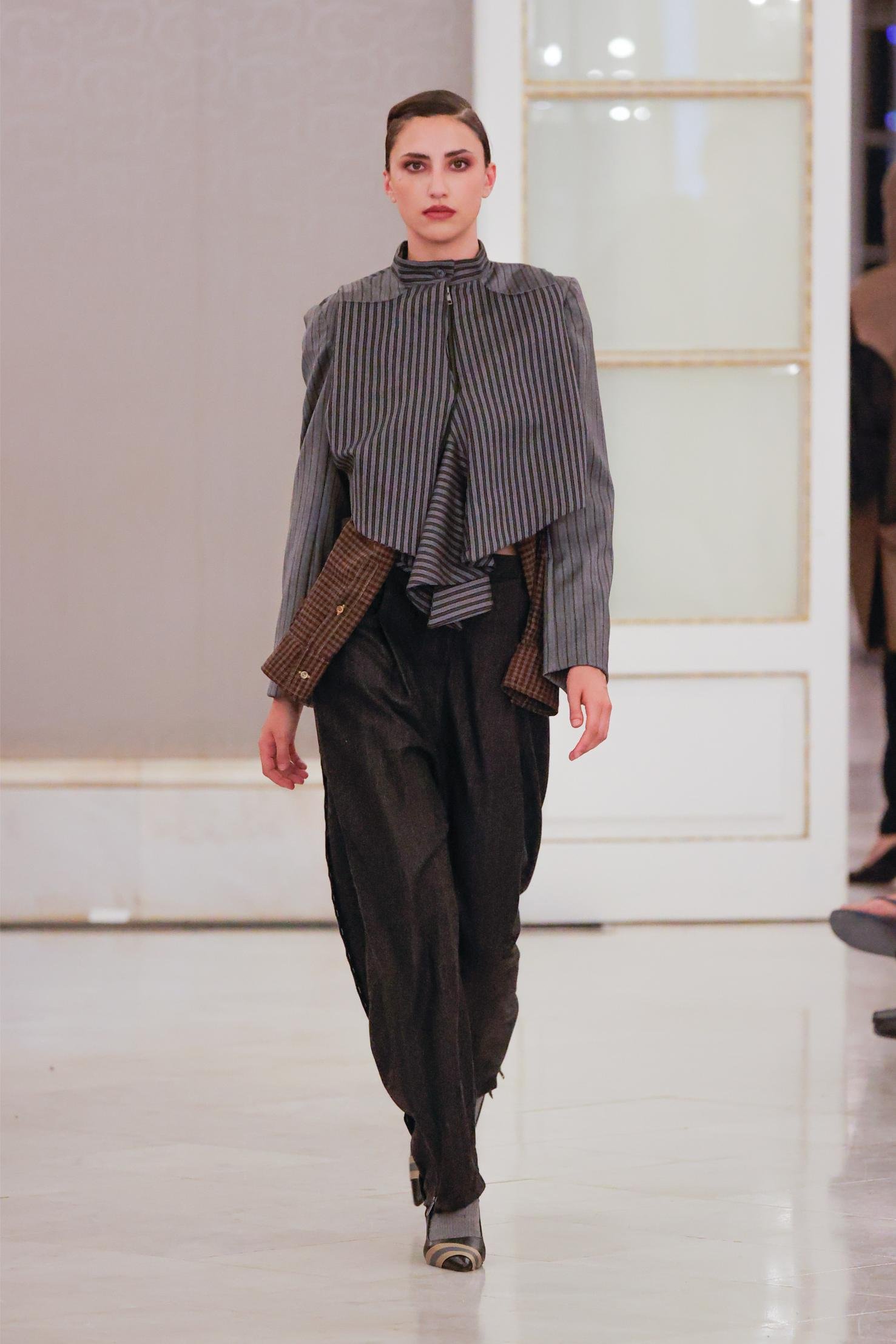
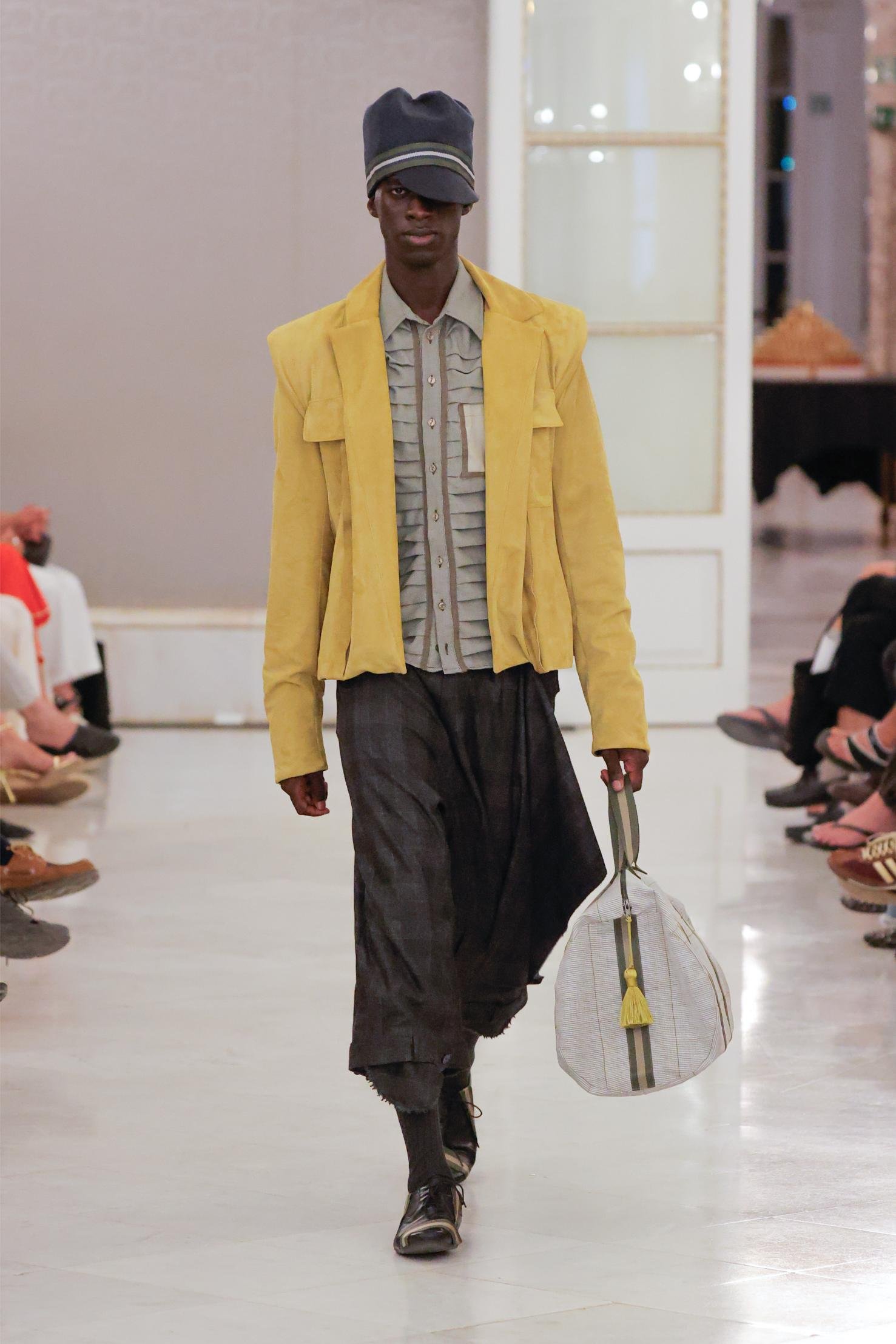
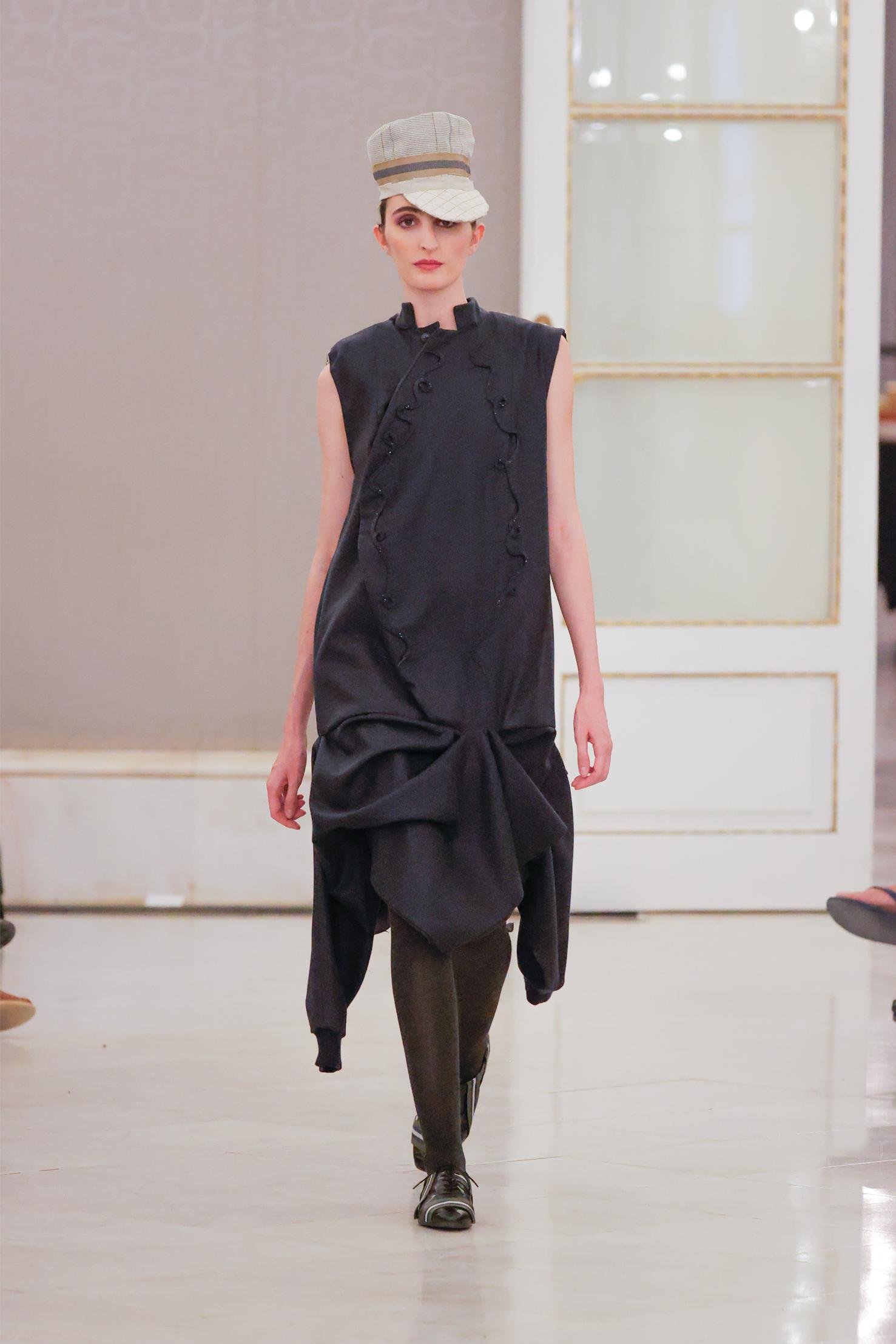
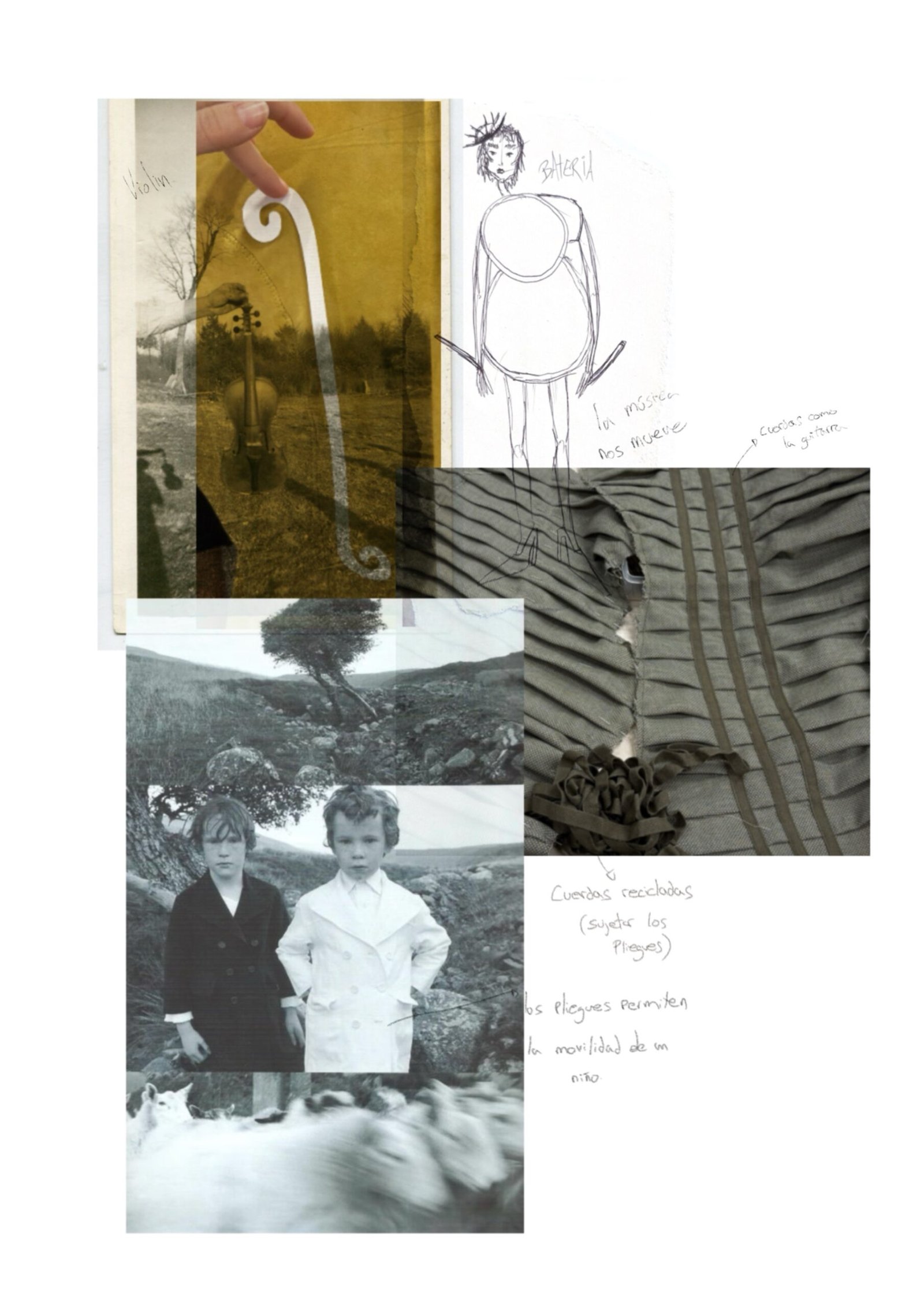
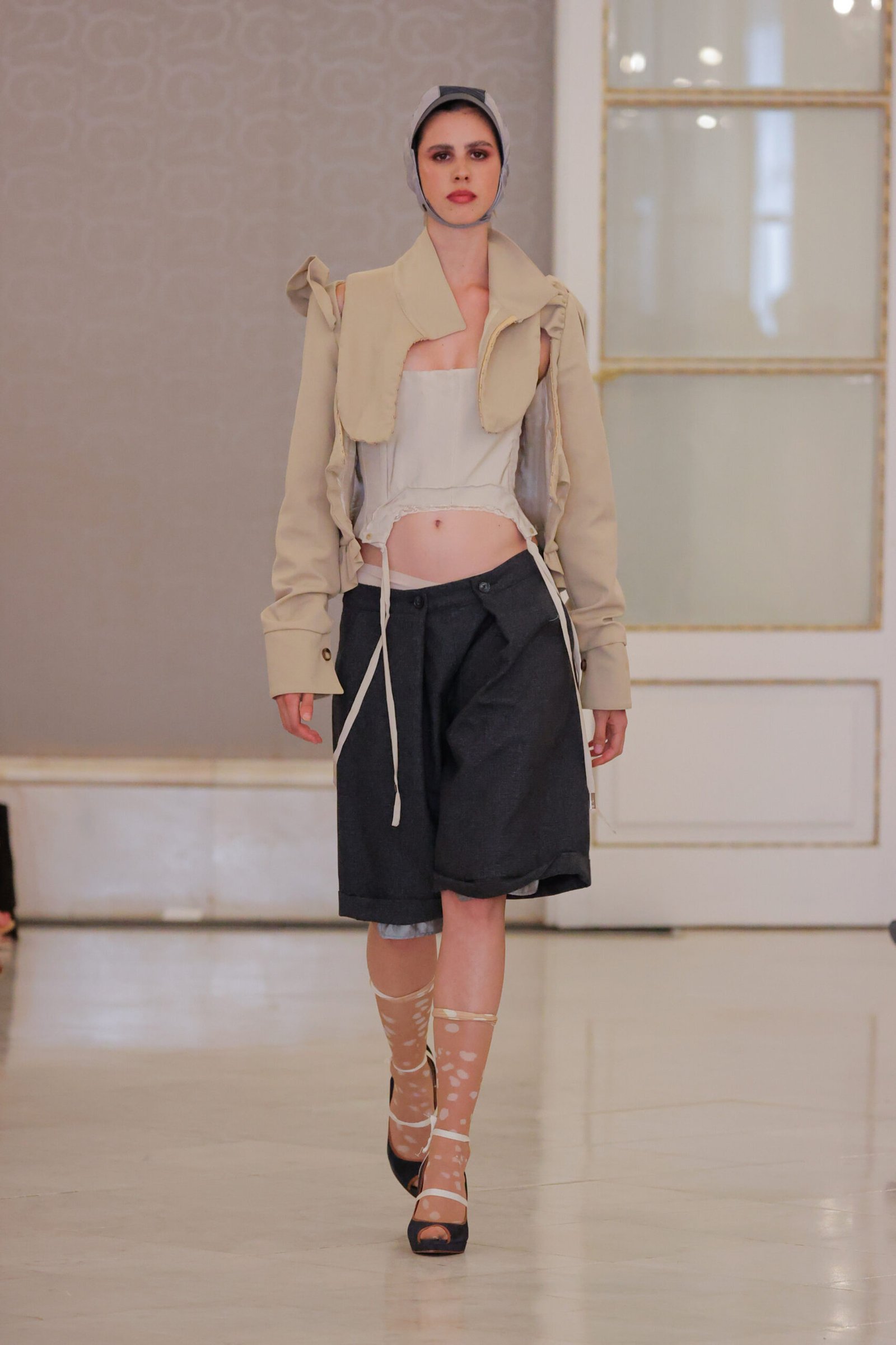
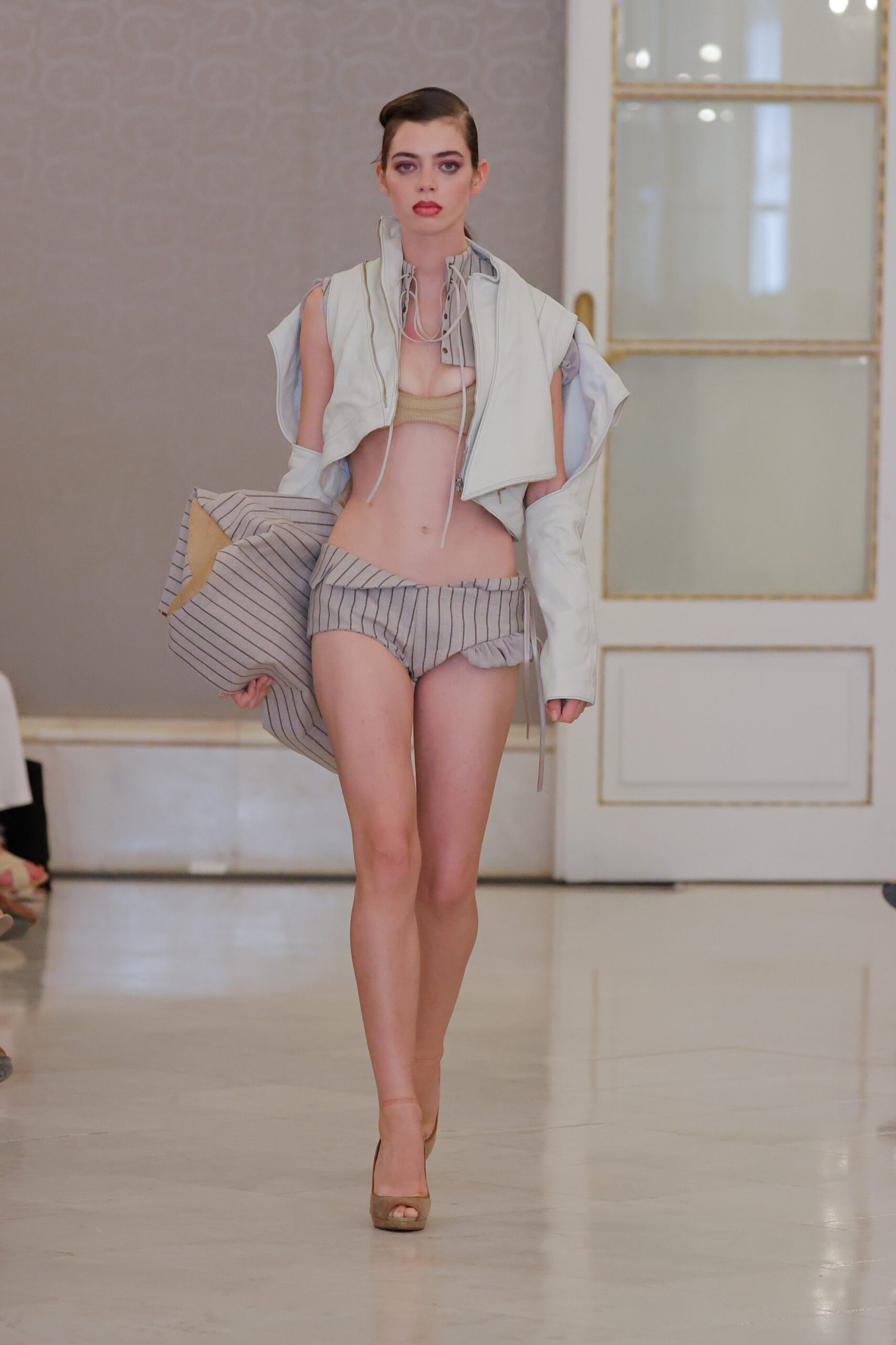
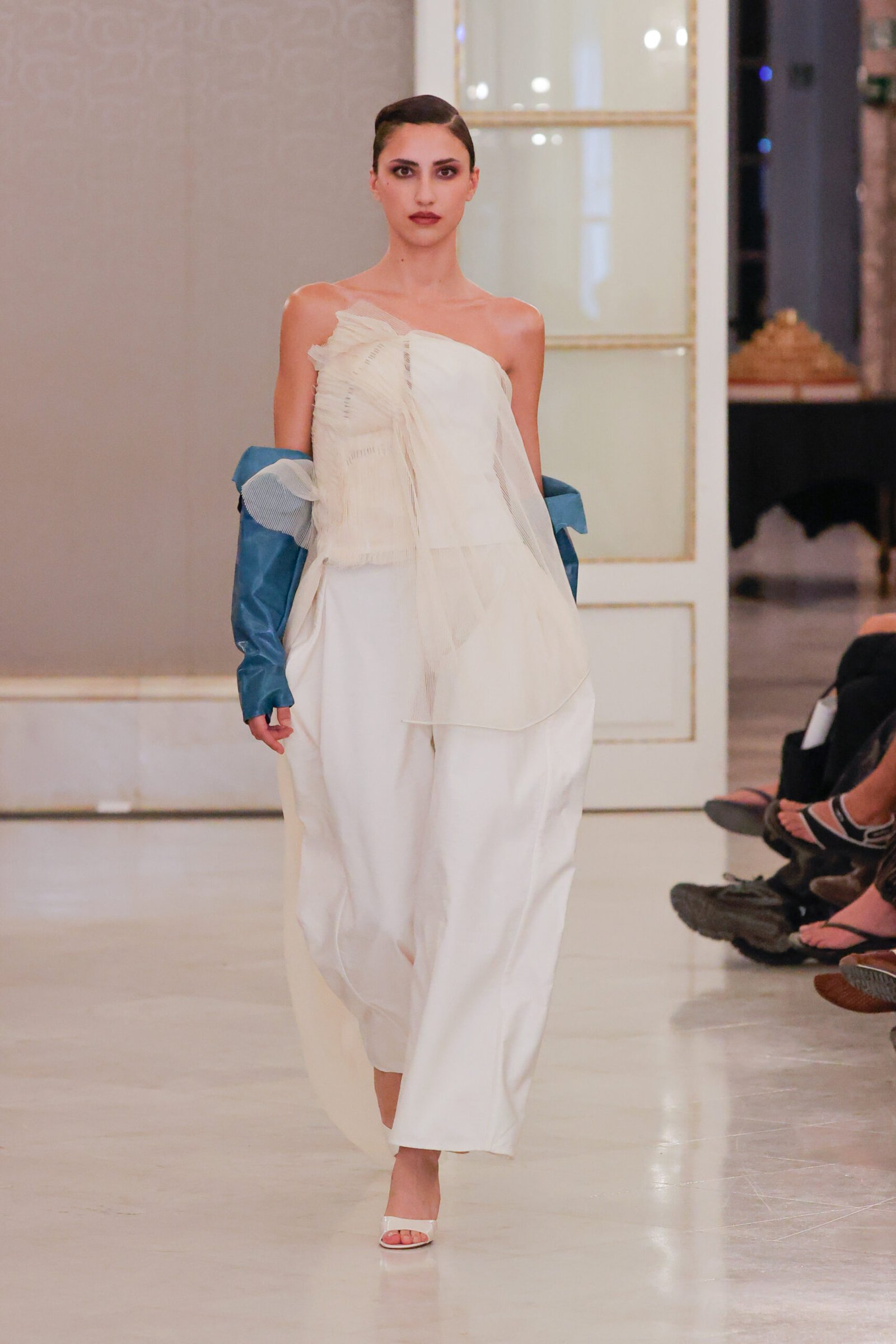
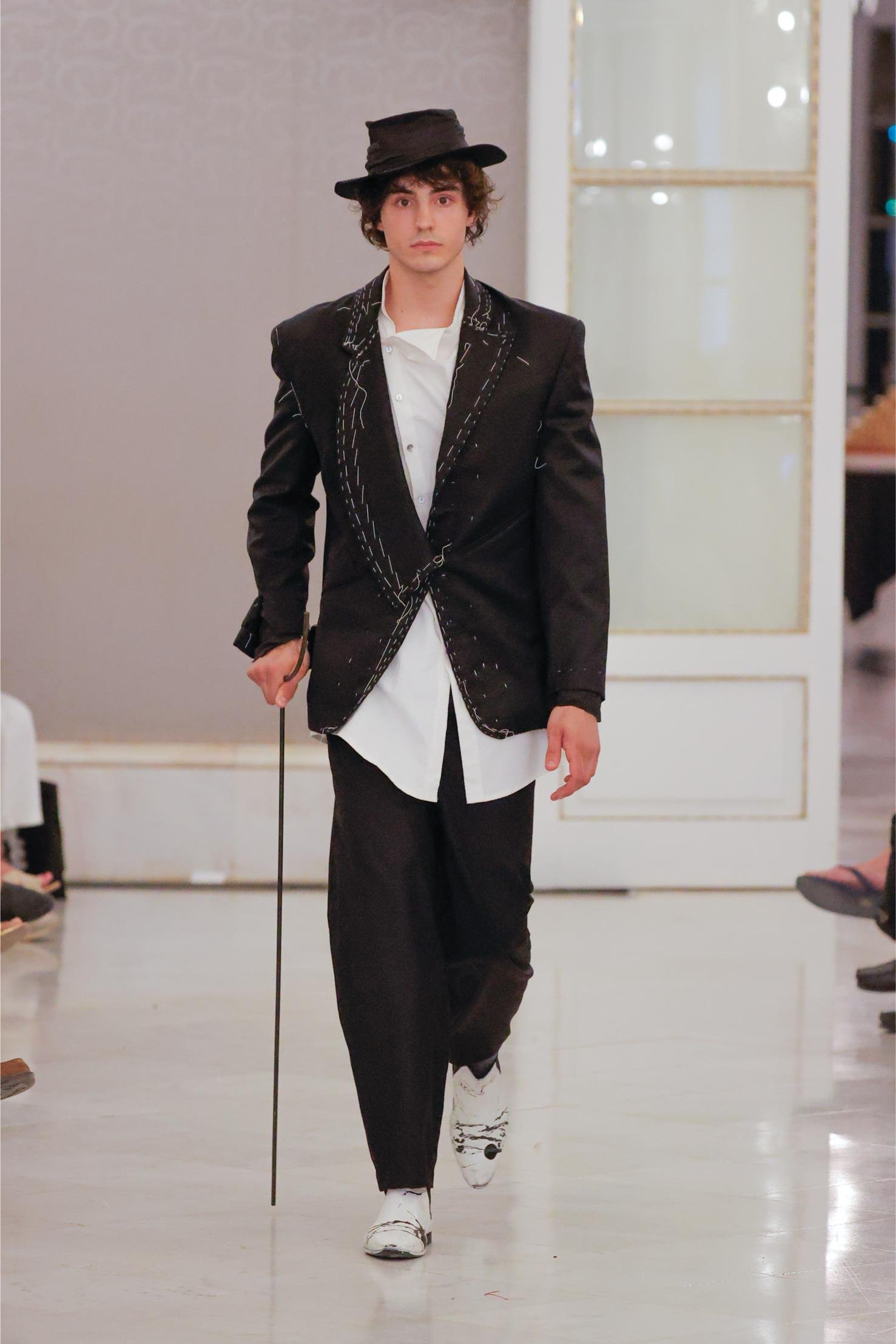
Albert Porta’s work approaches dress through subtraction rather than addition. “I make dresses by undressing them,” he writes, describing garments as “empty bodies” that allow themselves to be inhabited. Rather than working from a fixed theme, his practice is driven by instinct, mystery, and what he describes as the search for his own centre. Influenced by the ideas of Antoni Tàpies, Joan Brossa, and the poetry of Federico García Lorca, the collection explores clothing as a vessel rather than an object with predetermined meaning. As he enters the industry, Porta is deeply concerned by fashion’s environmental impact and argues that making clothes today requires a commitment to creating pieces that transcend mass culture. He believes garments should develop slowly and naturally, remaining true to materials and craftsmanship, while encouraging greater sensitivity towards where and how clothing is made. For him, the industry should continue to move closer to art, “if only out of courtesy to the sky that shelters us.”
Rosella Vega Ley

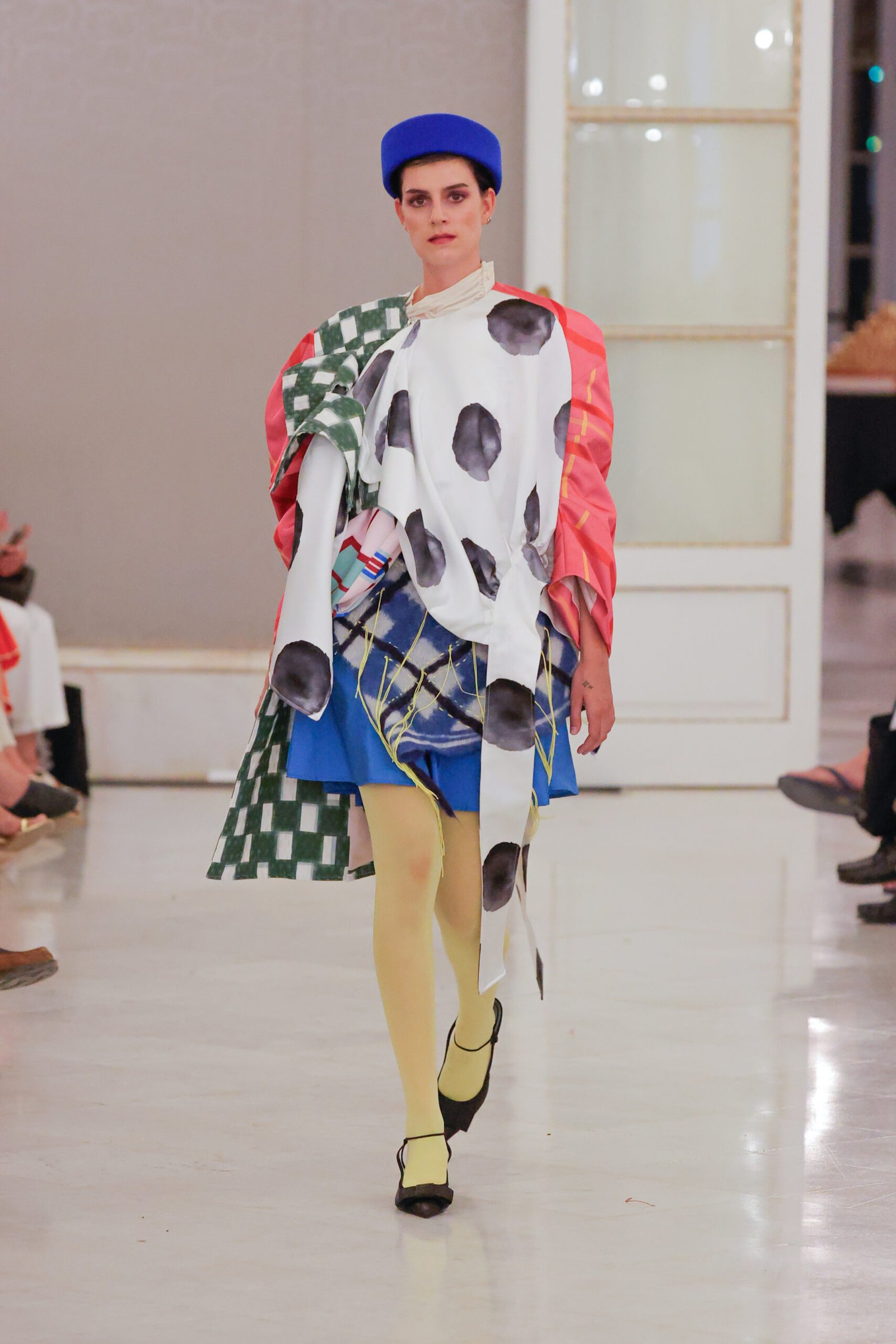
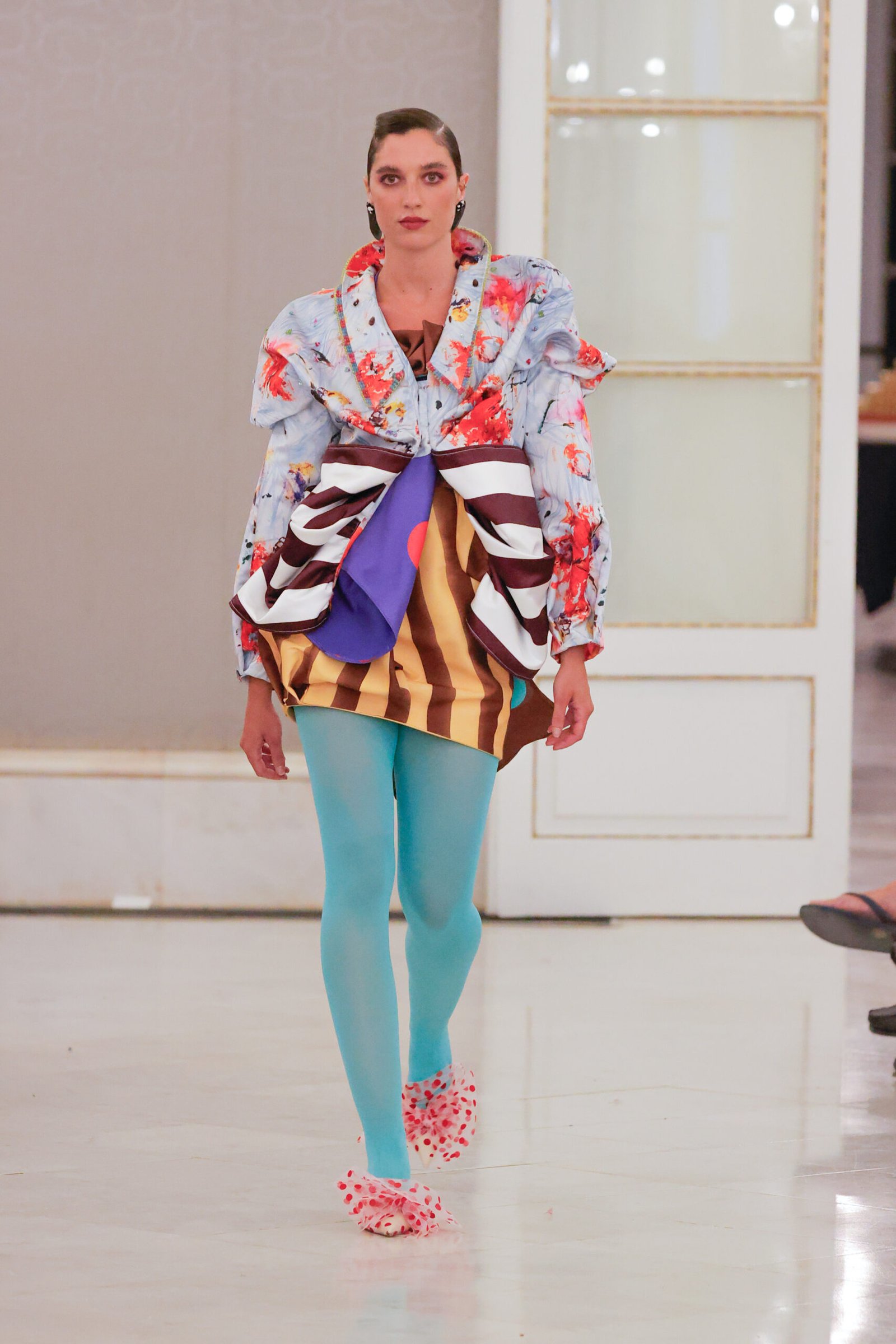
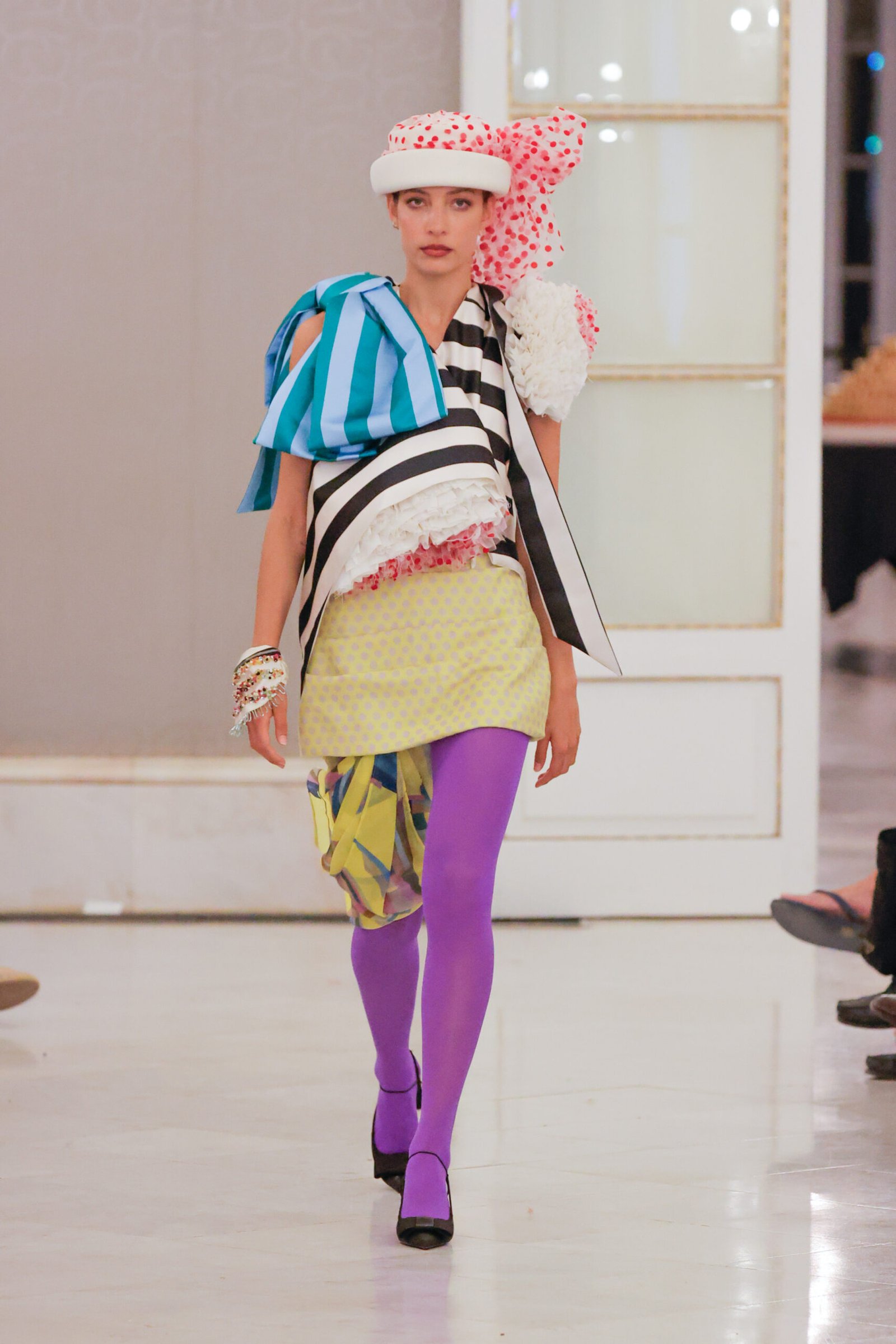
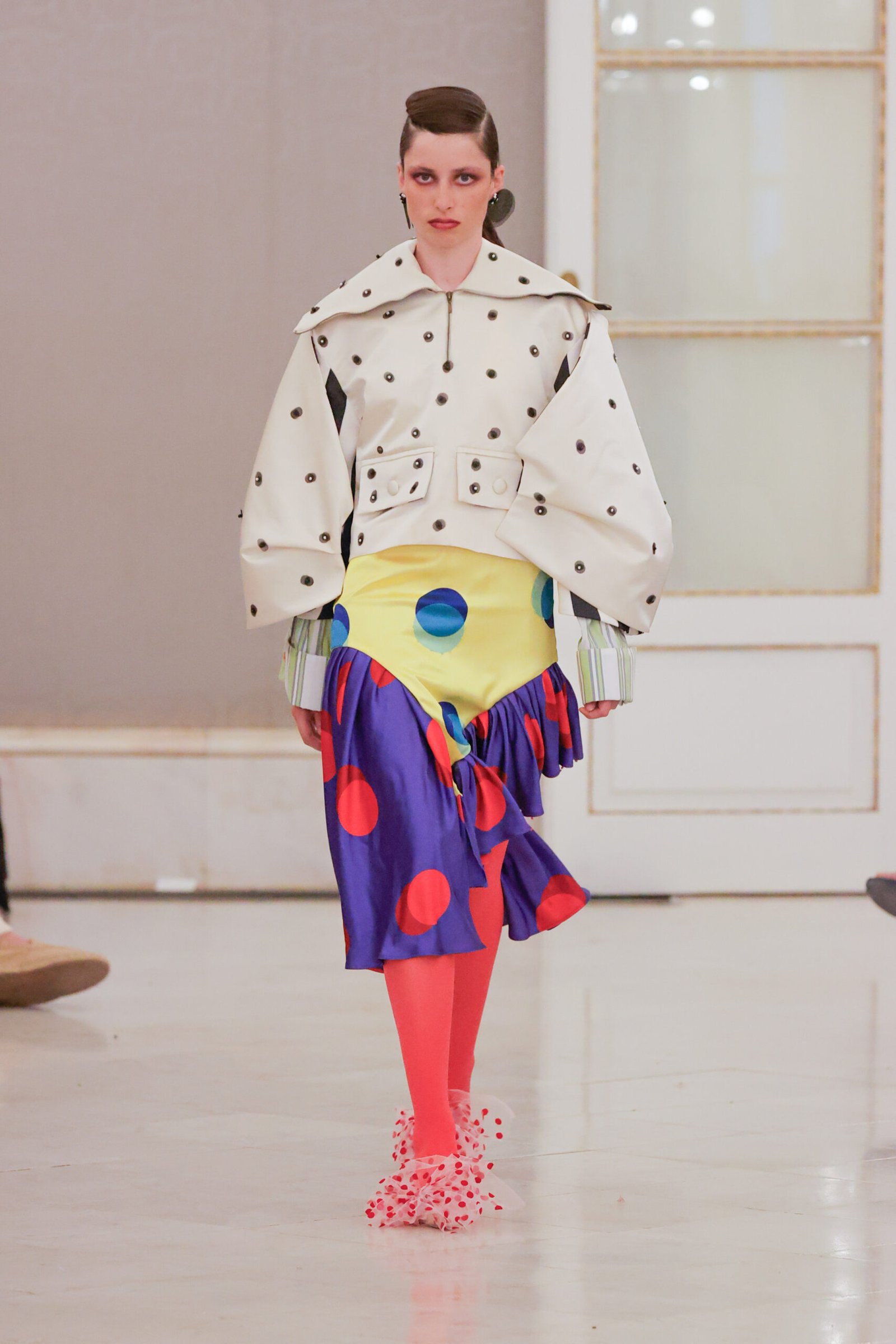
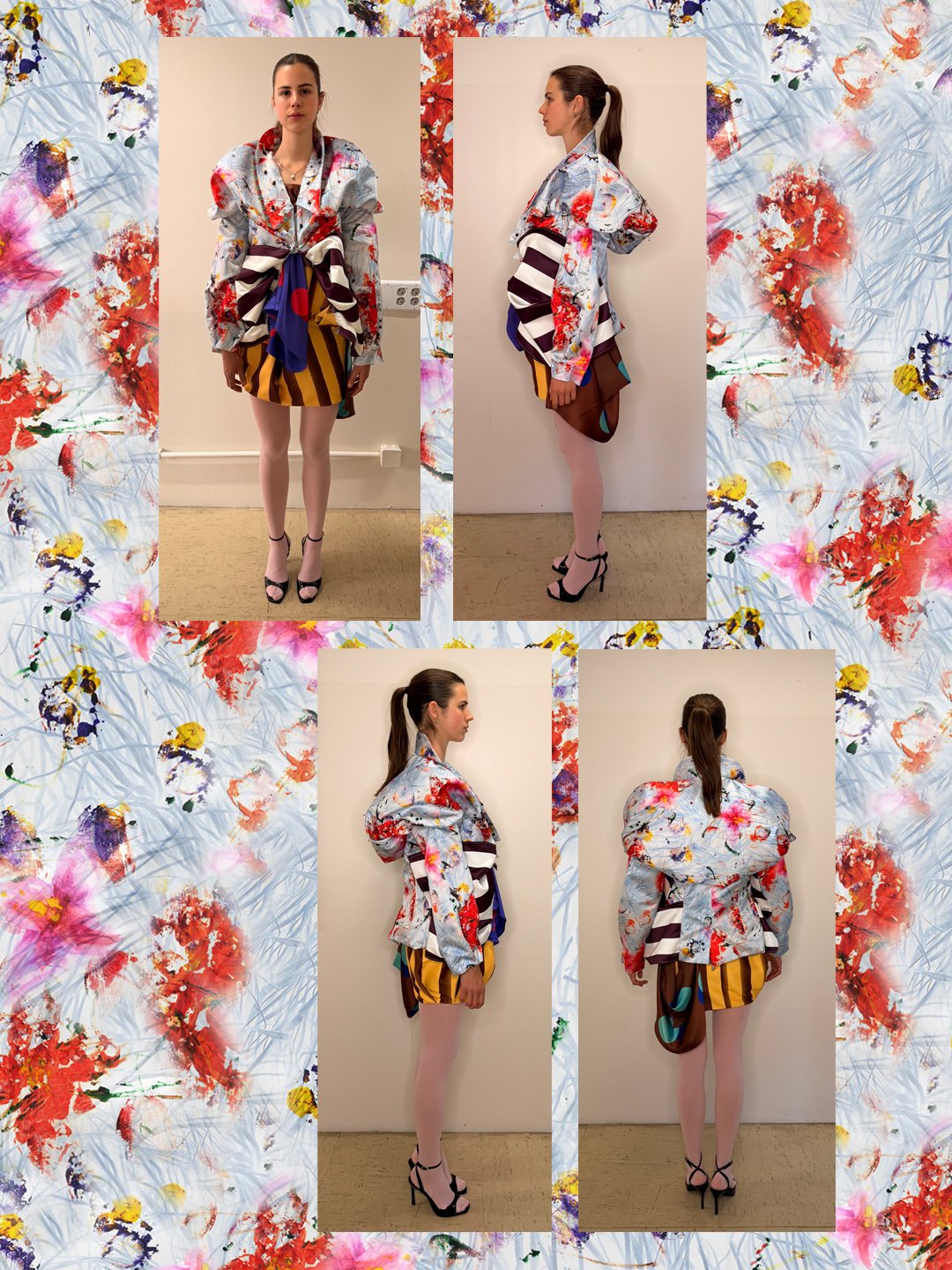
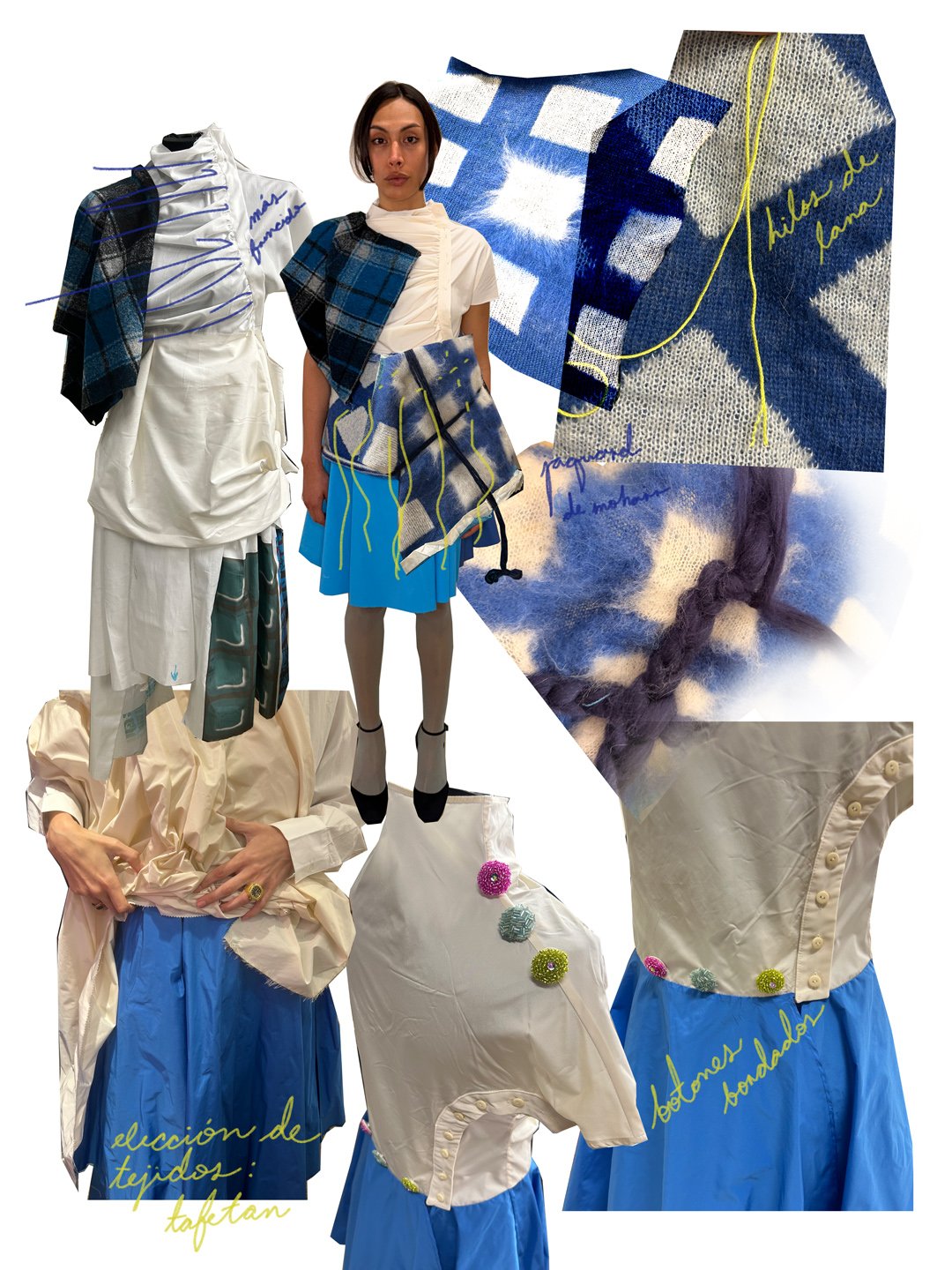
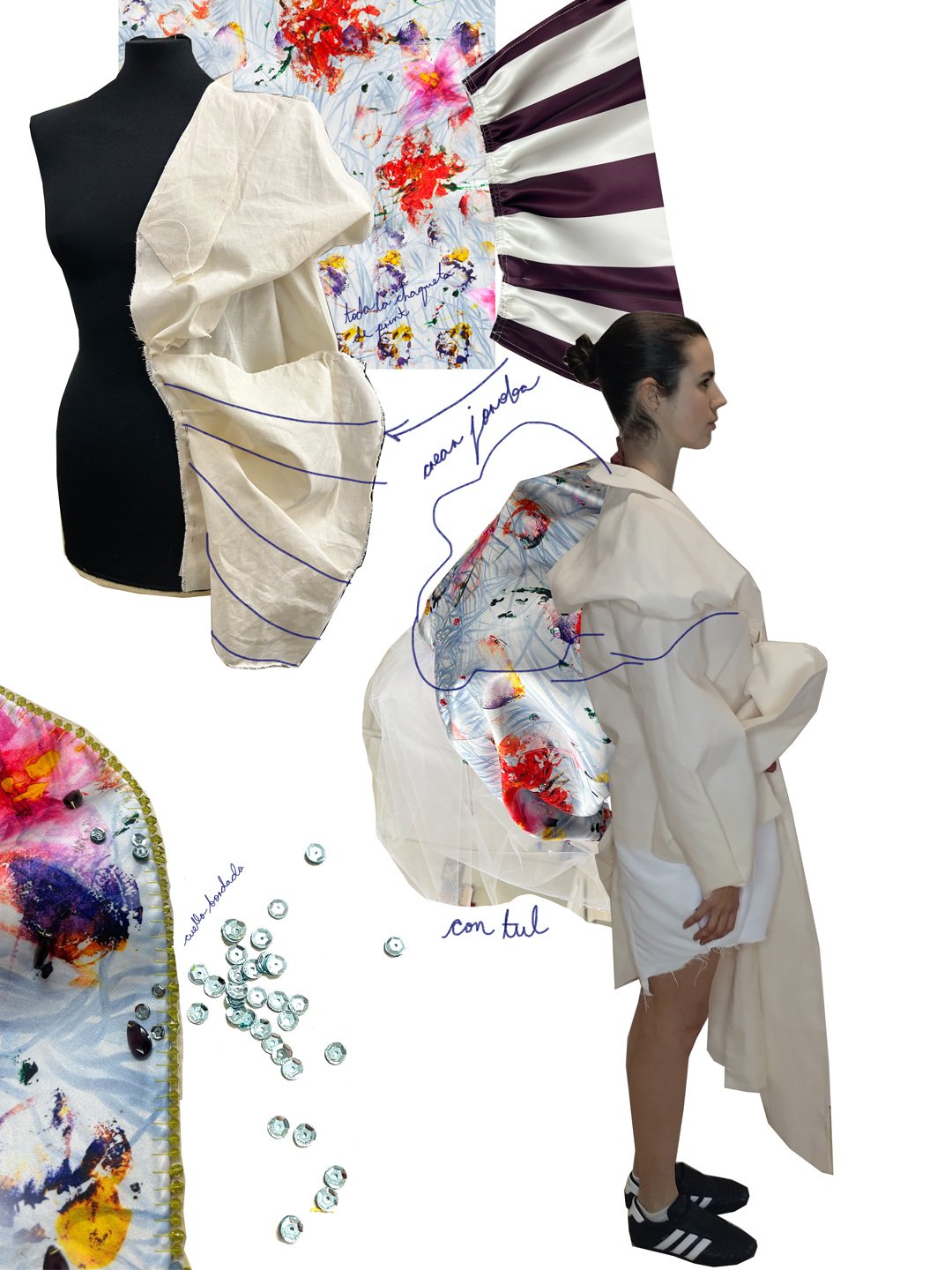
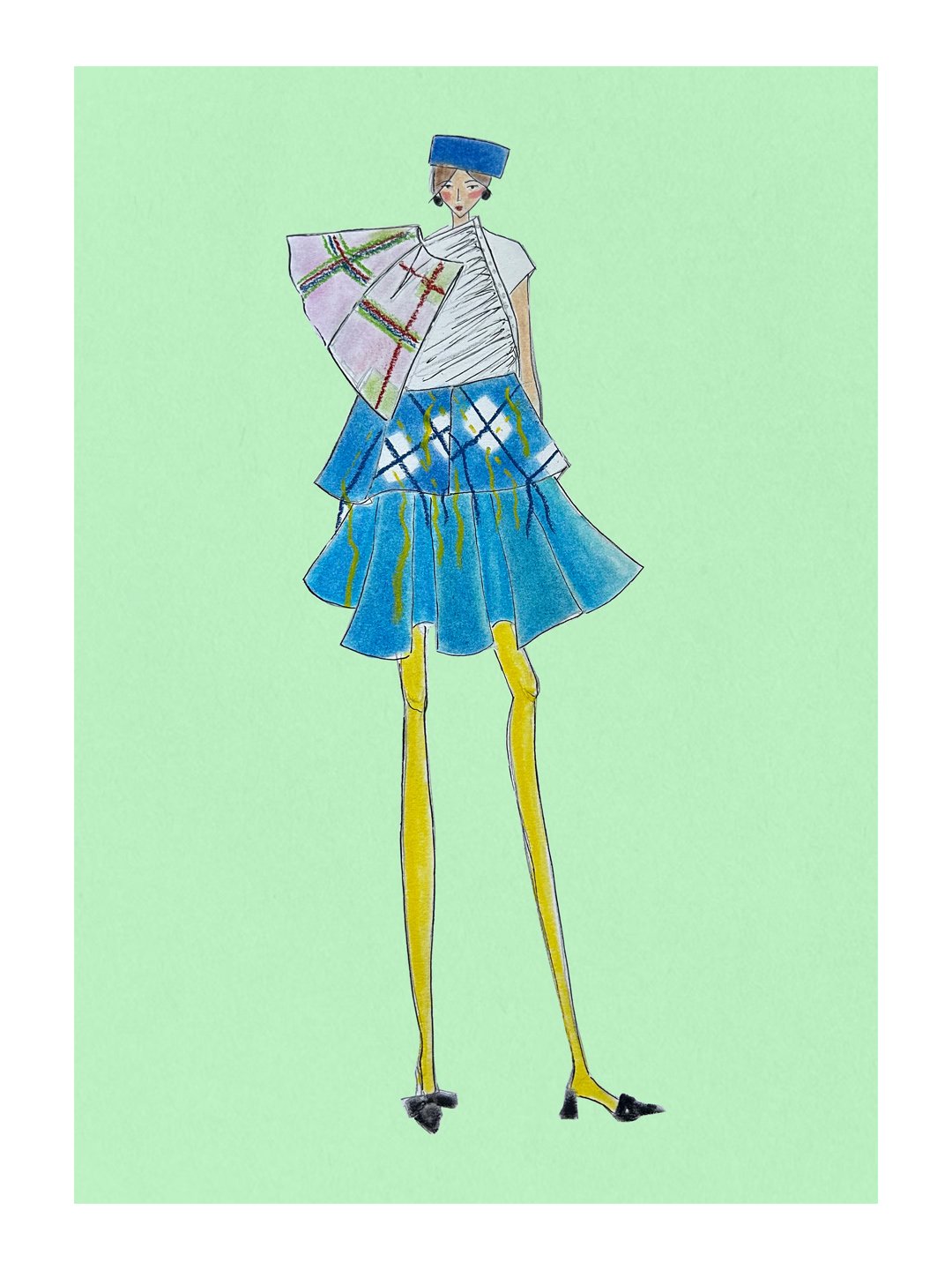
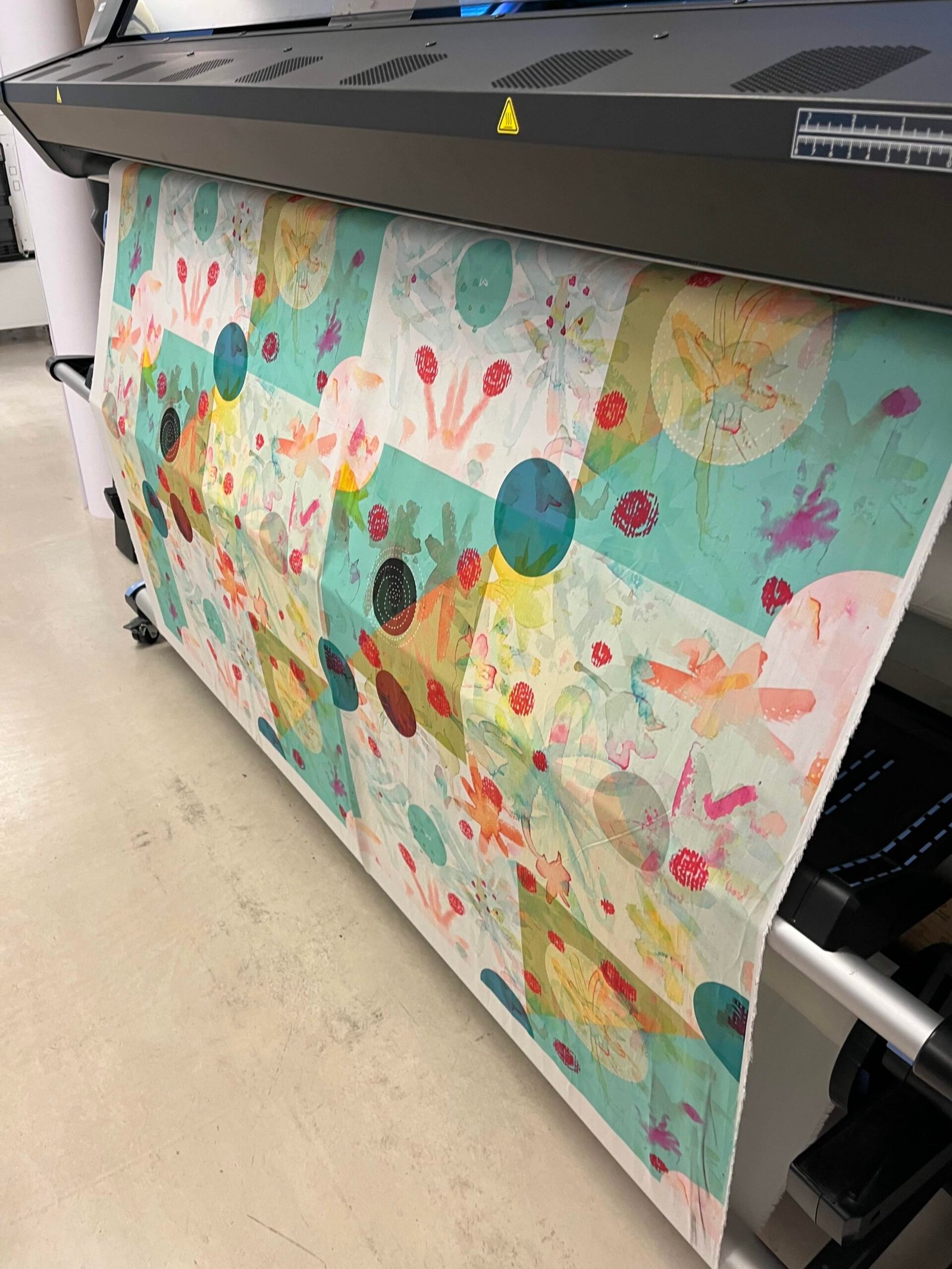
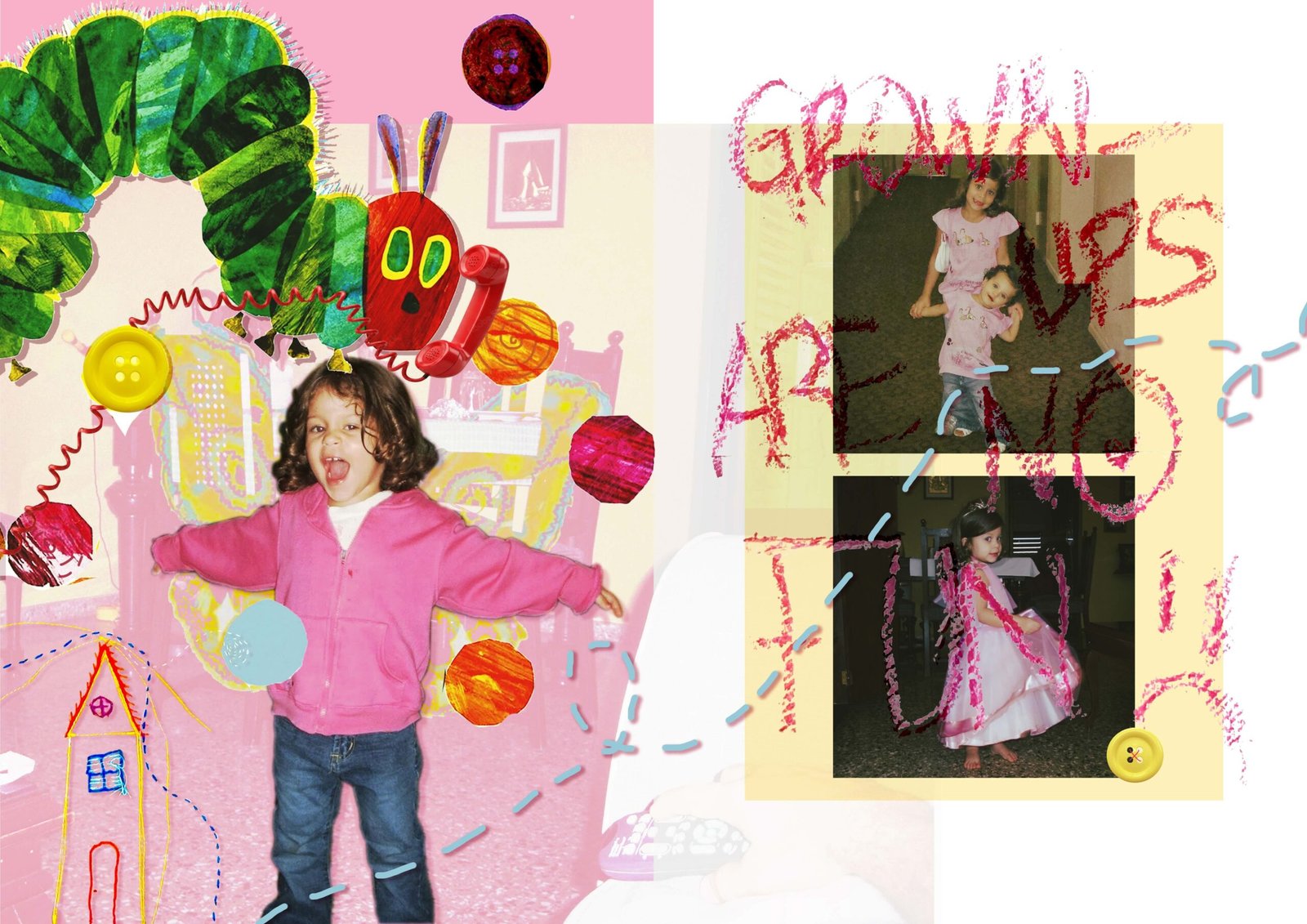
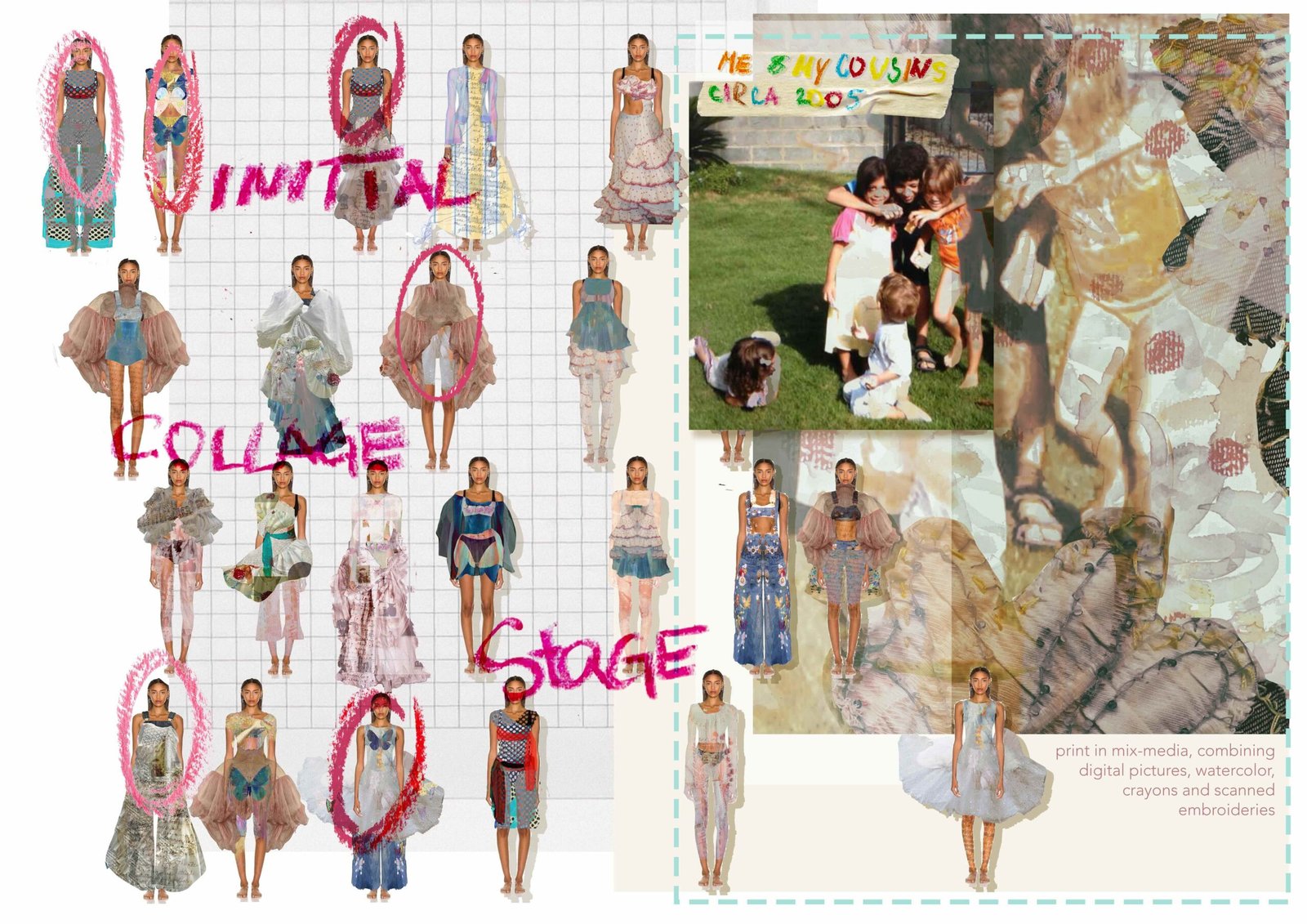
Rosella Vega Ley’s graduate collection, Recollection of a Childhood Dream, explores childhood as a formative stage in emotional and personal development. Revisiting memories of playfulness, imagination, and rebellion from an adult perspective, the collection translates these experiences through colourful custom prints, luminous satin, taffeta, manipulated knit jacquard, embroidery, and handcrafted details. Fluid and structured silhouettes combine to express different stages of childhood as reinterpreted through adult reflection and intuition. What concerns Vega Ley most about the industry is its increasingly disposable nature, where images, trends, and collections pass so quickly that the time and care behind them are easily overlooked. Looking ahead, she hopes to create work that resists this pace, drawing strength from her Mexican heritage and craftsmanship to produce collections that feel thoughtful, personal, and enduring.

@rosellavega_st

Mariona Panés i Coromina

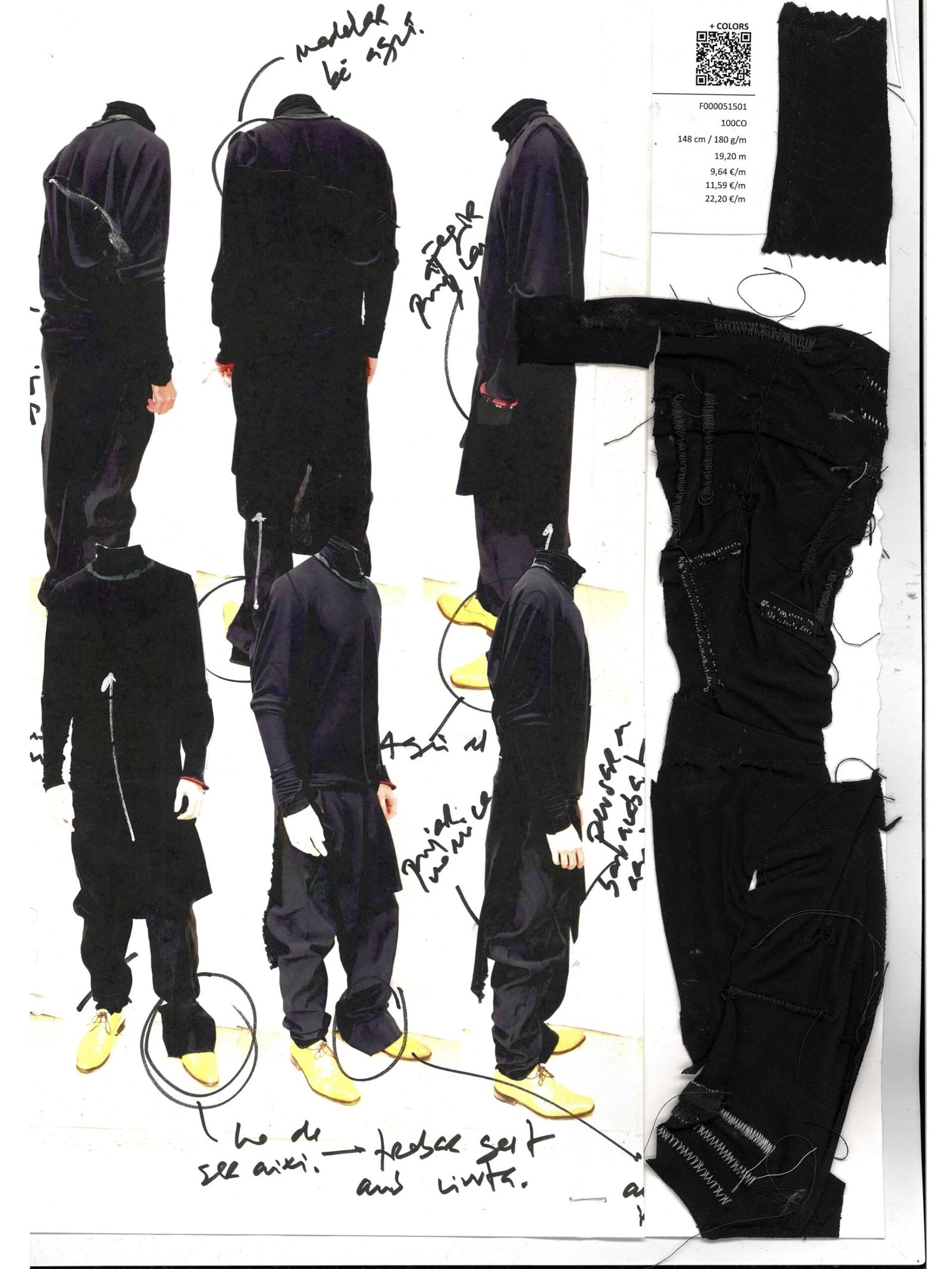
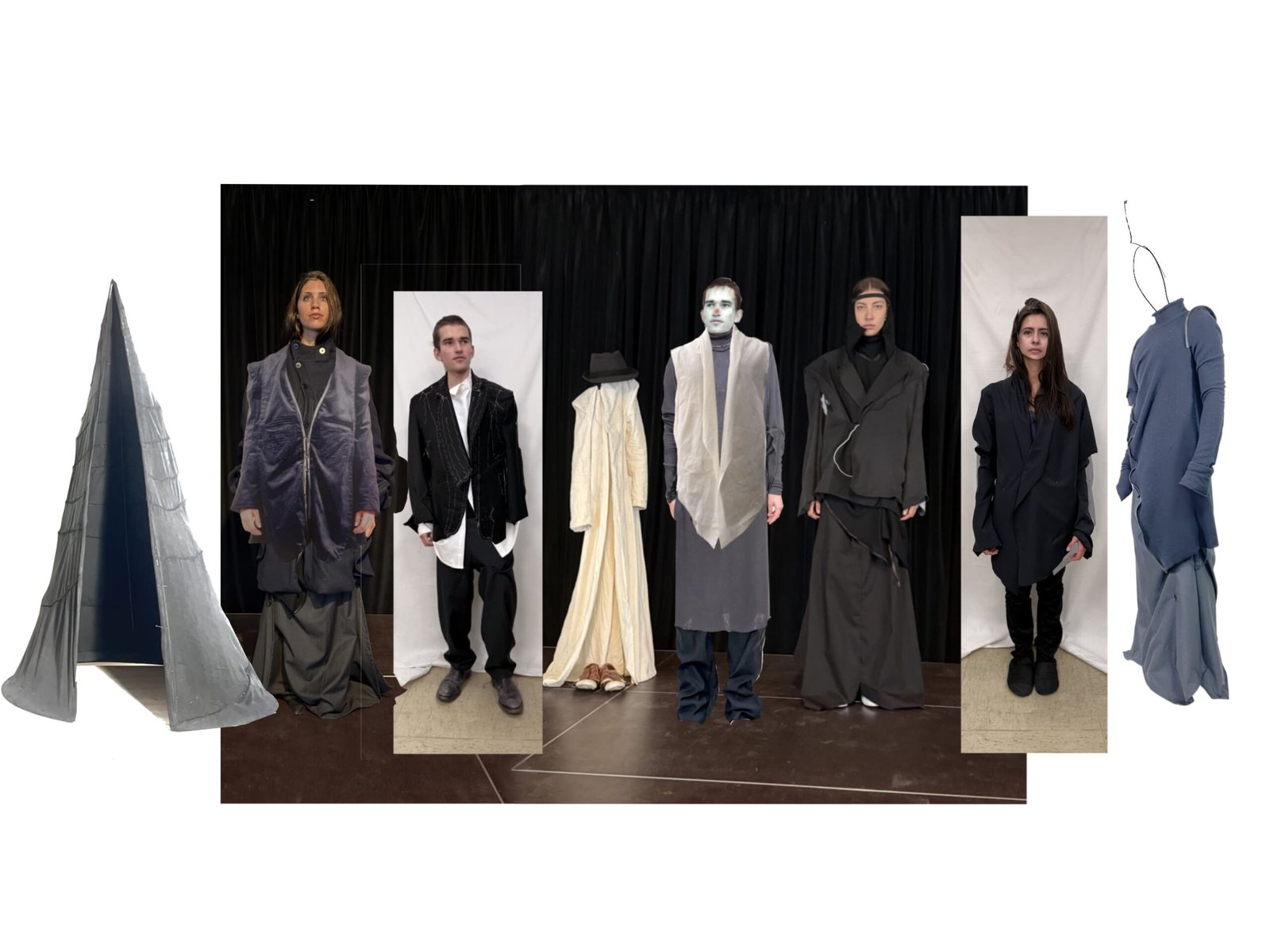
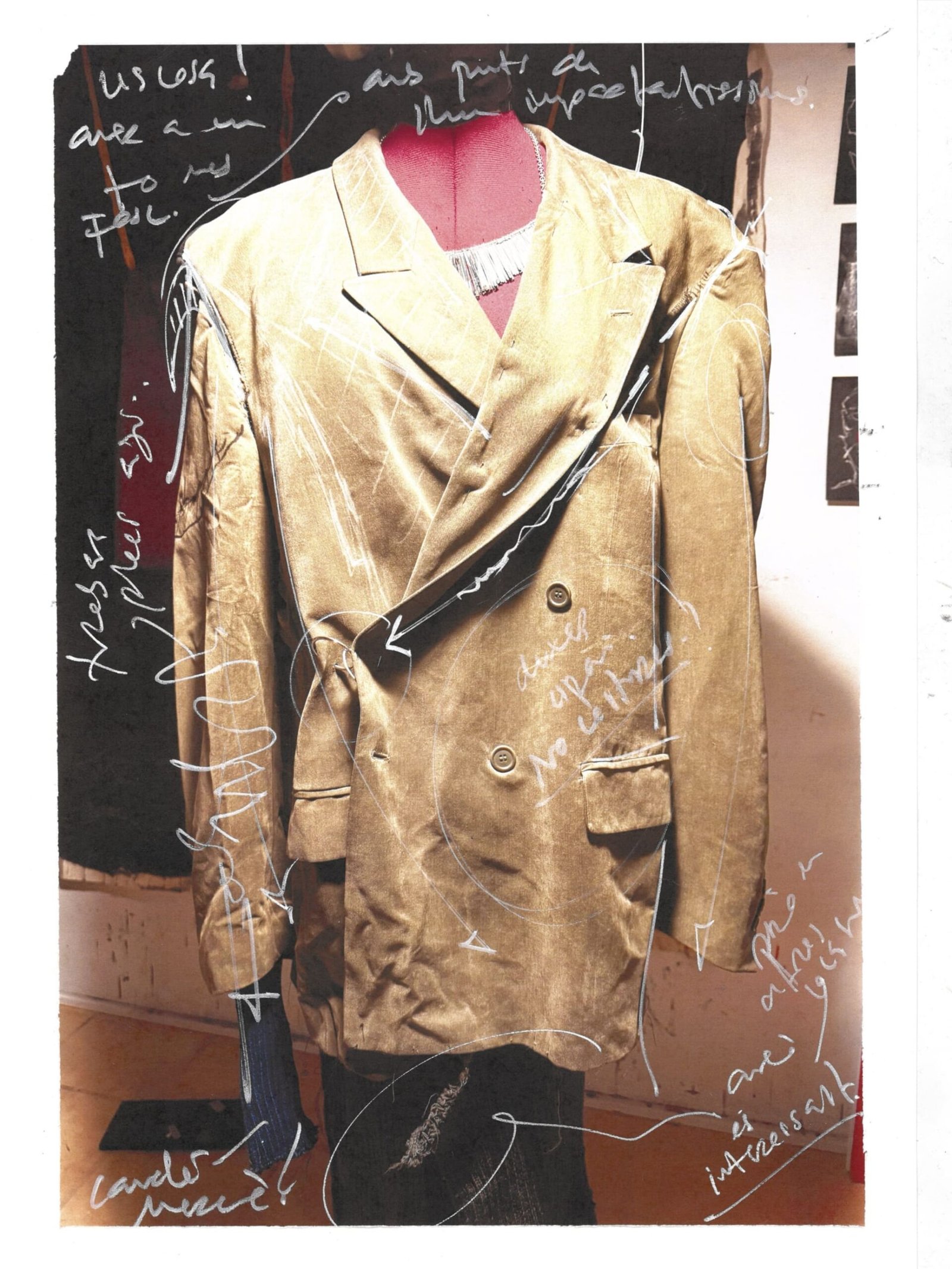
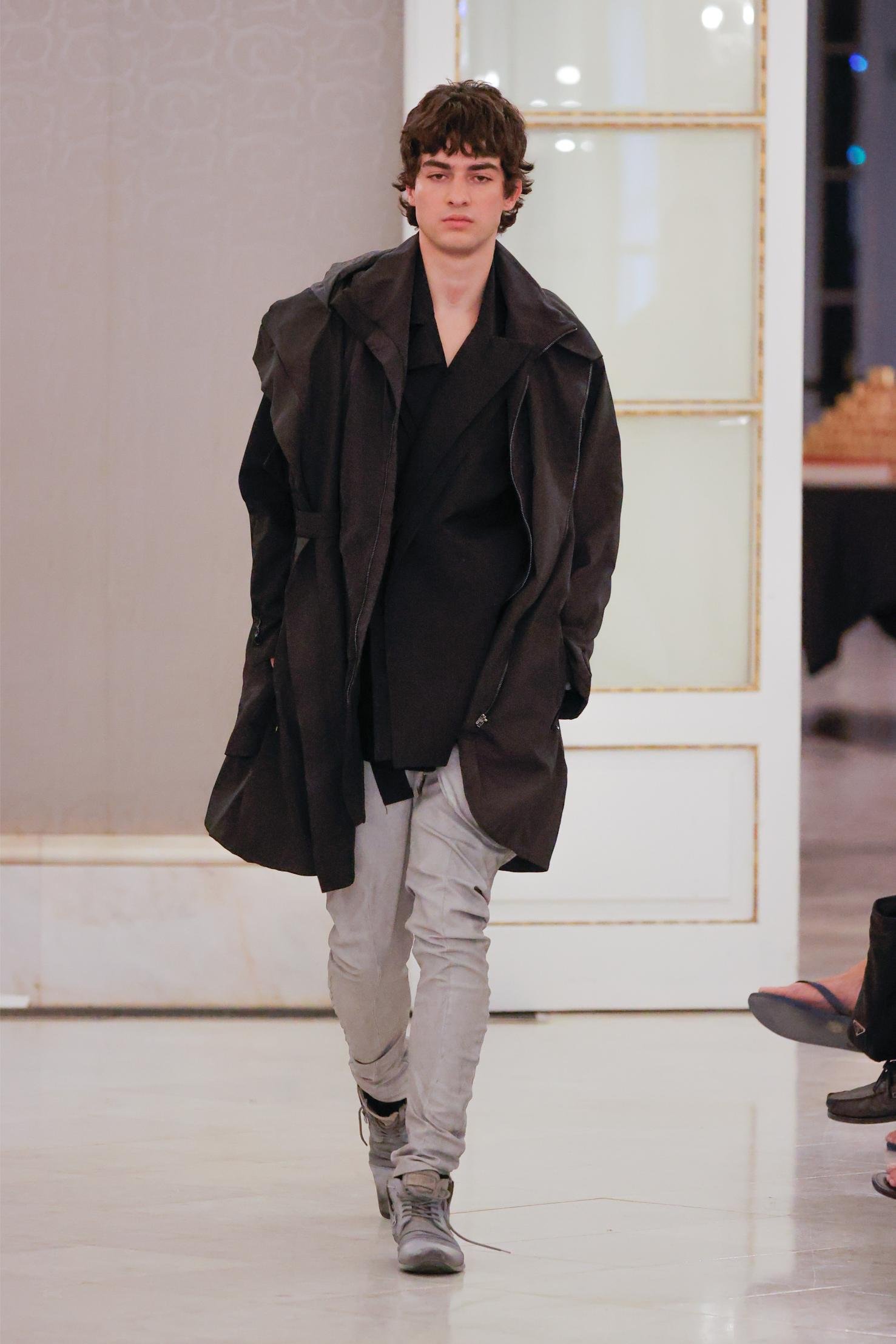
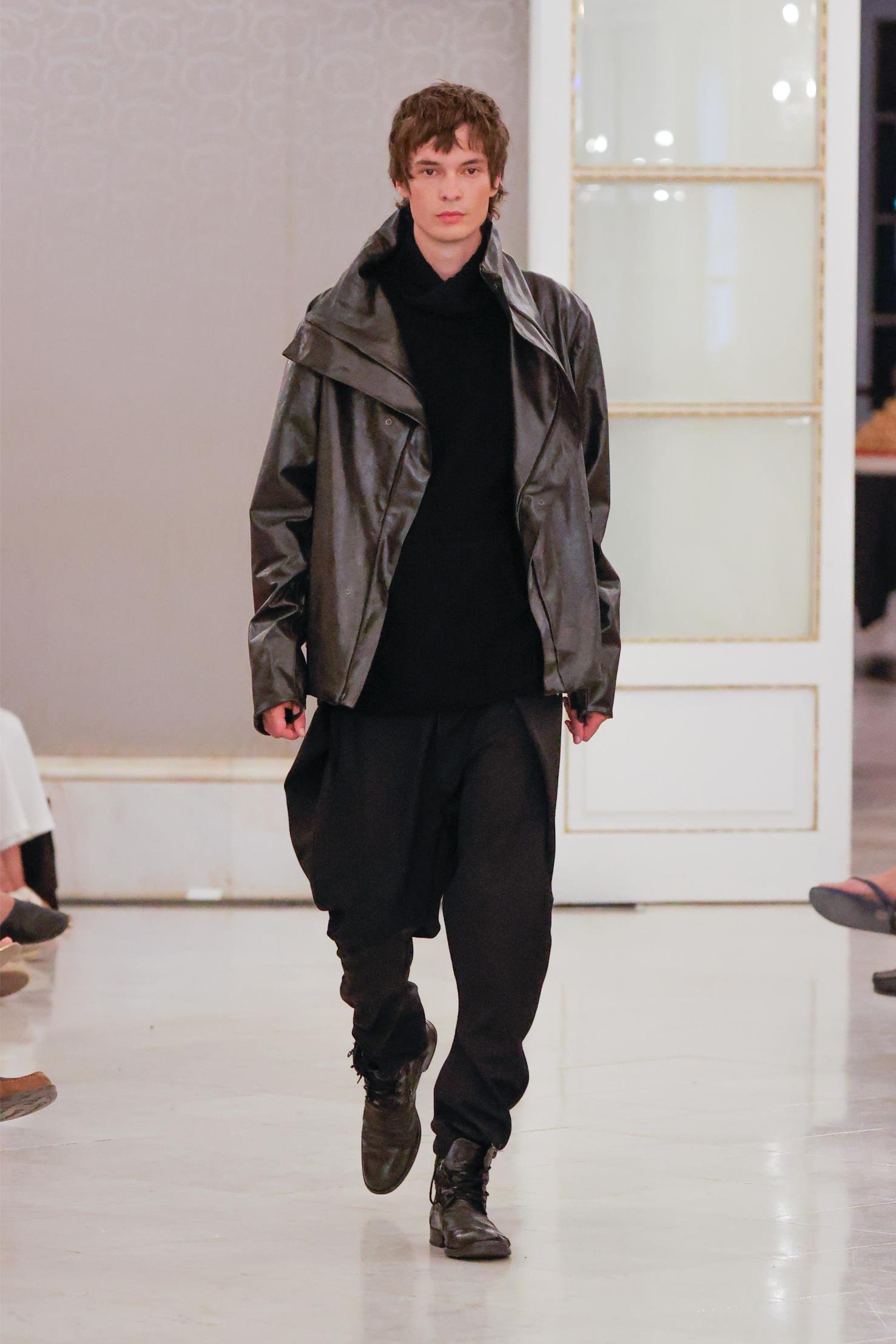
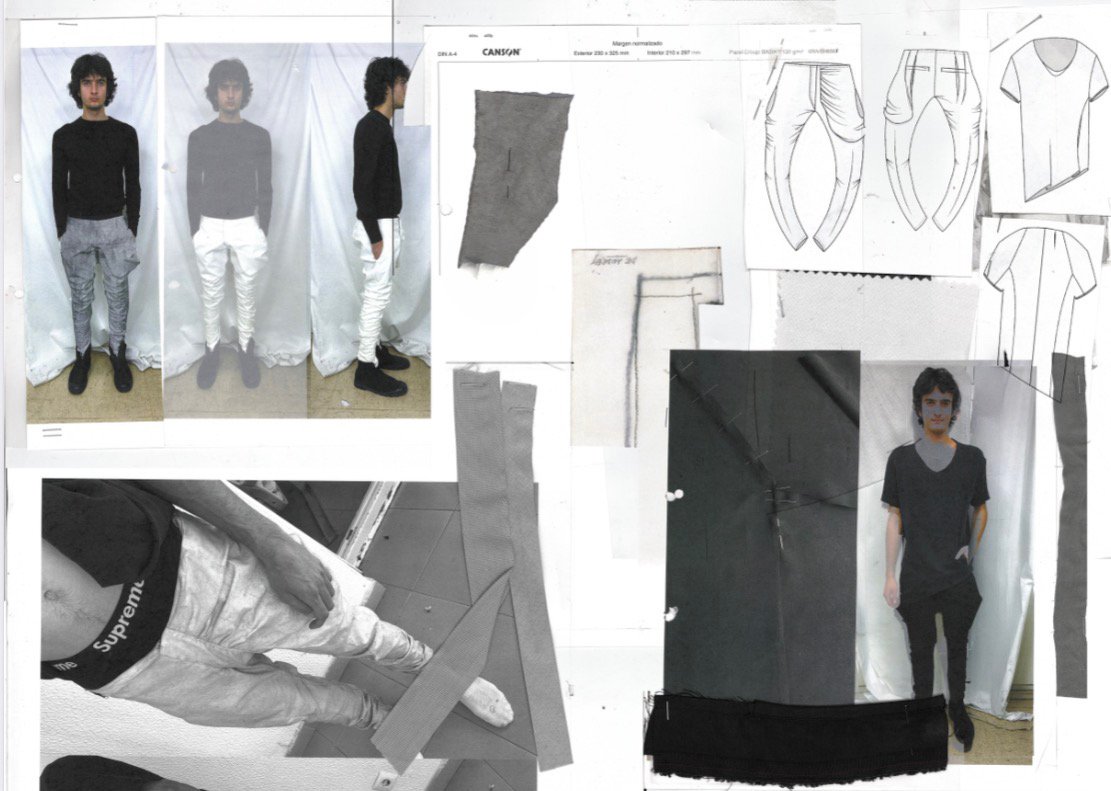
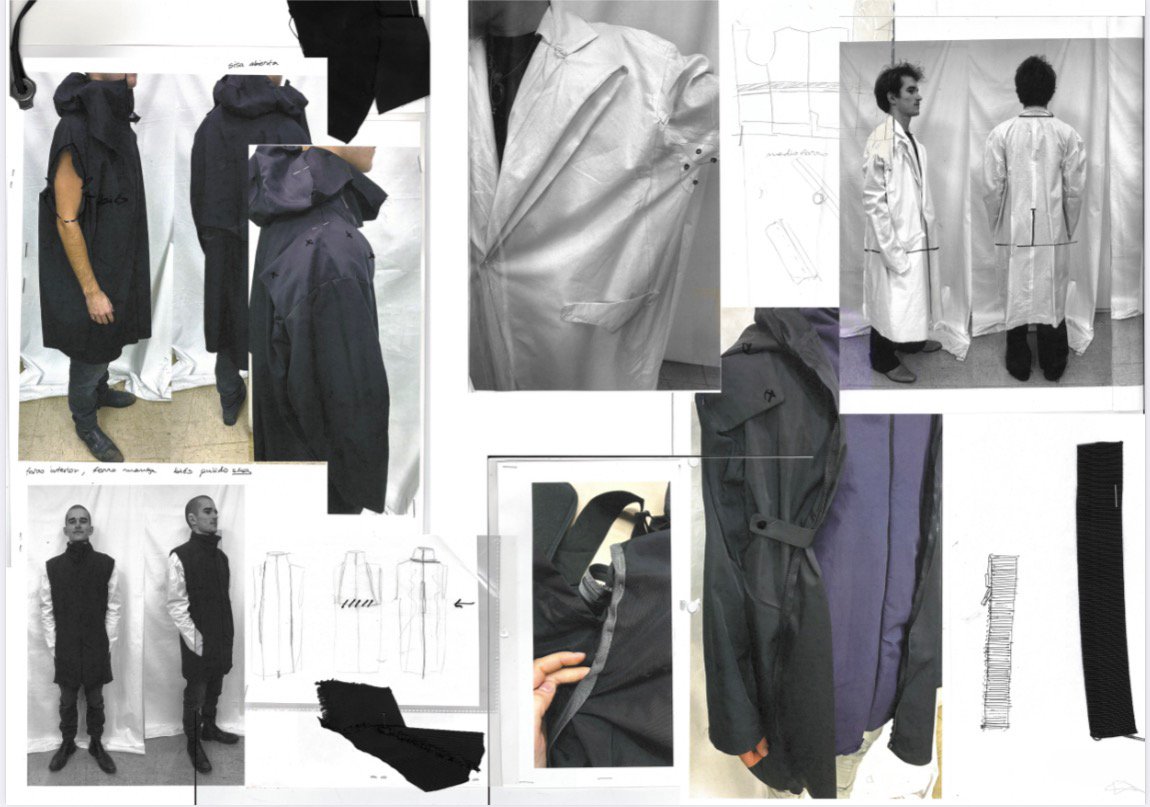
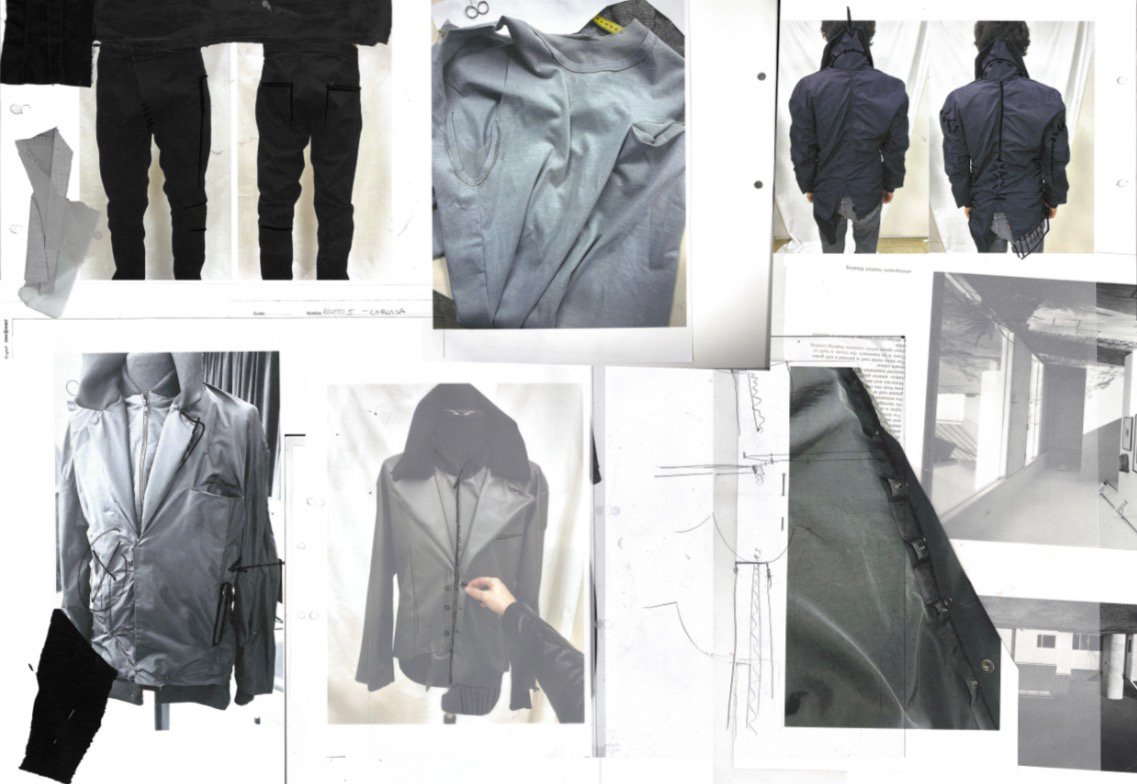
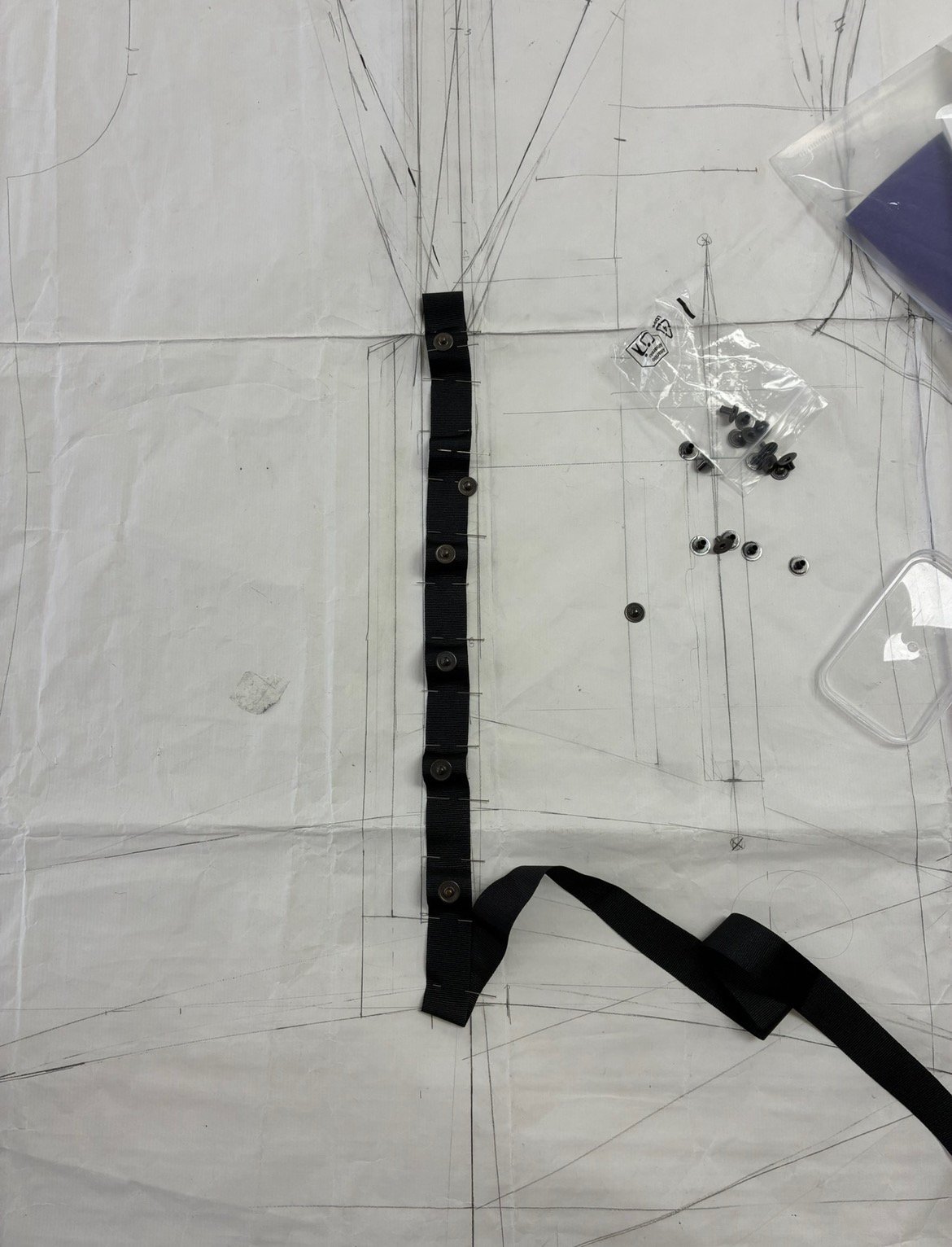
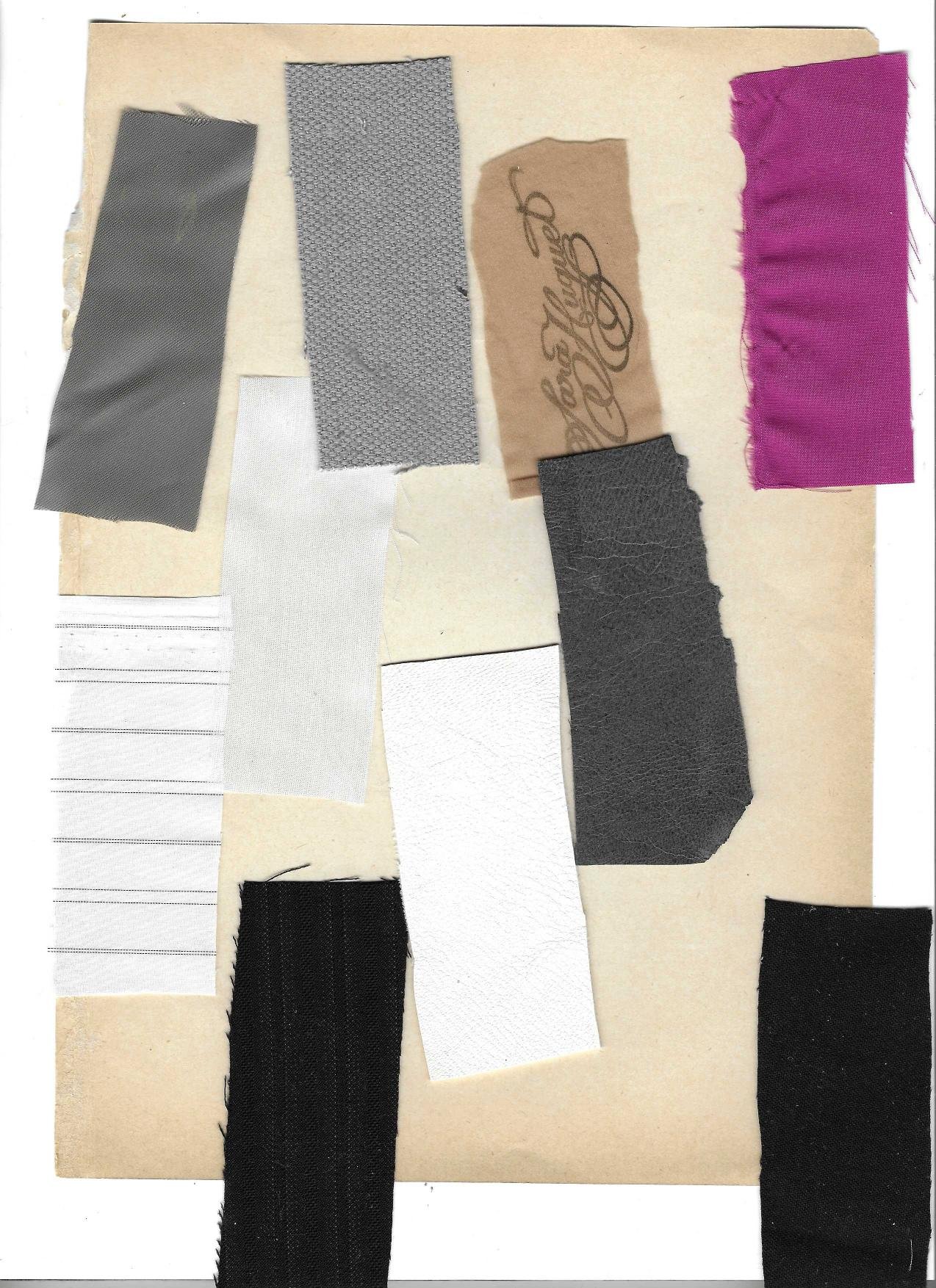
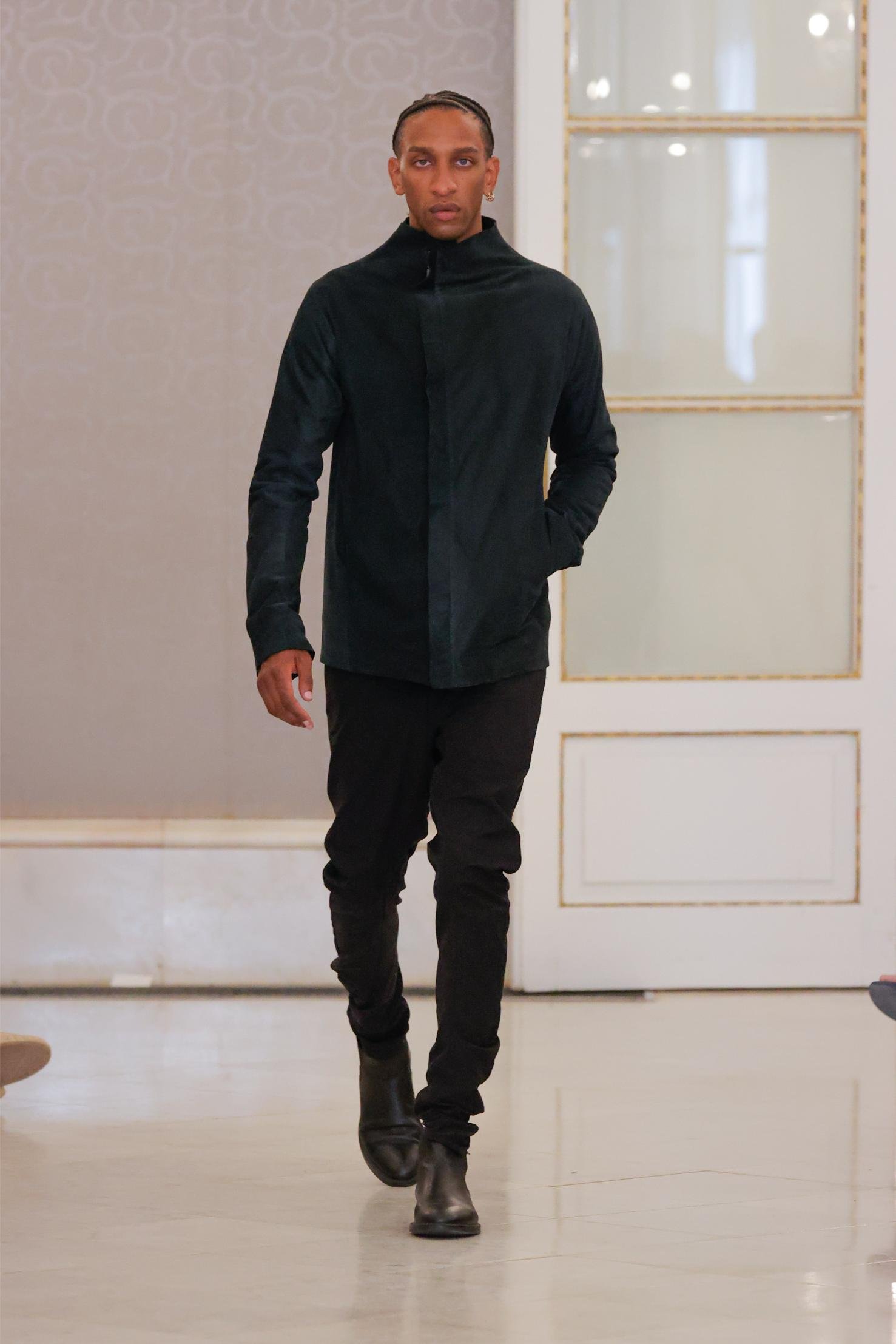
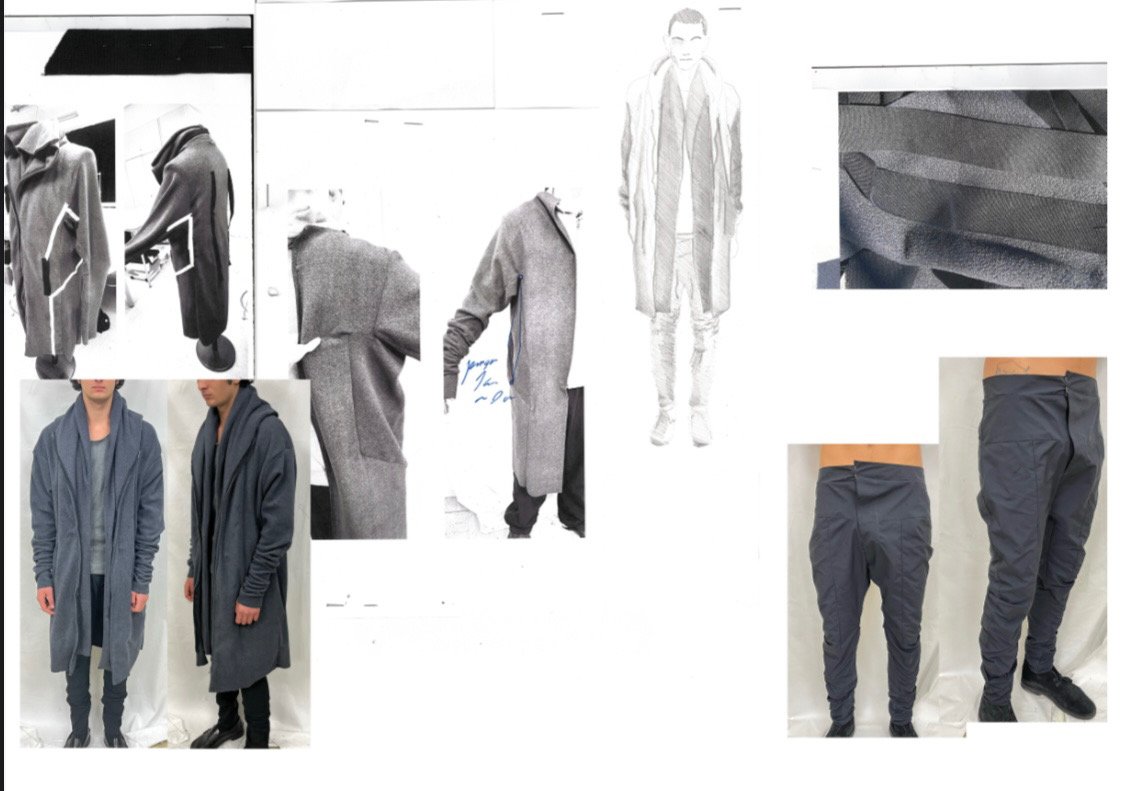
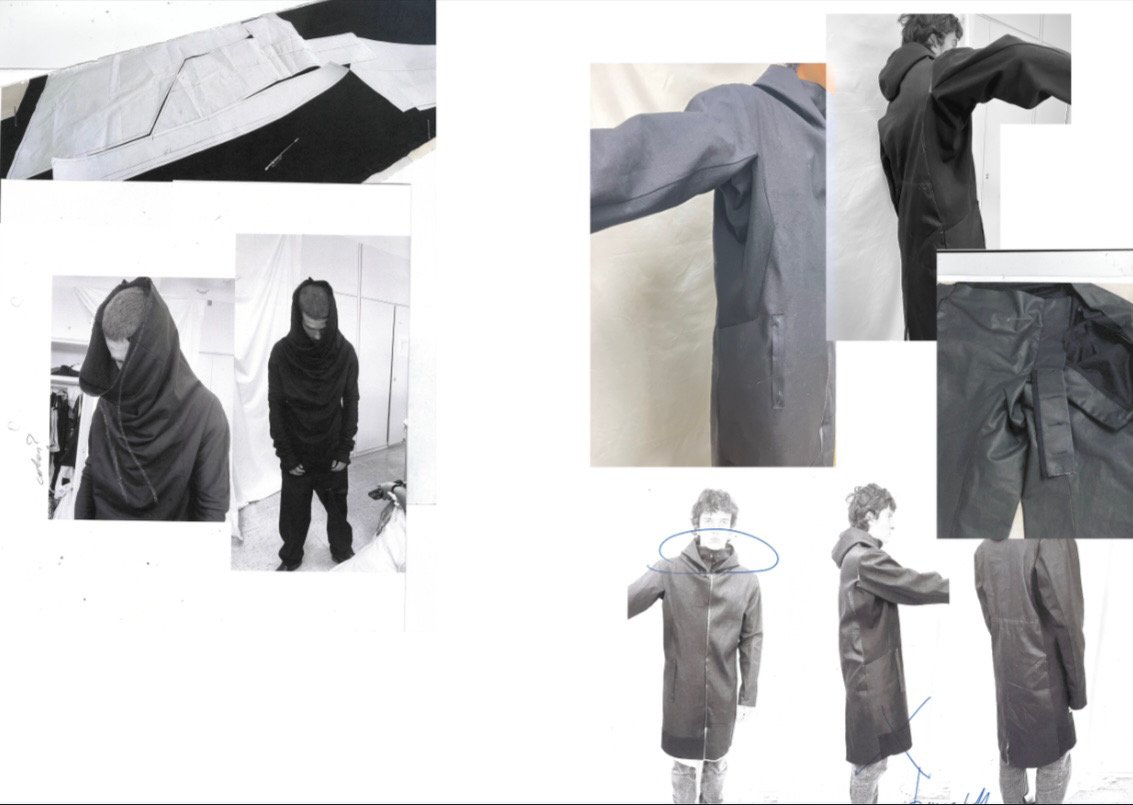
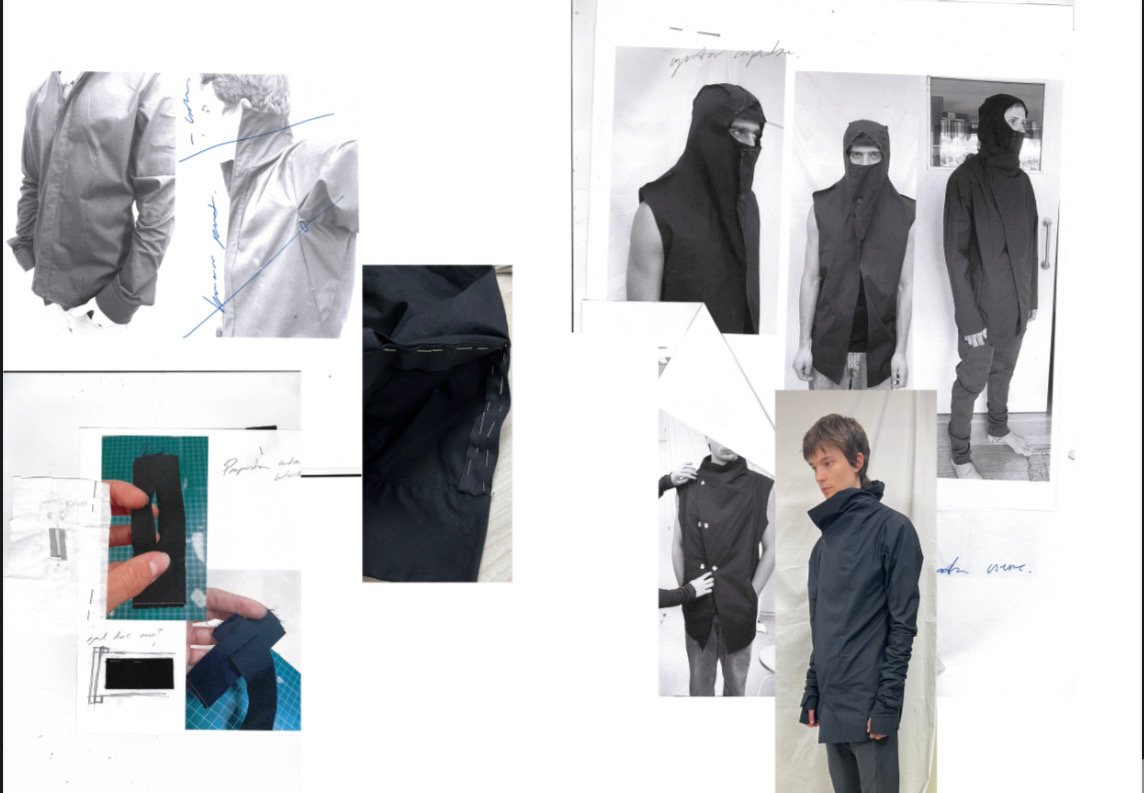
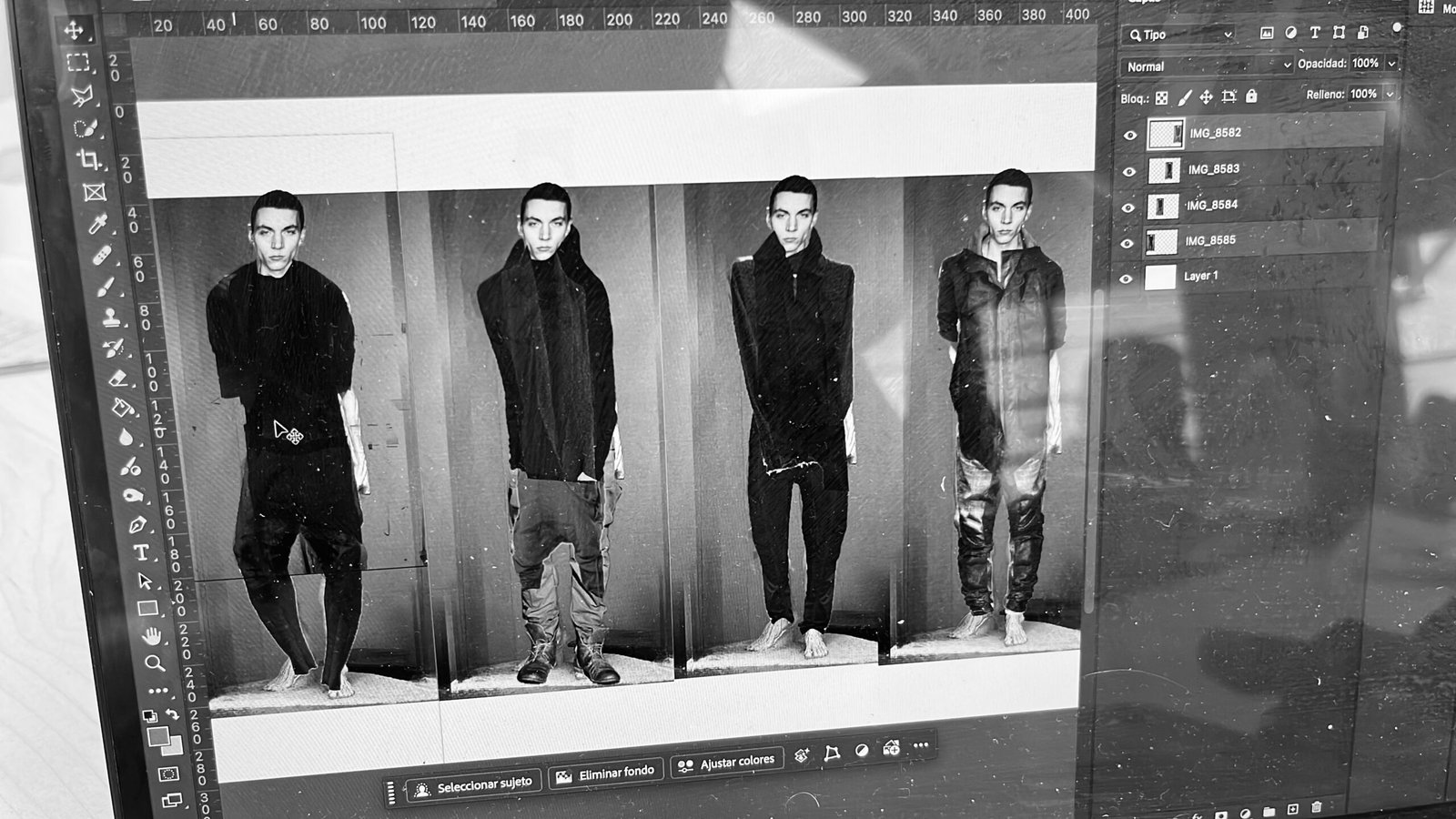
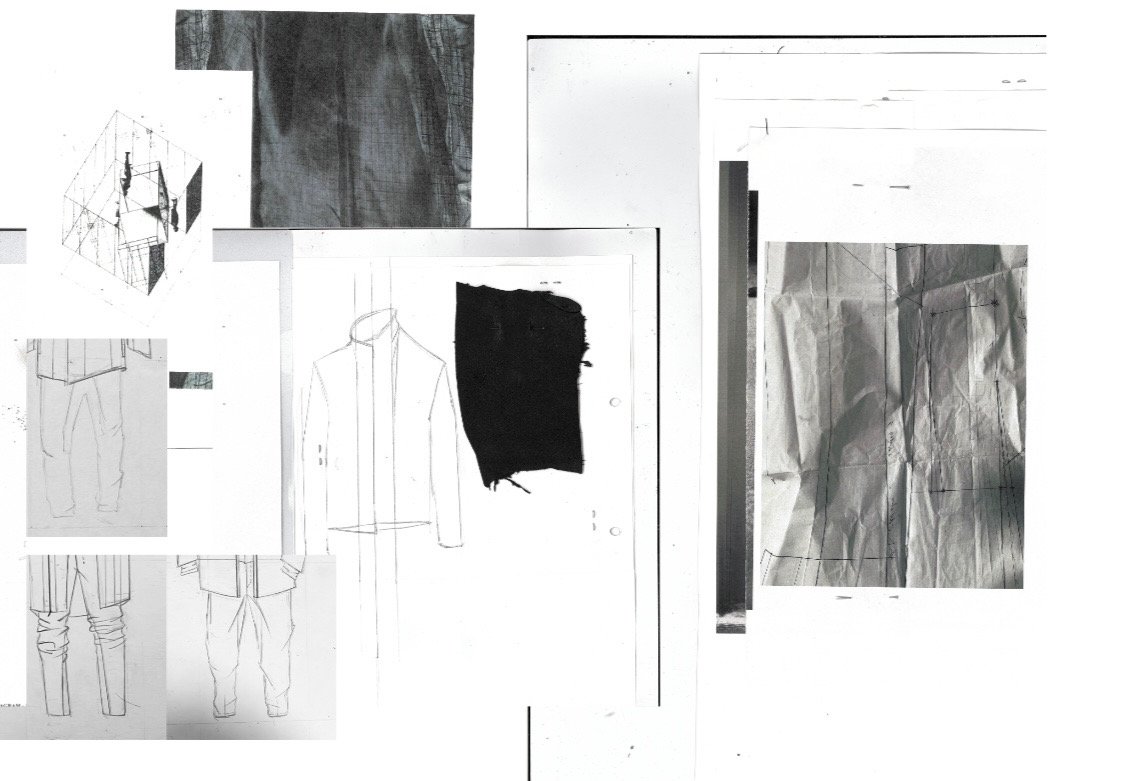
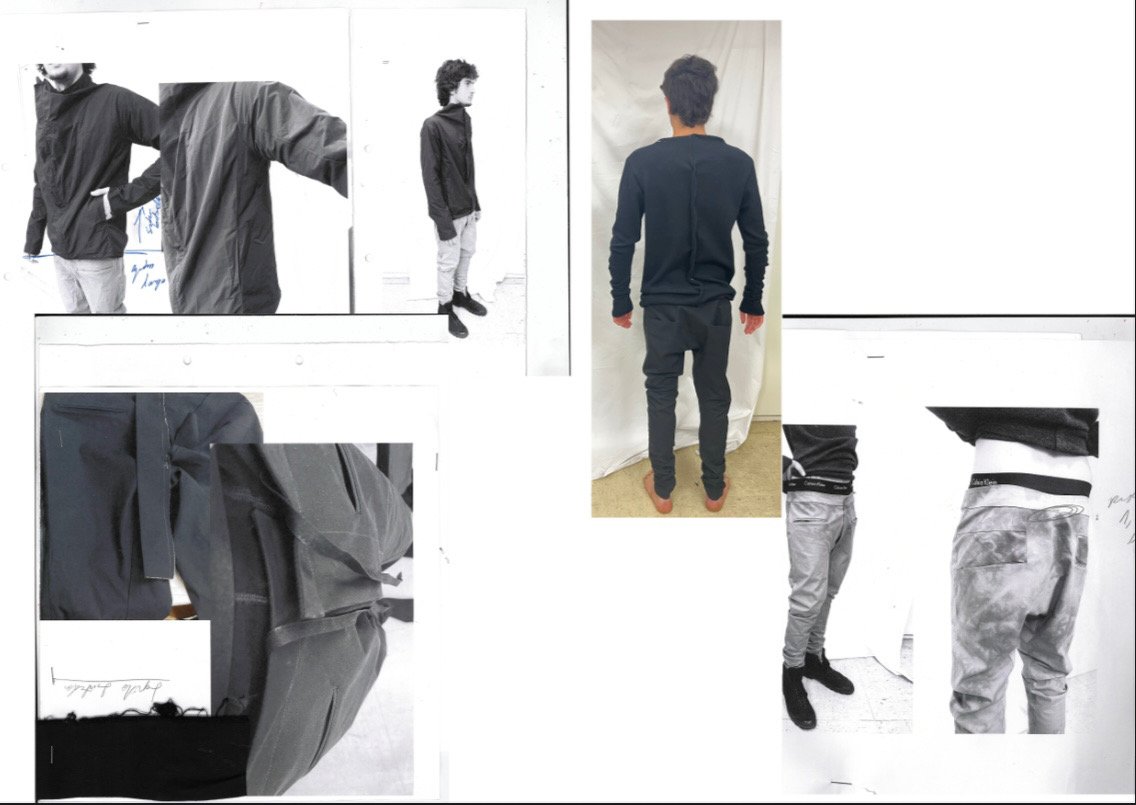
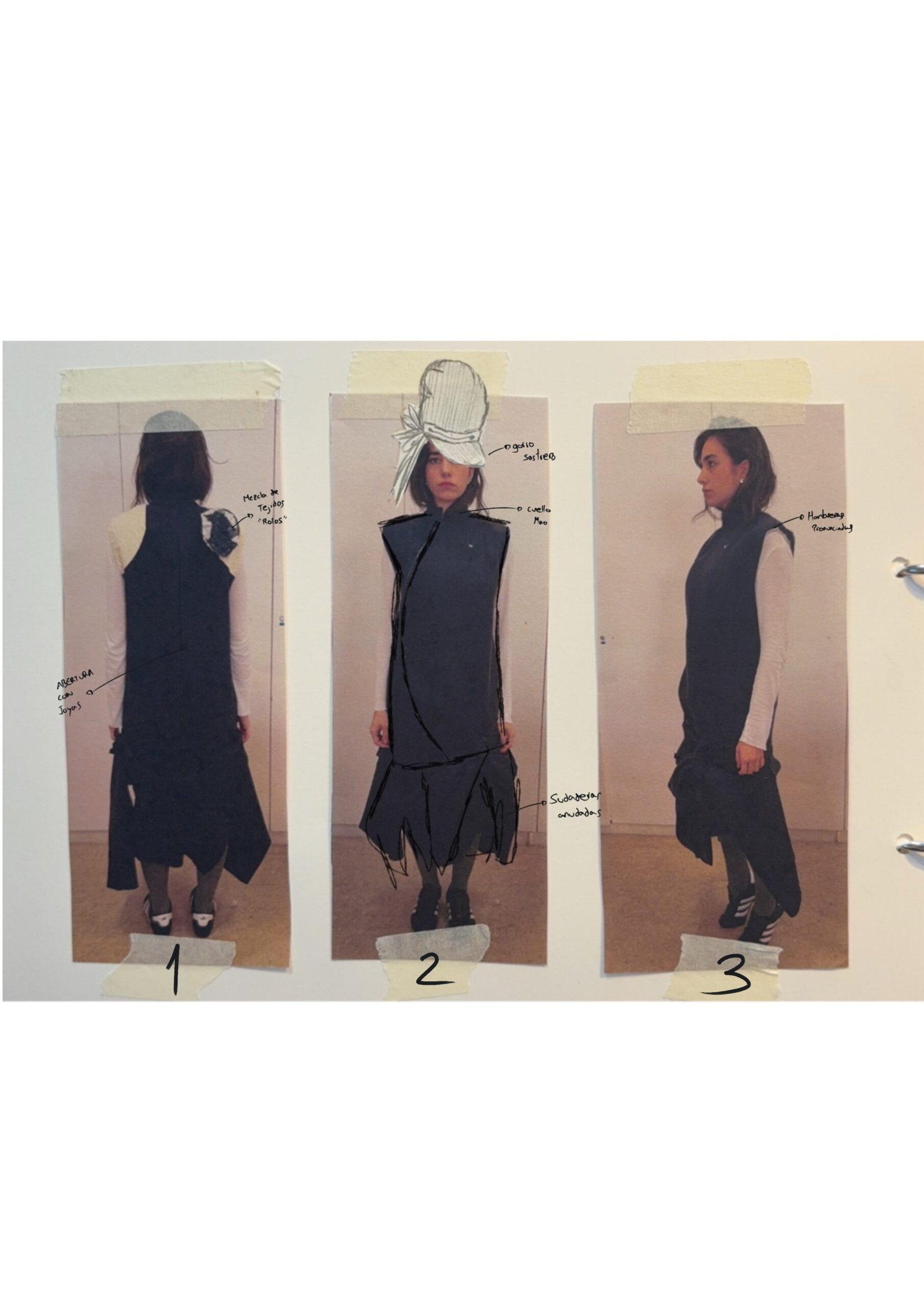
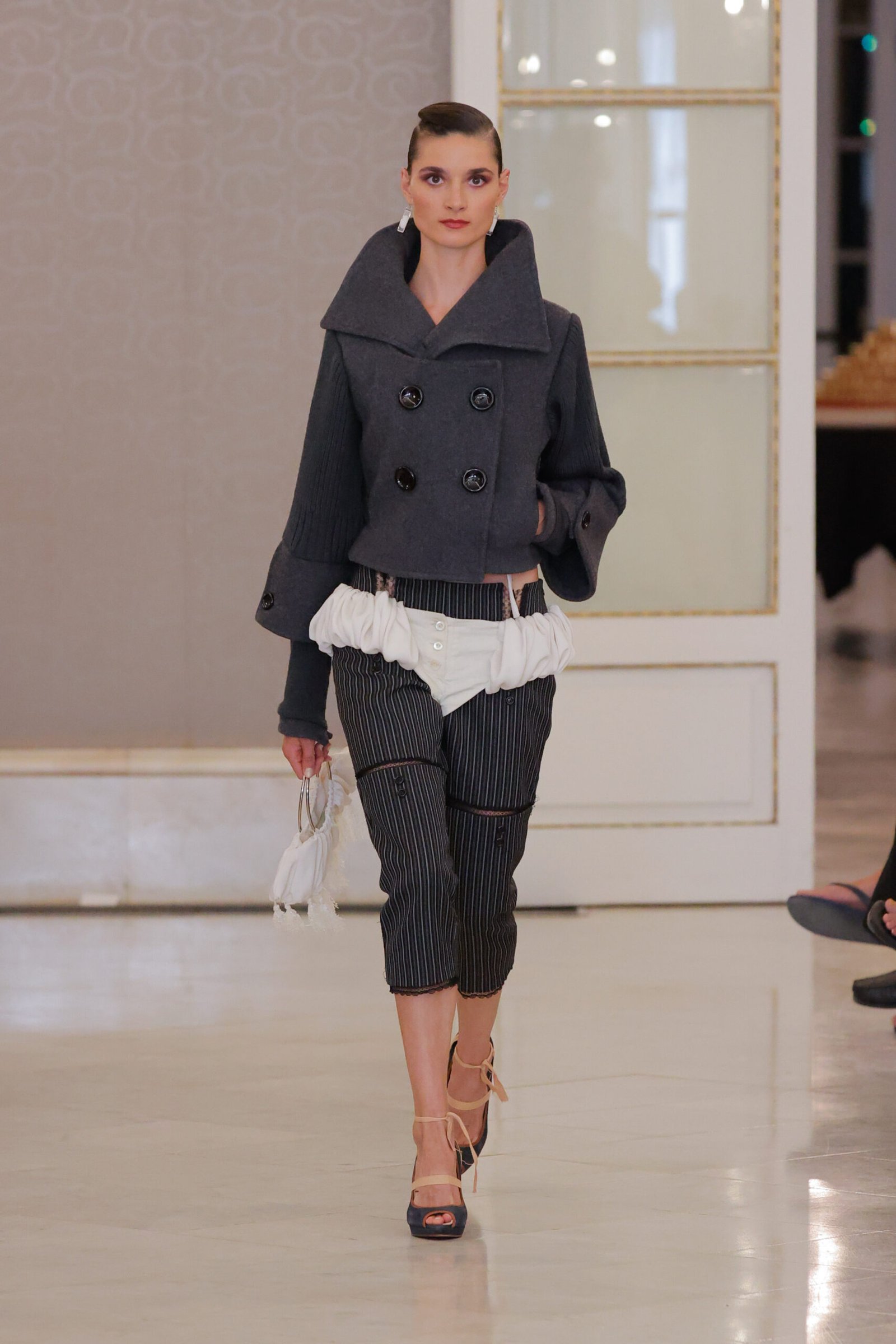
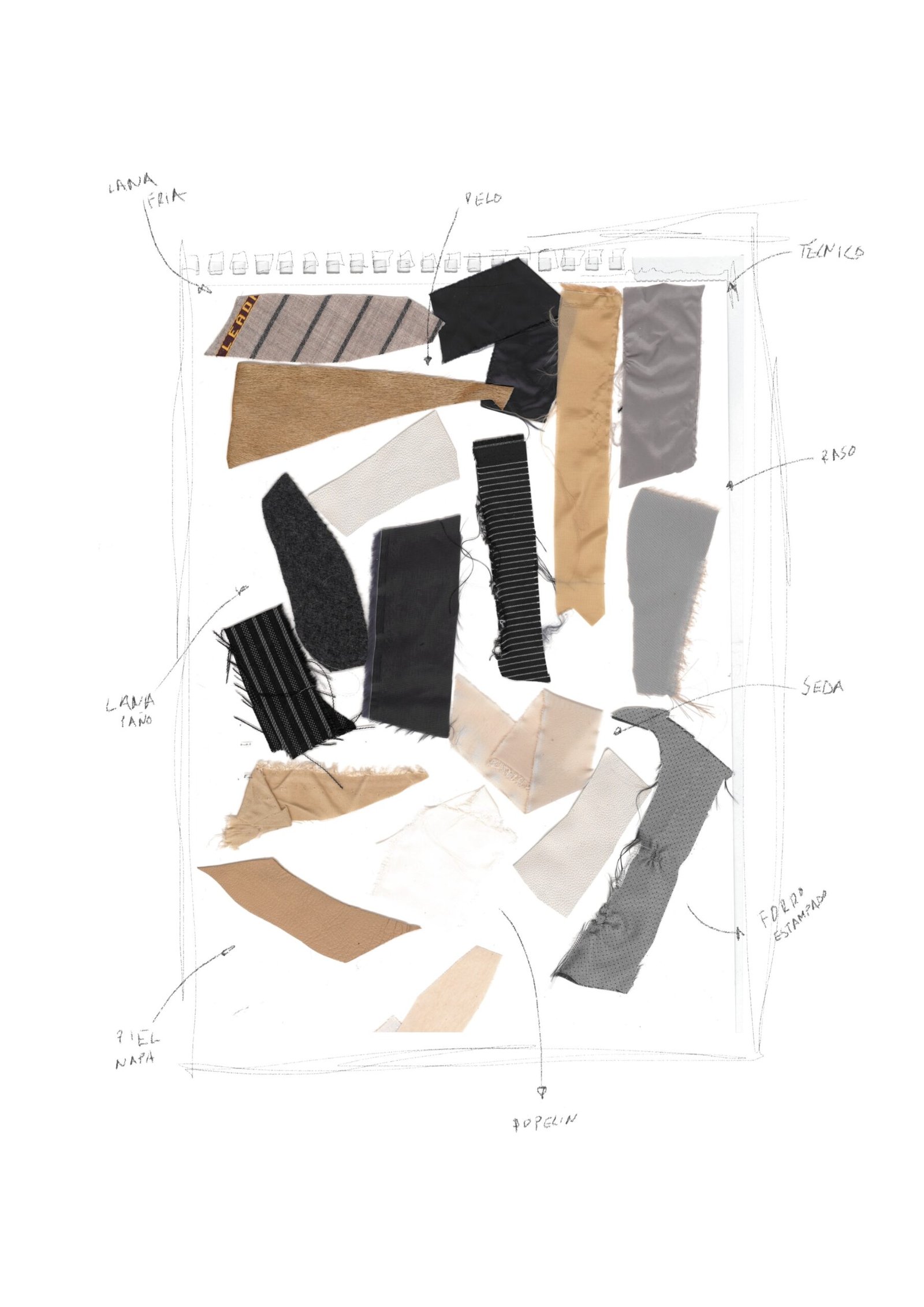
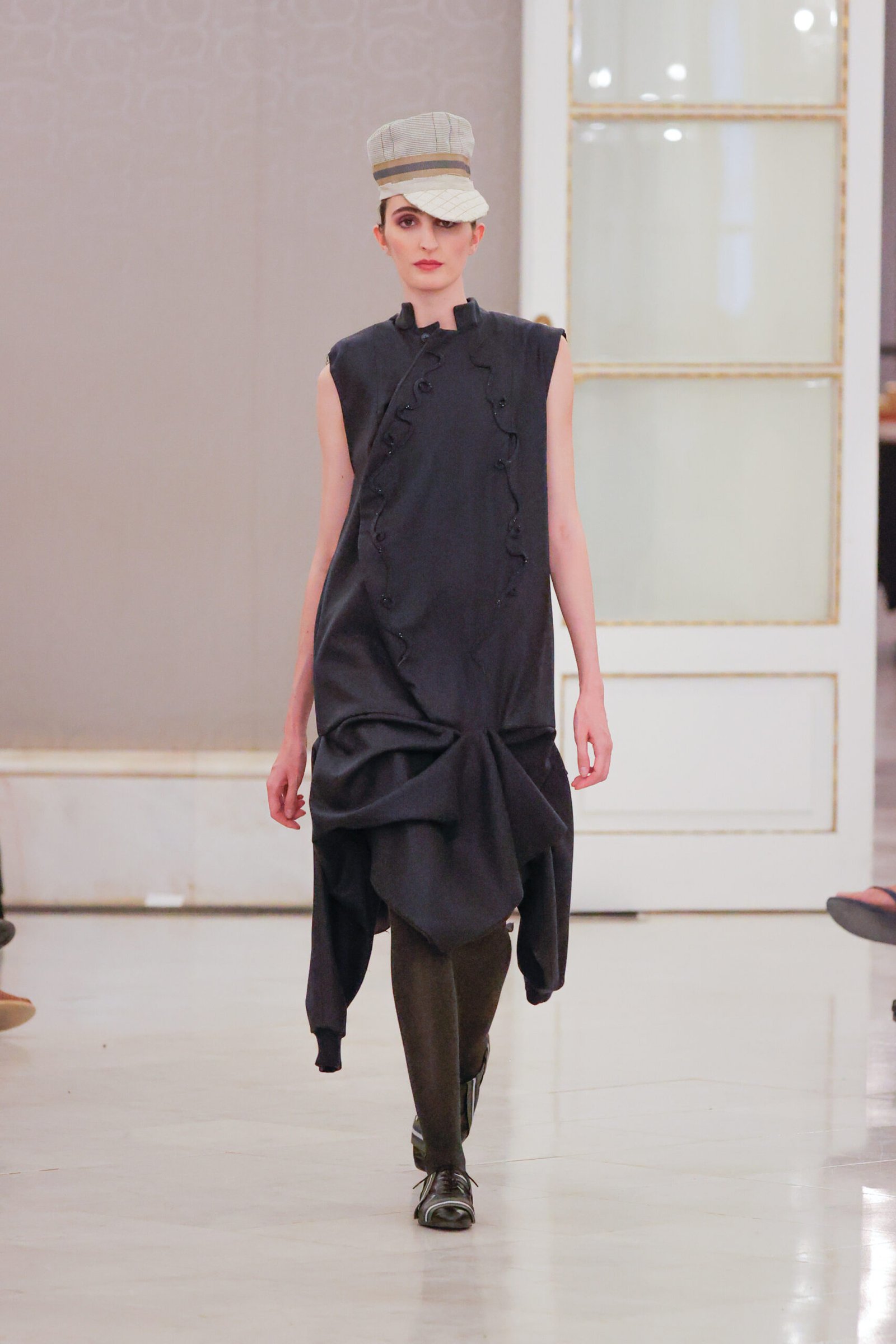
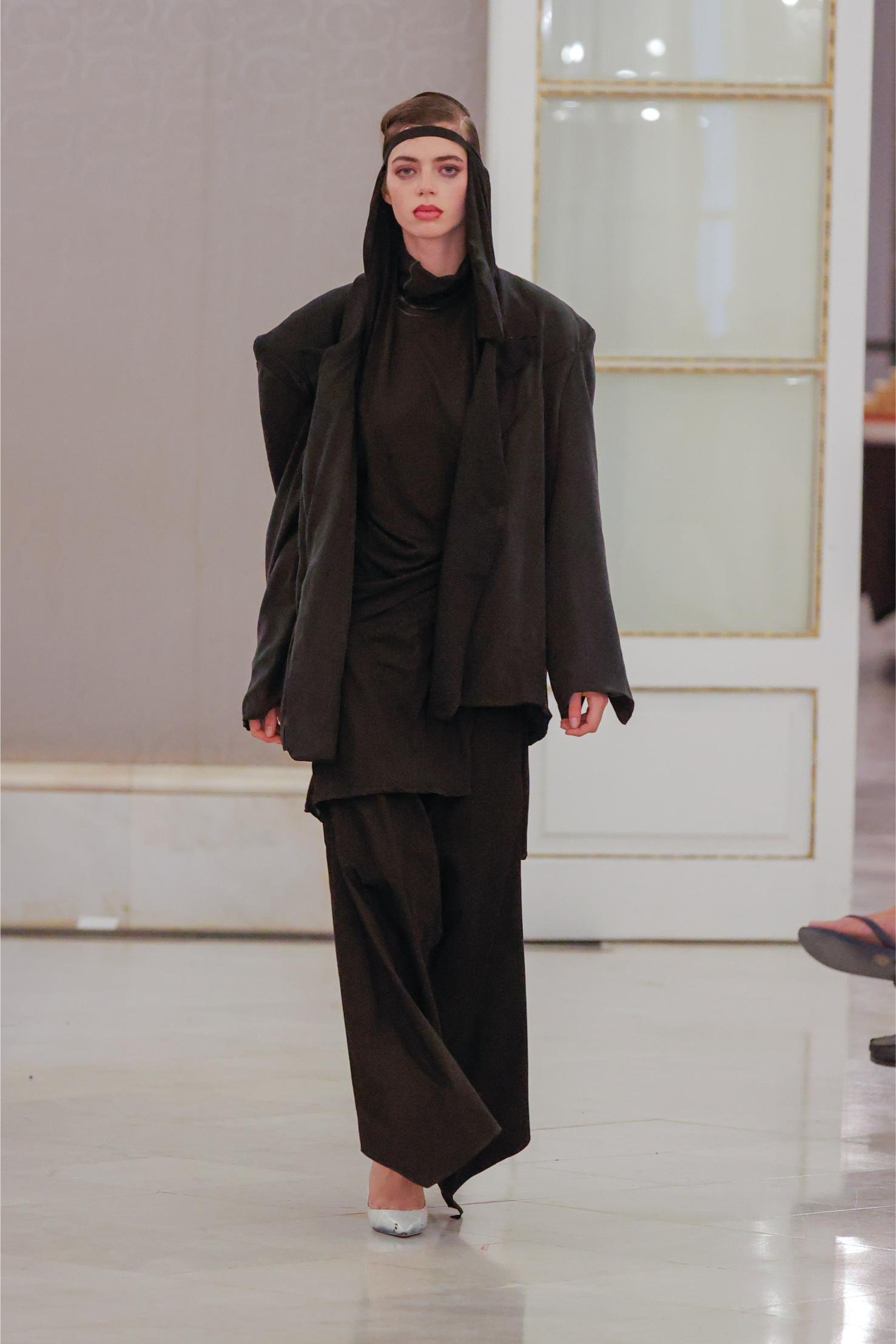
Mariona Panés i Coromina’s collection, Escala del 7 al buit, explores linearity and the impossibility of confining it to a fixed axis. Conceived as an open system rather than a closed collection, the project continuously redefines itself through garments that exist both individually and as part of a larger whole. Reinterpreting classical menswear codes through a contemporary lens, elongated silhouettes emerge through cuts and seams, while garments interact with both the body and one another. Textiles move along a continuous scale from technical, compact materials to lighter surfaces, with subtle shifts in colour and construction encouraging closer observation. Working almost exclusively in black, Panés i Coromina explores differences in texture, rigidity, weave, relief, satin and matte finishes, roughness, and the varying presence of darkness within the fabric itself. Though she finds the industry intimidating, she finds reassurance in slowing down to question each garment’s construction, pattern cutting, and function, describing the process as an almost poetic conversation with the clothes.

@mariona_coromina

Sara Huguet

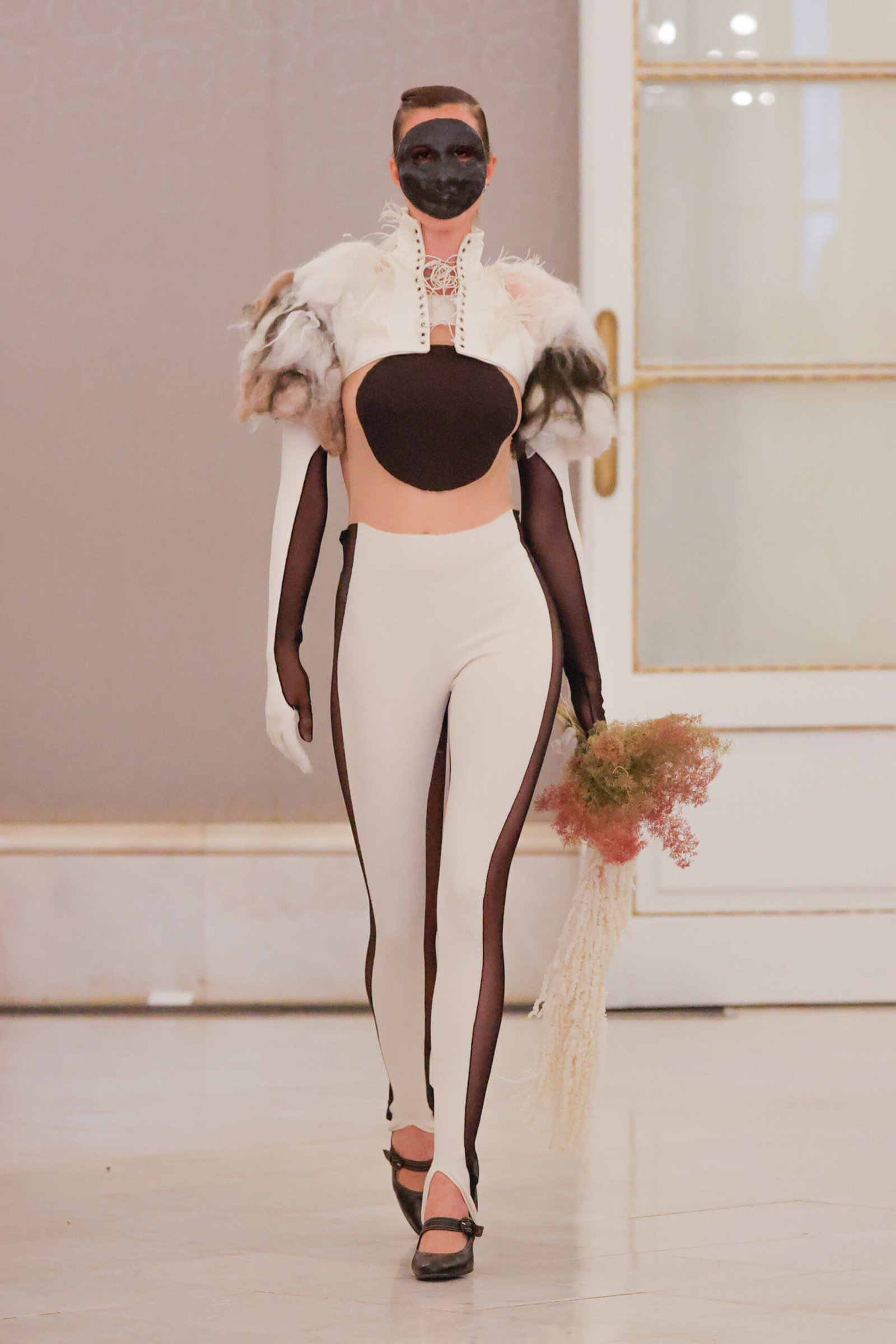
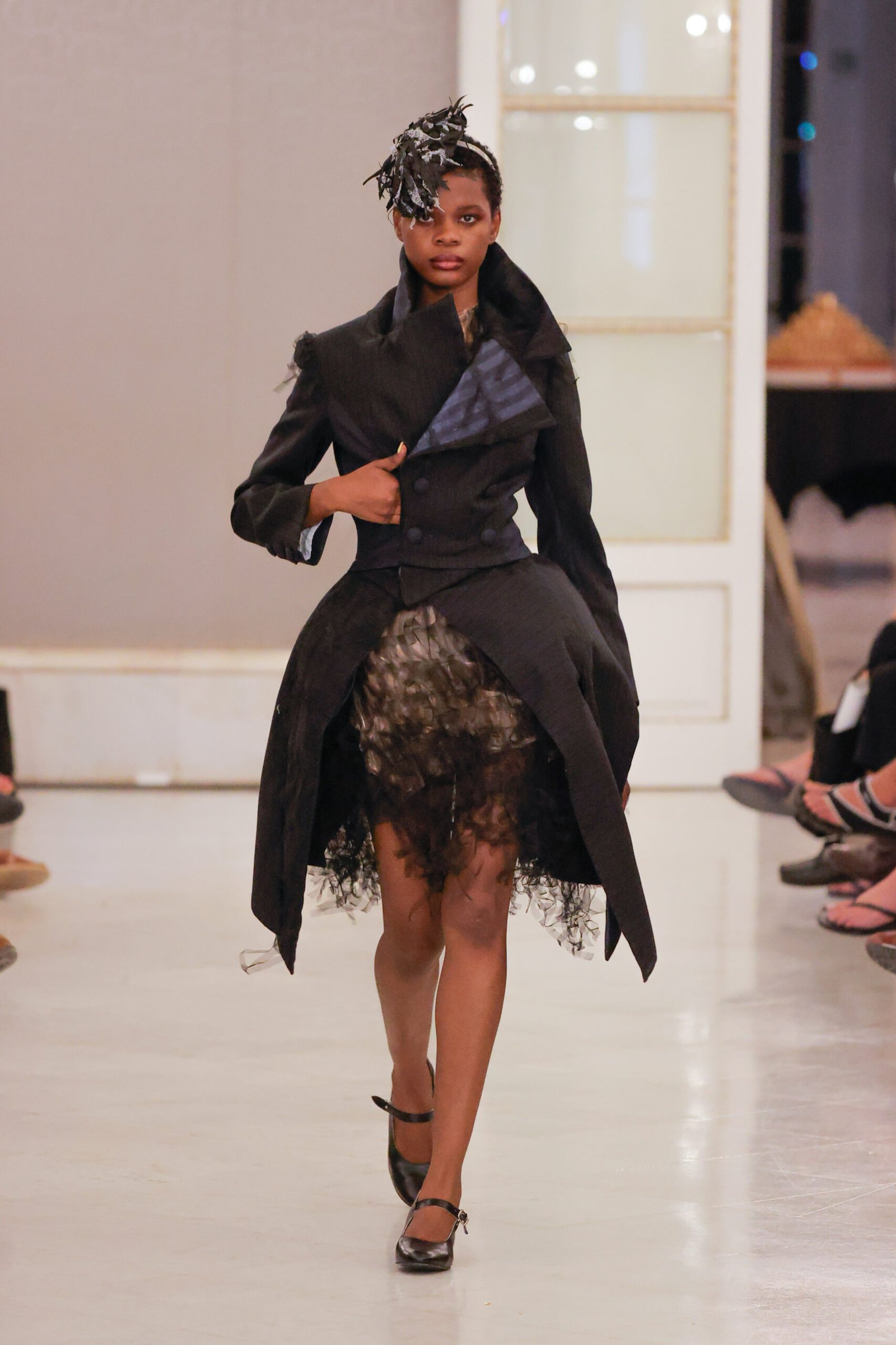
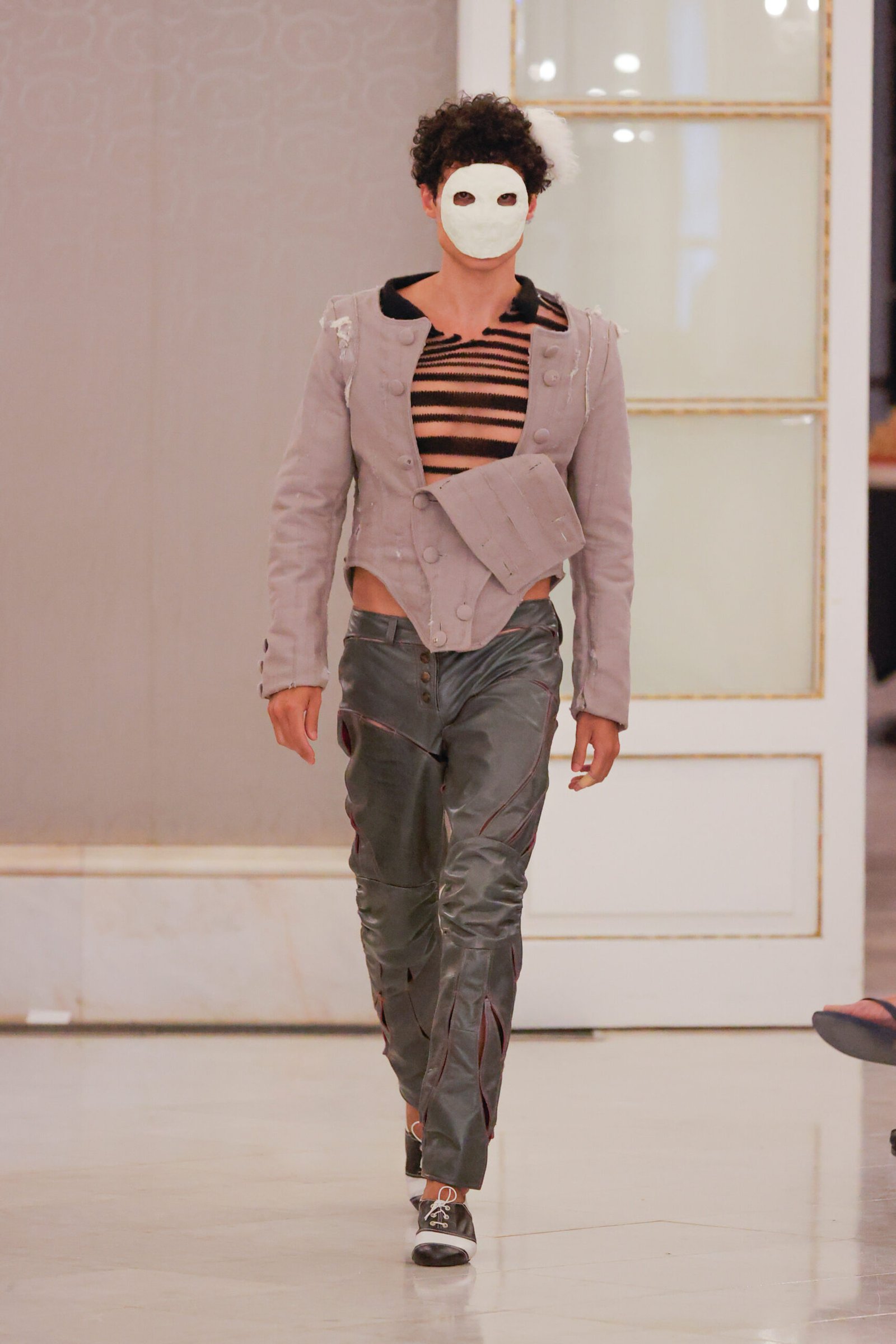
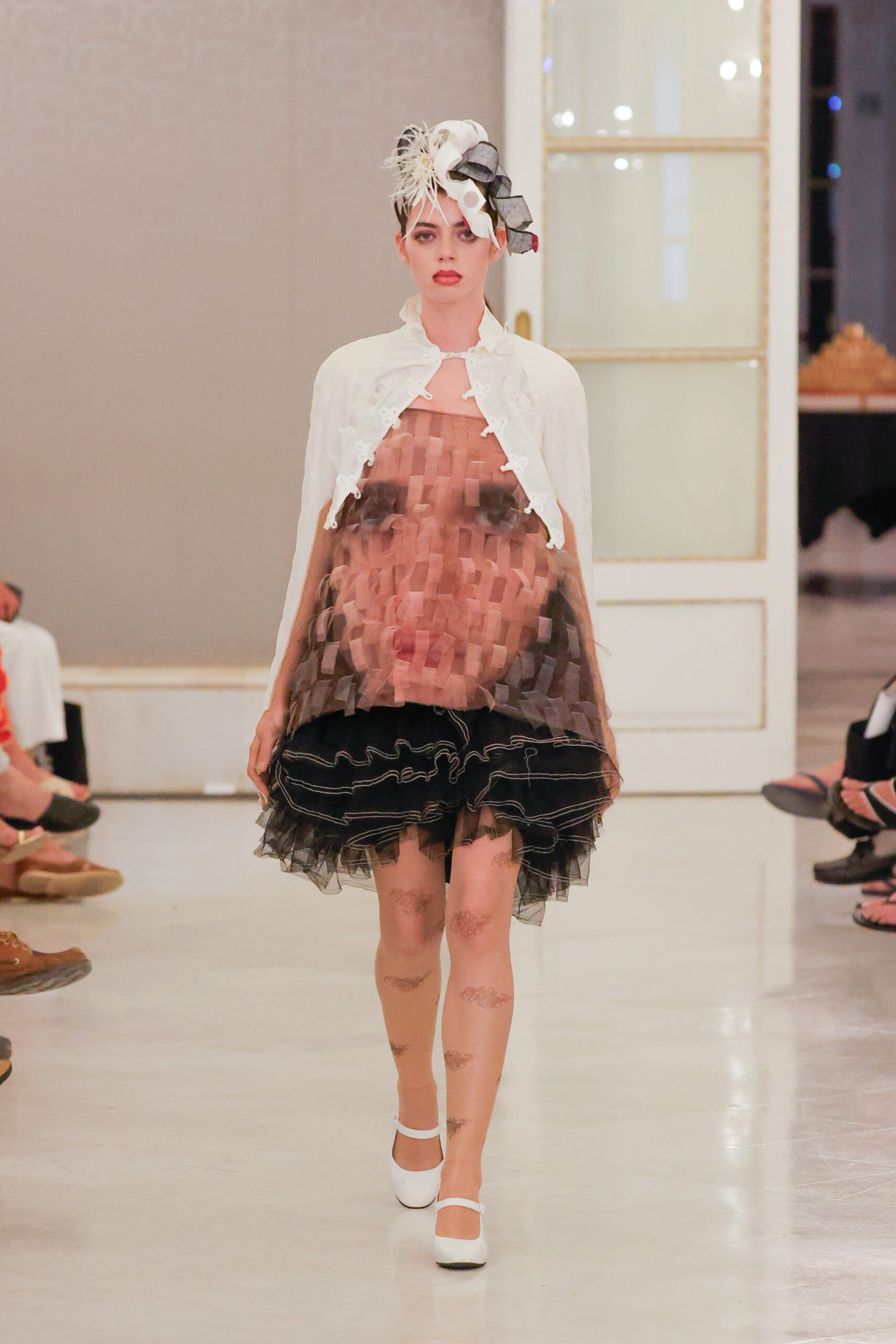
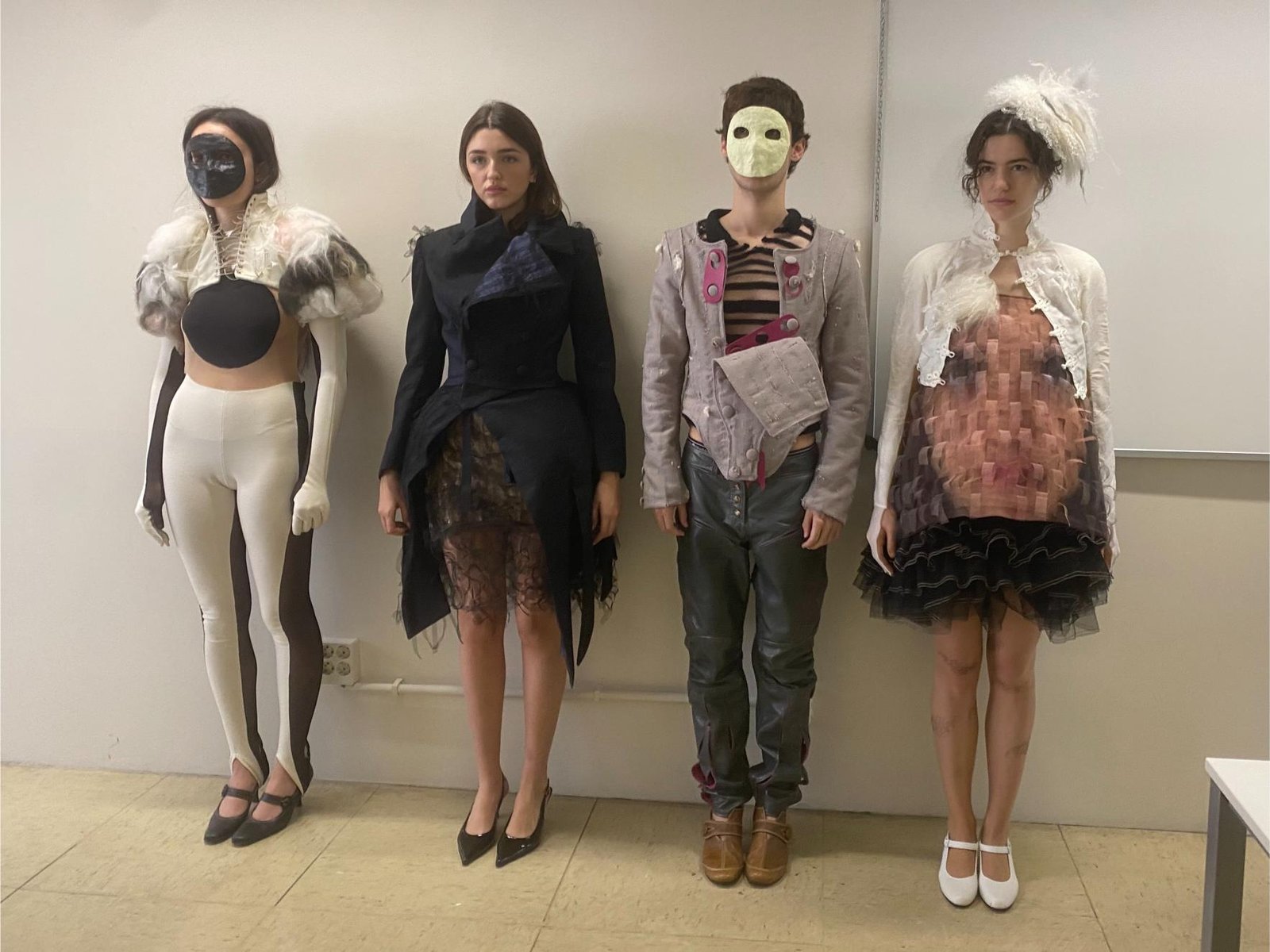
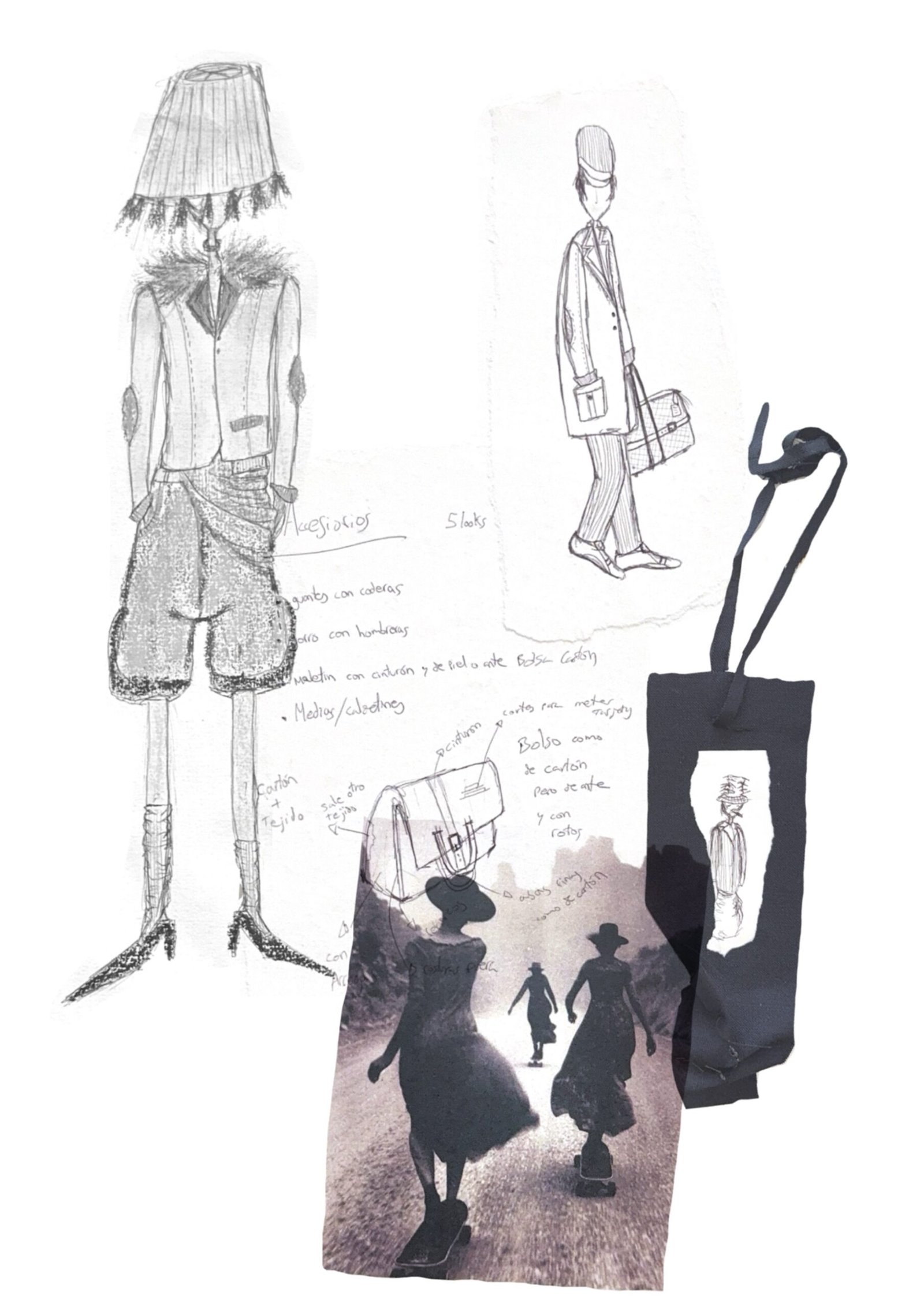
Sara Huguet’s collection brings together fashion and performance through a staged journey of transformation. Drawing inspiration from Life Is a Dream by Pedro Calderón de la Barca, the work of Lolo & Sosaku, Parade, the ballet that featured collaborations by Erik Satie, Pablo Picasso and Jean Cocteau, and other references that exist between theatre, movement, and image, the collection unfolds across four looks that combine menswear and womenswear through bold colour, volume, and contrasting materials. Extensive experimentation underpins the project, incorporating laser-cut fabrics, distressed finishes, feathers, hand-felted wool, tailoring references, and printed textiles. As she enters the industry, Huguet hopes to continue developing and exhibiting the collection, seeing it as her first complete statement as both an artist and designer. 

@sara.huguet

Carlotta Ramon Serra

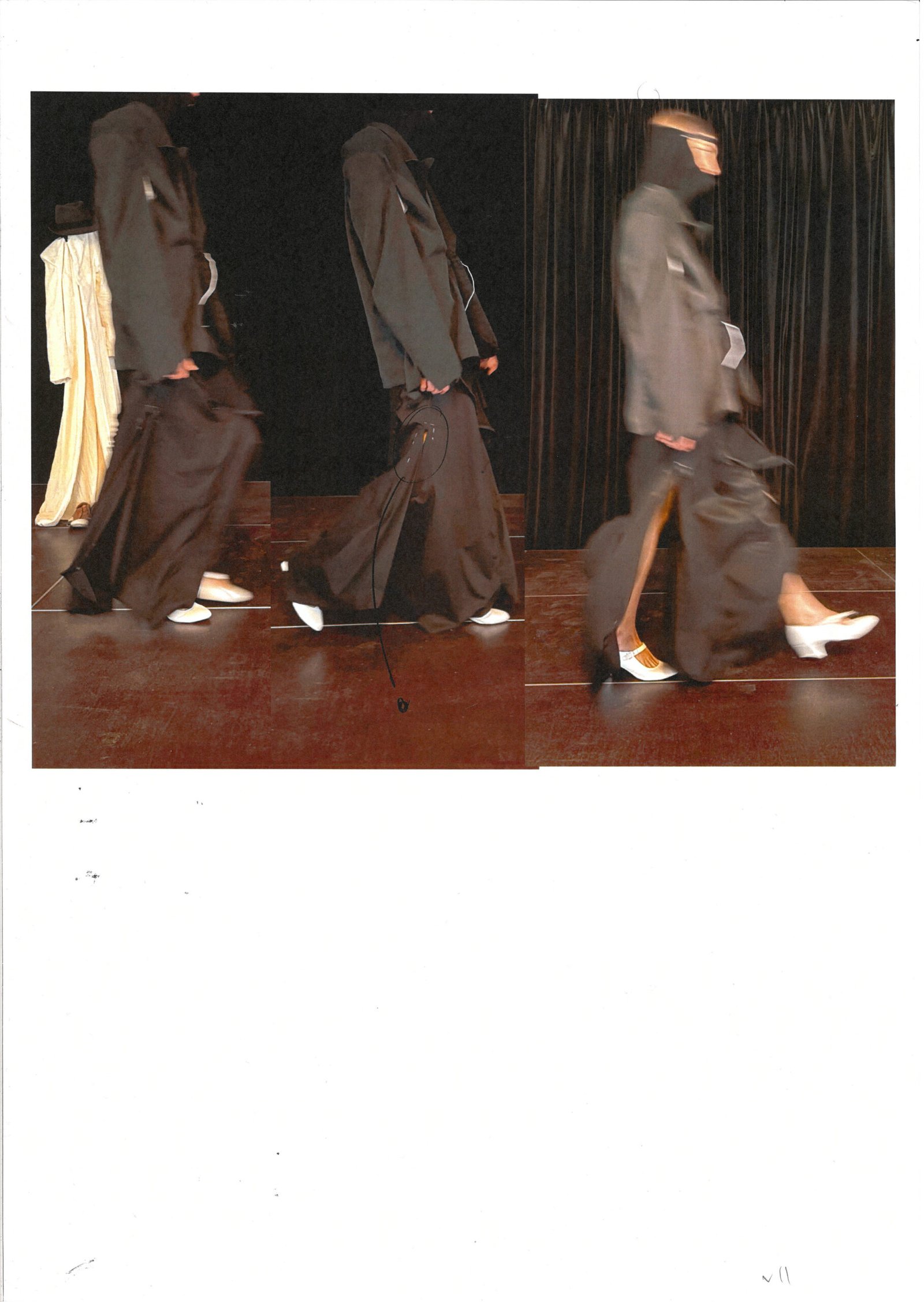
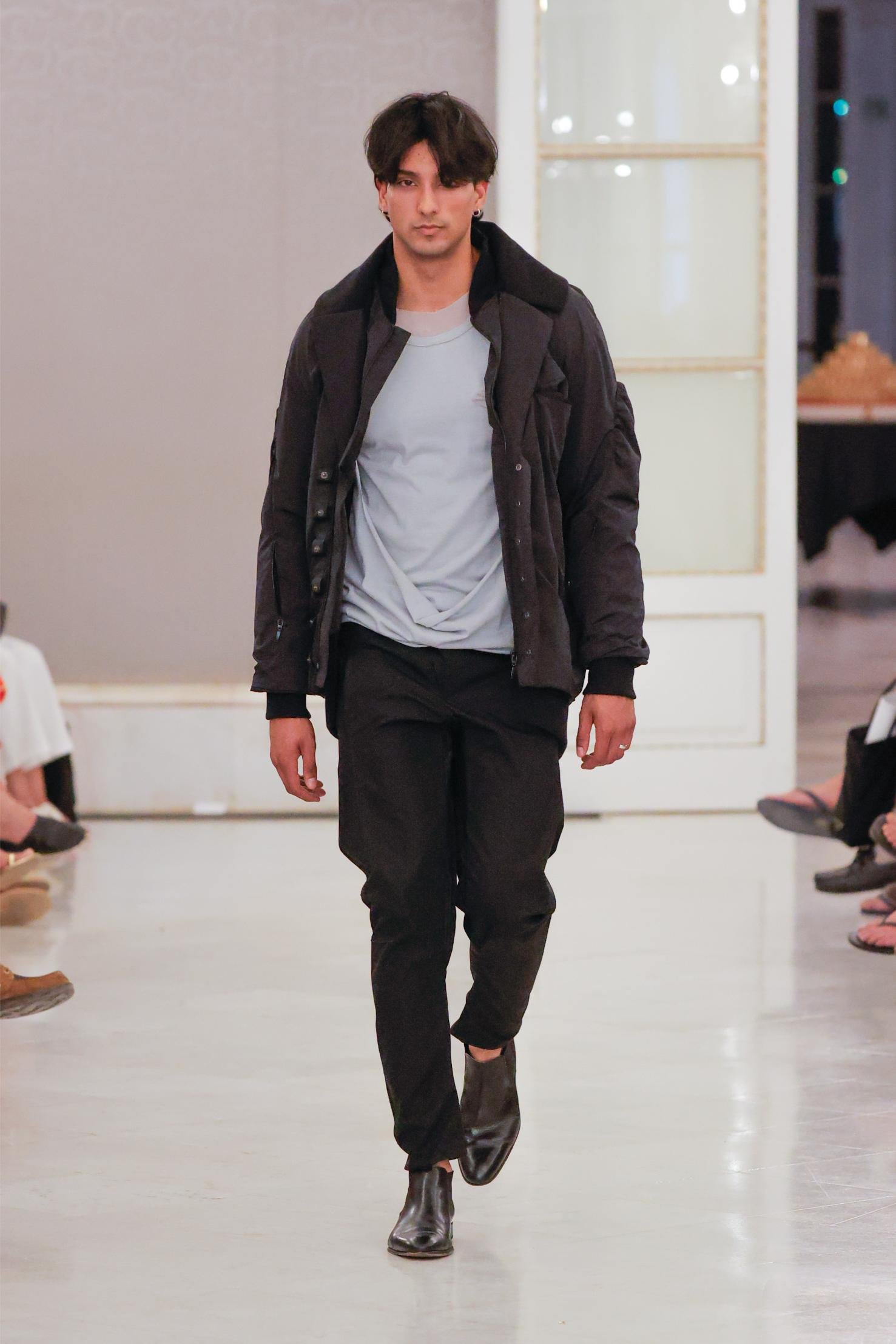
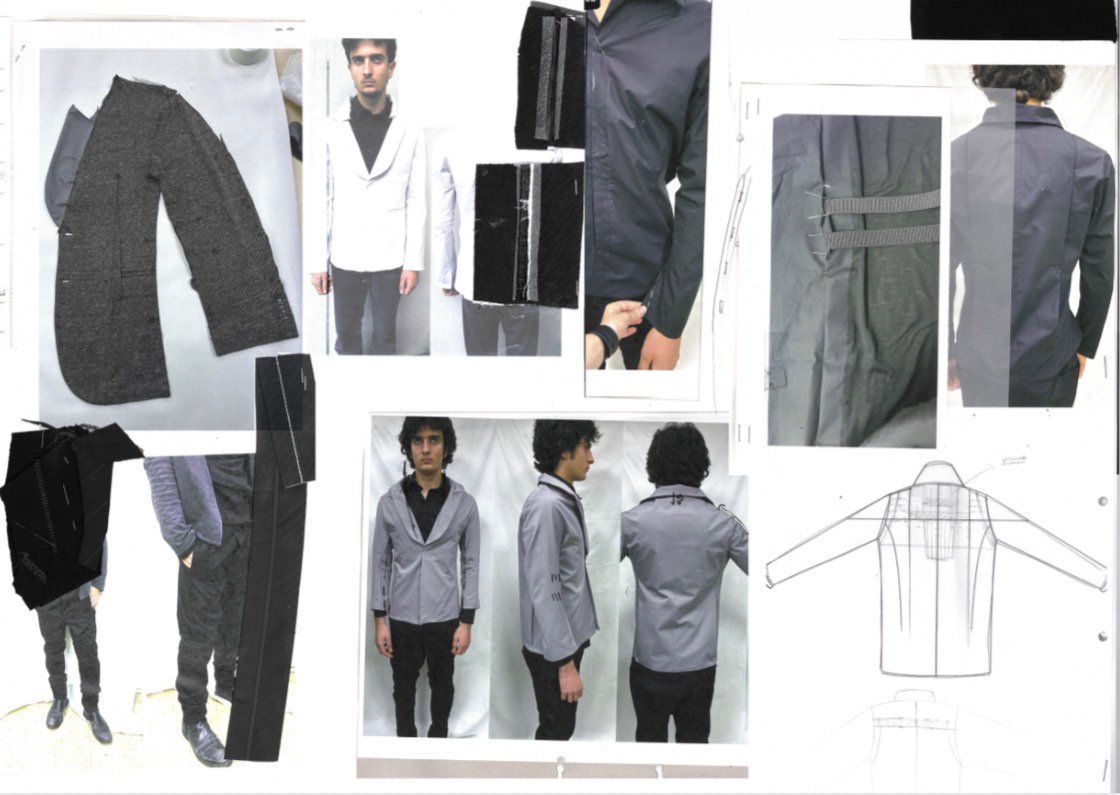
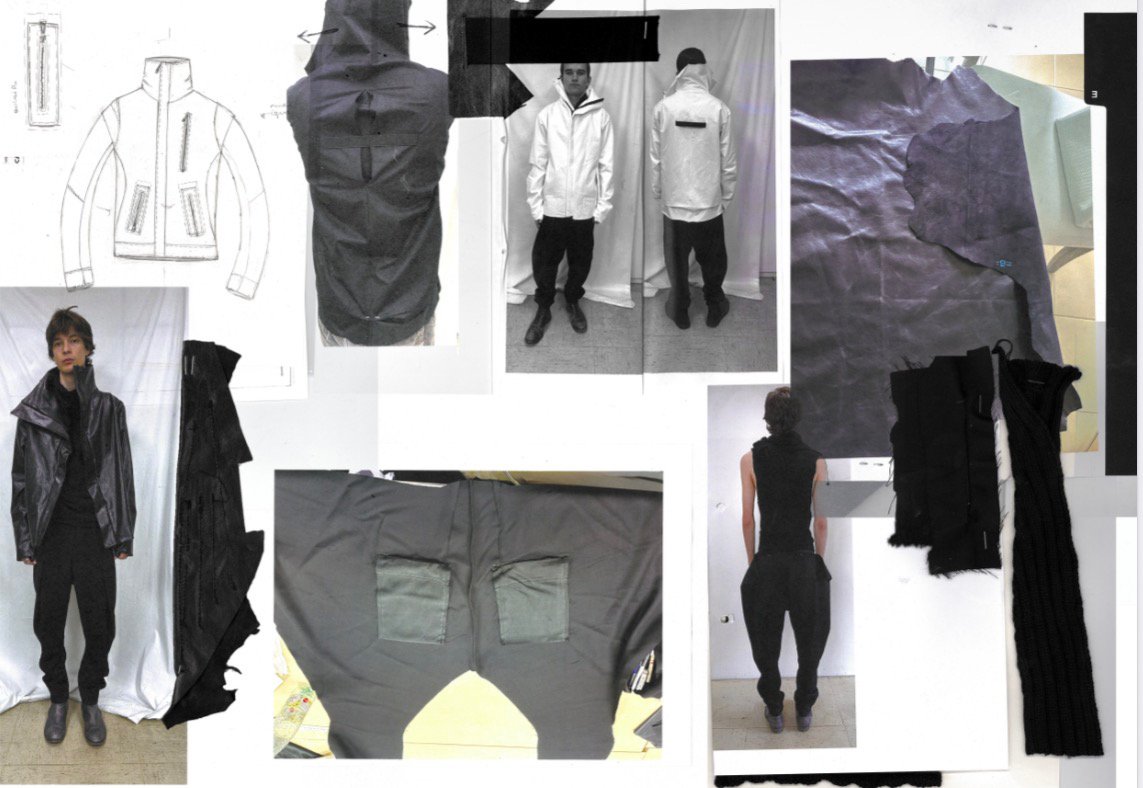
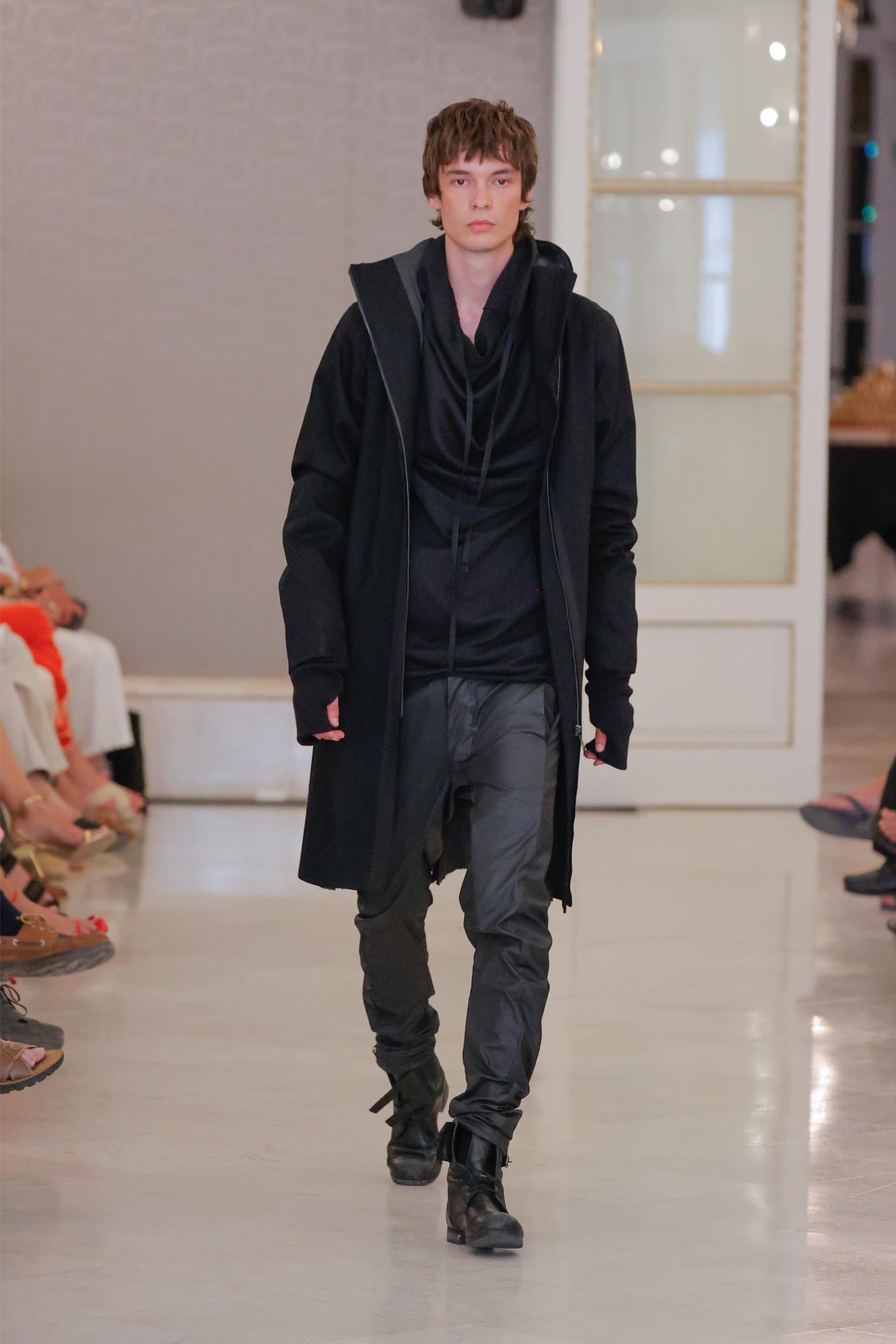
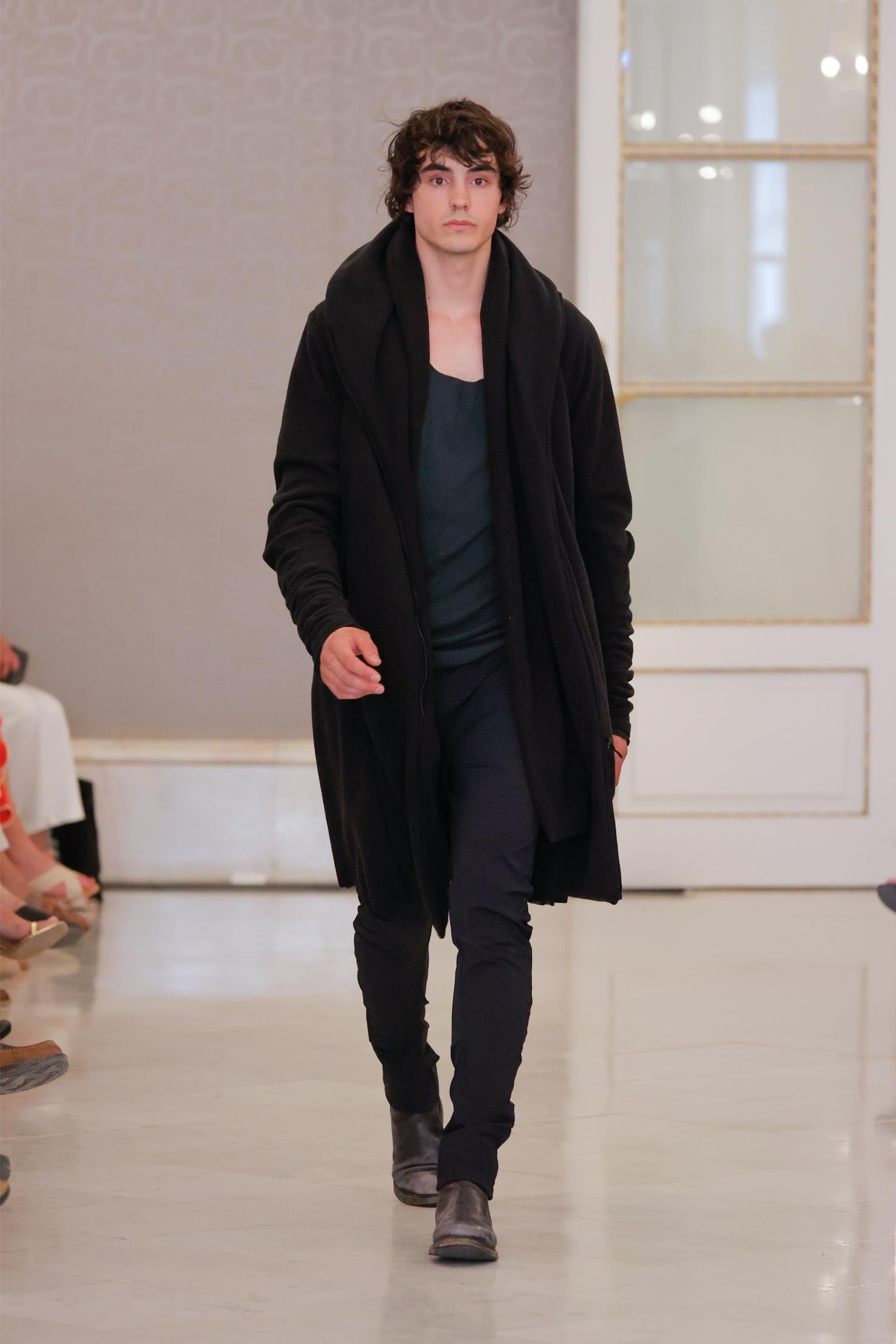
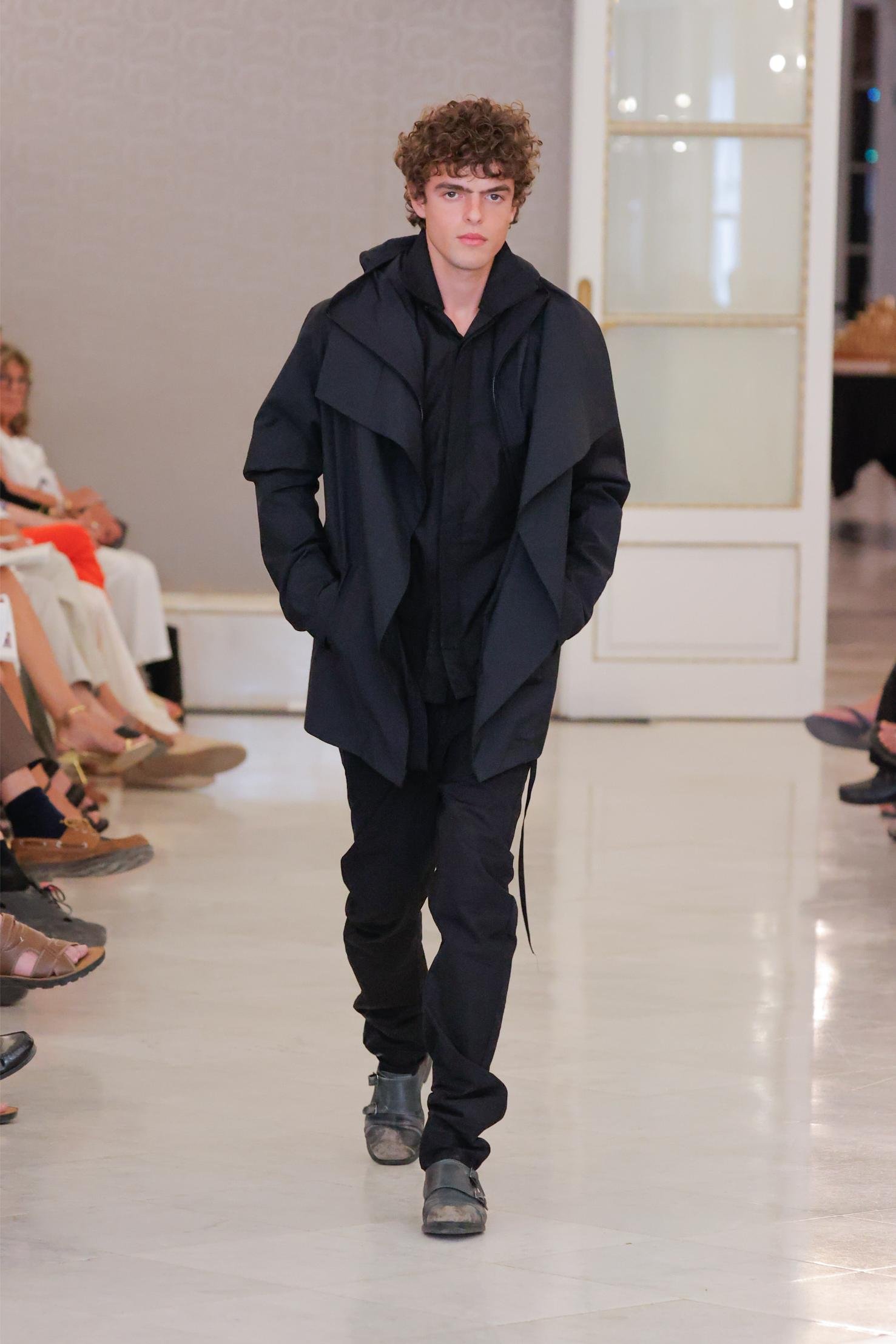
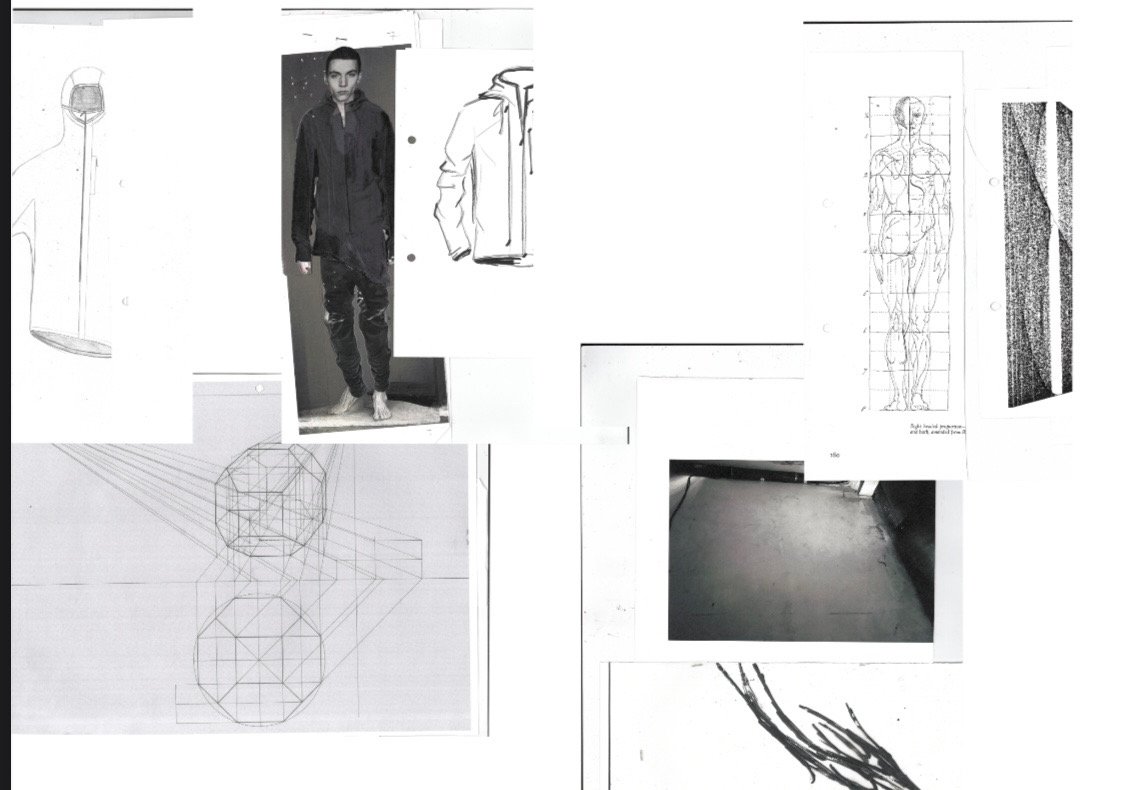
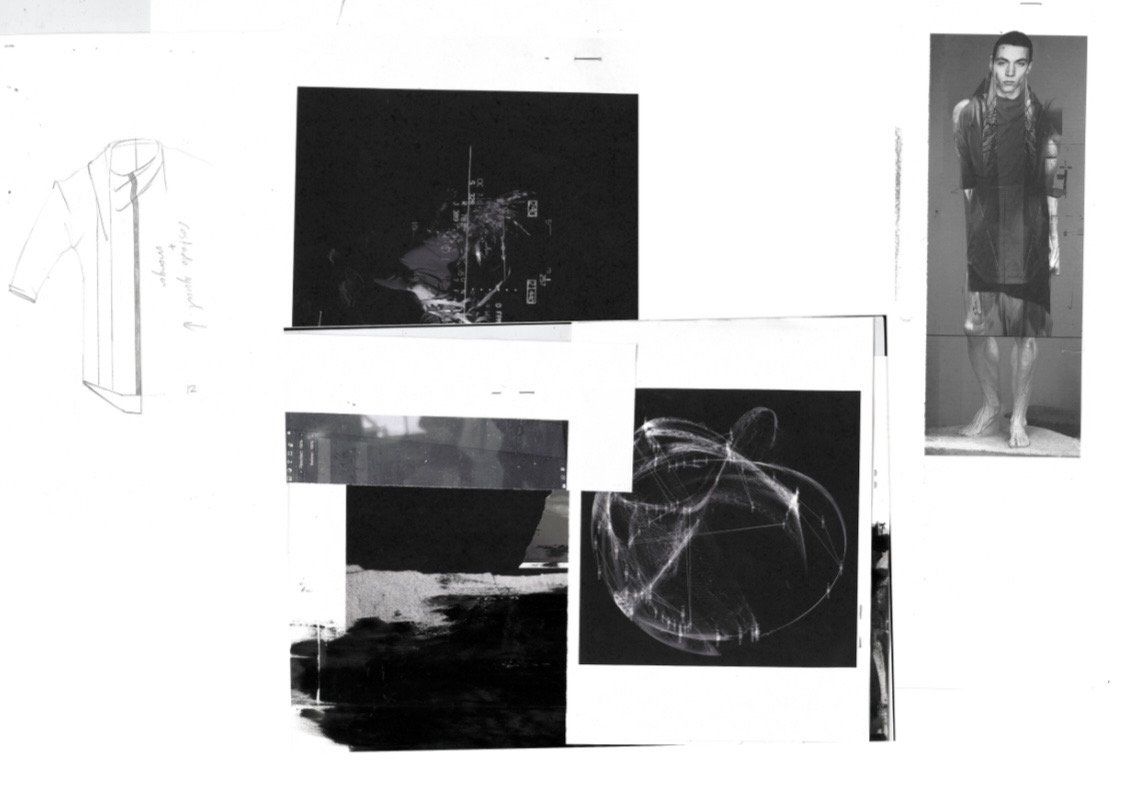
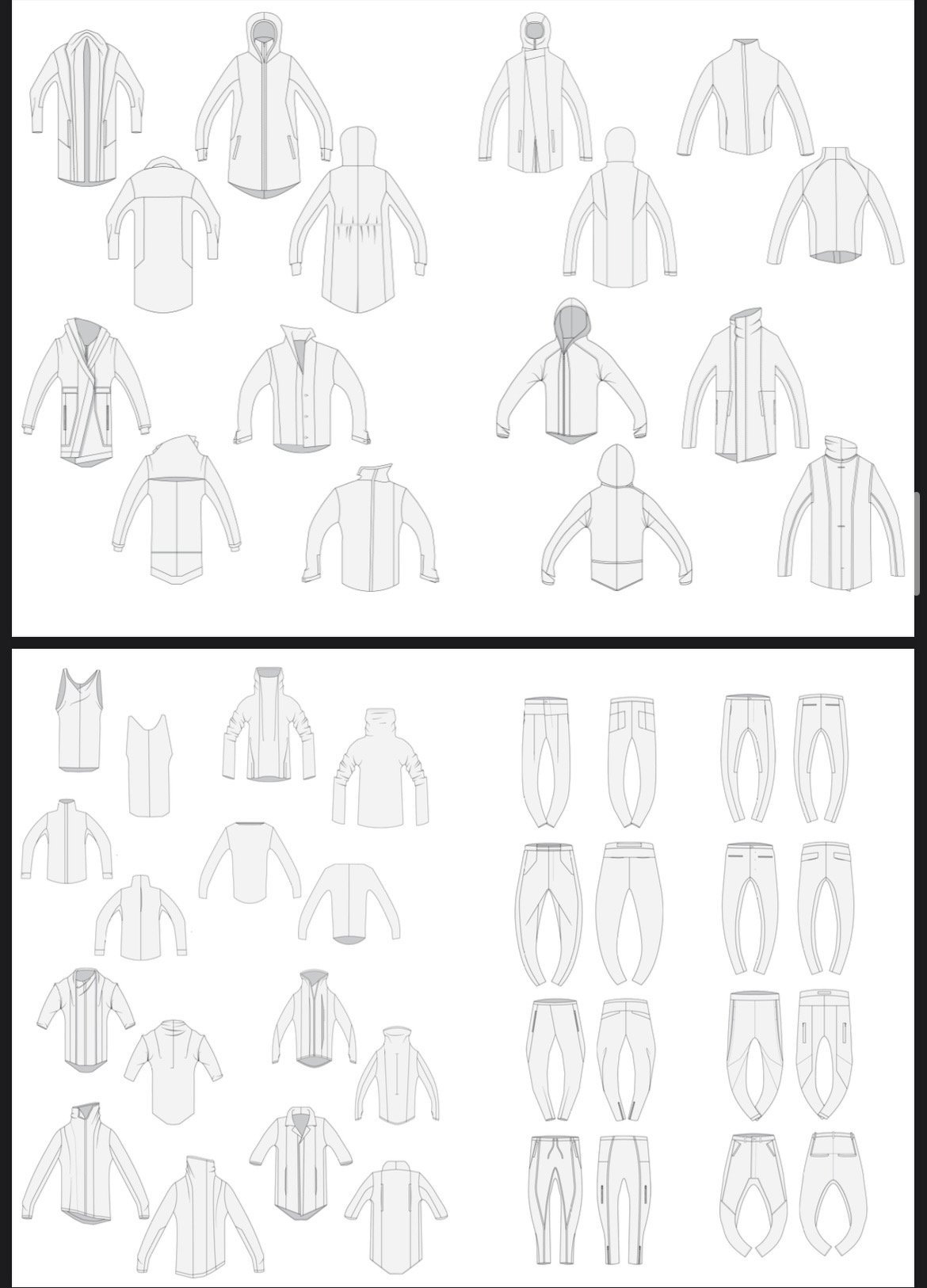
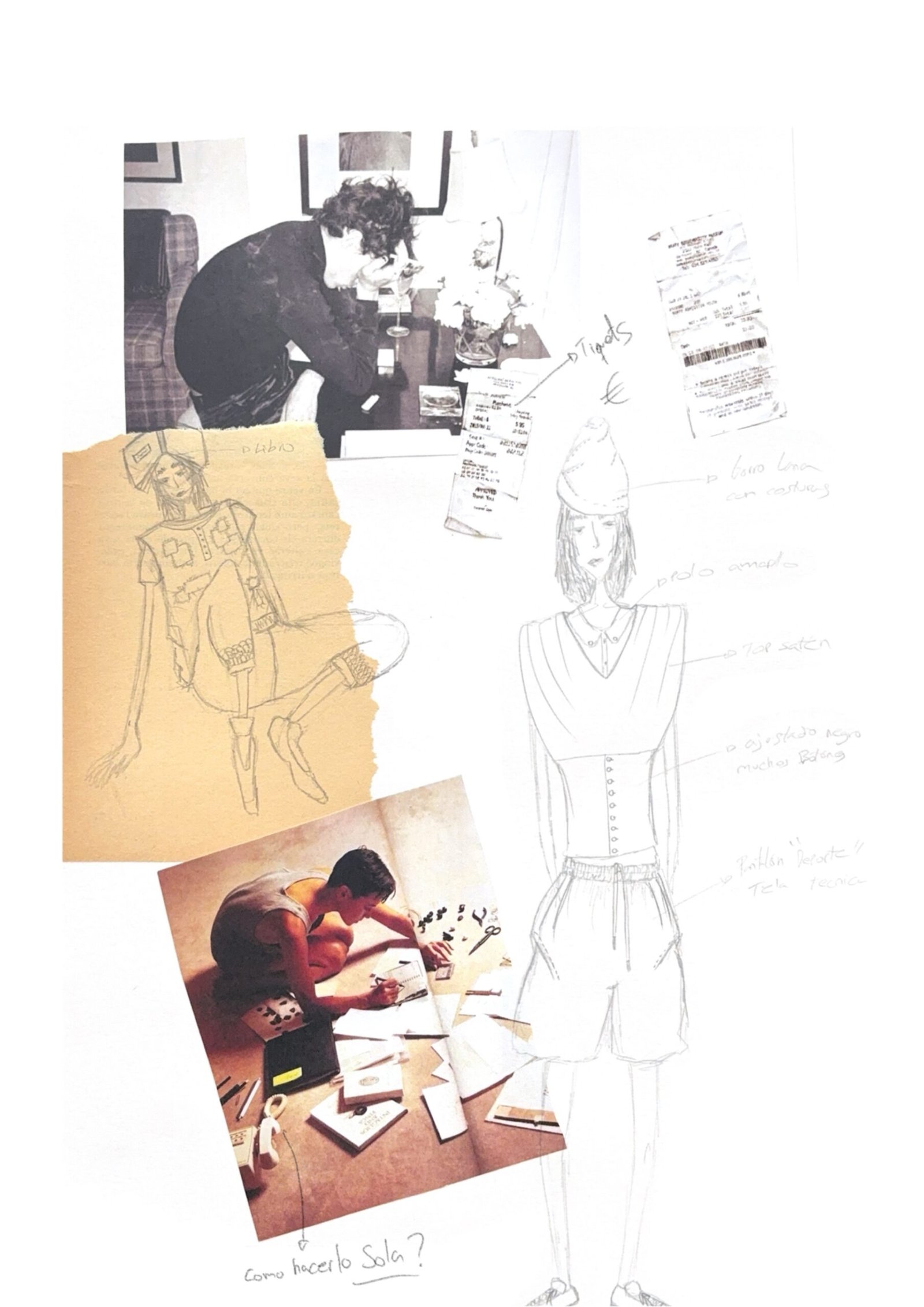
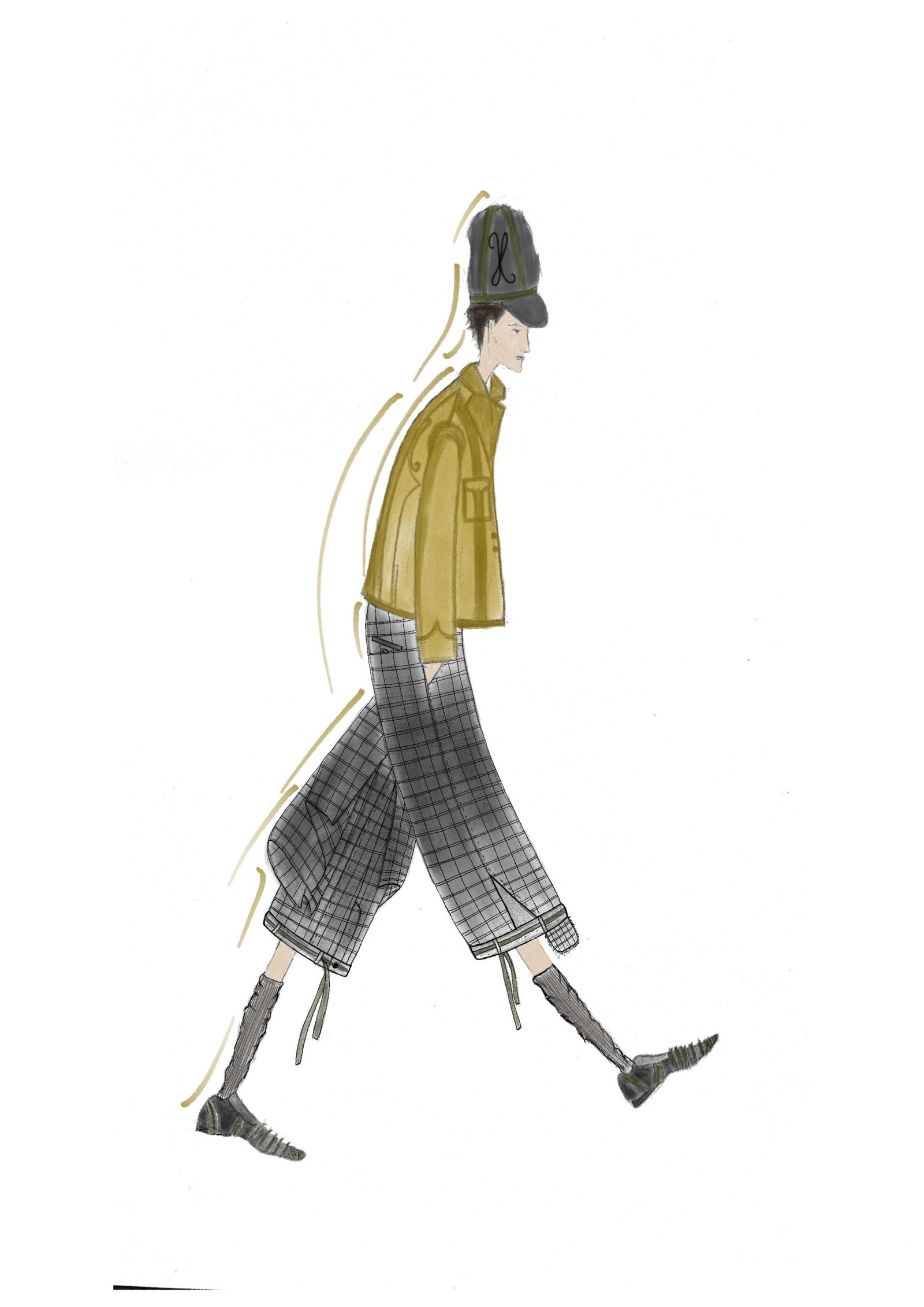
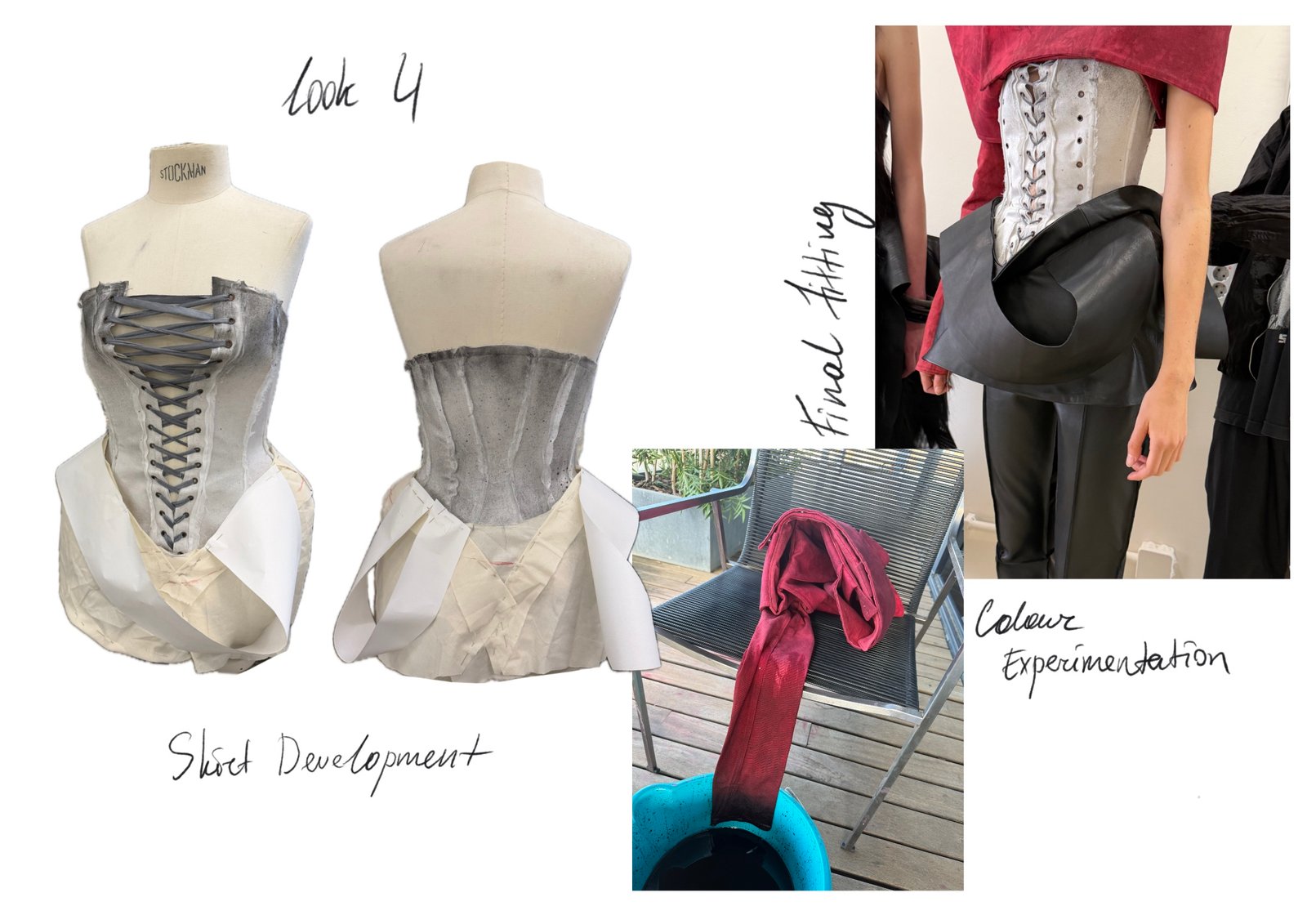
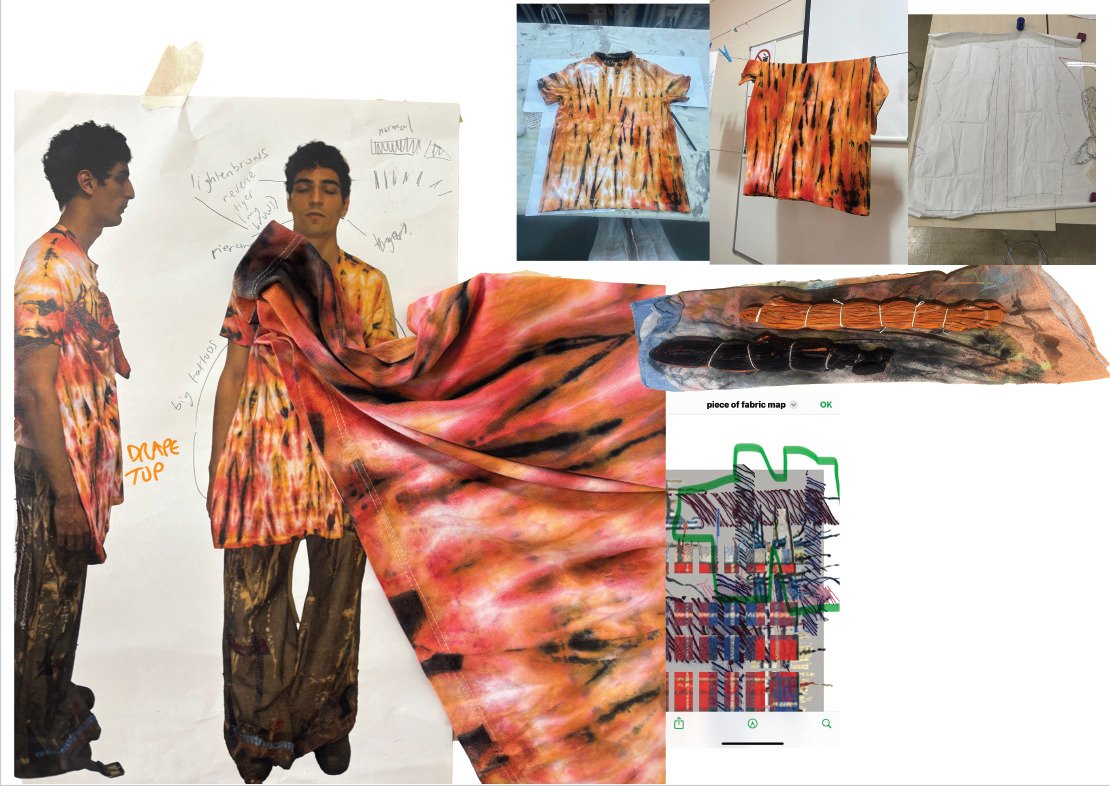
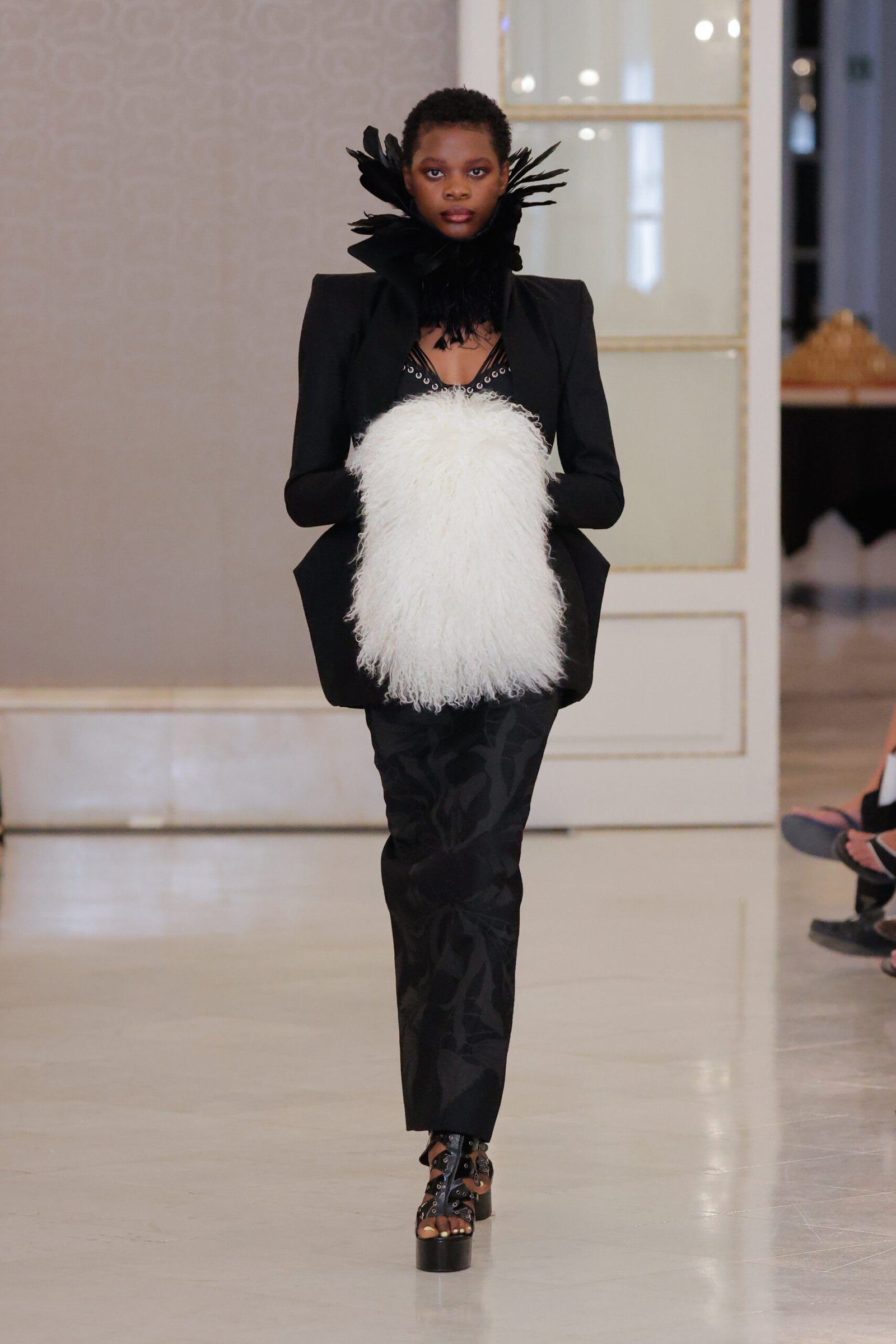
Carlotta Ramon Serra’s menswear collection consists of four complete looks, each composed of an outer garment, an inner garment, and trousers. The project explores the energy that drives and defines the individual, translating thought into form through clothing as a means of expression. At its centre is the idea of balance, understood as a constant tension between opposing forces and beliefs that shapes both objectives and identity. Developed through research into movement, the body’s physical capabilities, and its relationship with space, the collection reflects on questions of control, perception, and the connection between body and mind. A combination of varied textiles, textures, and black tonalities creates depth, contrast, and cohesion across the garments. Looking ahead, Ramon Serra believes it is essential to cultivate technical skill while remaining attentive to personal motivations and the world beyond fashion, approaching the future with honesty and curiosity.

Maria López Xandri (Xandri)

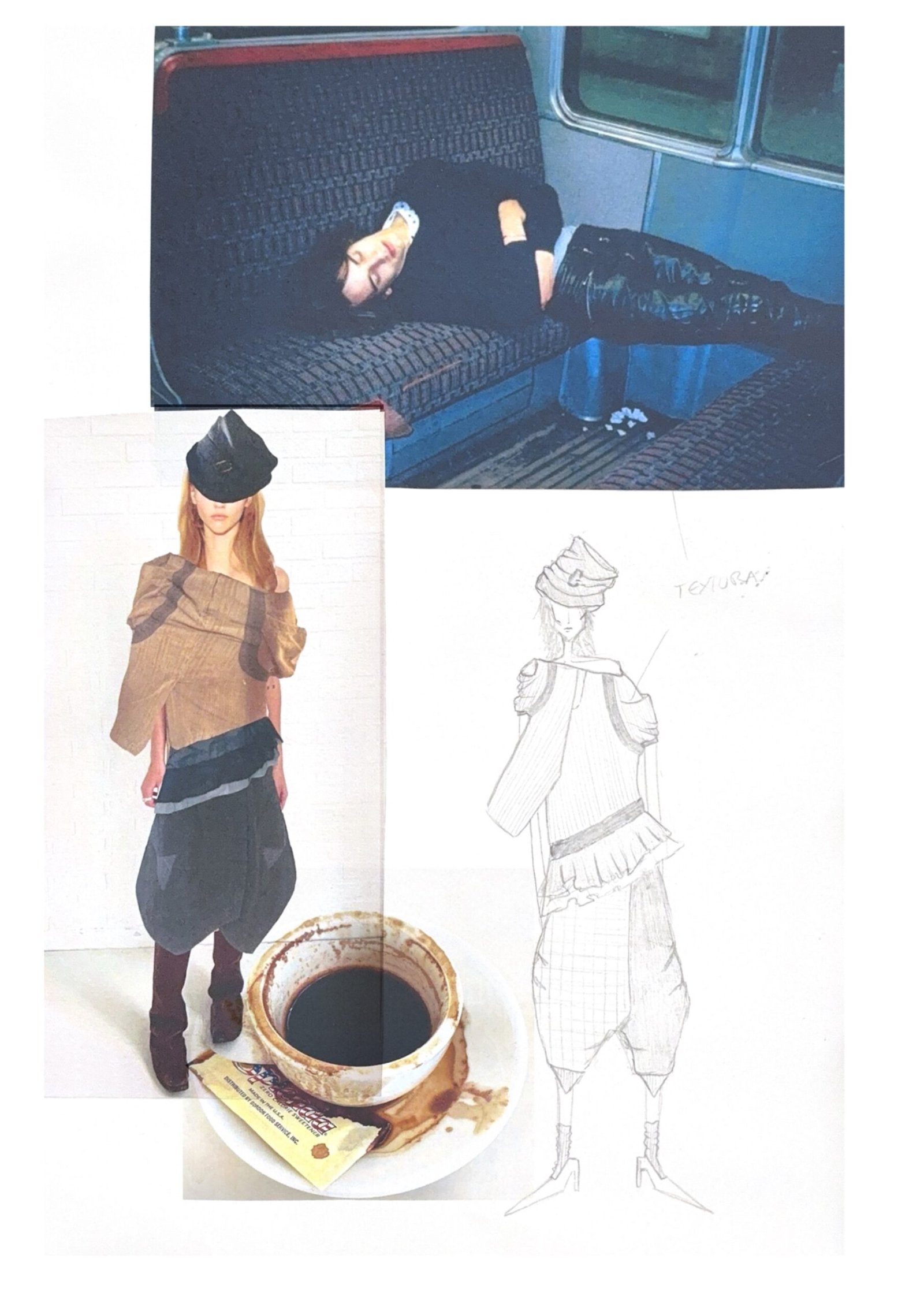
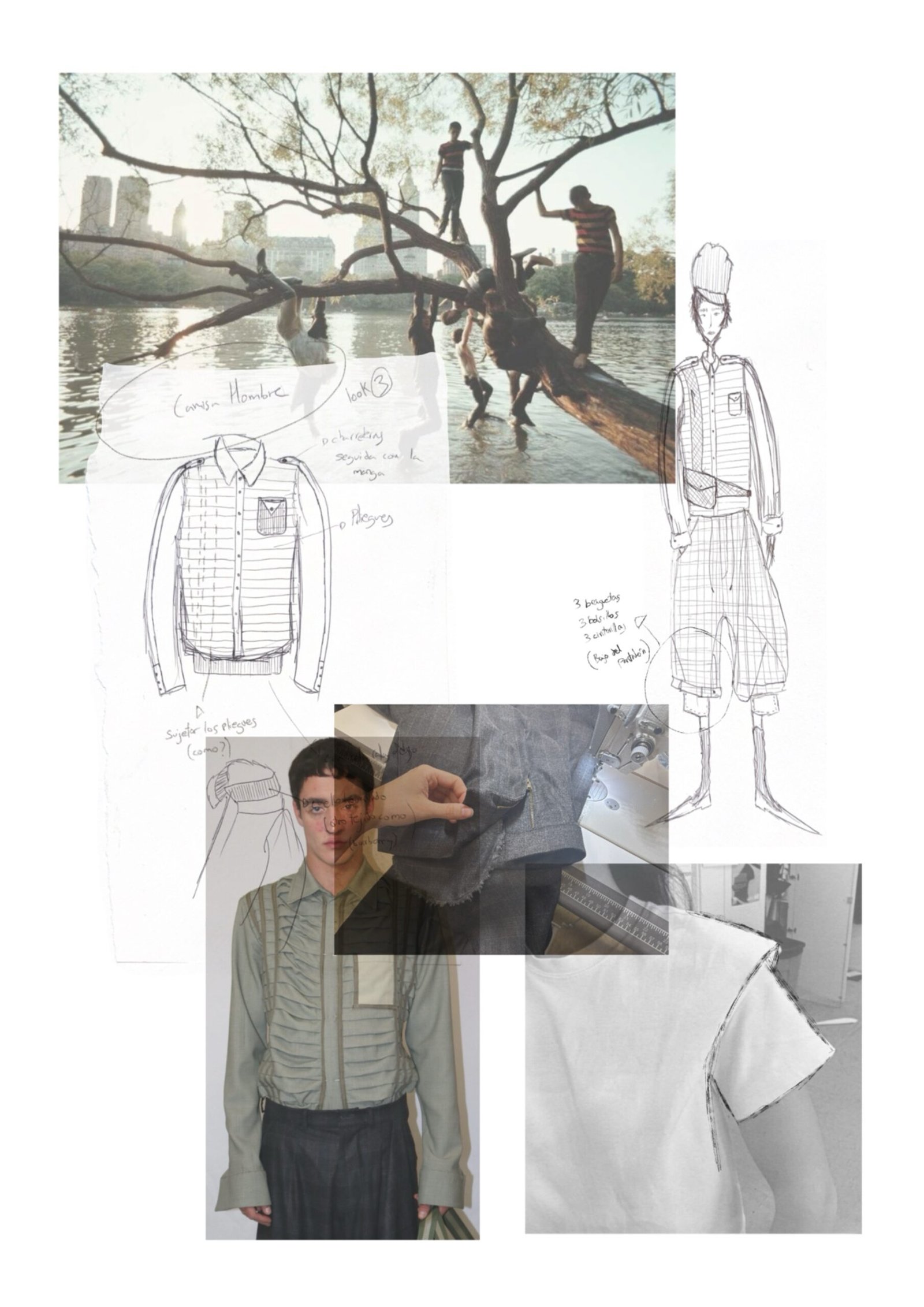
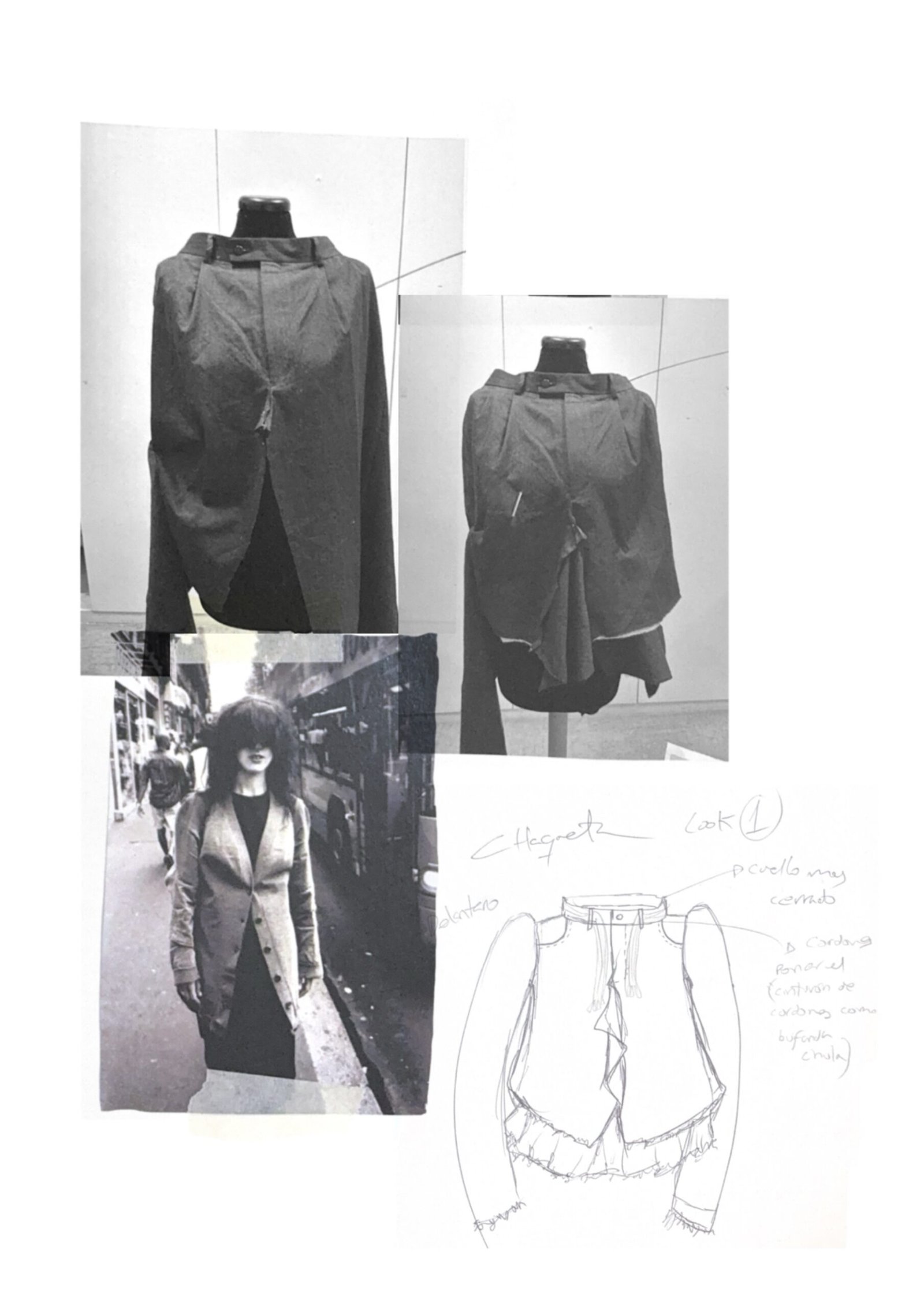
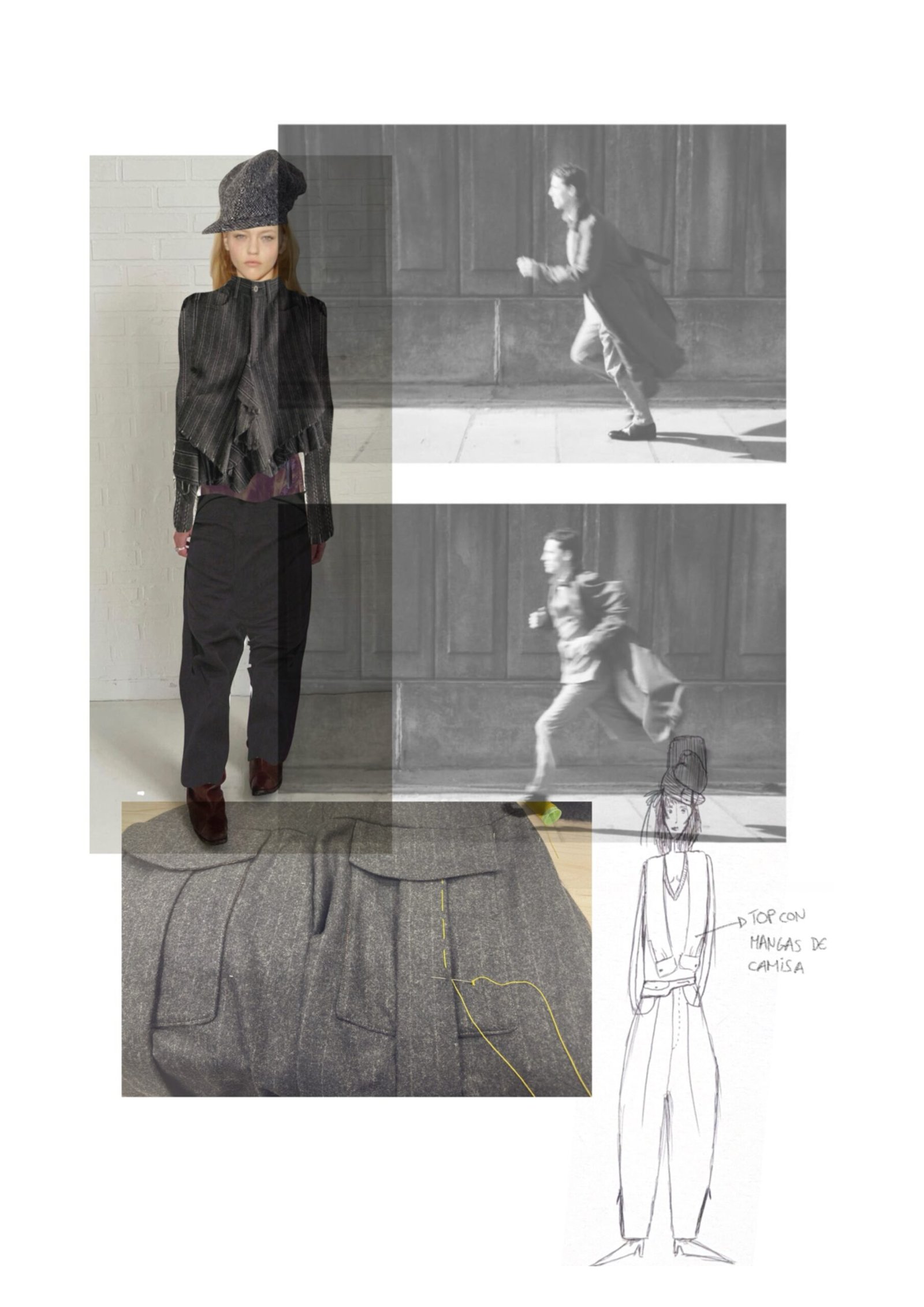
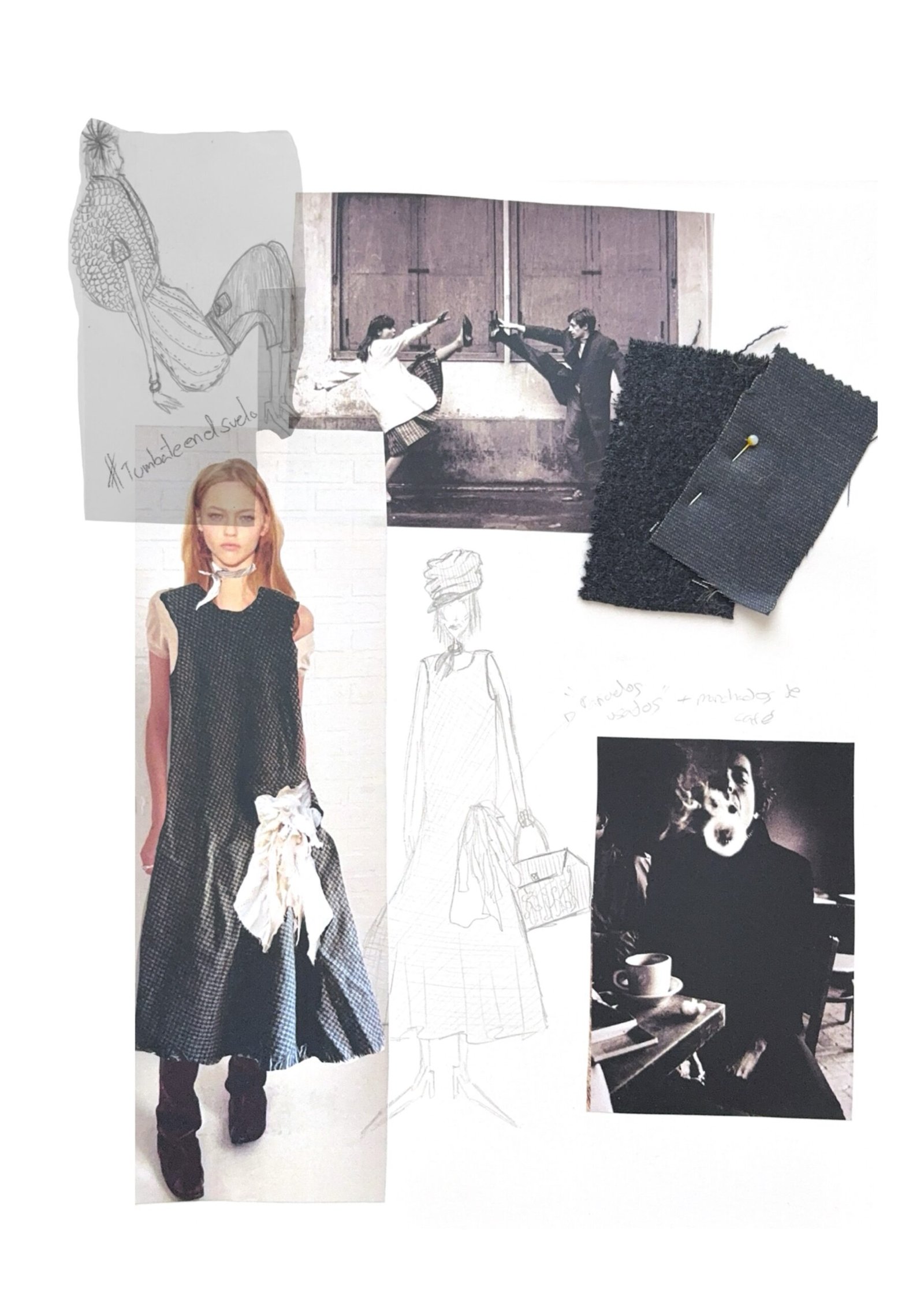
Maria López Xandri’s collection is less concerned with clothing than with the moments people are taught to overlook. It celebrates lying on the ground, staring at the sky, getting lost, running without a destination, or talking for hours without checking the time – experiences that may seem unproductive but often become the memories that endure. Through tailoring, hand-finished details, and garments designed for movement, the collection questions a culture that constantly demands productivity and instead suggests that value can also be found in simply being present. As she leaves education, López Xandri is excited by the possibility of creating work that makes people feel something genuine. At the same time, she is concerned by the pressure for creativity to become ever faster, louder, and more visible, leaving little space for curiosity or reflection.

@x.a.n.d.r.i

Ester Mengs

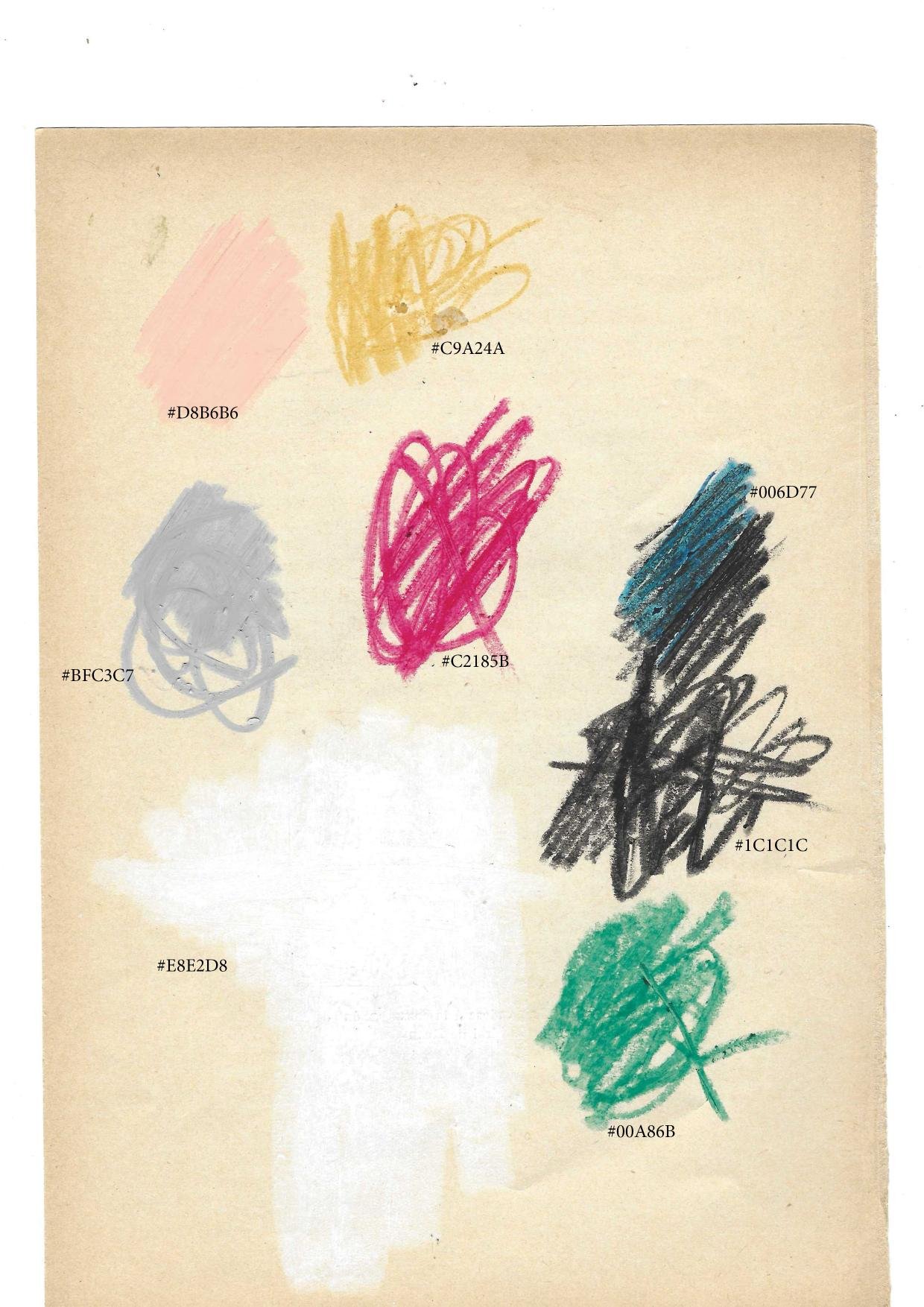
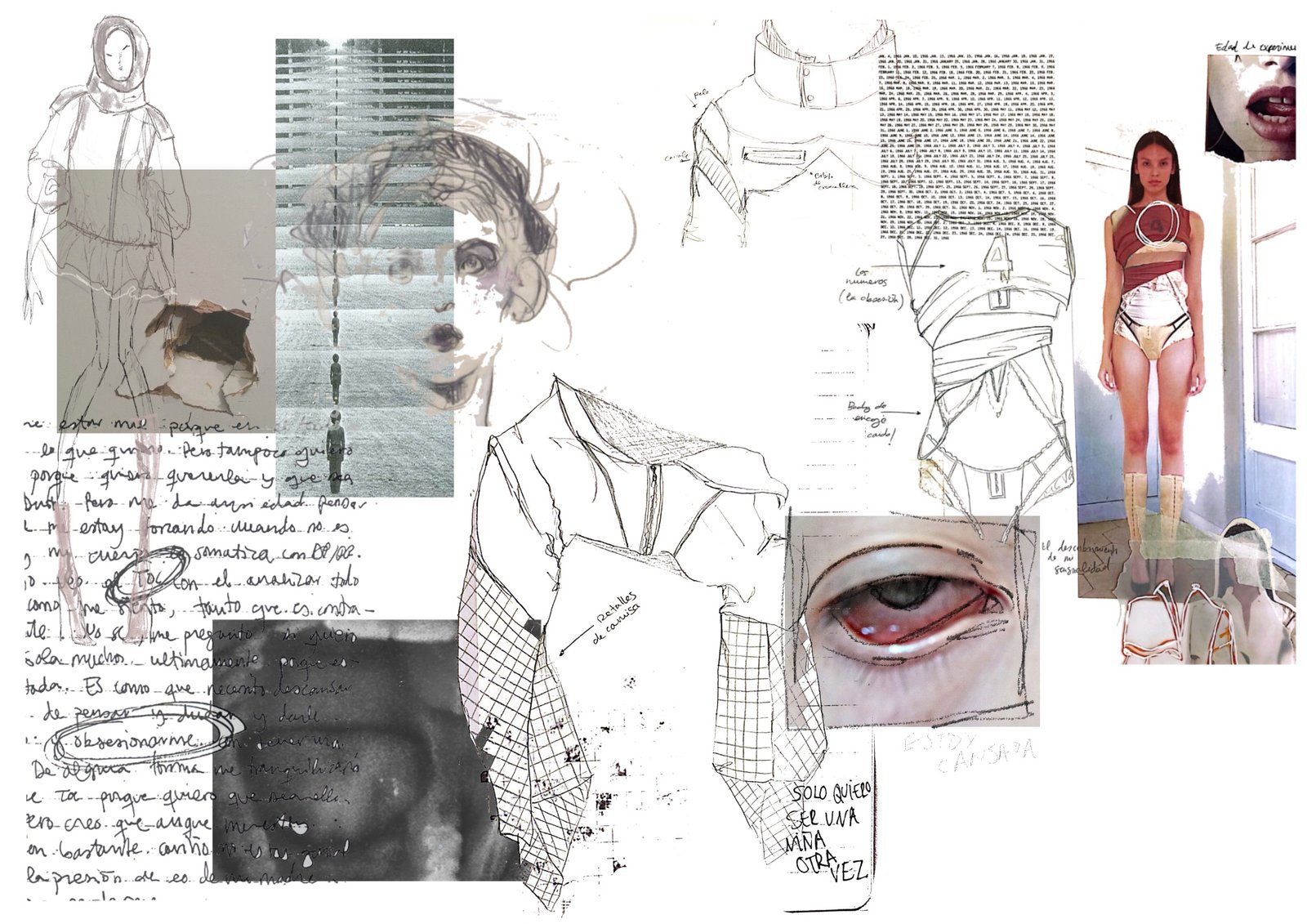
Ester Mengs’ collection draws on personal diaries written from 2018 onwards during a period marked by derealisation, panic attacks, and intrusive thoughts. The project explores the contrast between outward appearance and internal experience, revealing what she describes as a more hidden and distorted side of her identity. Throughout the collection, vulnerability is set against youth, darkness against sensuality, and fear against growth, reflected in a colour palette that moves between skin-like tones and darker shades while deliberately avoiding any sense of purity. As she enters the industry, Mengs is enthusiastic about pursuing a career in the field she feels most connected to. At the same time, she is aware of the pressures created by speed and commercial expectations, and hopes to work in environments where creative identity and authenticity are respected and encouraged.

@mengswear

Natalia Tselousova (LLORIAN)

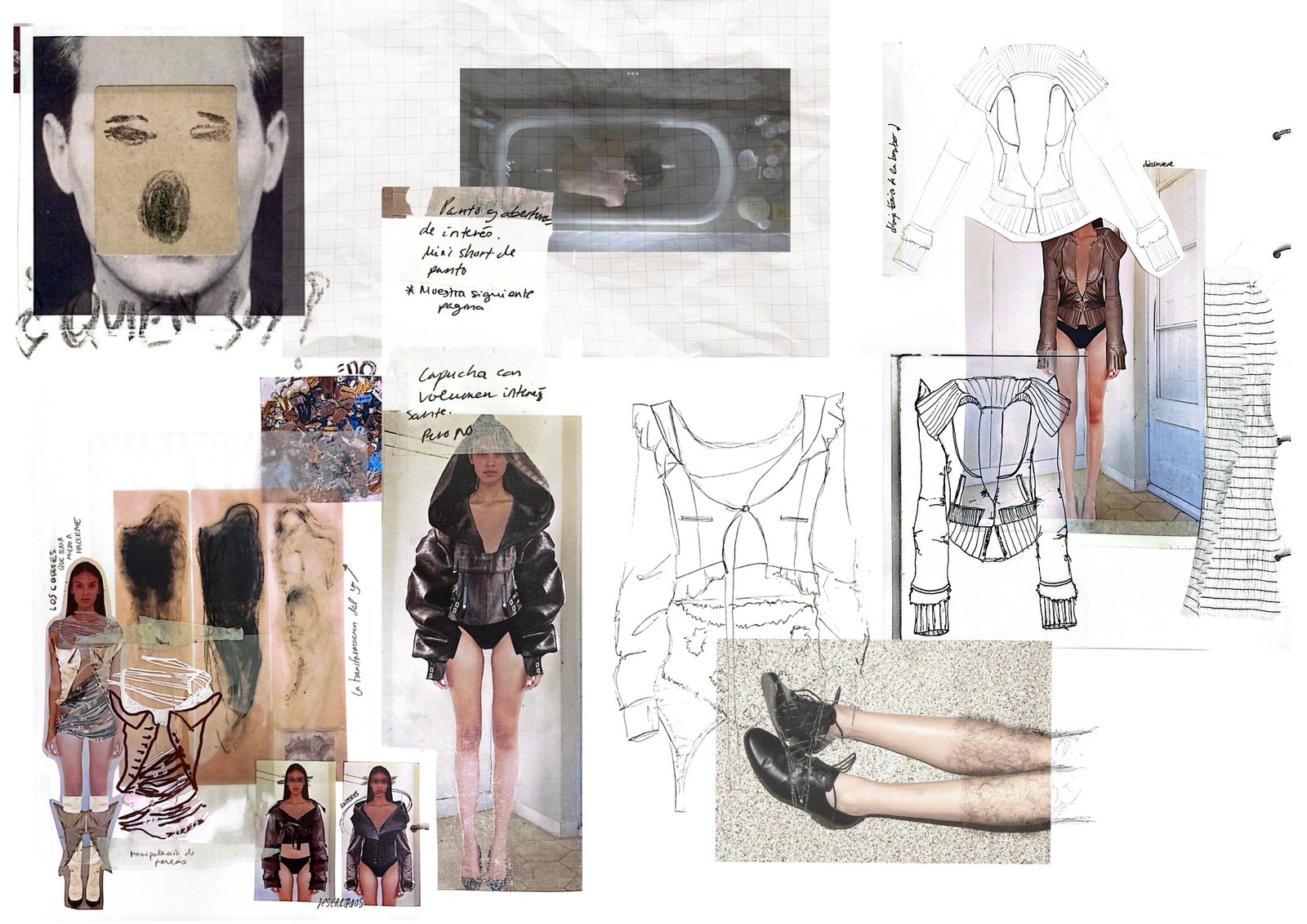
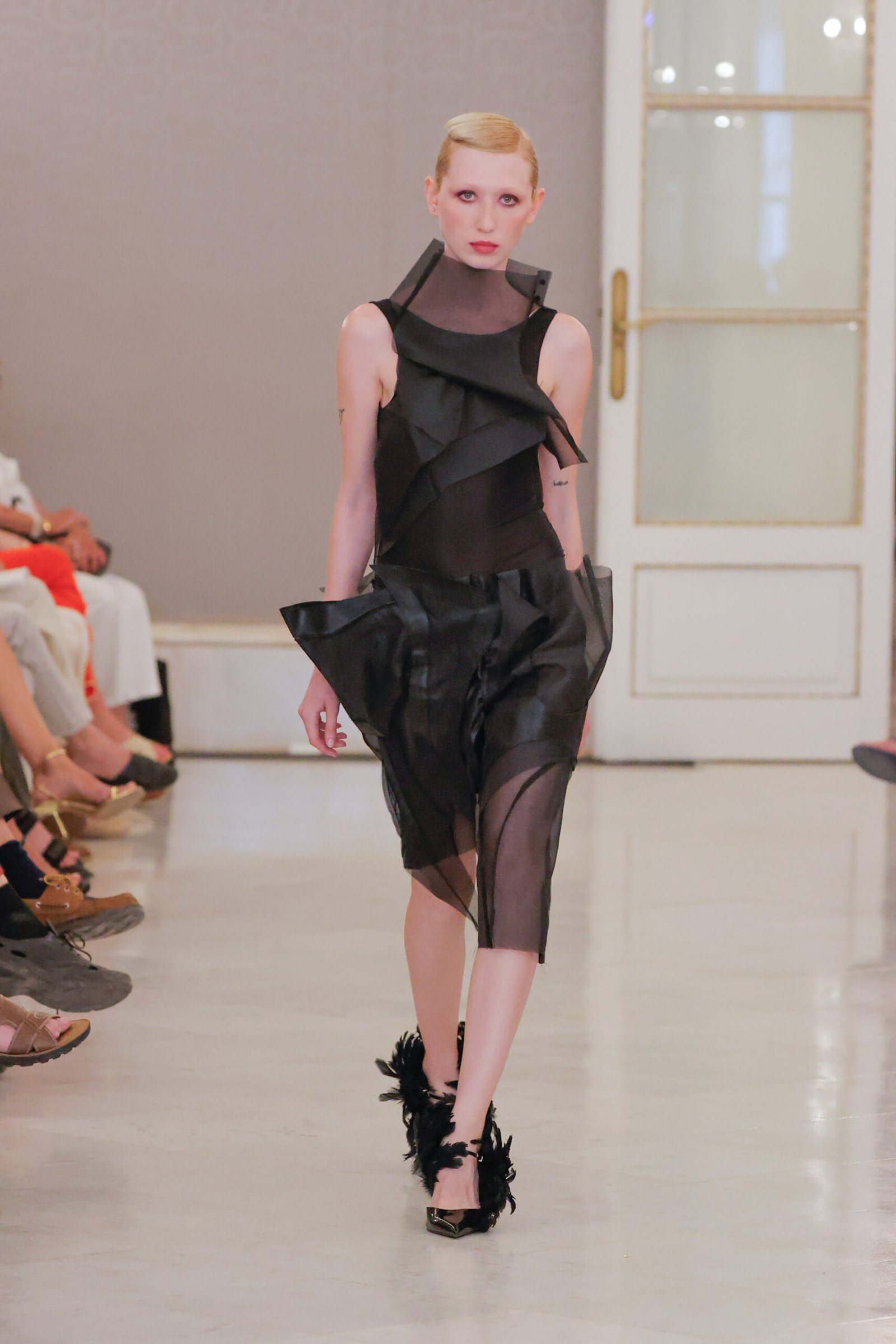
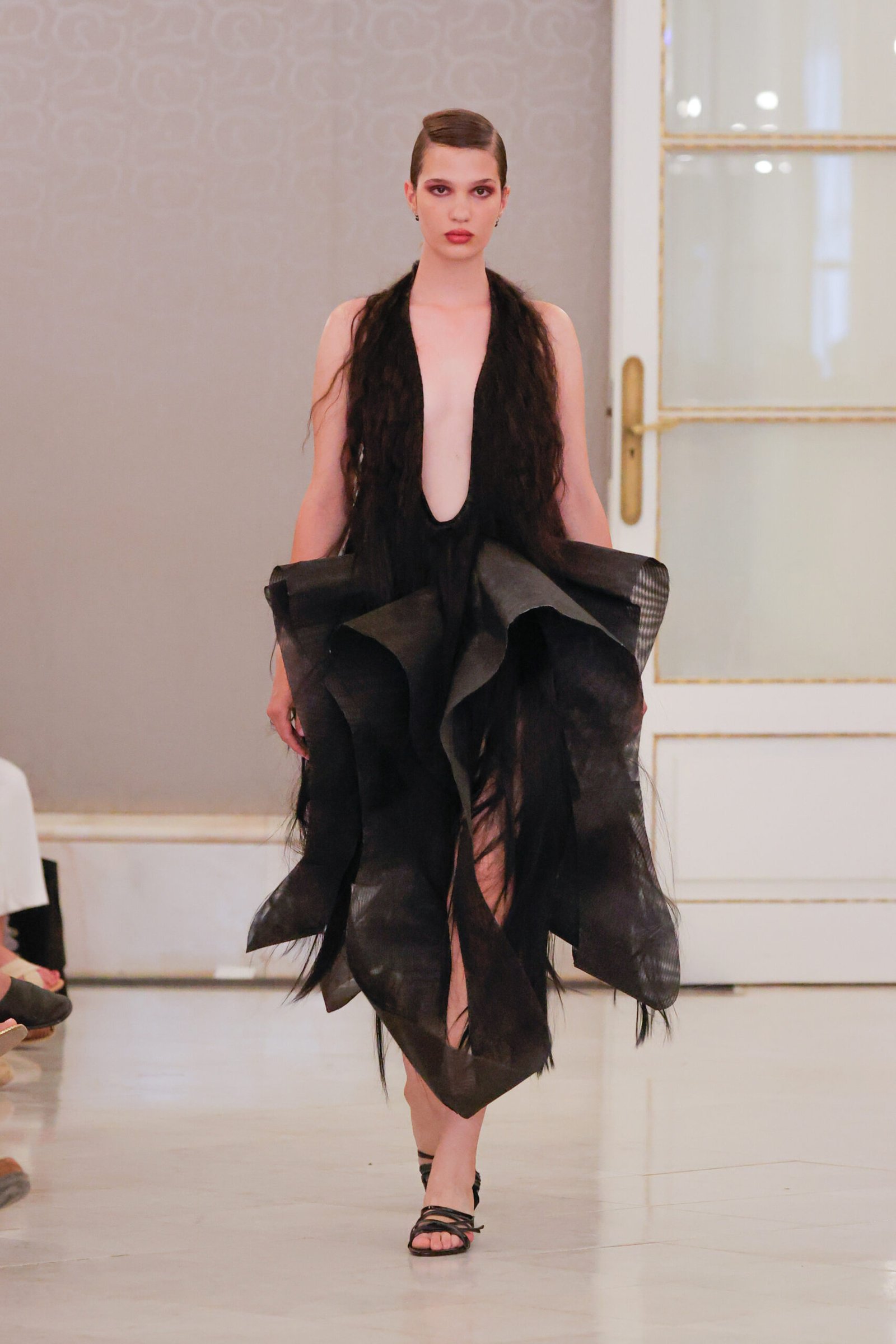
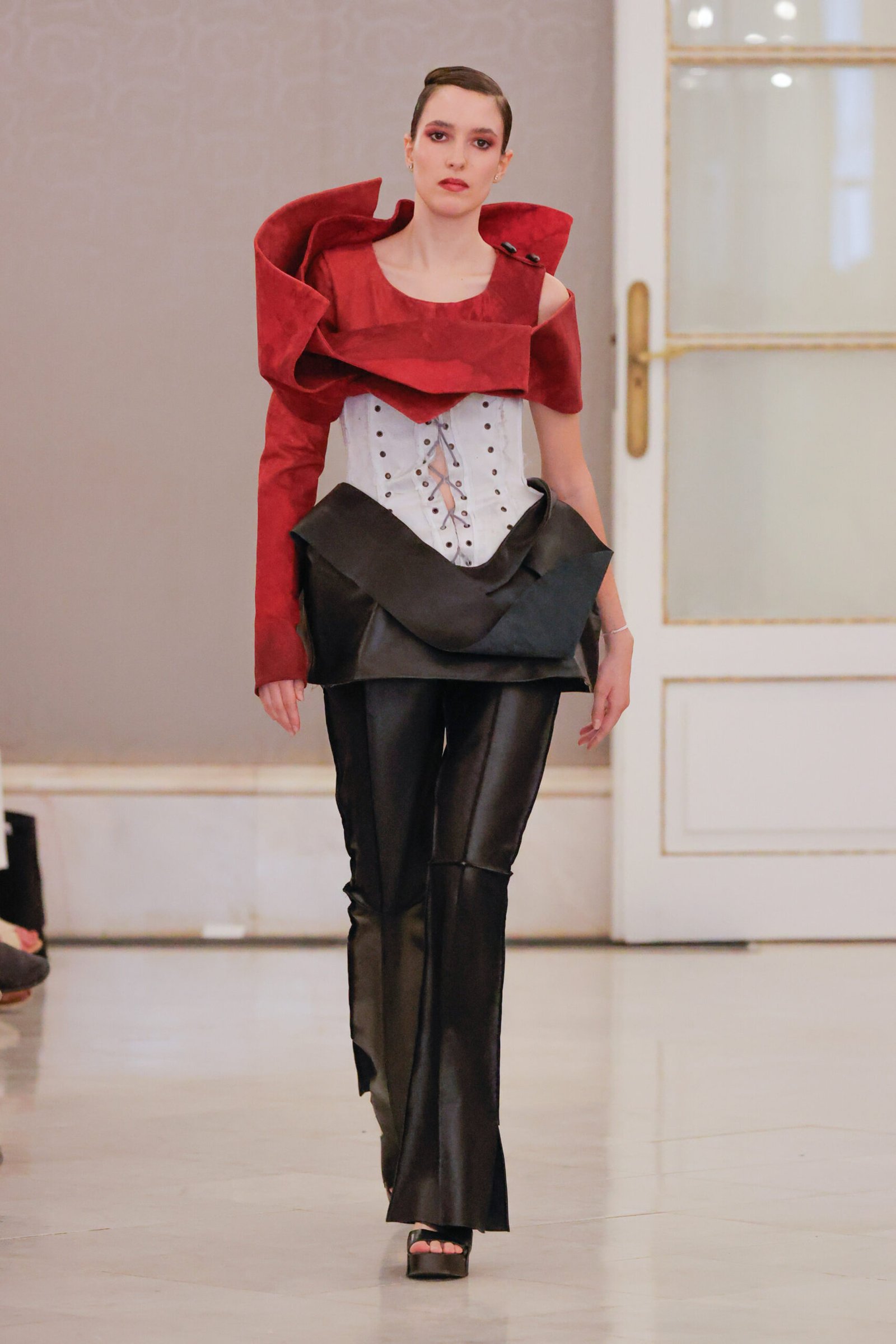
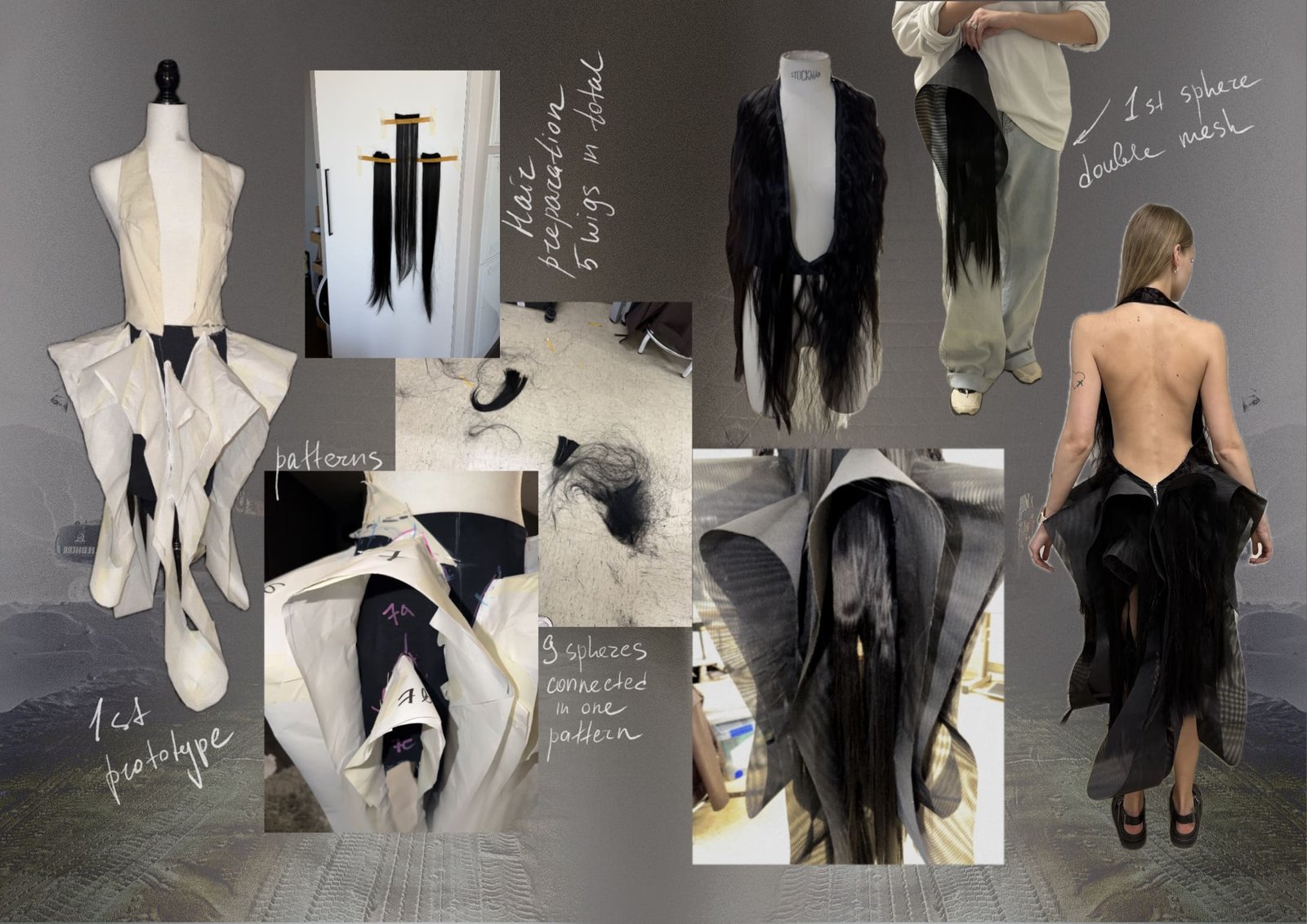
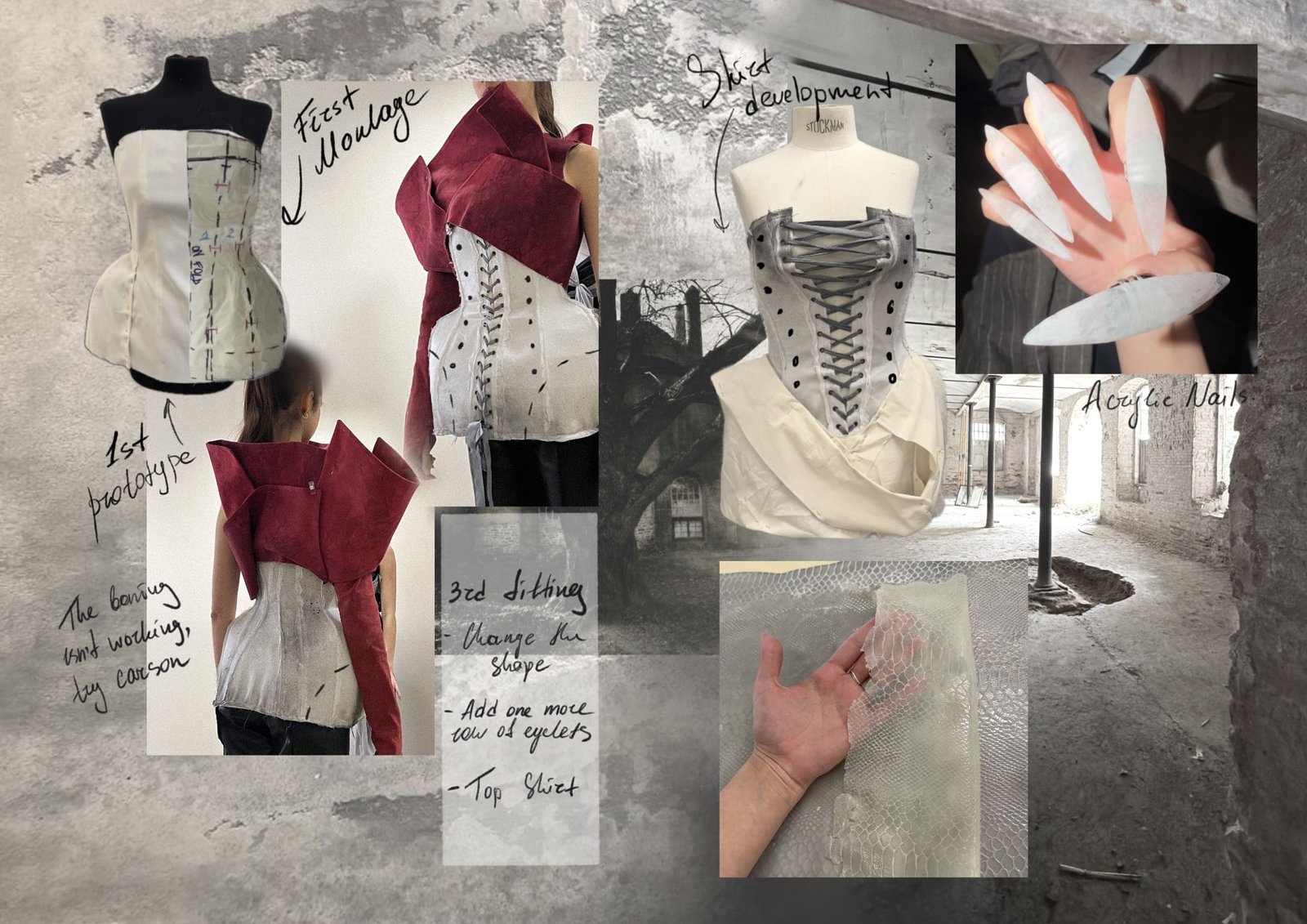
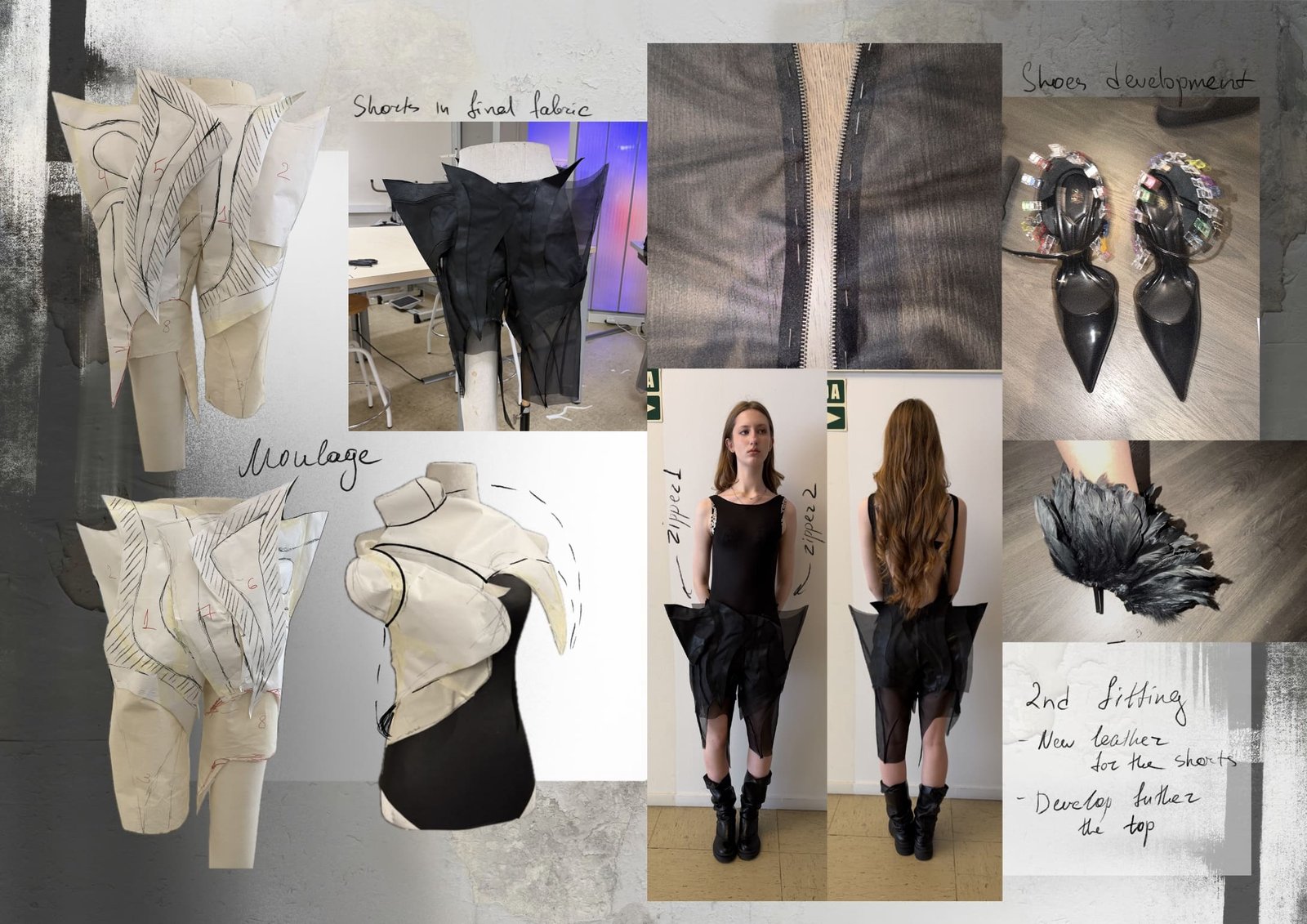
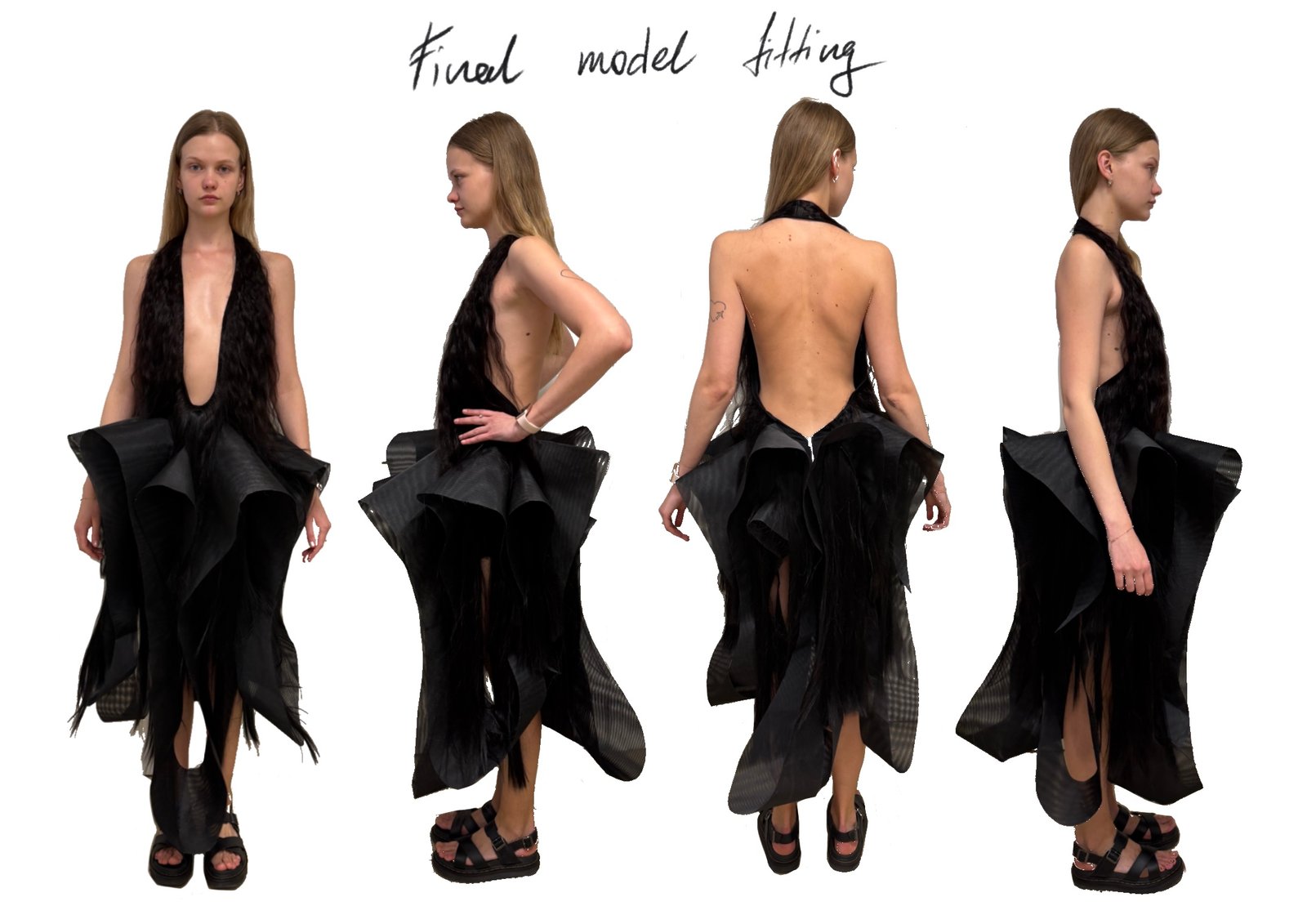
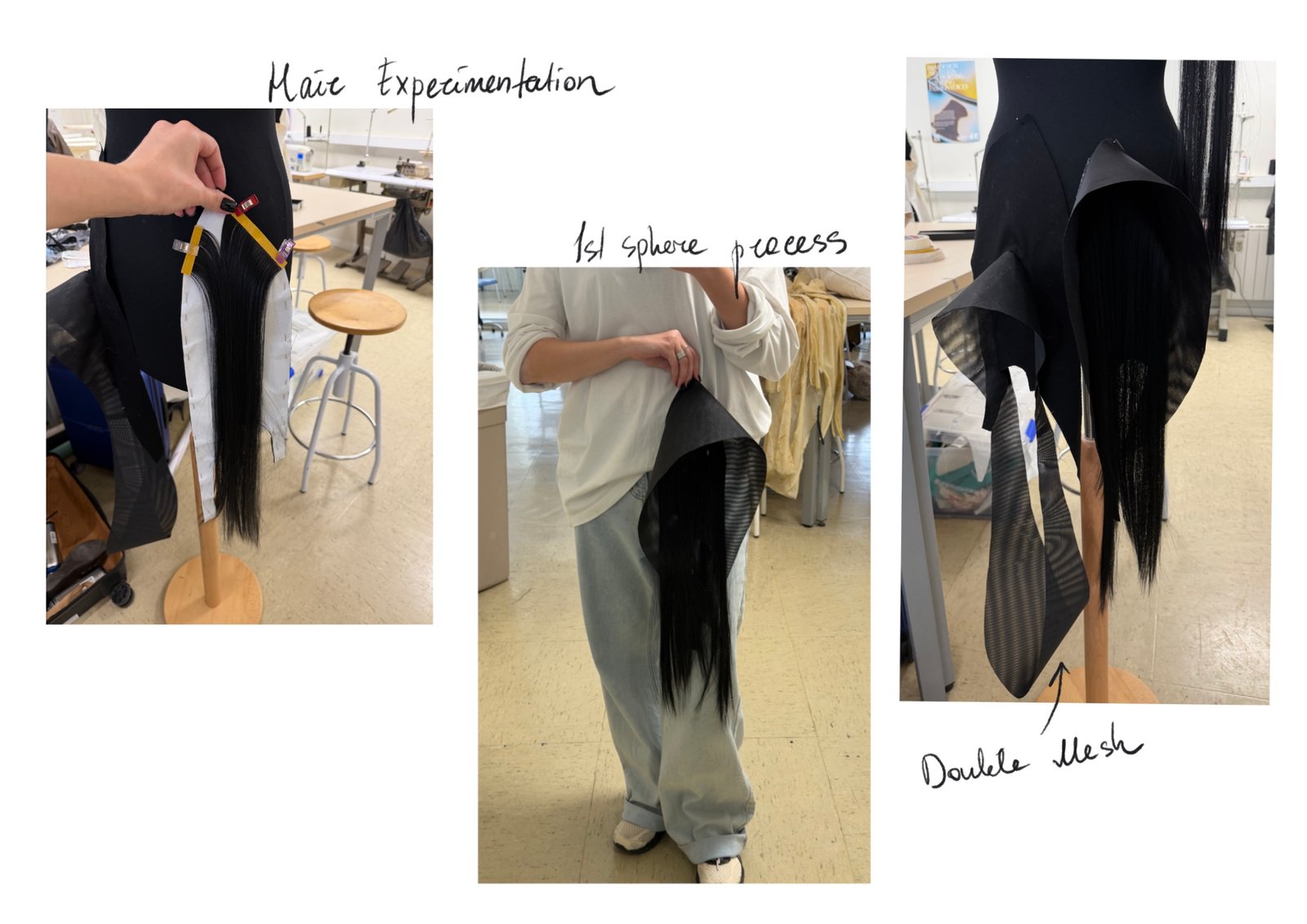
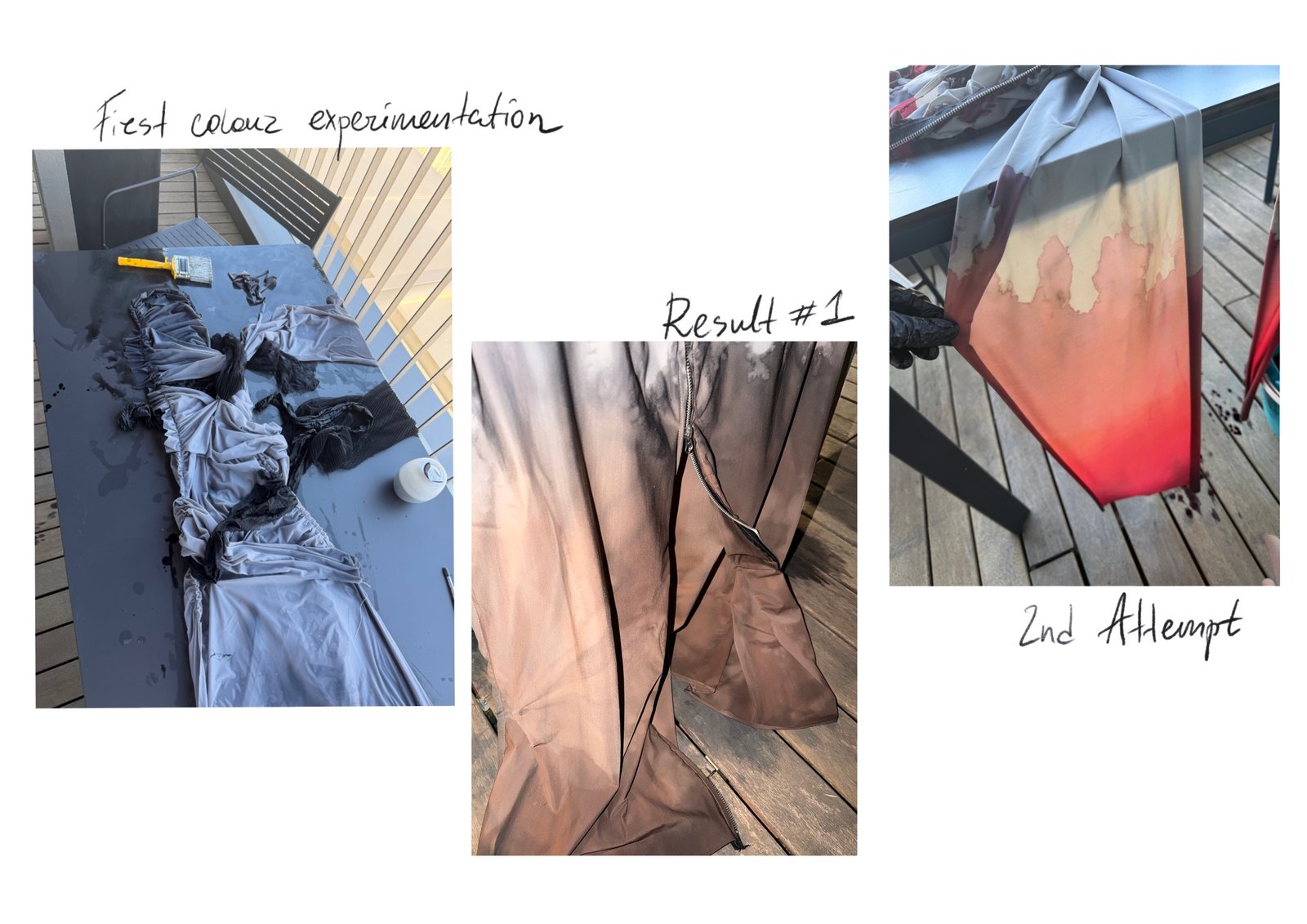
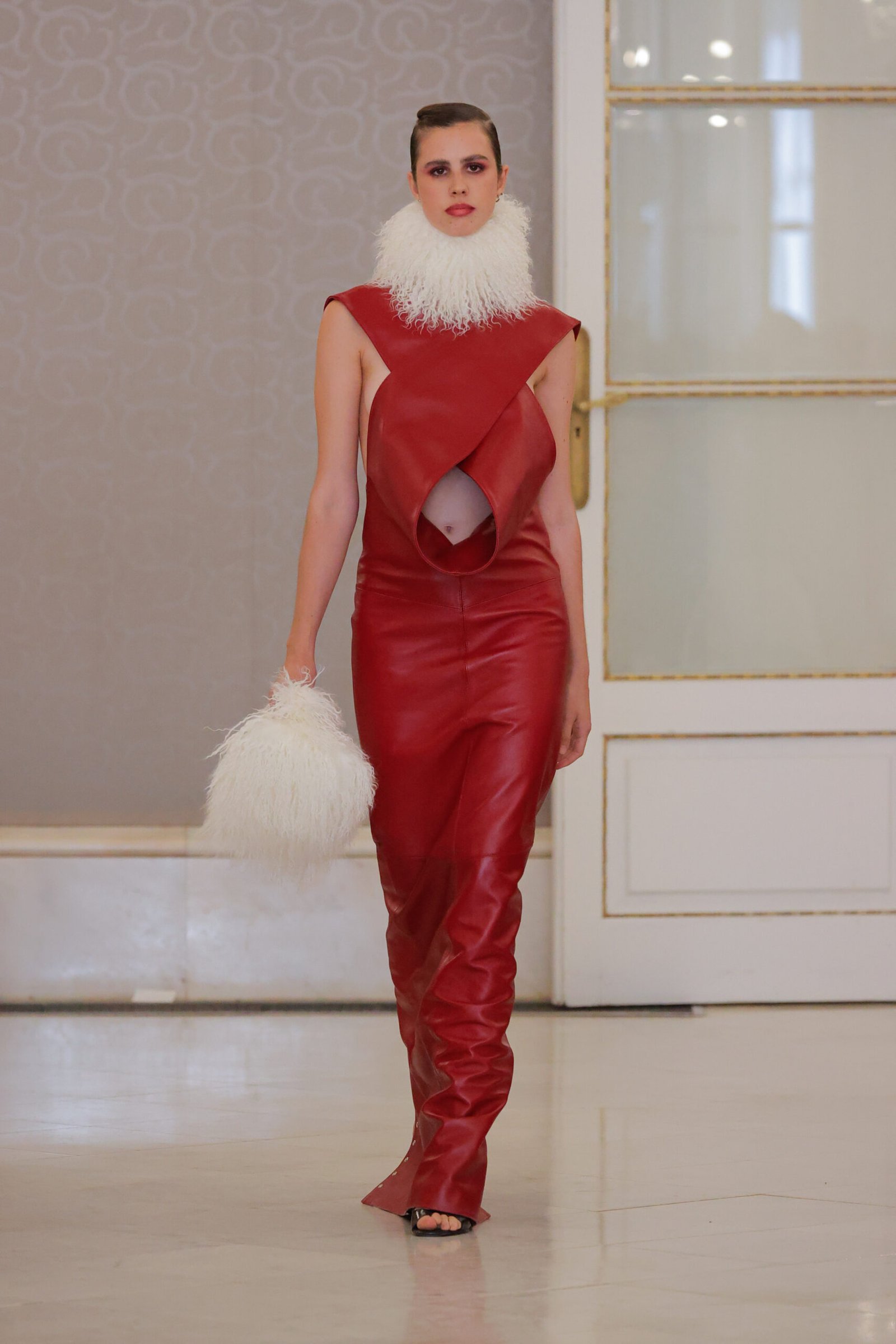
Natalia Tselousova’s collection, Liminal, is inspired by the fragile state between sleeping and waking and the unsettling experience of sleep paralysis. Drawing on liminal spaces, abandoned architecture, and feelings of derealisation, the project explores moments when the body and mind no longer feel entirely one’s own. Leather, sheer fabrics, denim, and details incorporating hair and feathers create garments that exist between structure and decay, control and vulnerability, while muted greys, blacks, dusty blues, and deep reds reinforce themes of isolation, fear, and loss of control. Looking ahead, Tselousova is excited by fashion’s ability to tell meaningful stories and create complete worlds through clothing, image-making, film, and atmosphere. She is particularly drawn to designers who build immersive narratives around their work, while expressing concern about constant production cycles and trend-driven consumption. Instead, she hopes to see greater emphasis placed on craftsmanship, experimentation, and originality.

@ttselousova_

Sara Vainer (Savai Studio)

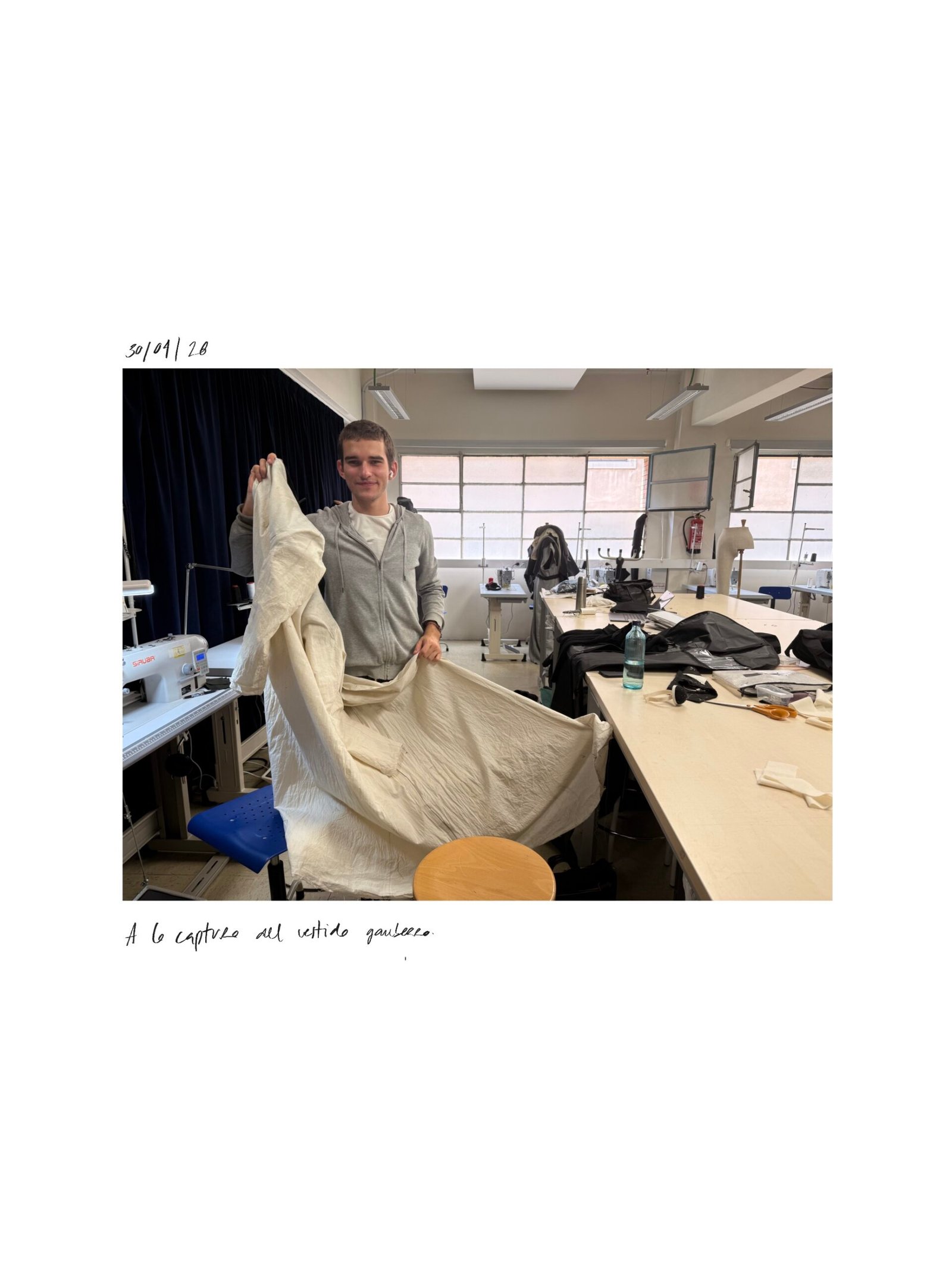
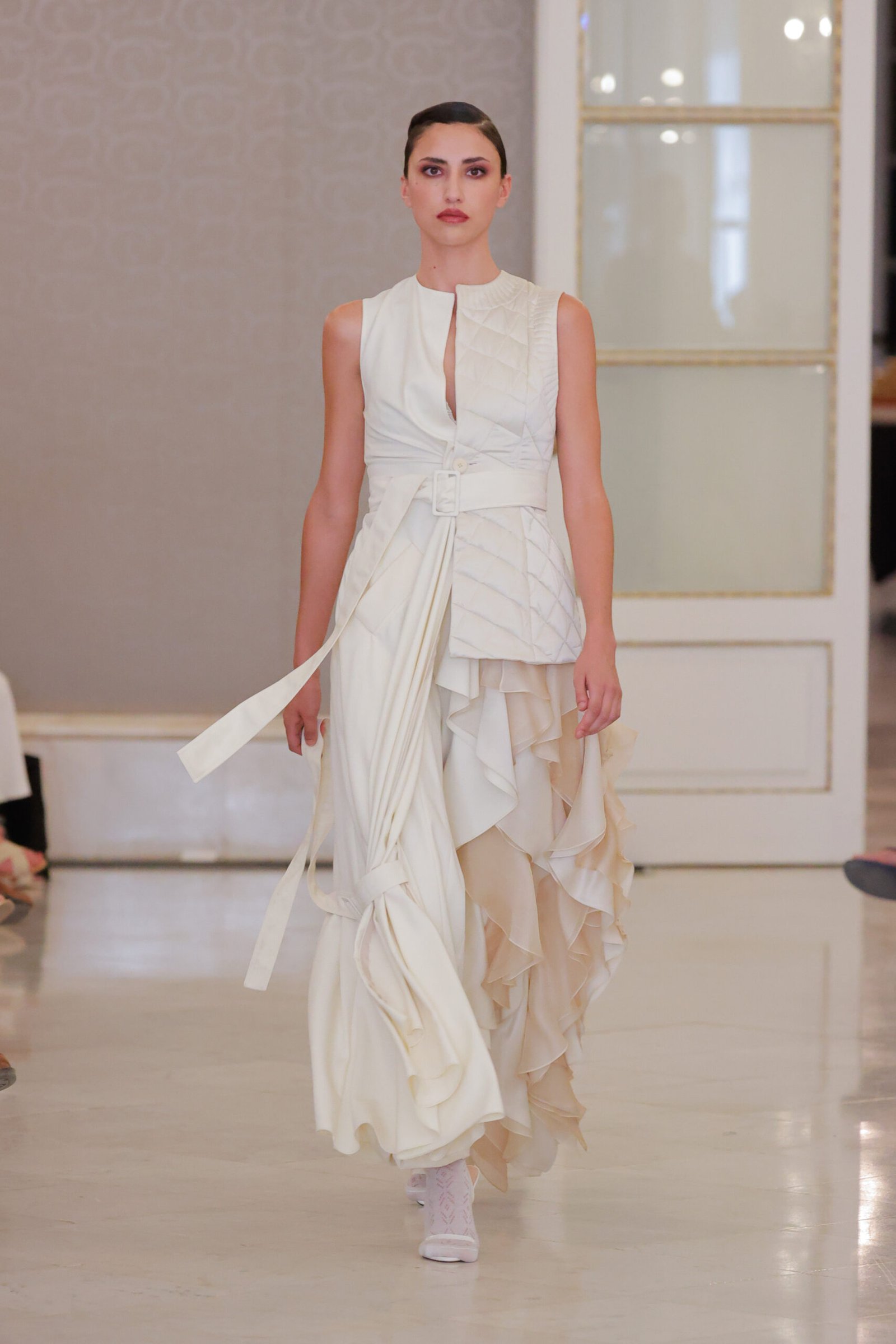
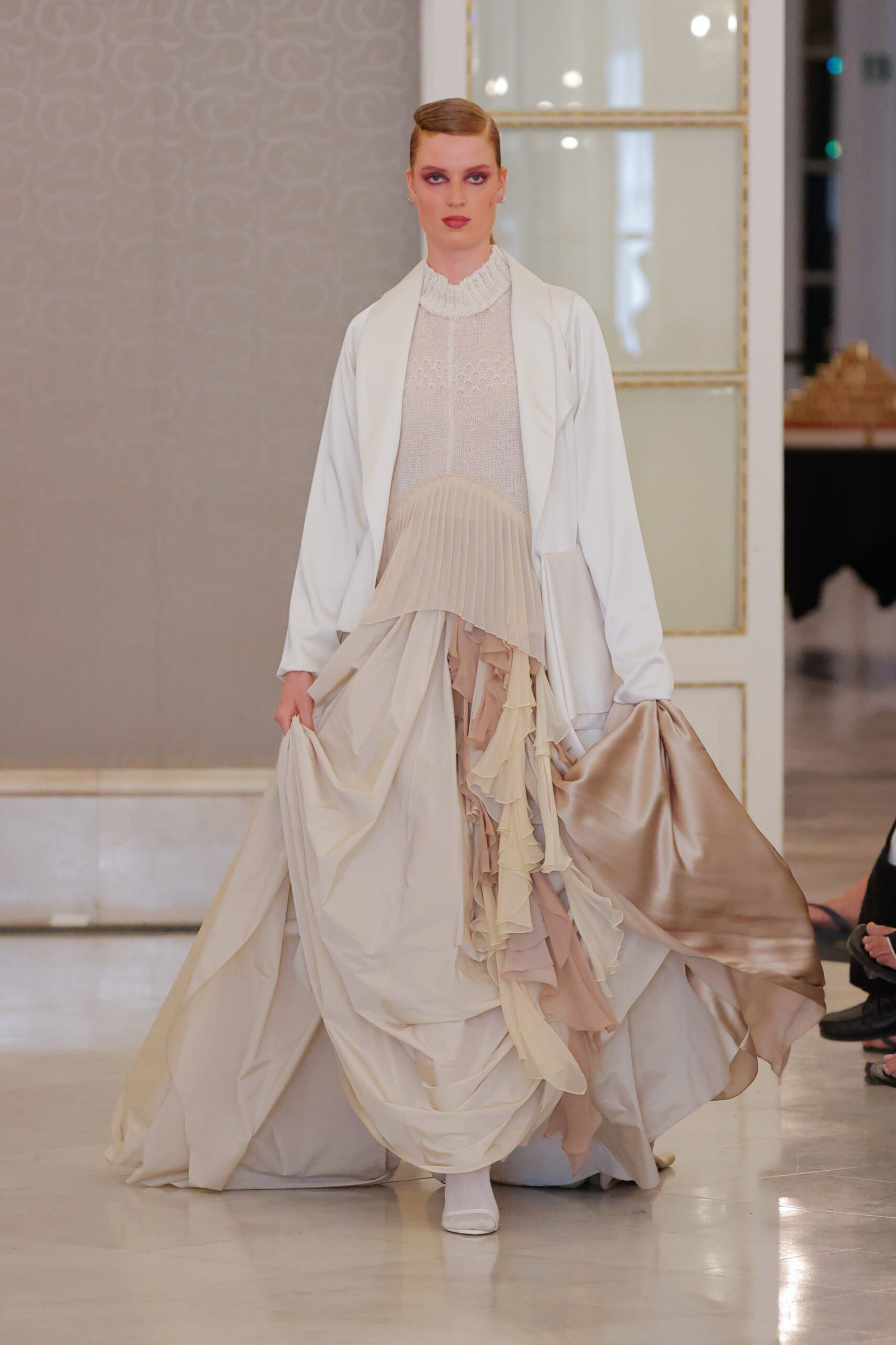
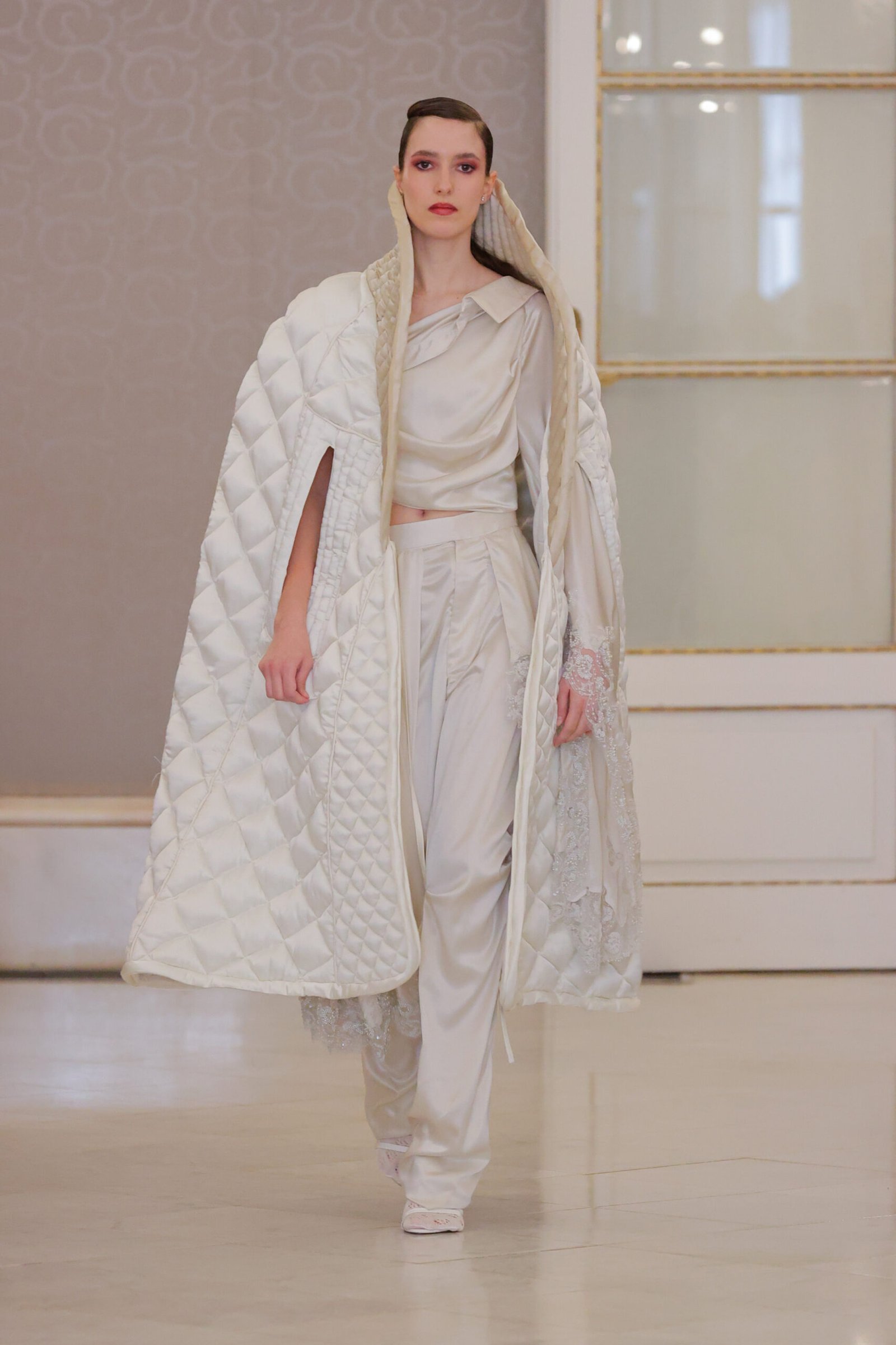
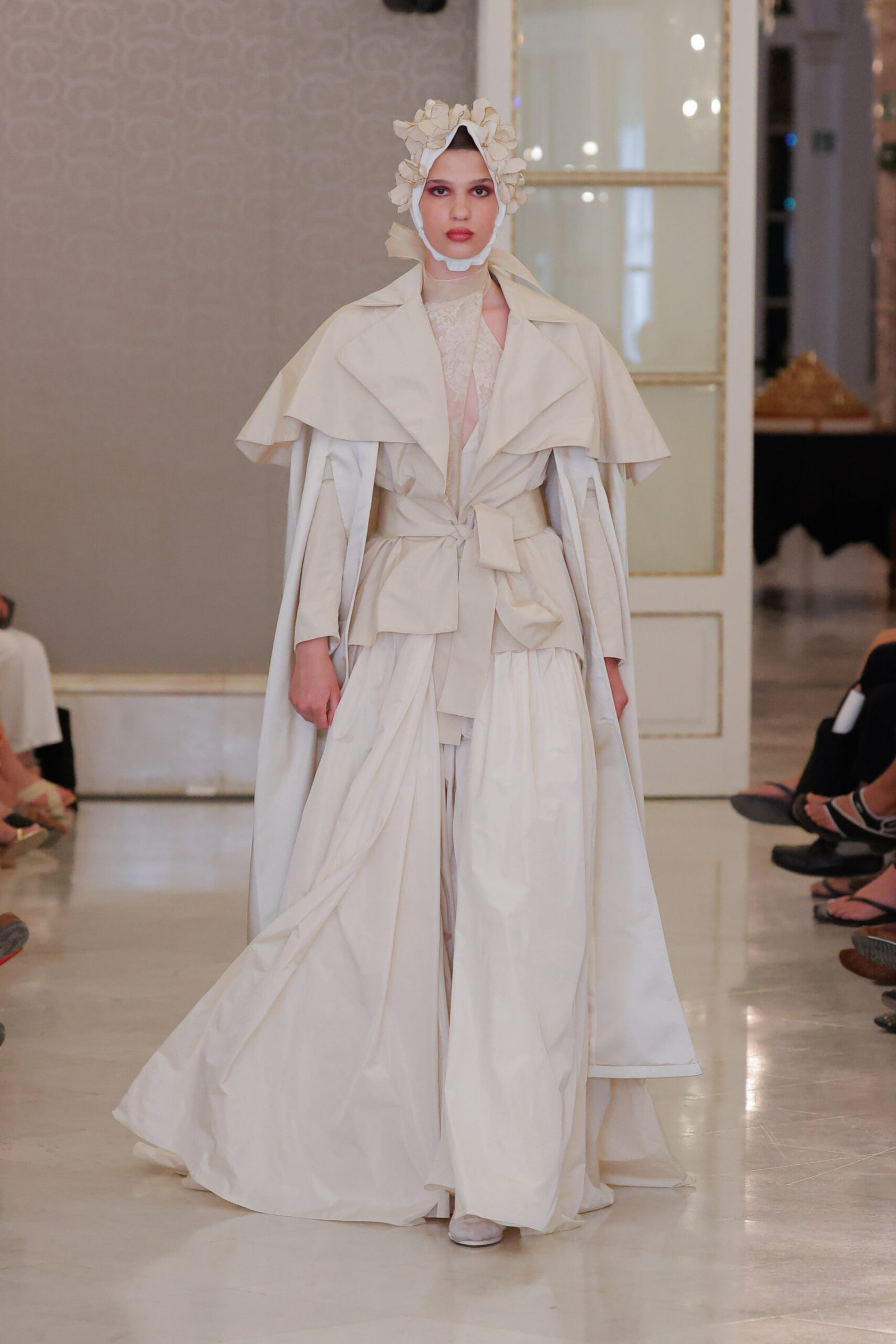
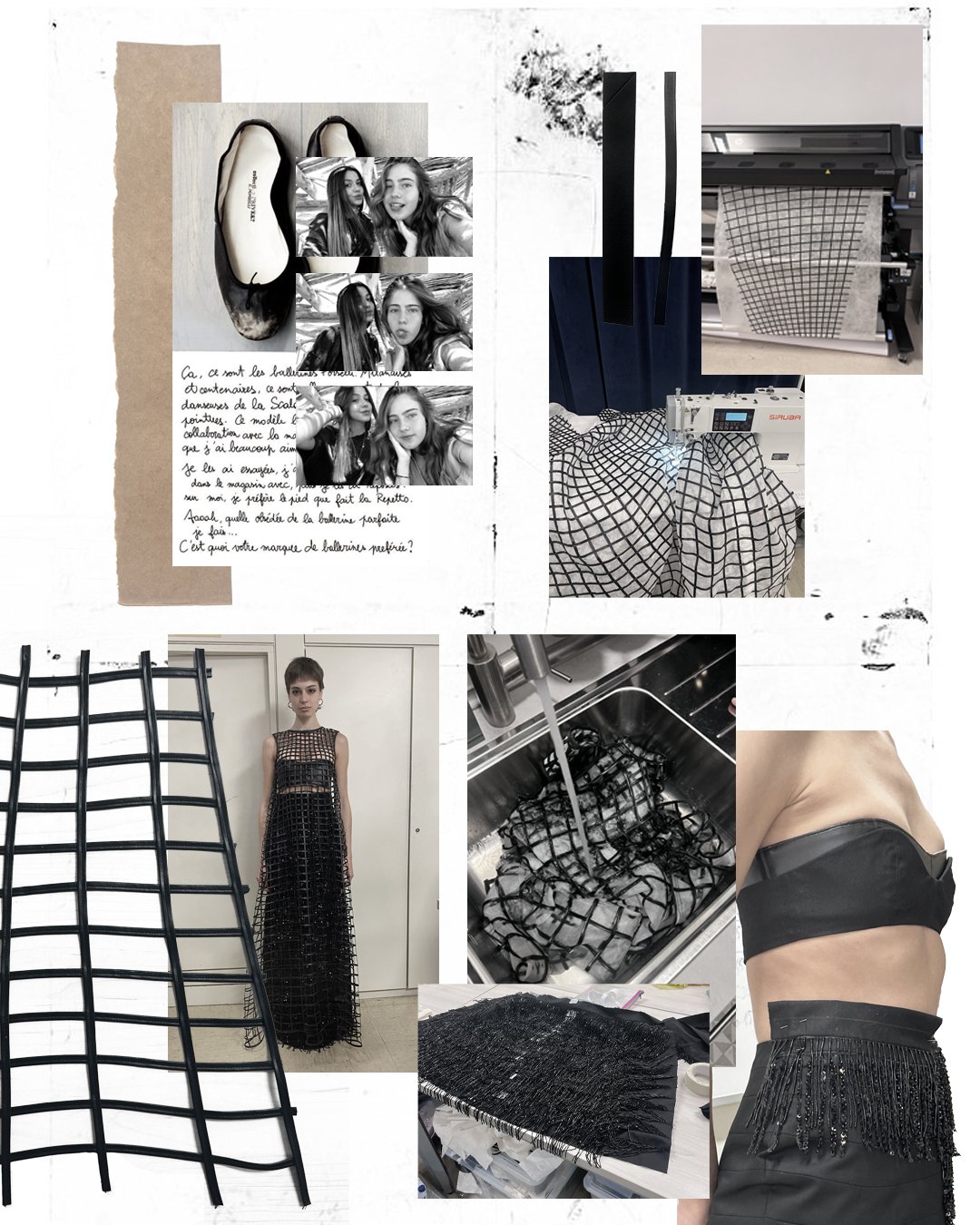
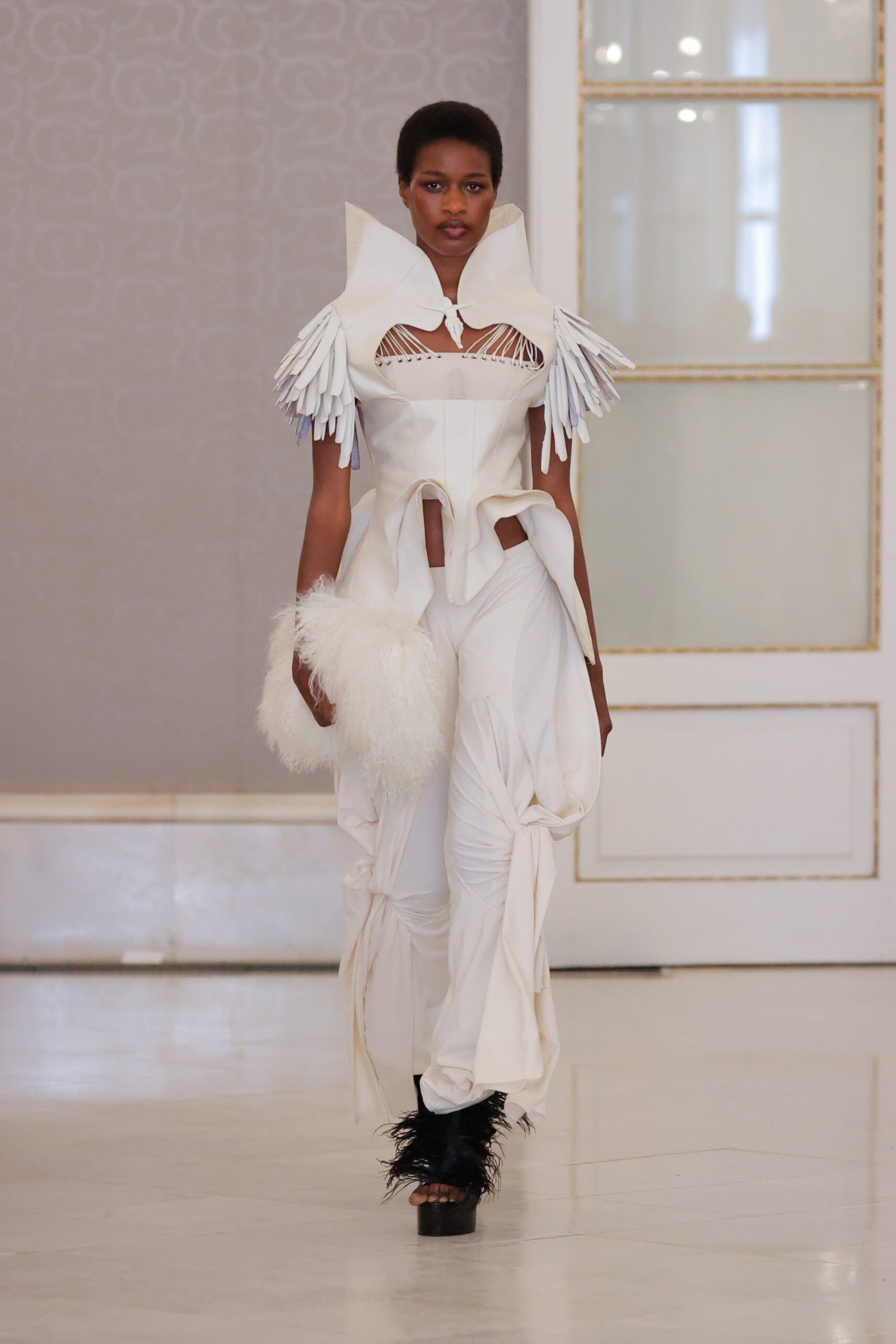
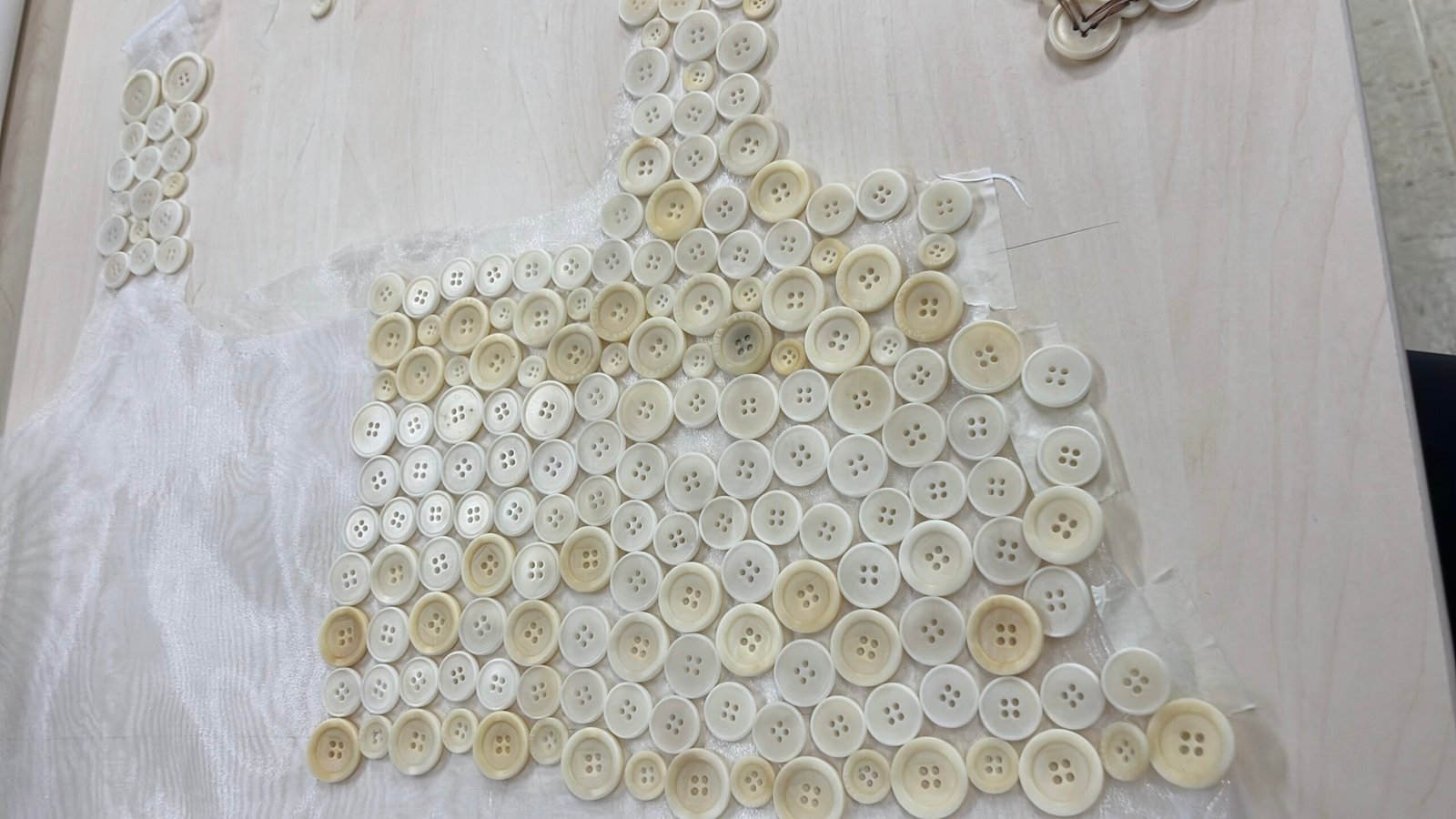
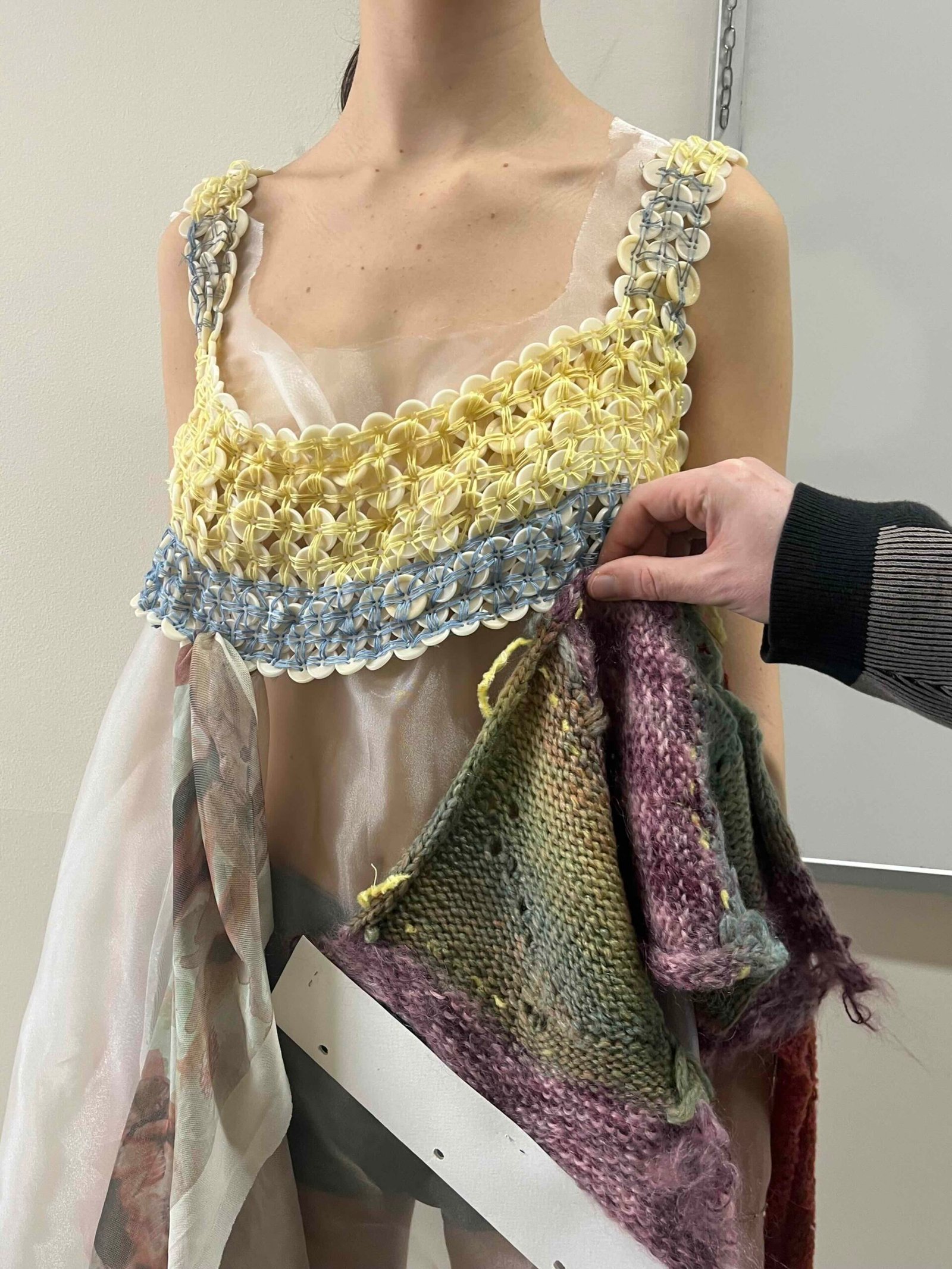
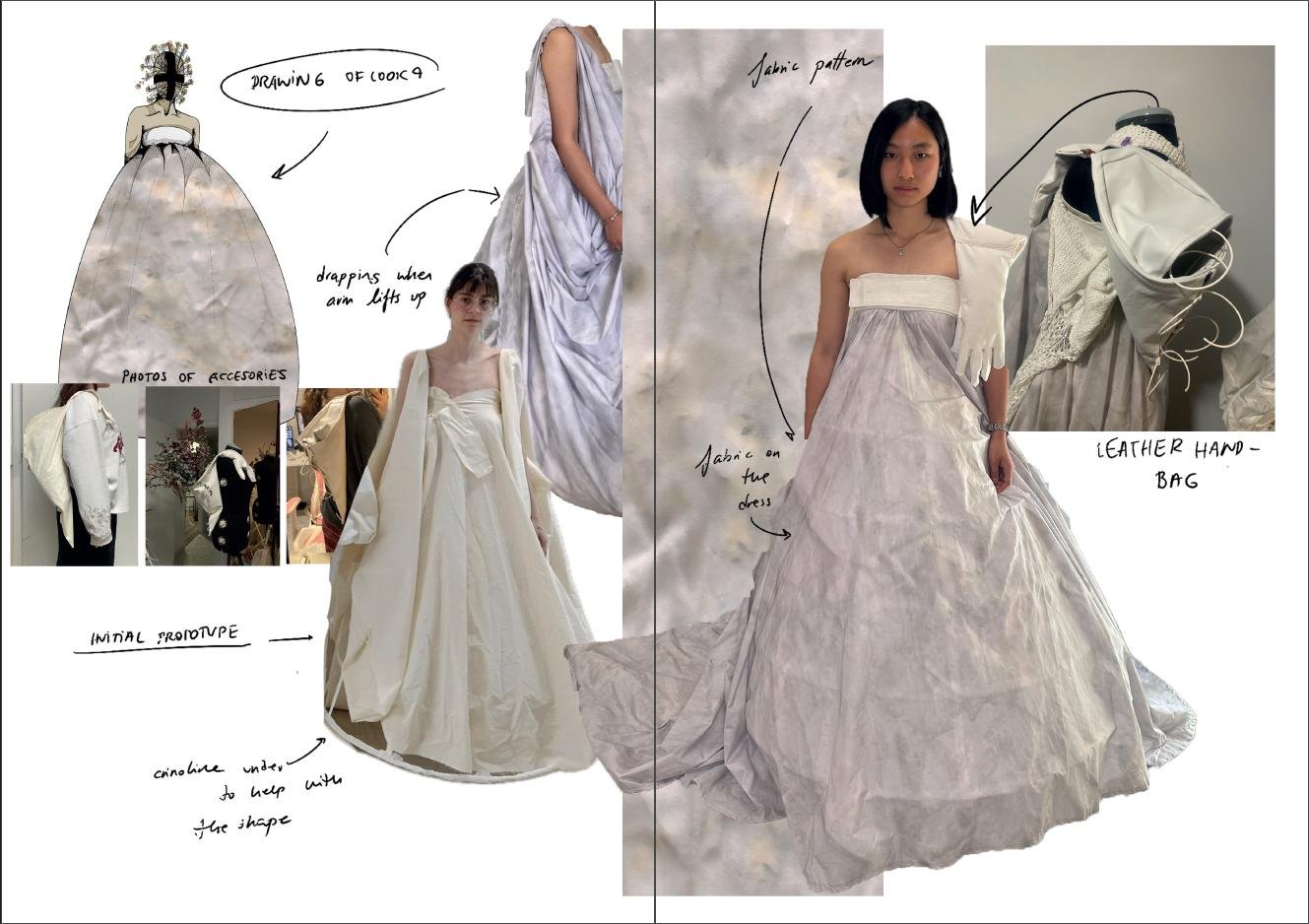
Sara Vainer’s collection, Bailar en la Herida, explores the tension between discipline and fragility through contemporary bridalwear. Inspired by ballet, body control, and the hidden emotional and physical demands behind ideals of beauty, the project examines how the body is shaped, protected, and exposed. Research into dance culture, body image, and the disciplined body informs garments that balance structured and fluid silhouettes, while satin, mikado, taffeta, organza, mohair knit, and hand-embroidered lace are rendered in warm ivories, creams, champagne tones, and soft neutrals. Craftsmanship and local sourcing remain central to the collection. Vainer is motivated by the possibility of contributing to a more thoughtful approach to fashion through craftsmanship, local production, and the emotional value of clothing beyond trends. 

@savai_studio

Anna González

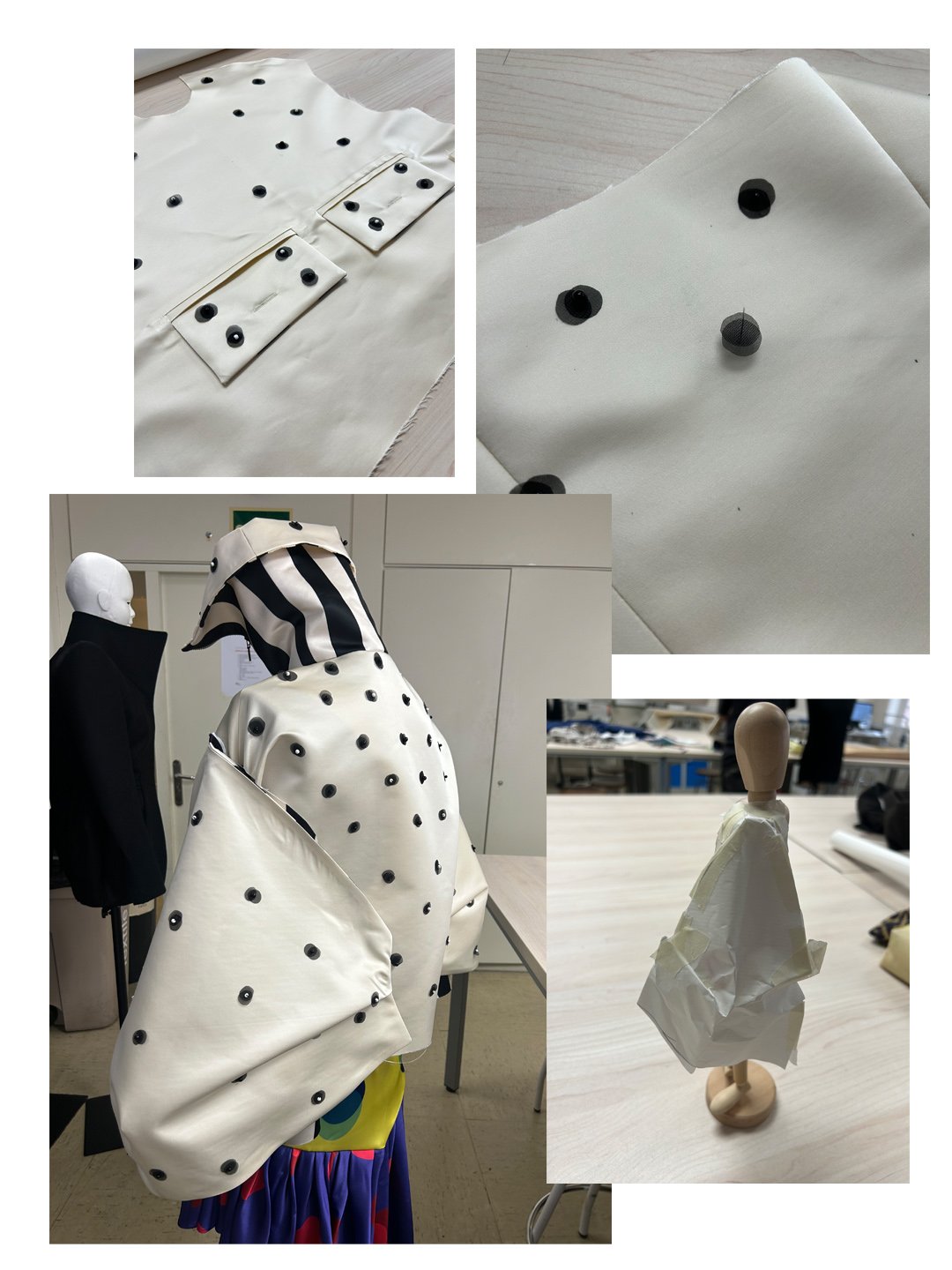
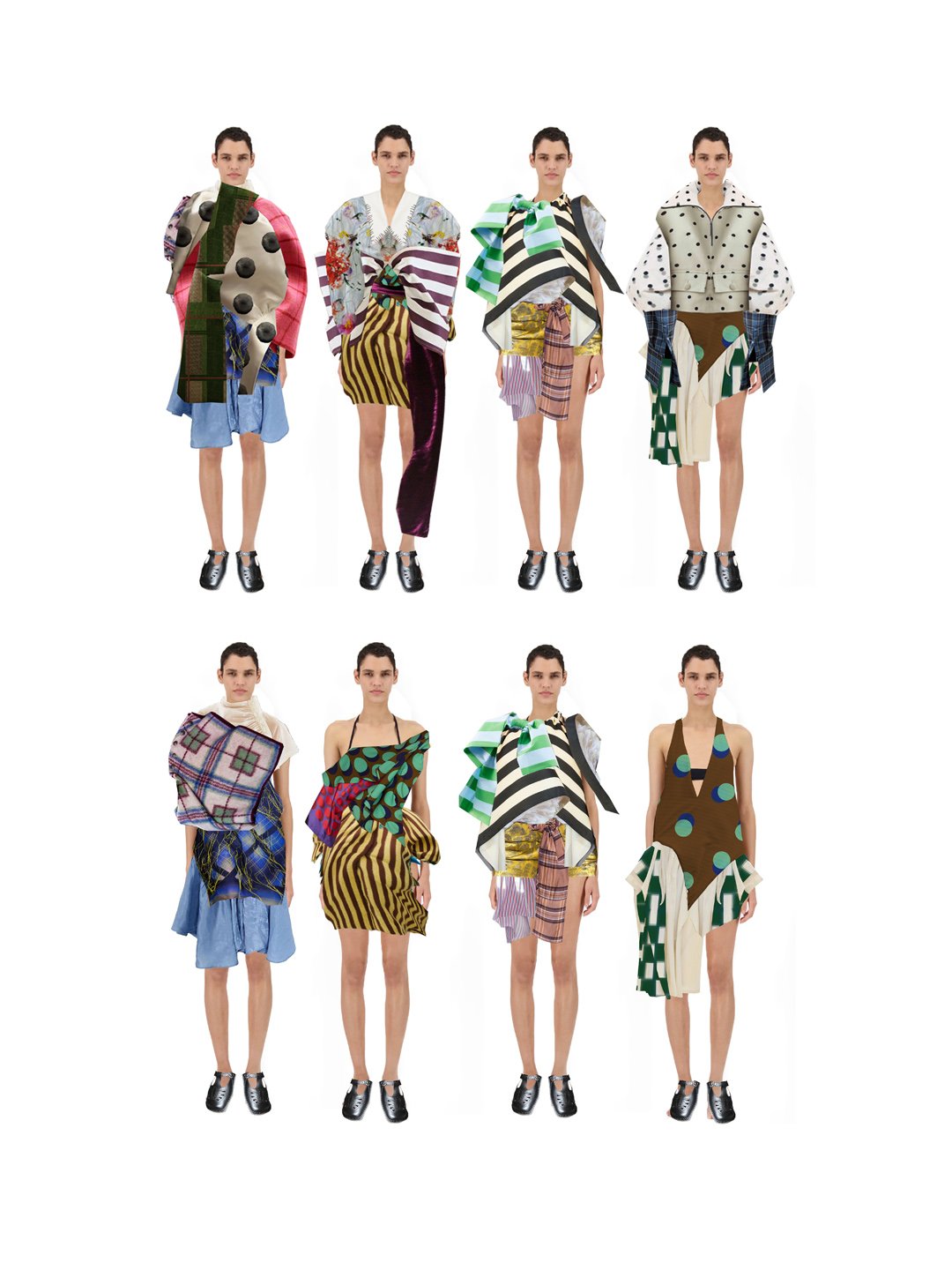
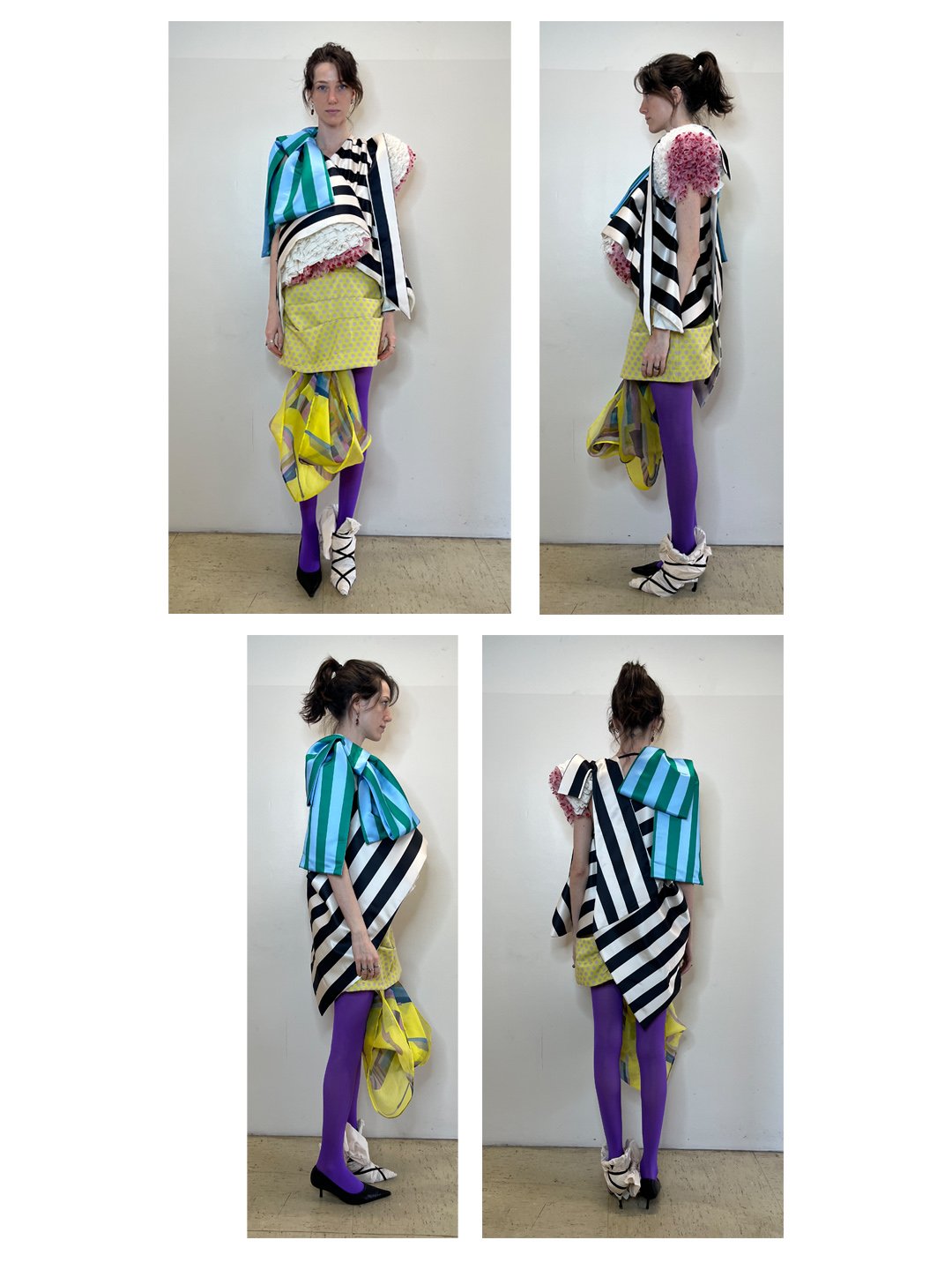
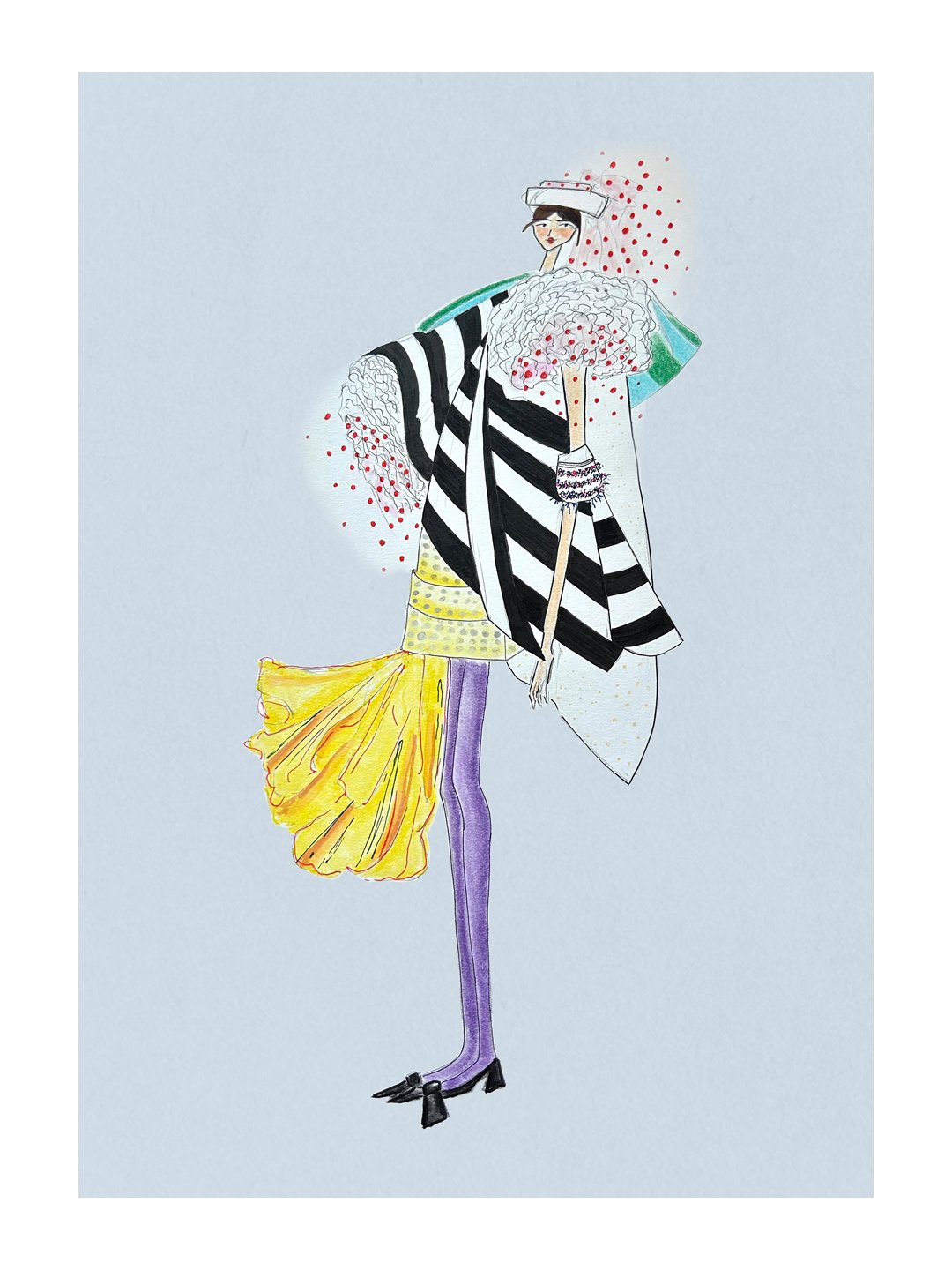
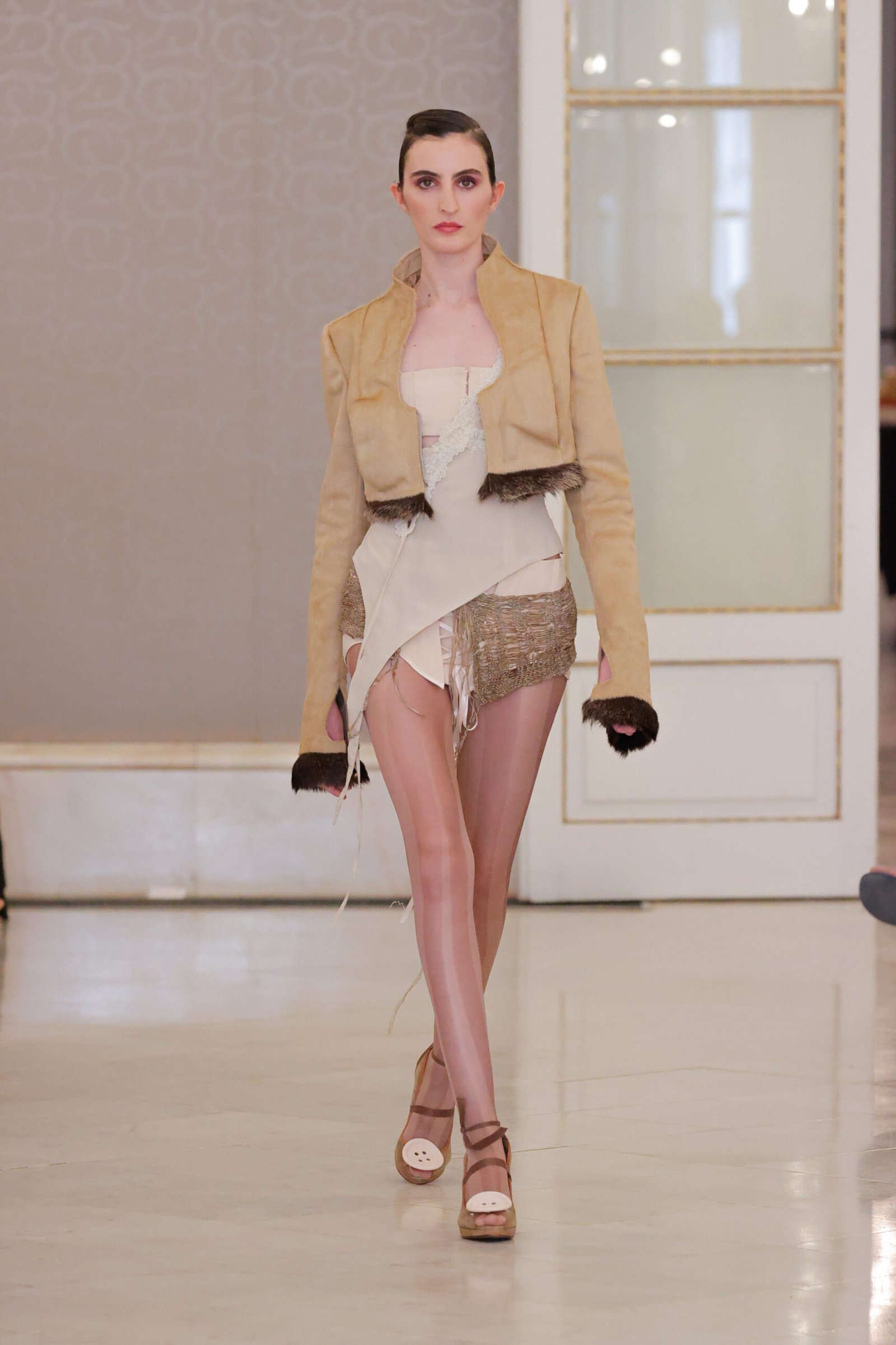
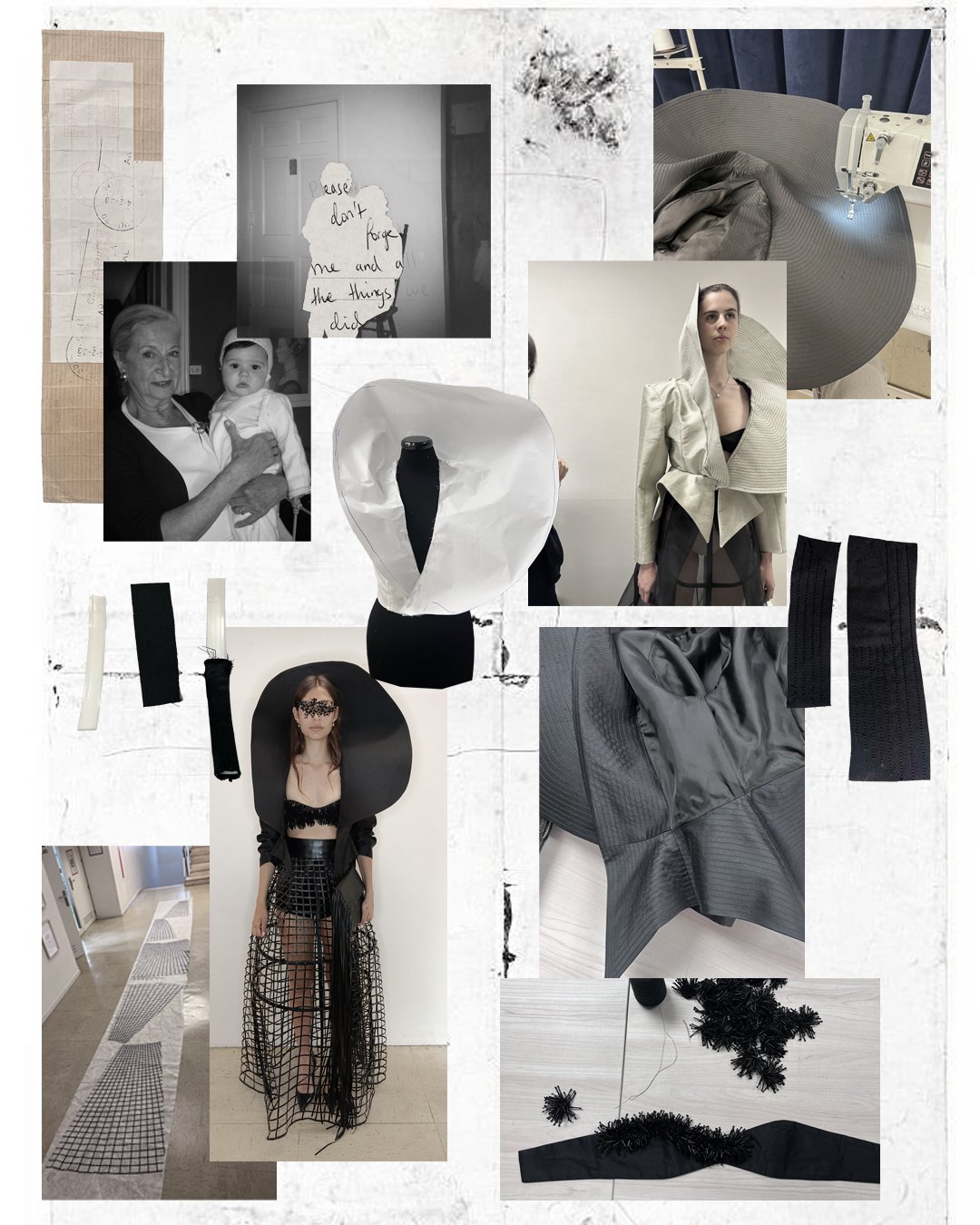
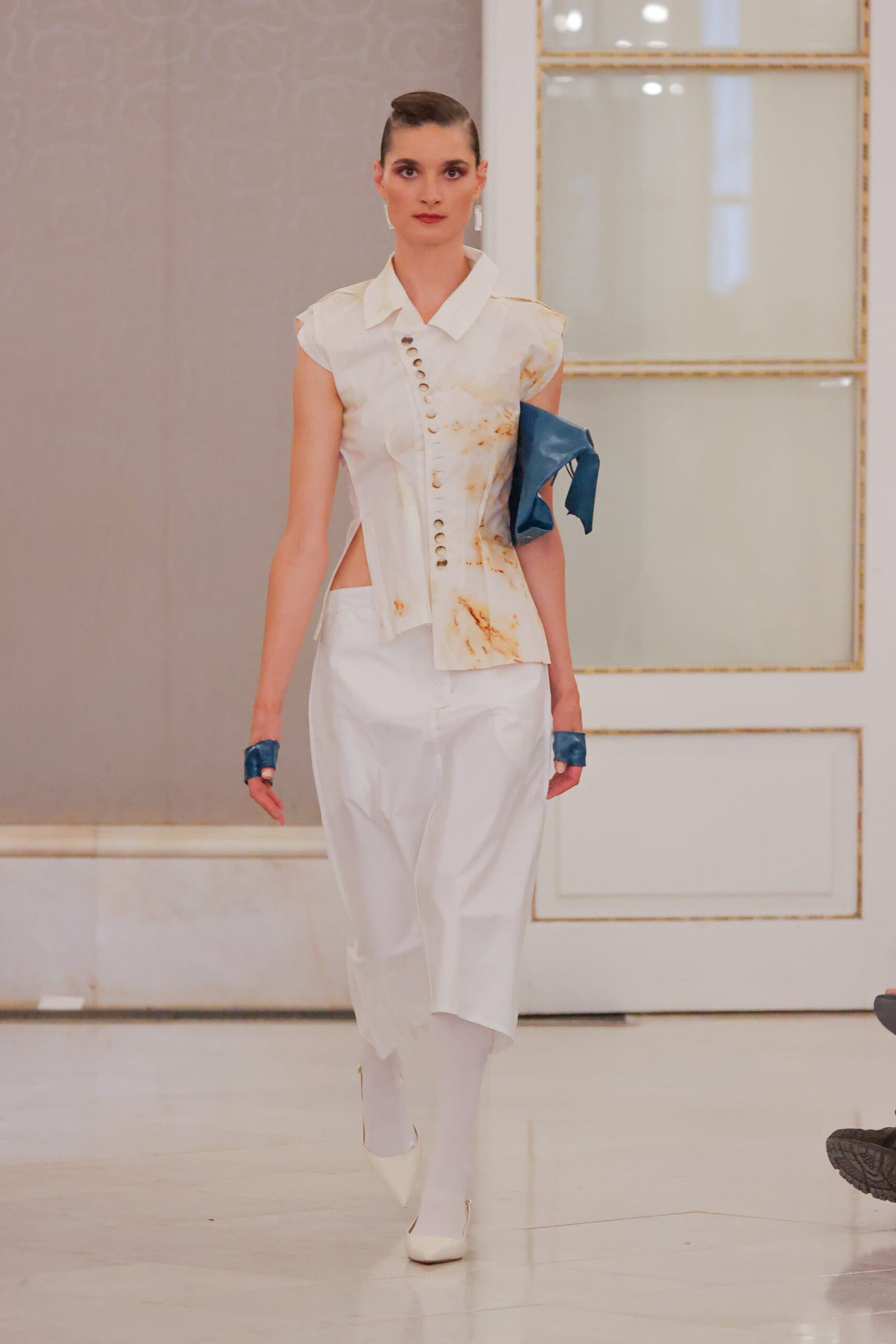
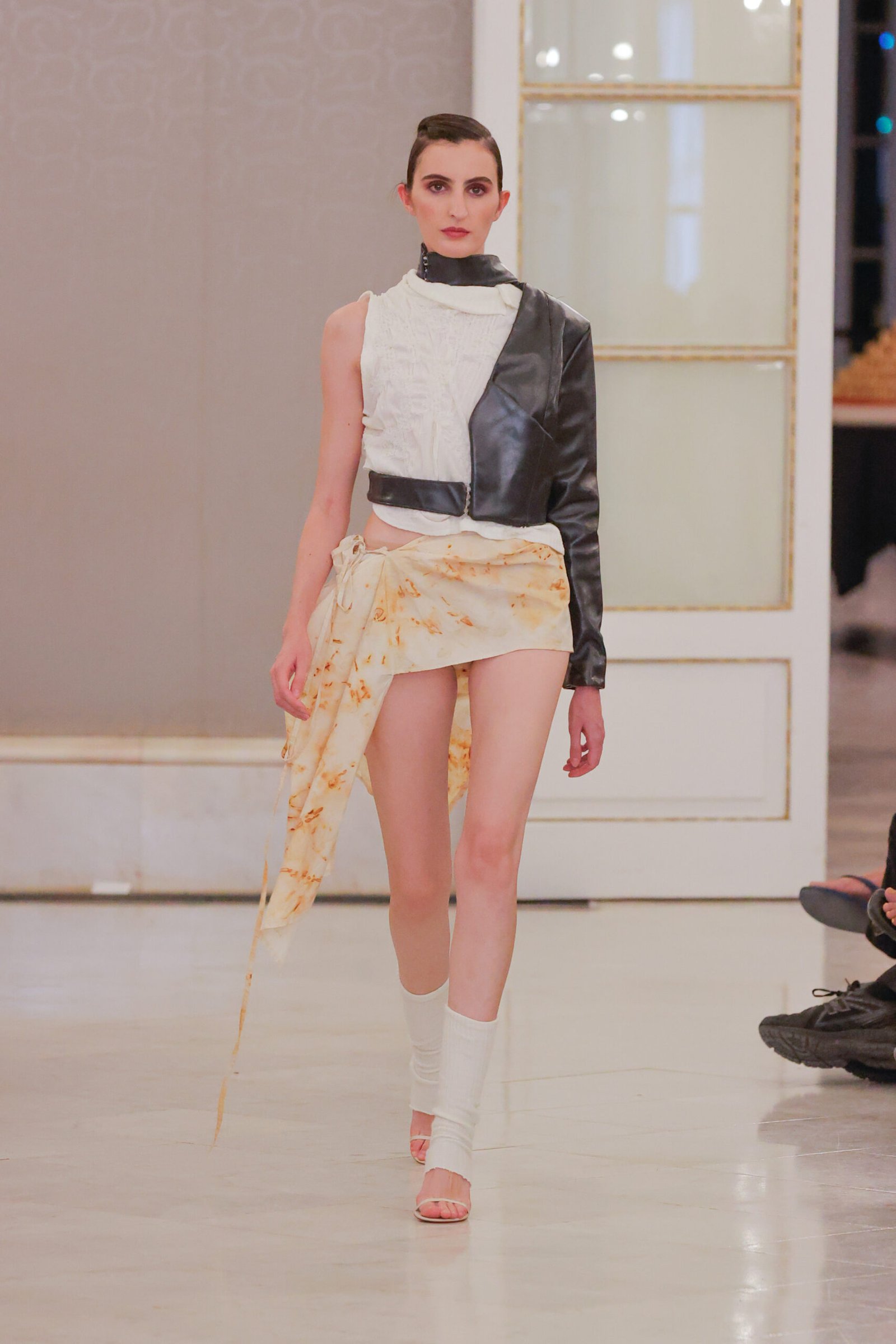
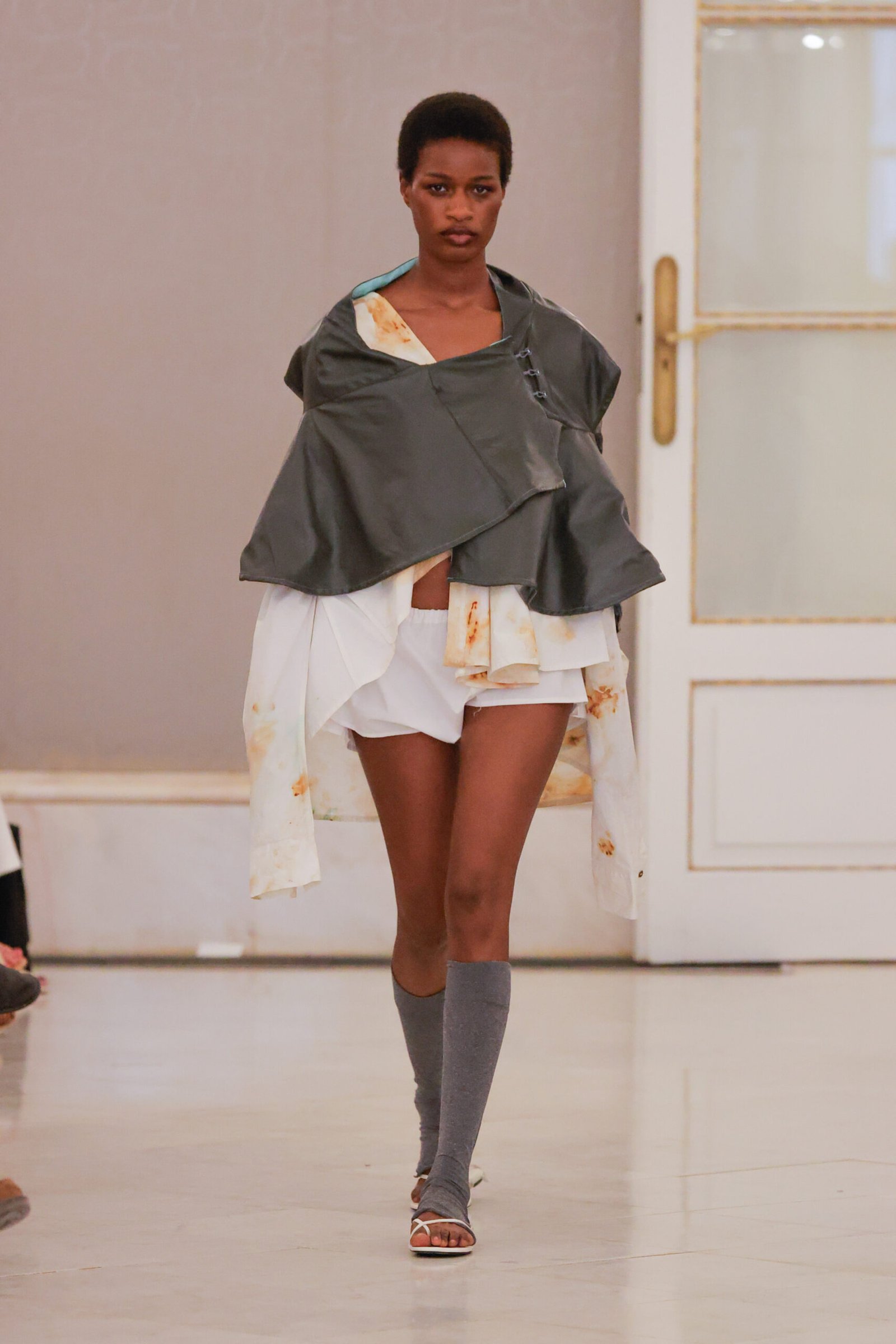
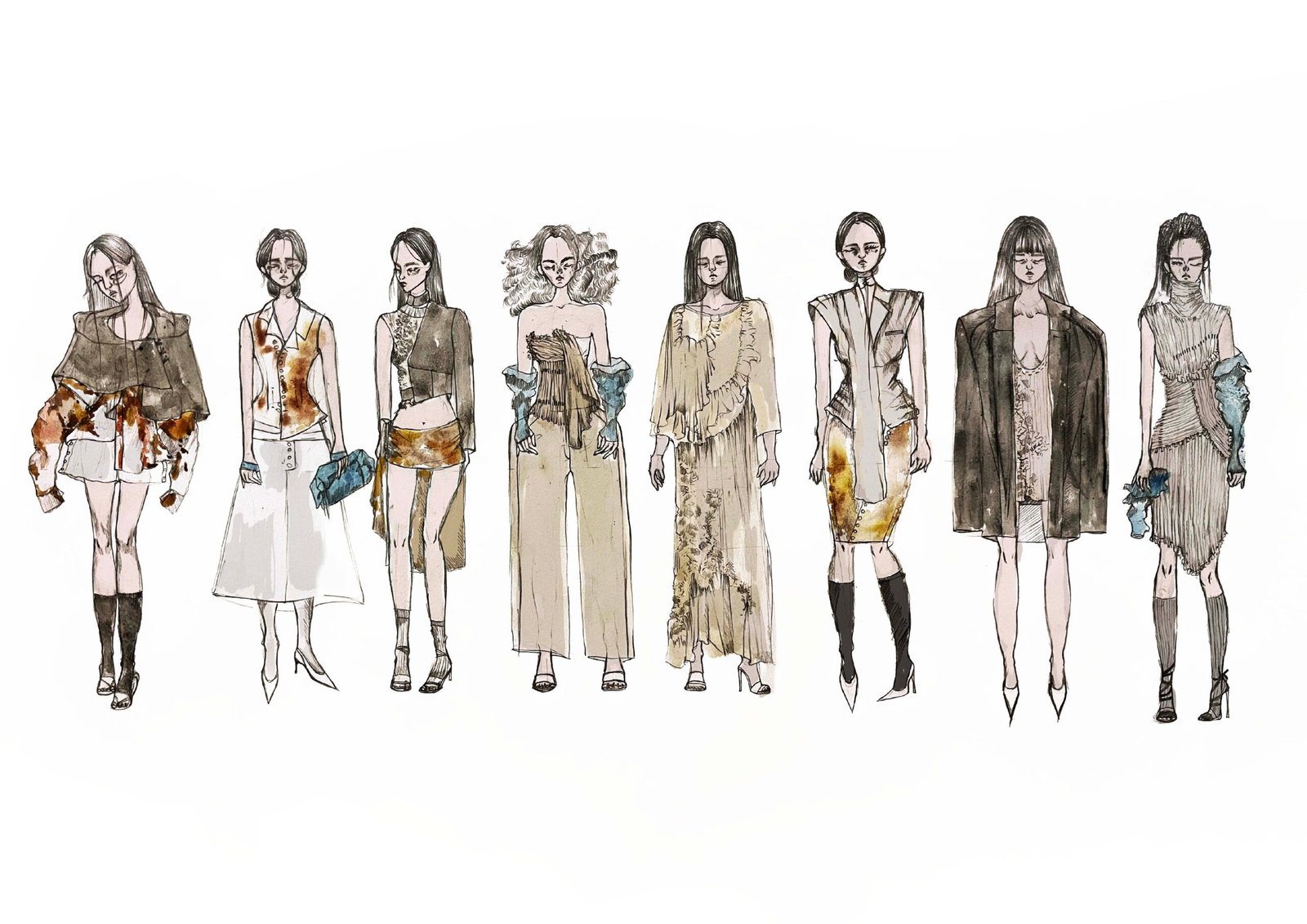
Anna González’s collection is inspired by an imaginary sanctuary that exists only in her mind: a place of peace, freedom, and escape from everyday life that can only be reached through scent. Developed in collaboration with the perfumers at MANE, the project includes a fragrance designed to transport the wearer to this intangible world. The four looks correspond to different stages in the perfume’s evolution, translating its top, heart, and base notes into shape, texture, colour, and textile manipulation. Notes of wood, incense, and caramel inform the collection throughout, while multifunctional garments reflect the transformative nature of perfume itself. González is motivated by the desire to create and to continue developing ideas through research into materials, shapes, colours, and textures. 

@annag.archives

Screenshot
Screenshot
Screenshot
Screenshot
Screenshot
Screenshot

Andrea Garcia

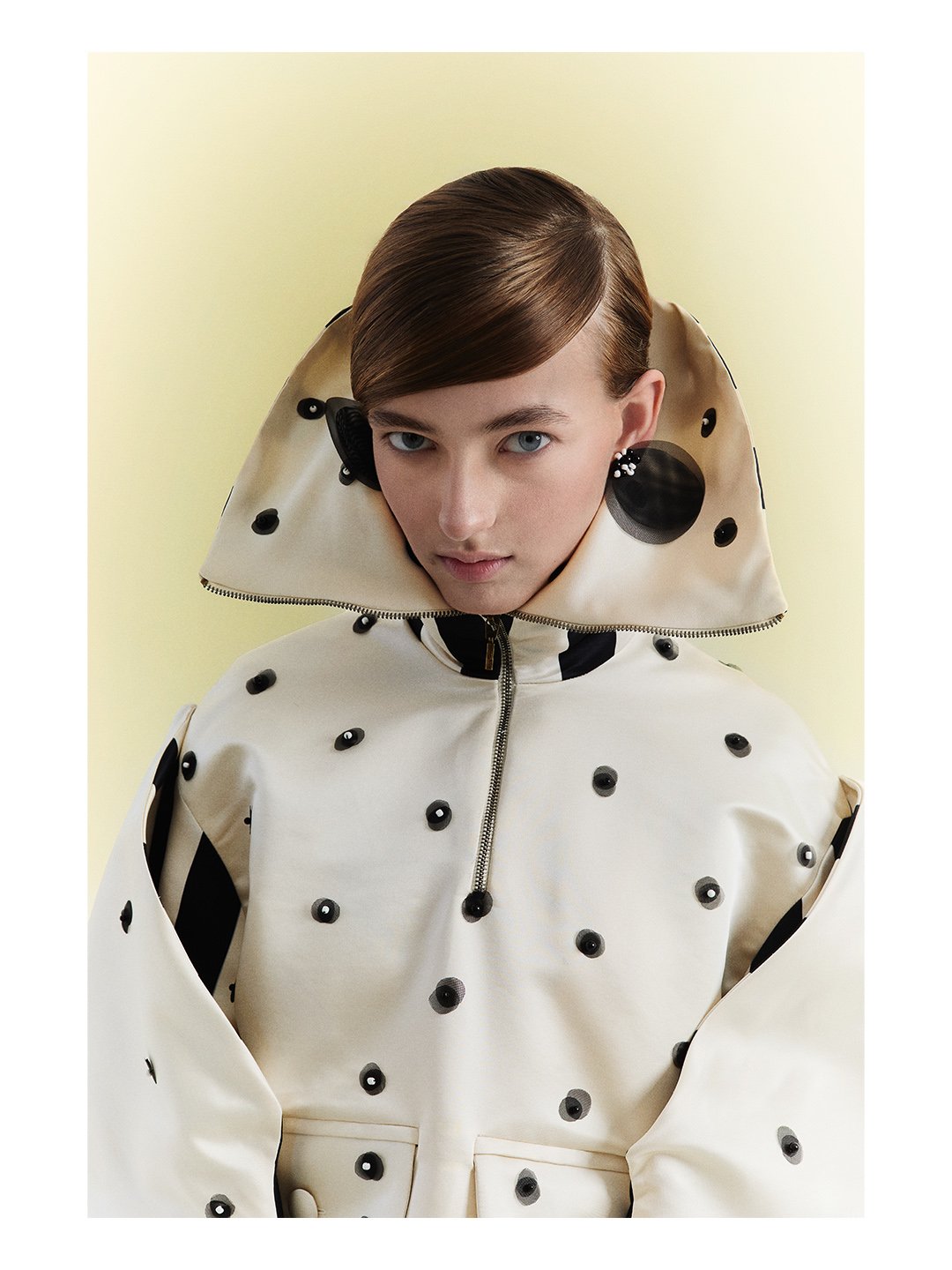
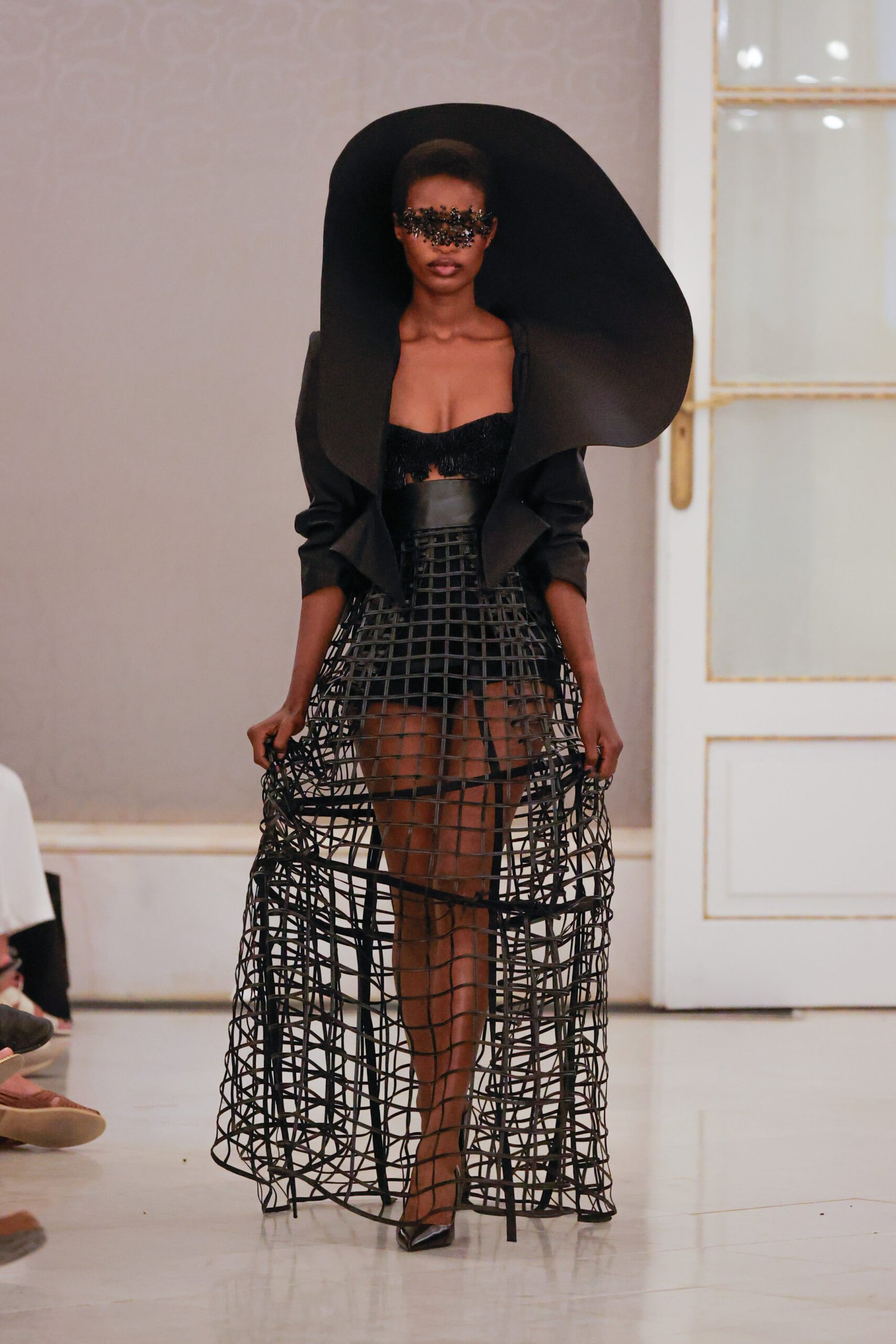
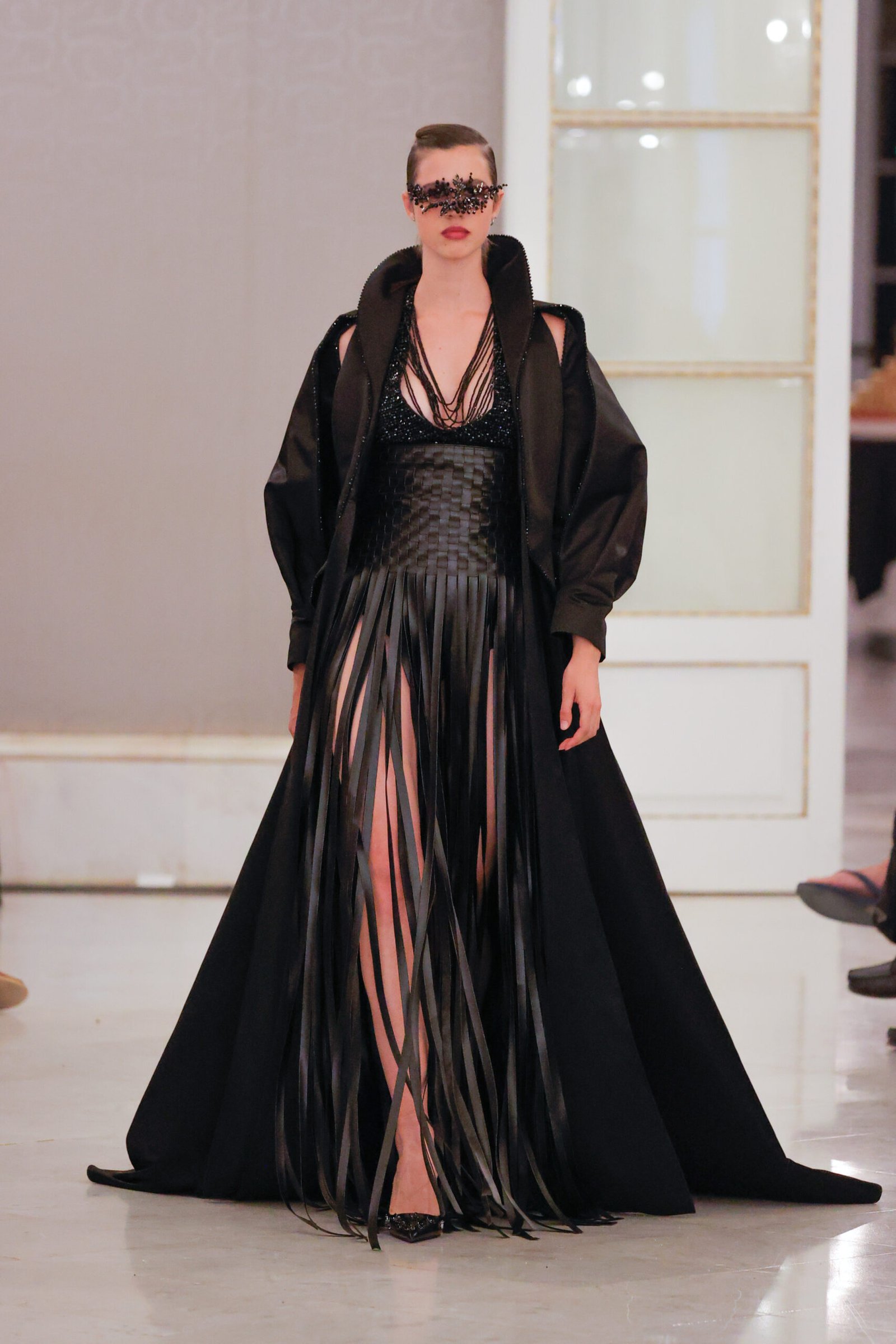
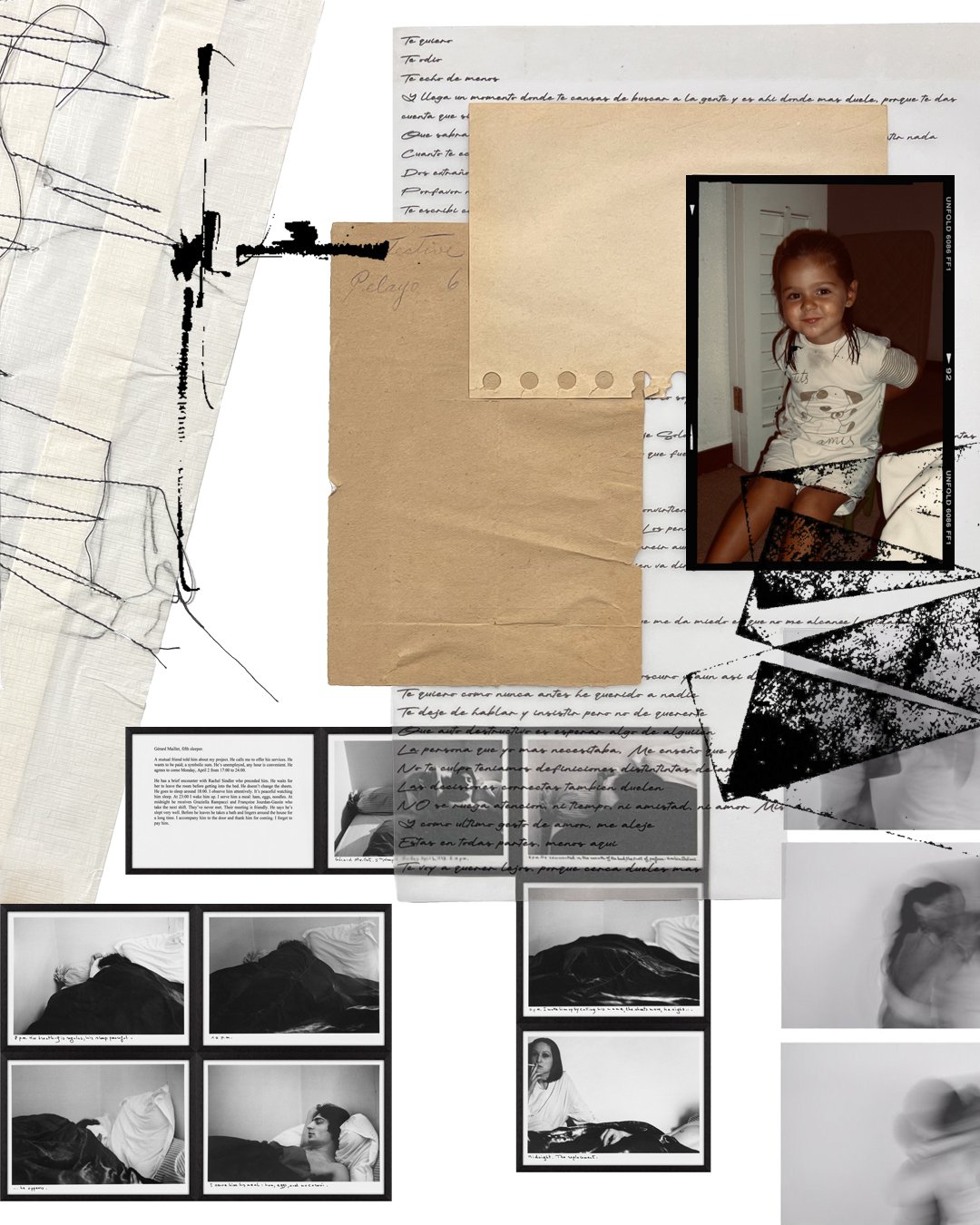
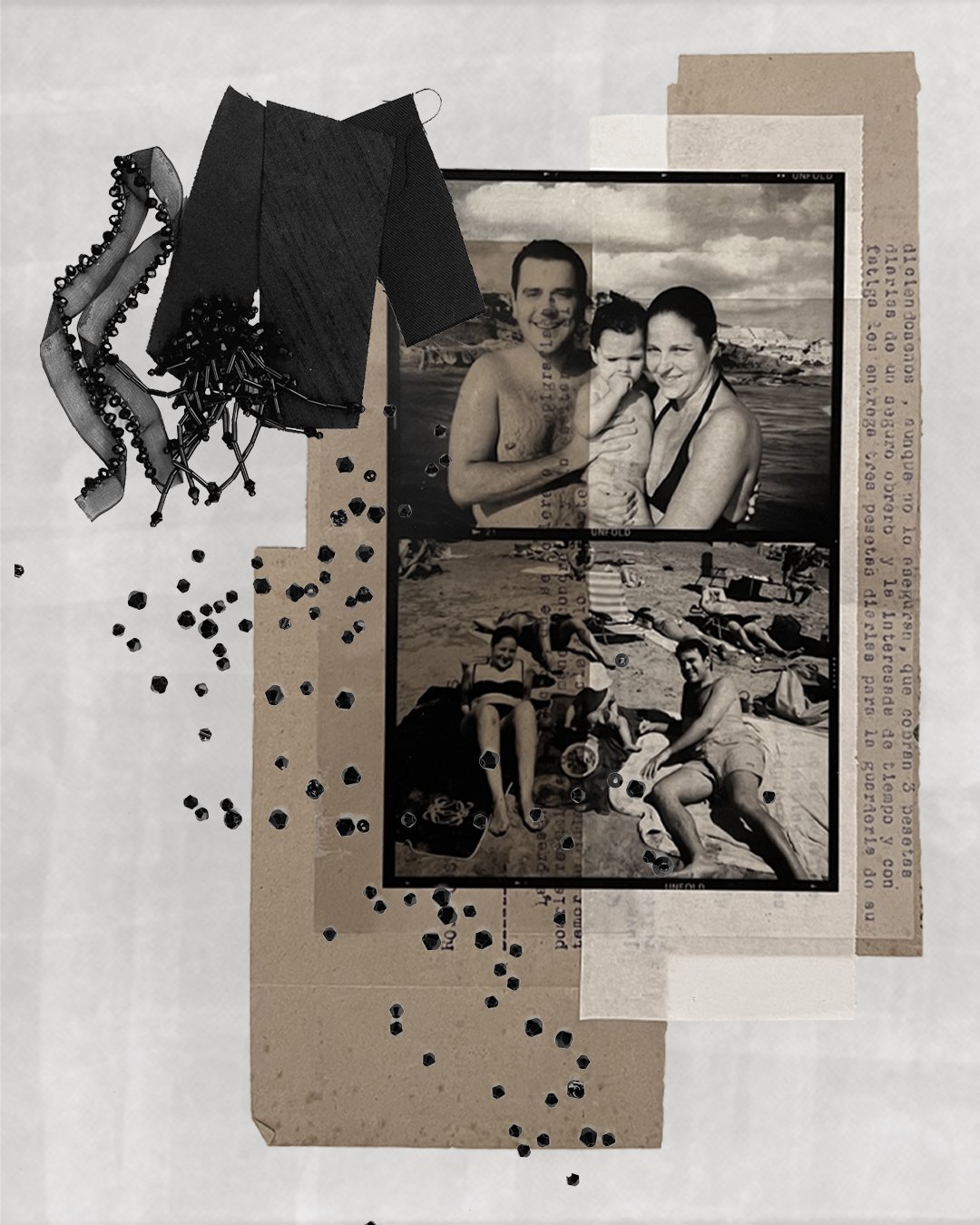
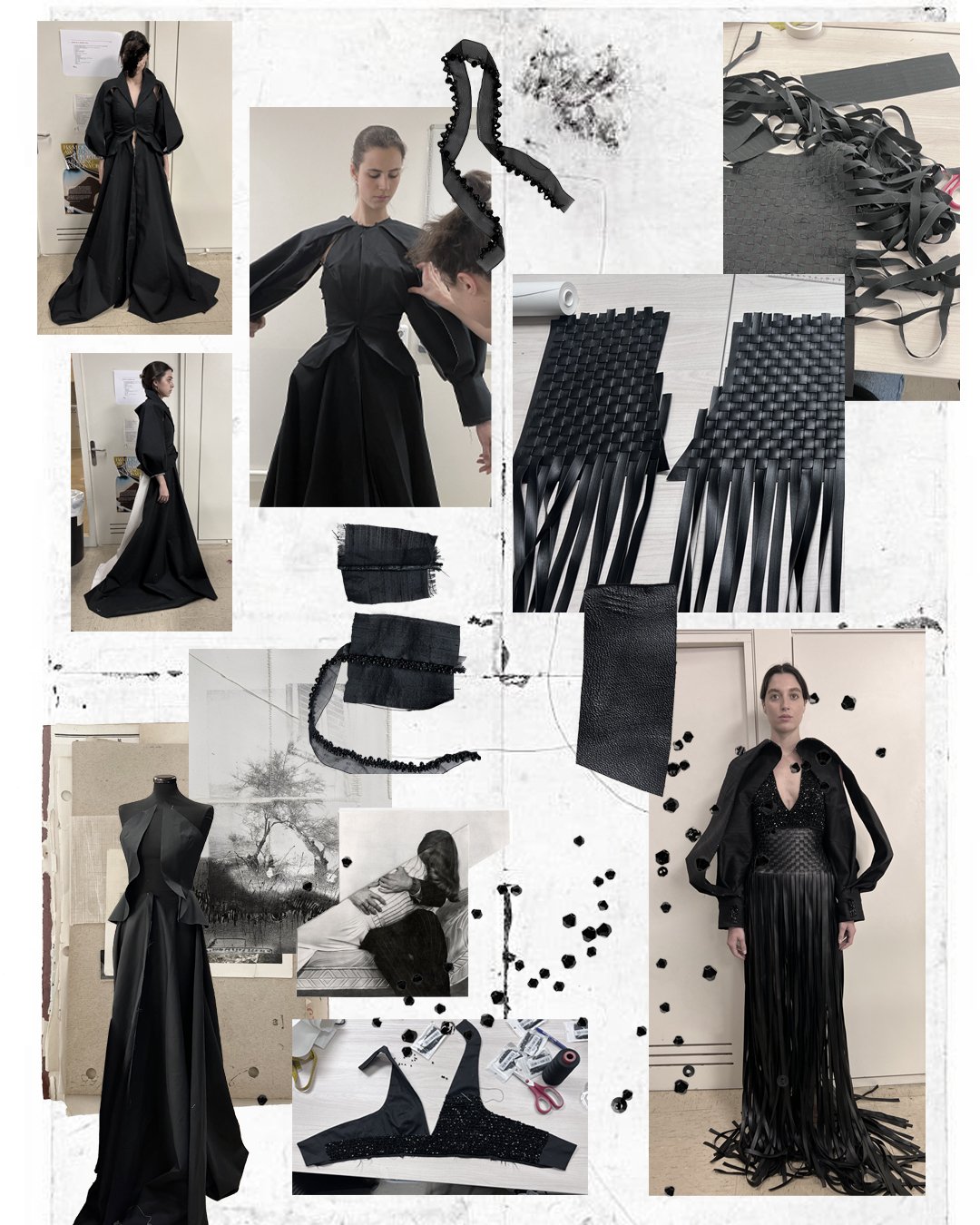
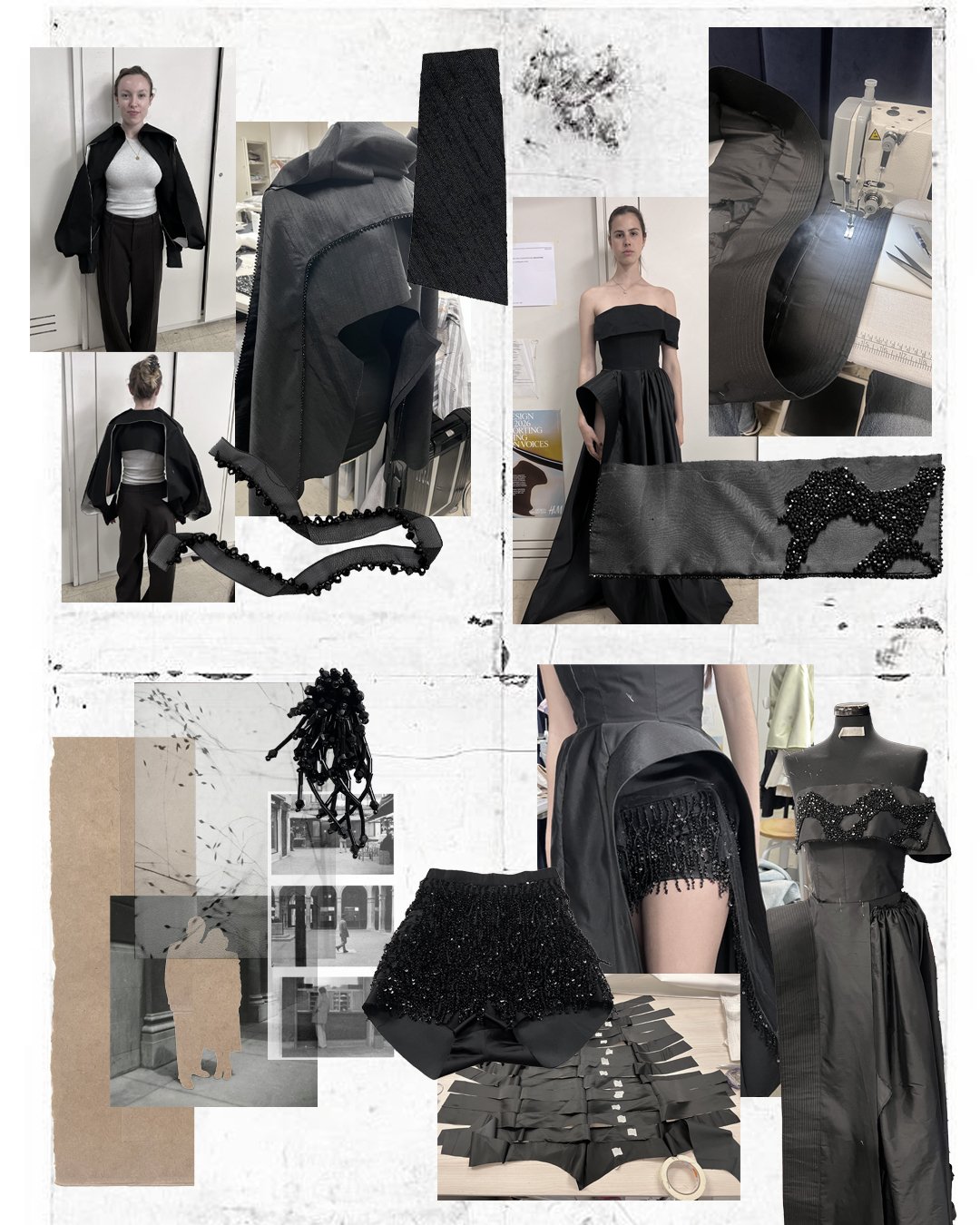
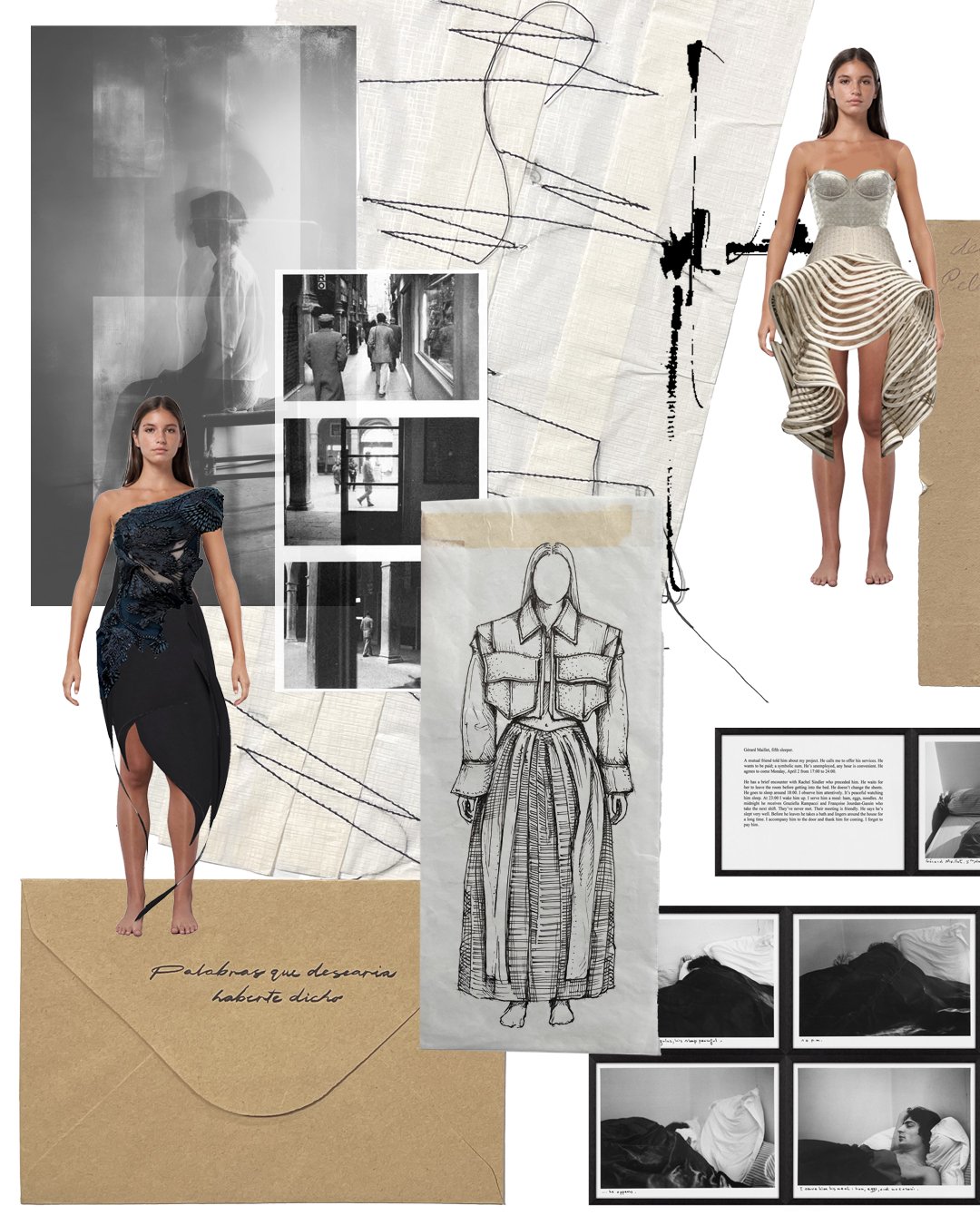
Andrea Garcia’s Nostalgia collection emerges from what she describes as her memory box: a symbolic place holding fragments of her own life and the people who have shaped it. Revisiting these memories evokes feelings of nostalgia and melancholy, becoming the foundation for a personal reflection on how moments and relationships overlap to form identity. The collection explores the way memories accumulate and intertwine, gradually shaping who we become. Constructed as a timeless monochromatic eveningwear collection, the work combines silk dupion, taffeta, wild silk, leather, silk organza, and satin with embellishment and beadwork. Voluminous outer garments provide protection and a sense of embrace, while more closely fitted inner pieces emphasise the feminine silhouette.

@revebyandrea

Carmen Celedonio

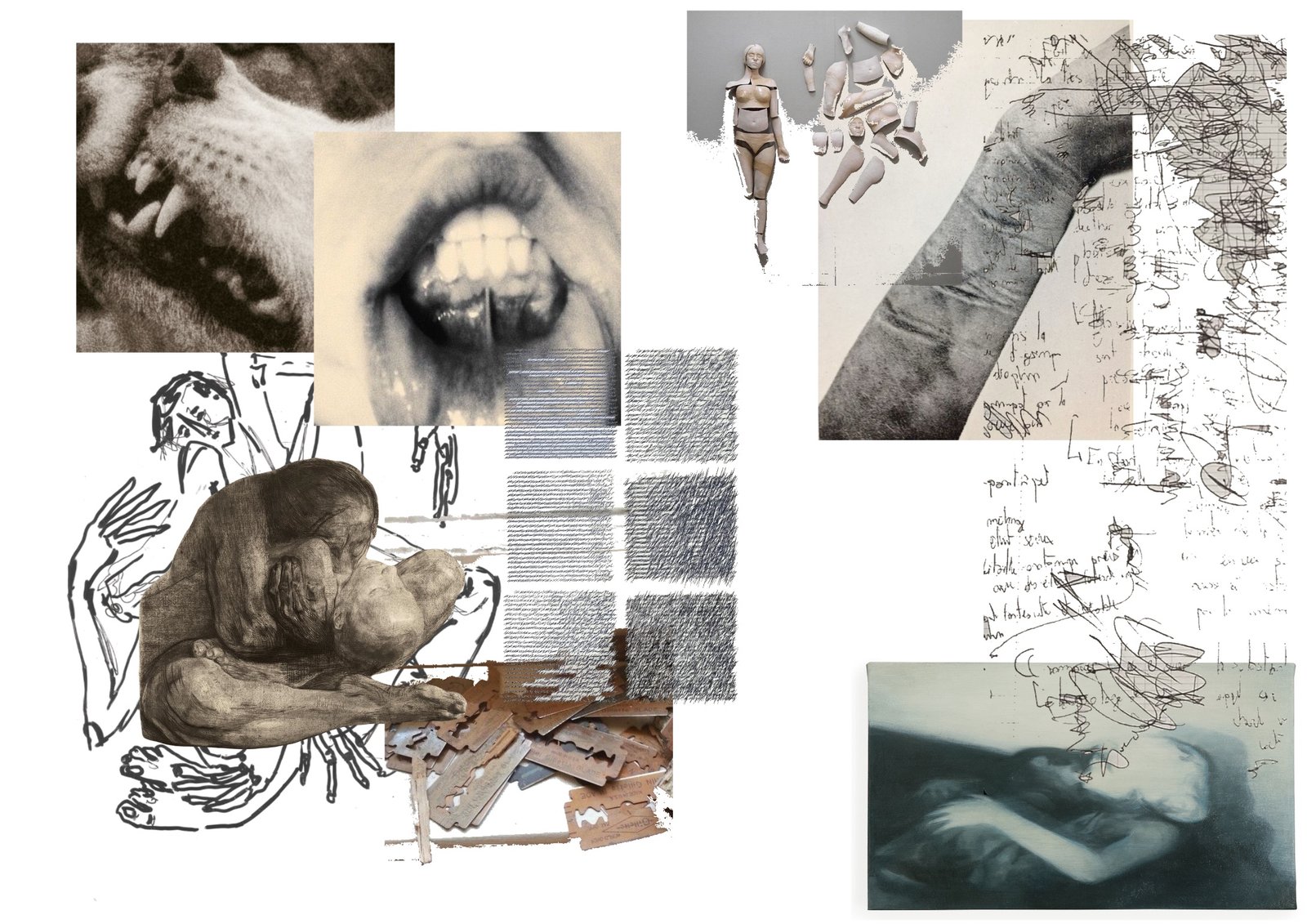
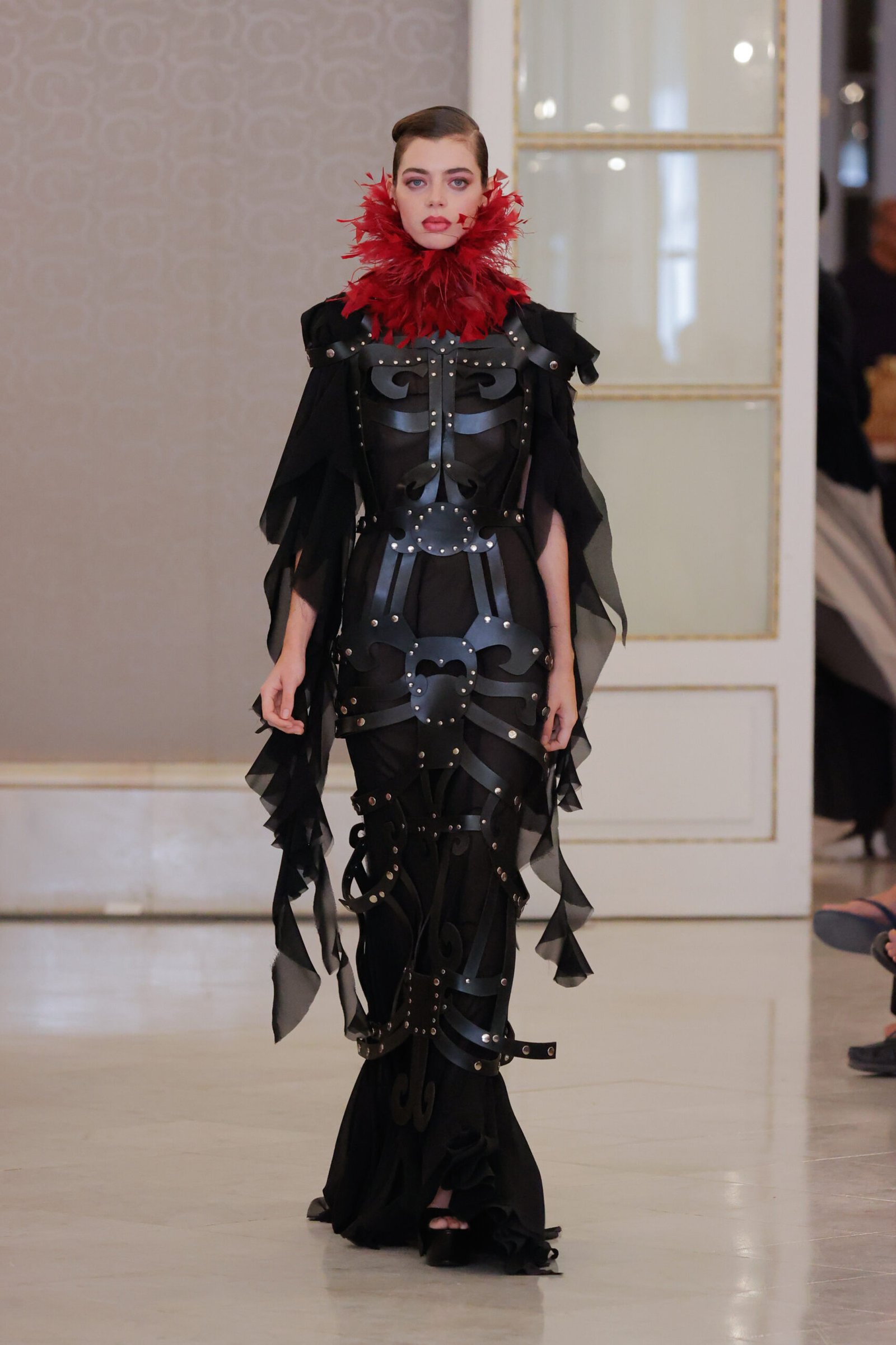
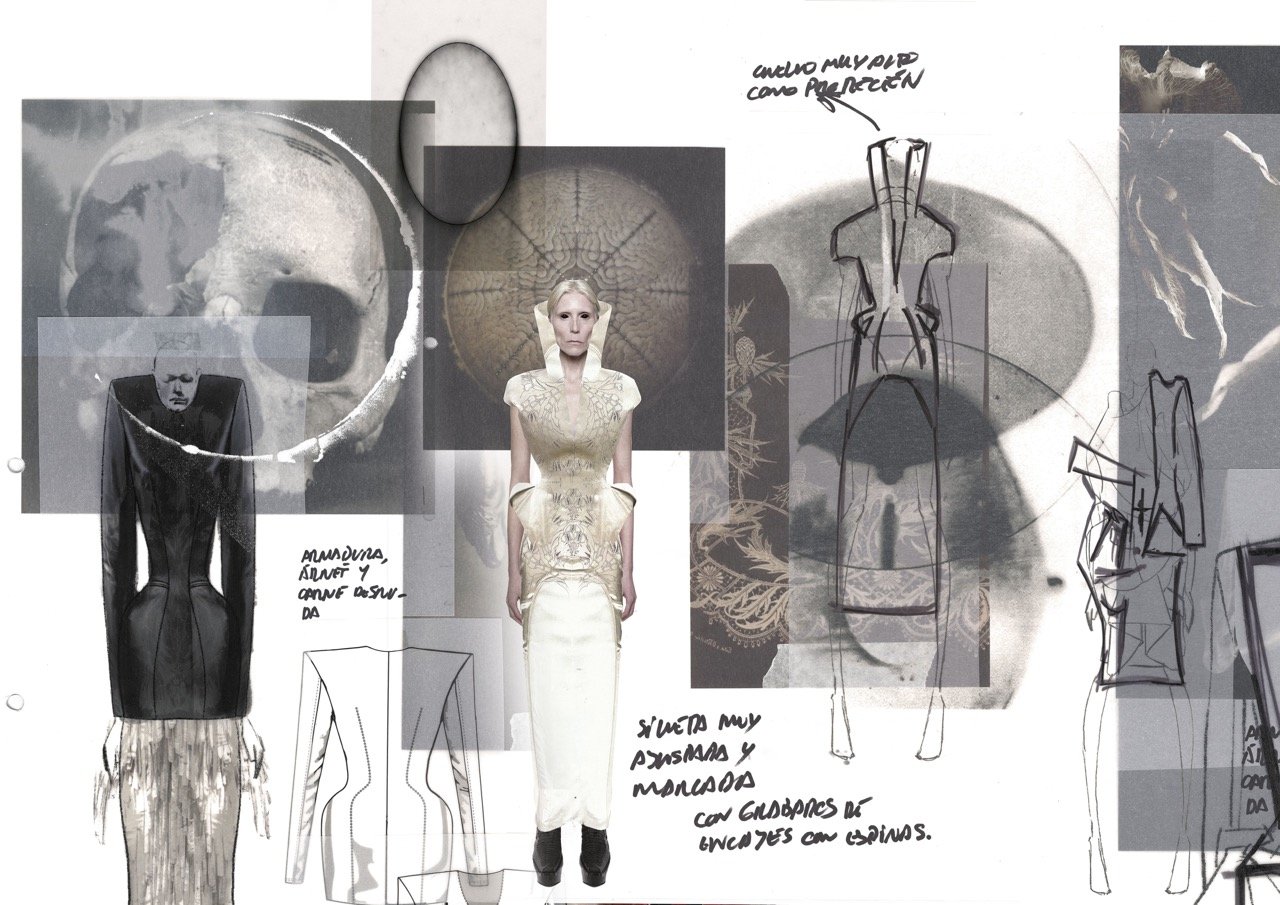
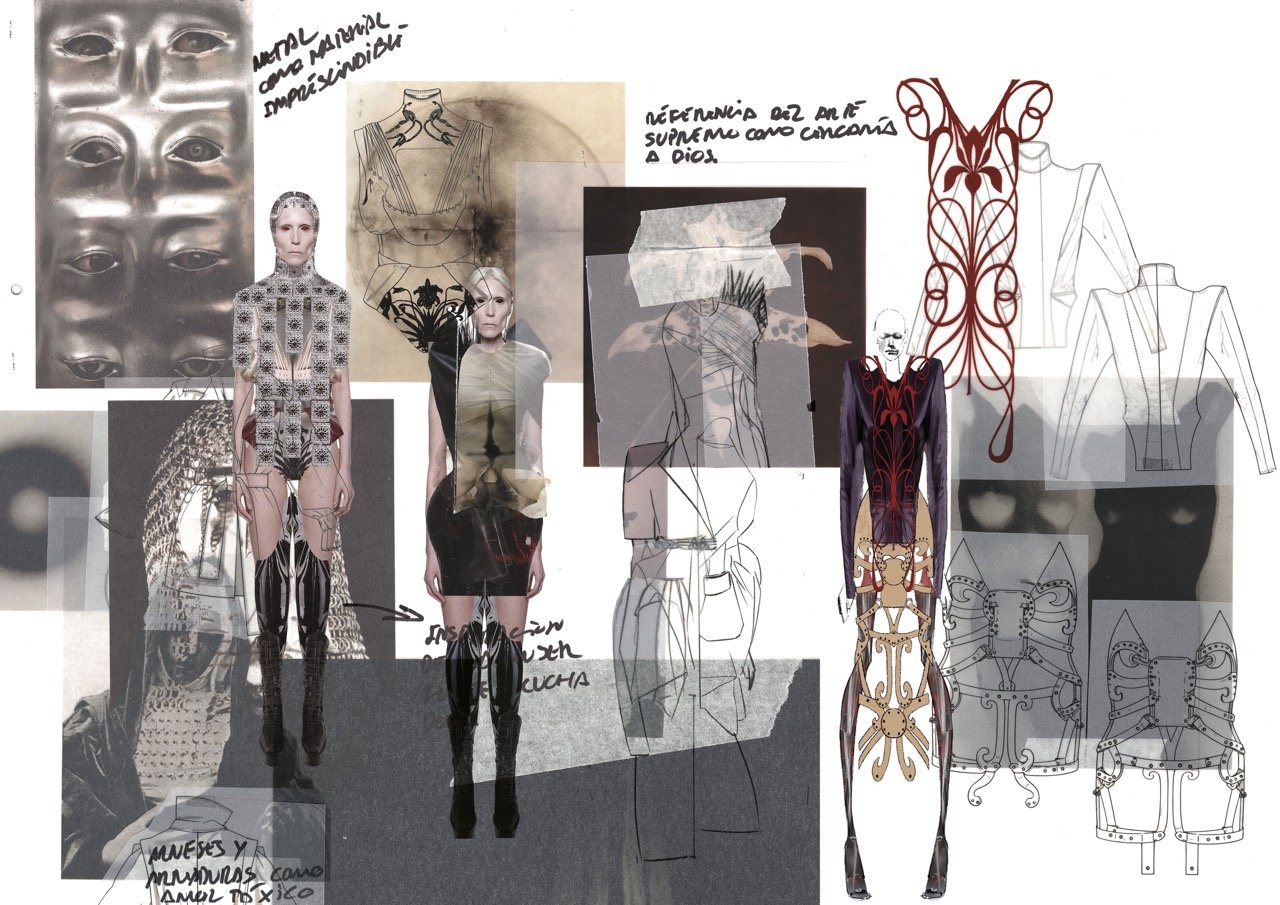
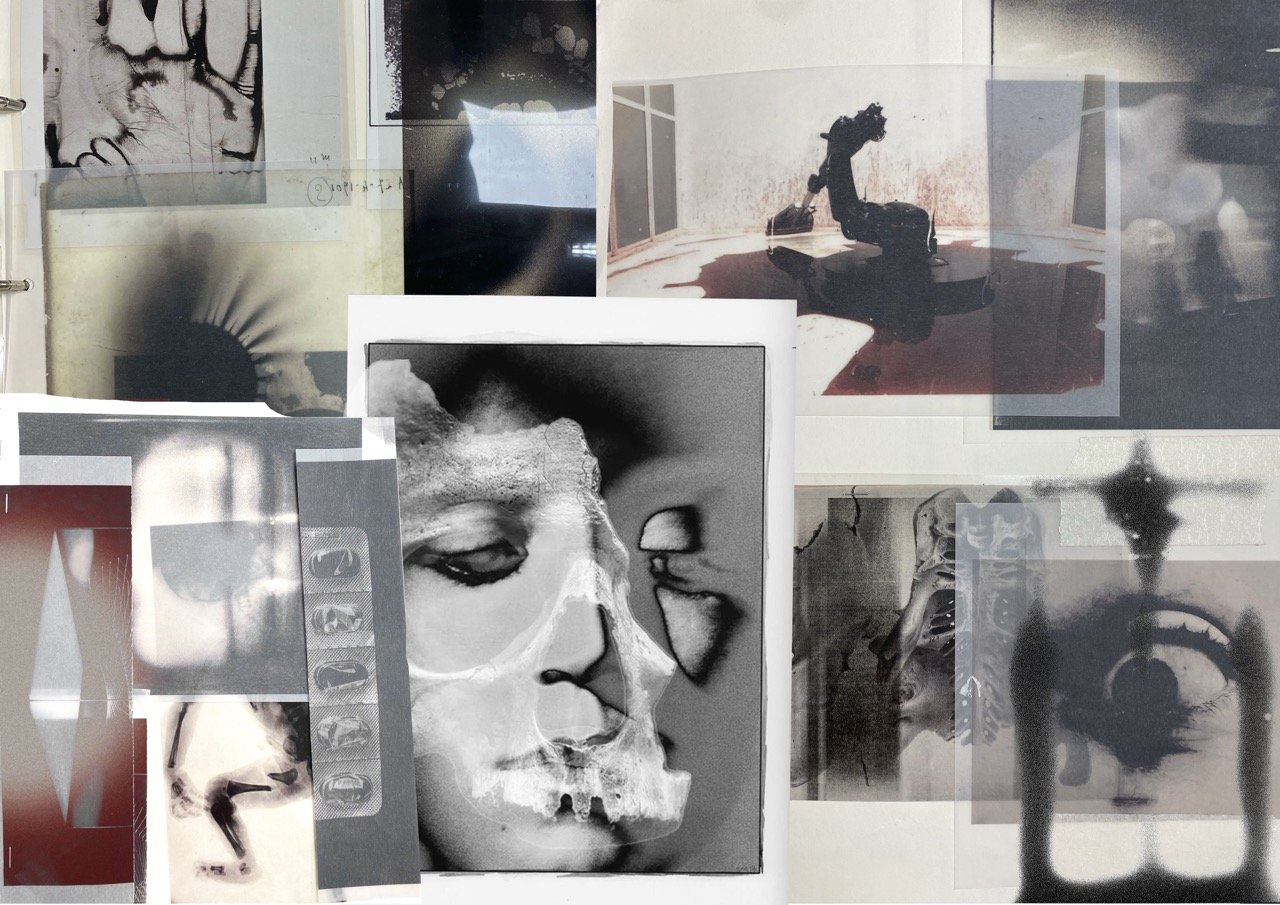
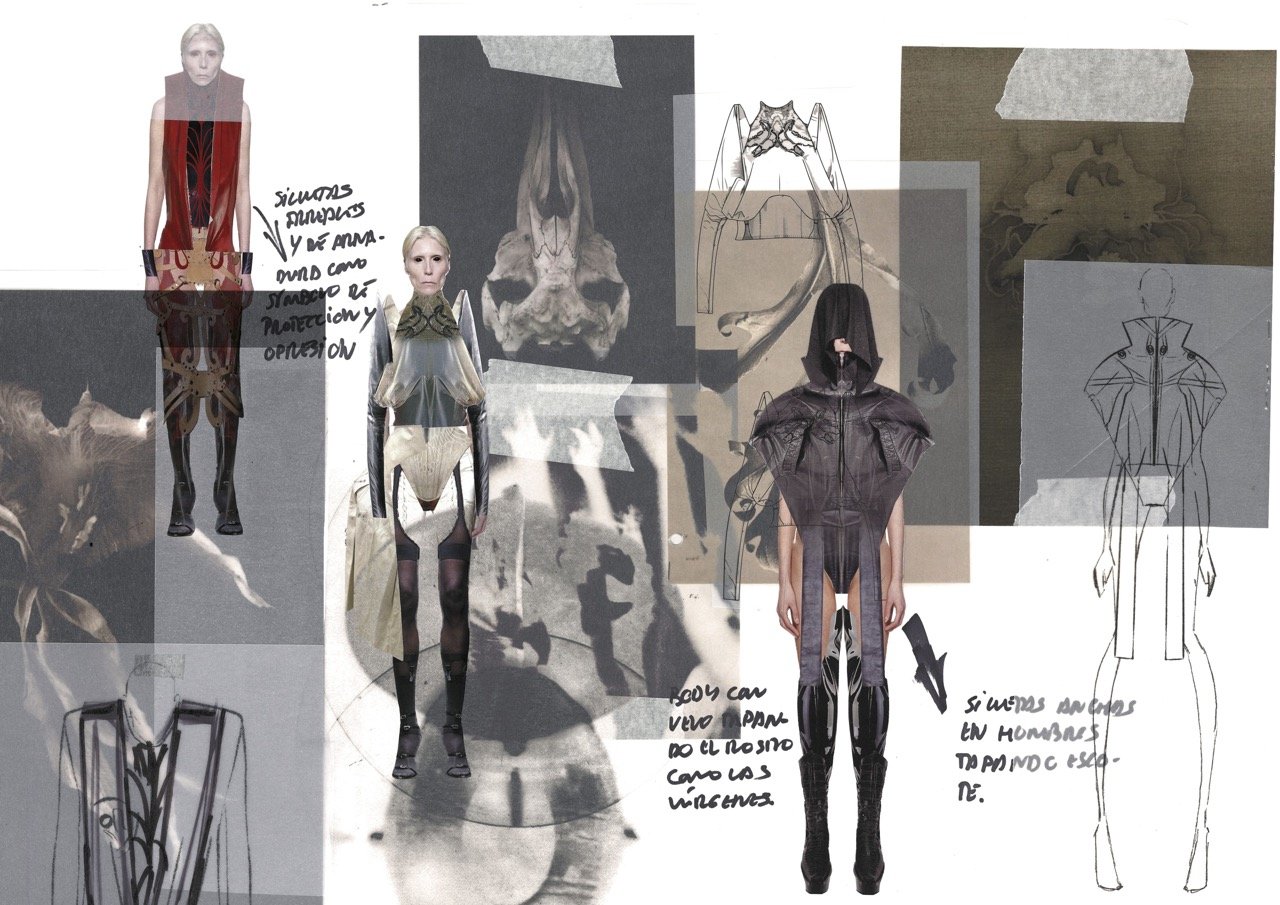
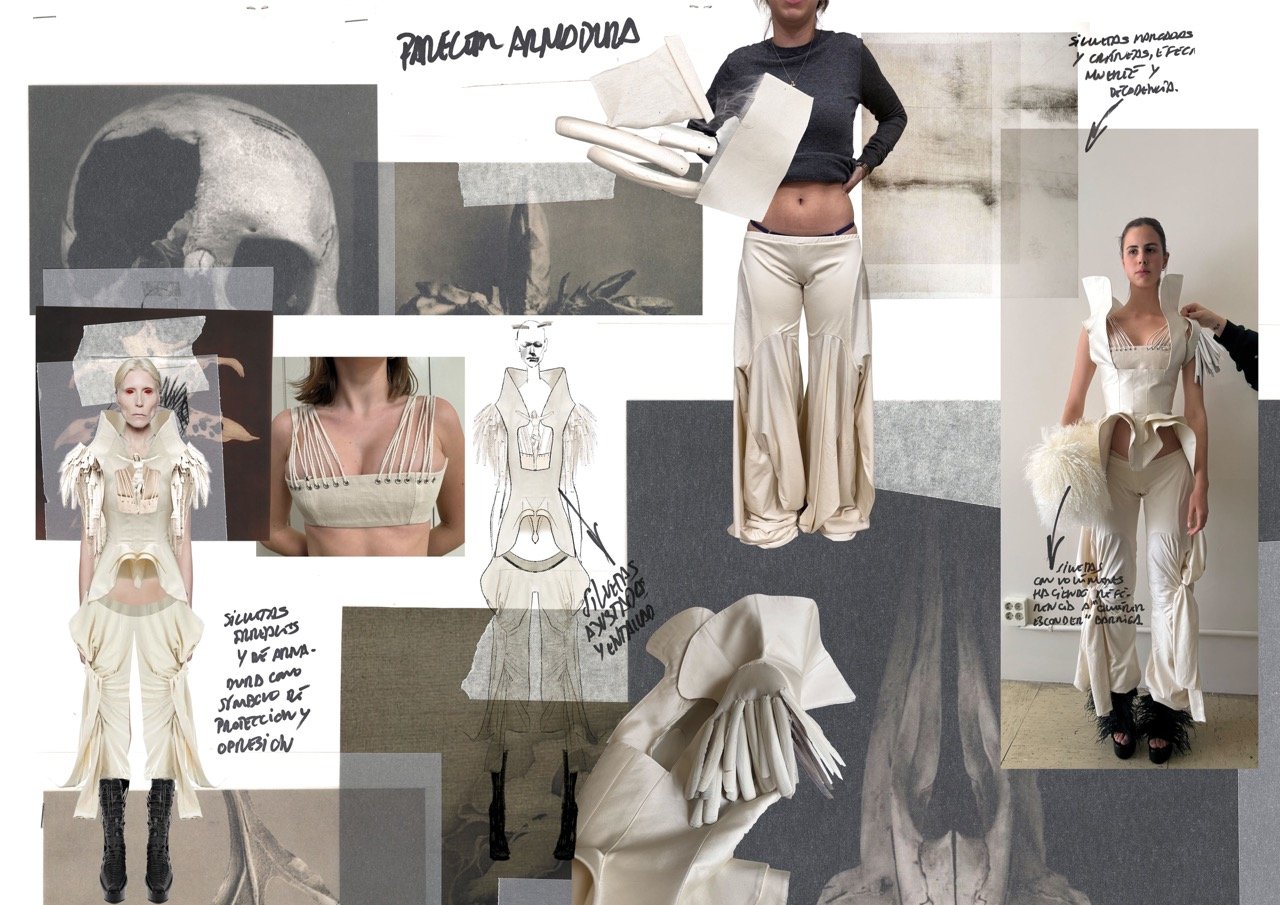
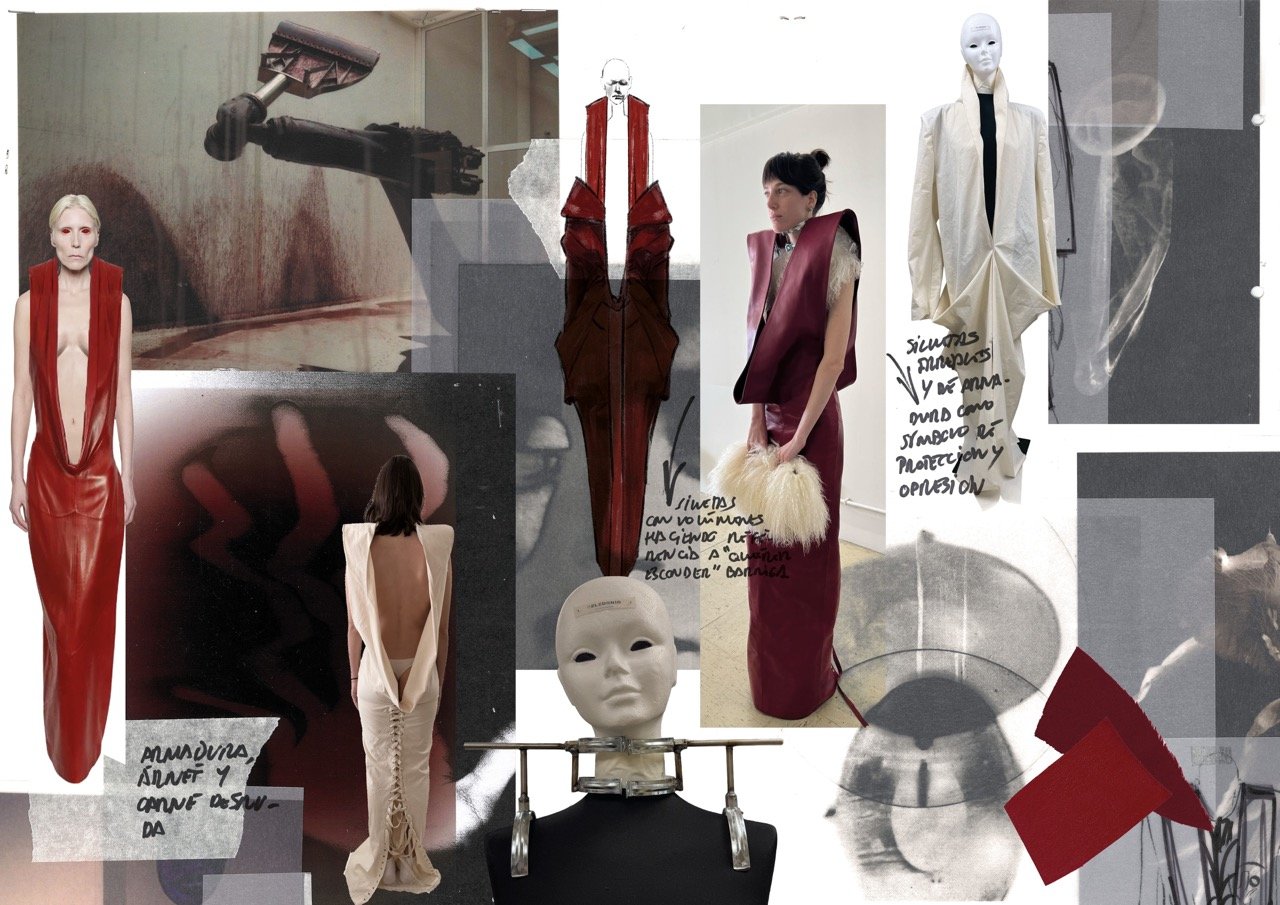
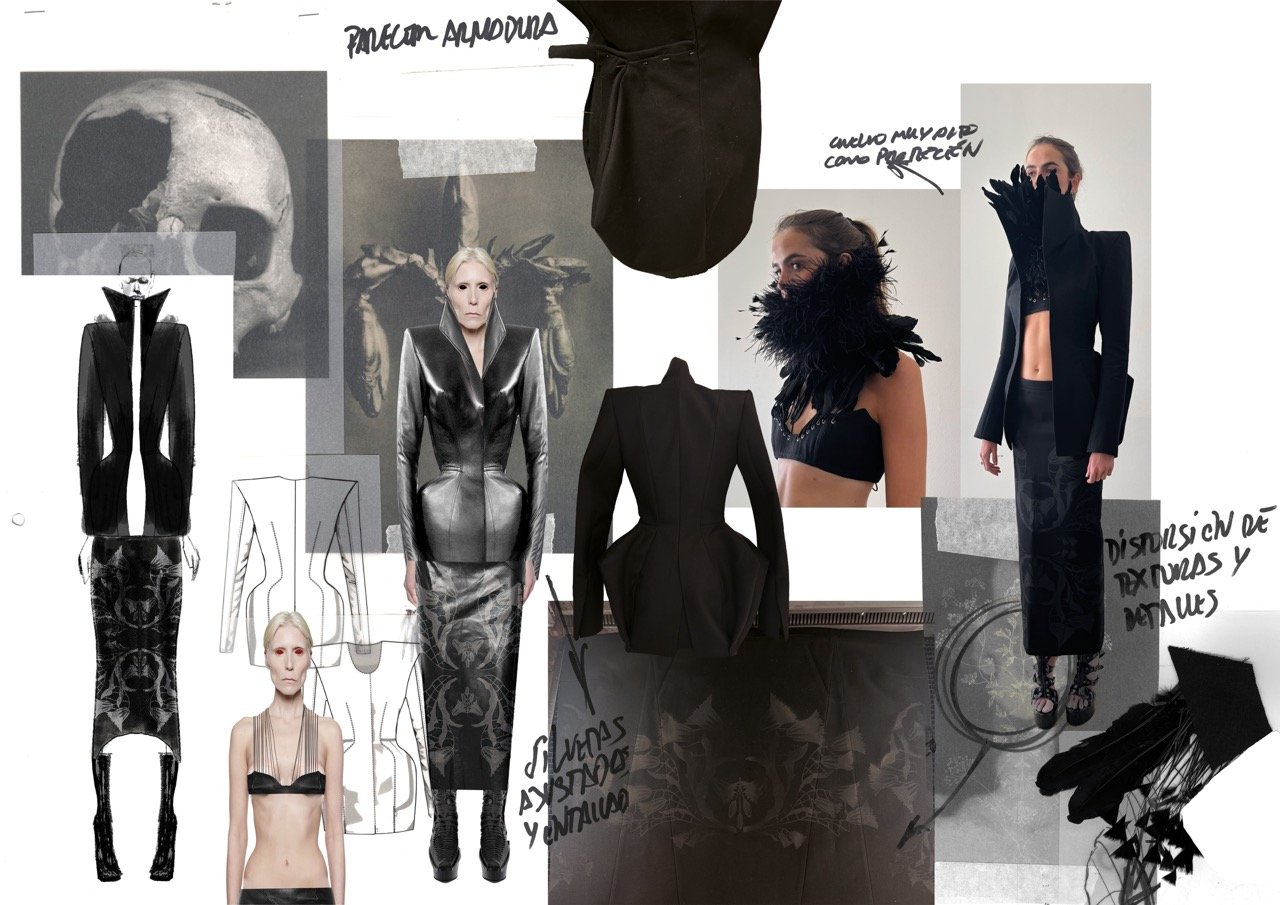
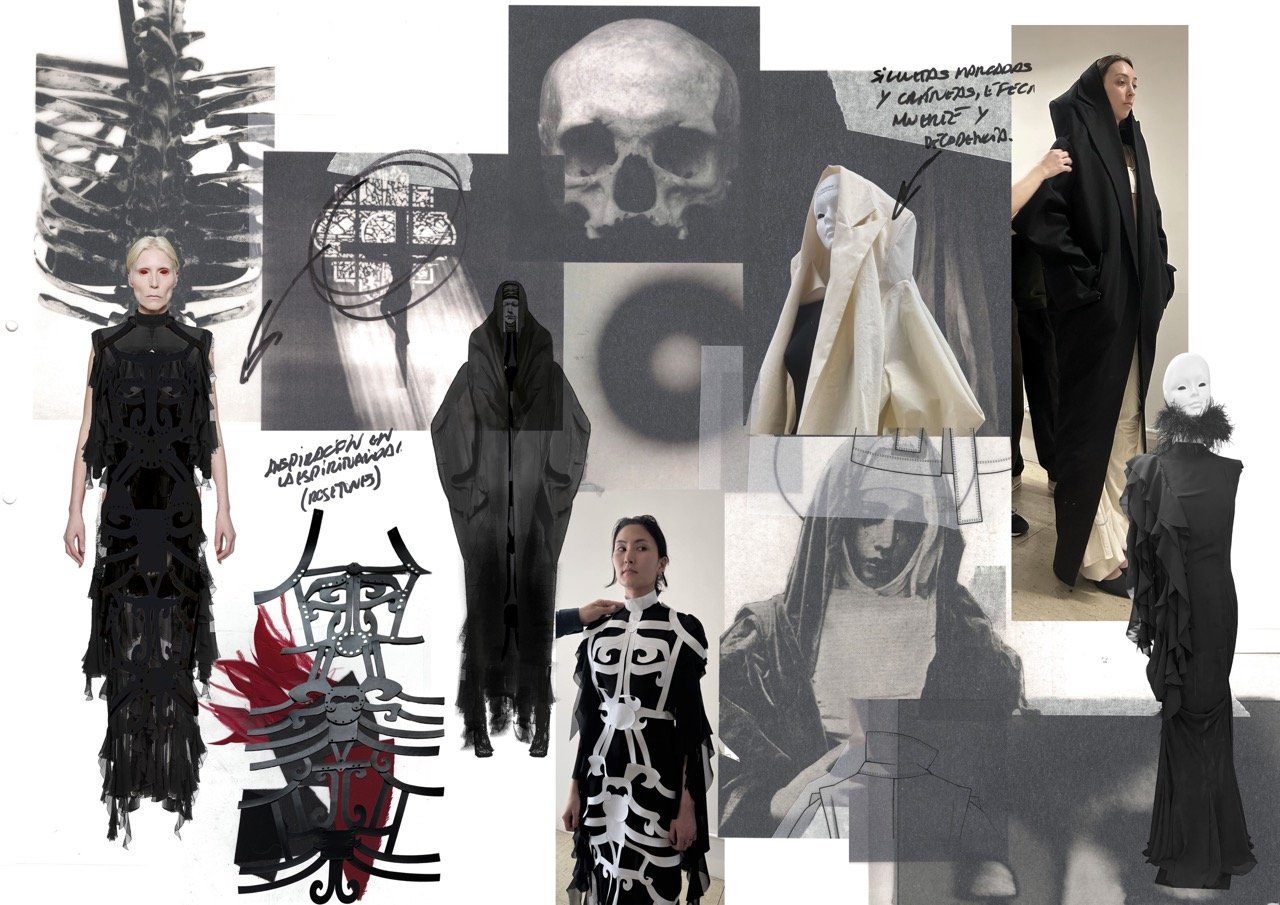
Carmen Celedonio’s collection, Rigor Mortis, transforms personal experience into a narrative about metamorphosis through four looks that chart a journey of memory, wounds, and reconstruction. Organised around five symbolic stages – origin, desire, interruption, self-destruction, and transcendence – the collection uses off-white, red, and black to create a chromatic progression in which purity, conflict, and introspection unfold. Silhouettes evolve from organic, vulnerable forms into structures that envelop the body like armour, celebrating transformation and the strength that can emerge from fragility. Celedonio is optimistic about joining a generation of designers who see fashion as a vehicle for expression, identity, and cultural reflection, and hopes to contribute work defined by authenticity, sustainability, and narrative.

@celedoonio

Miranda Sanz

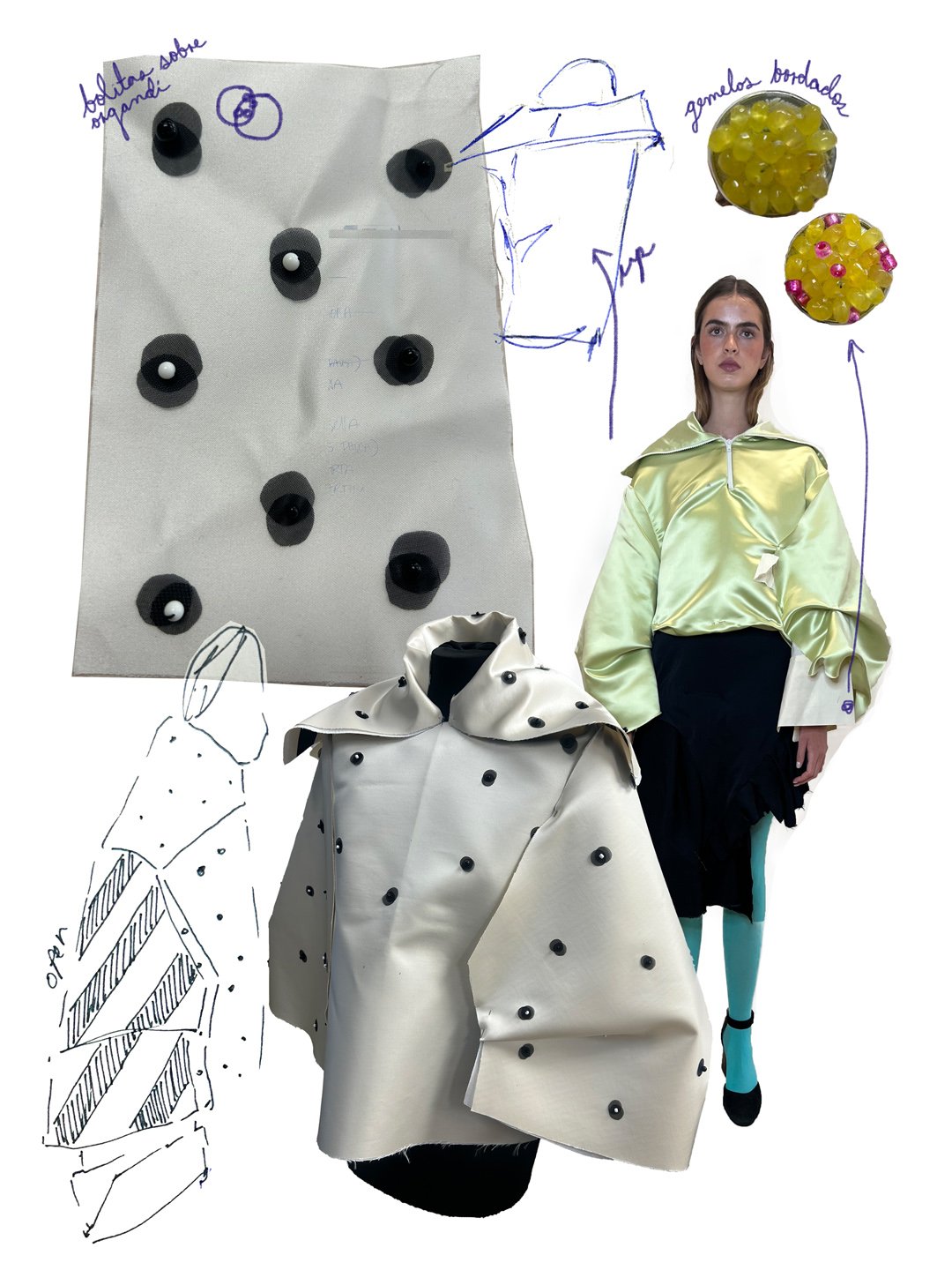
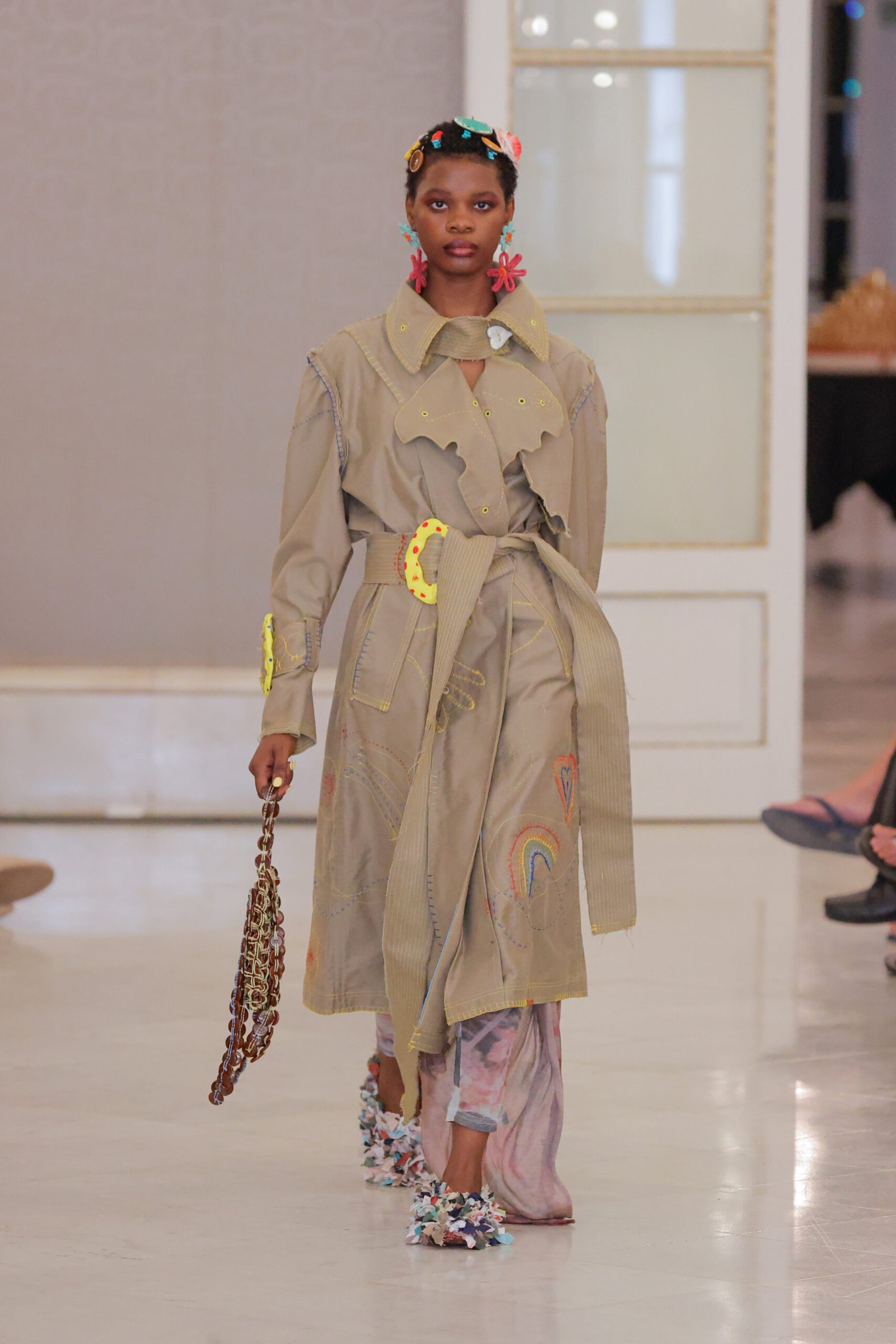
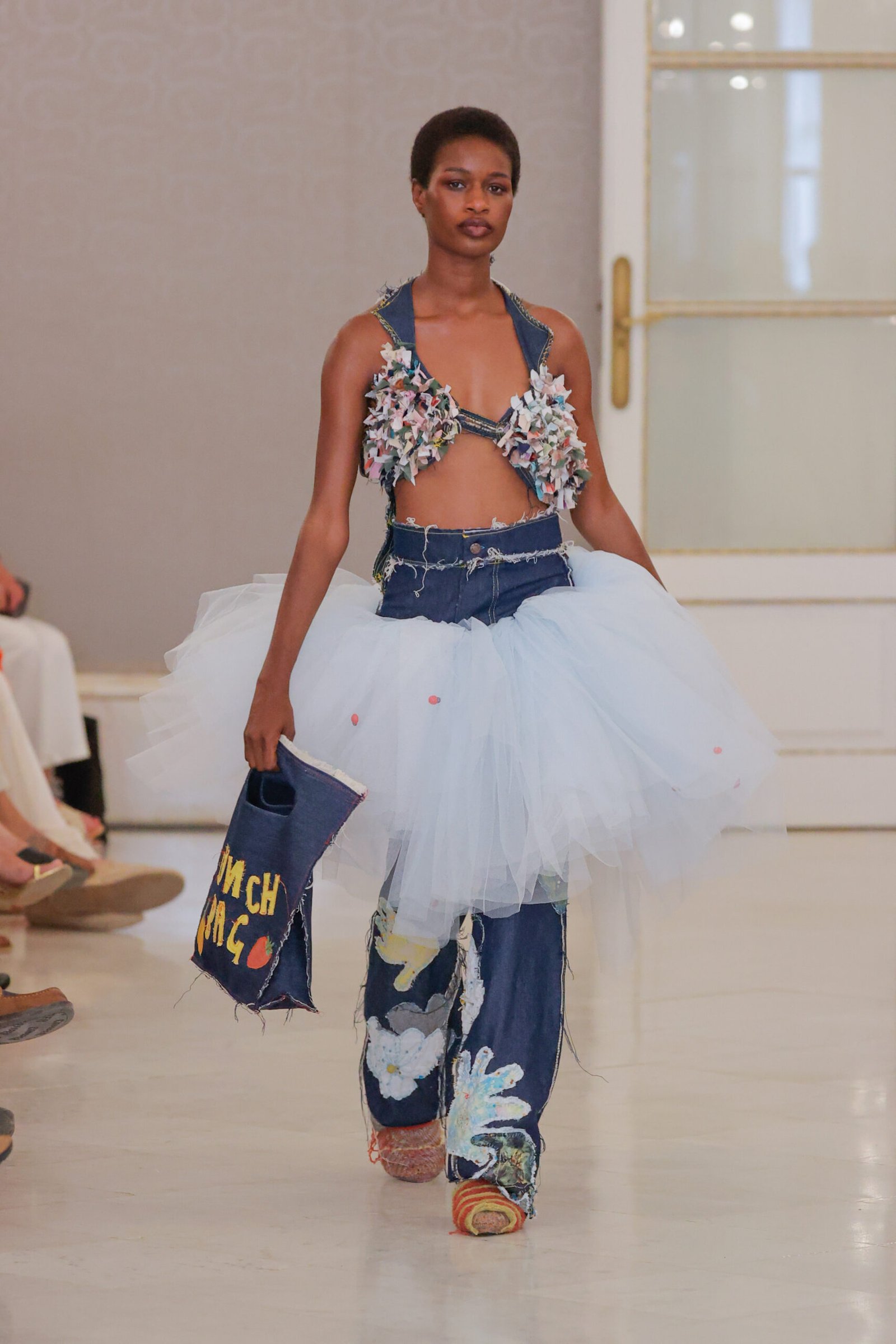
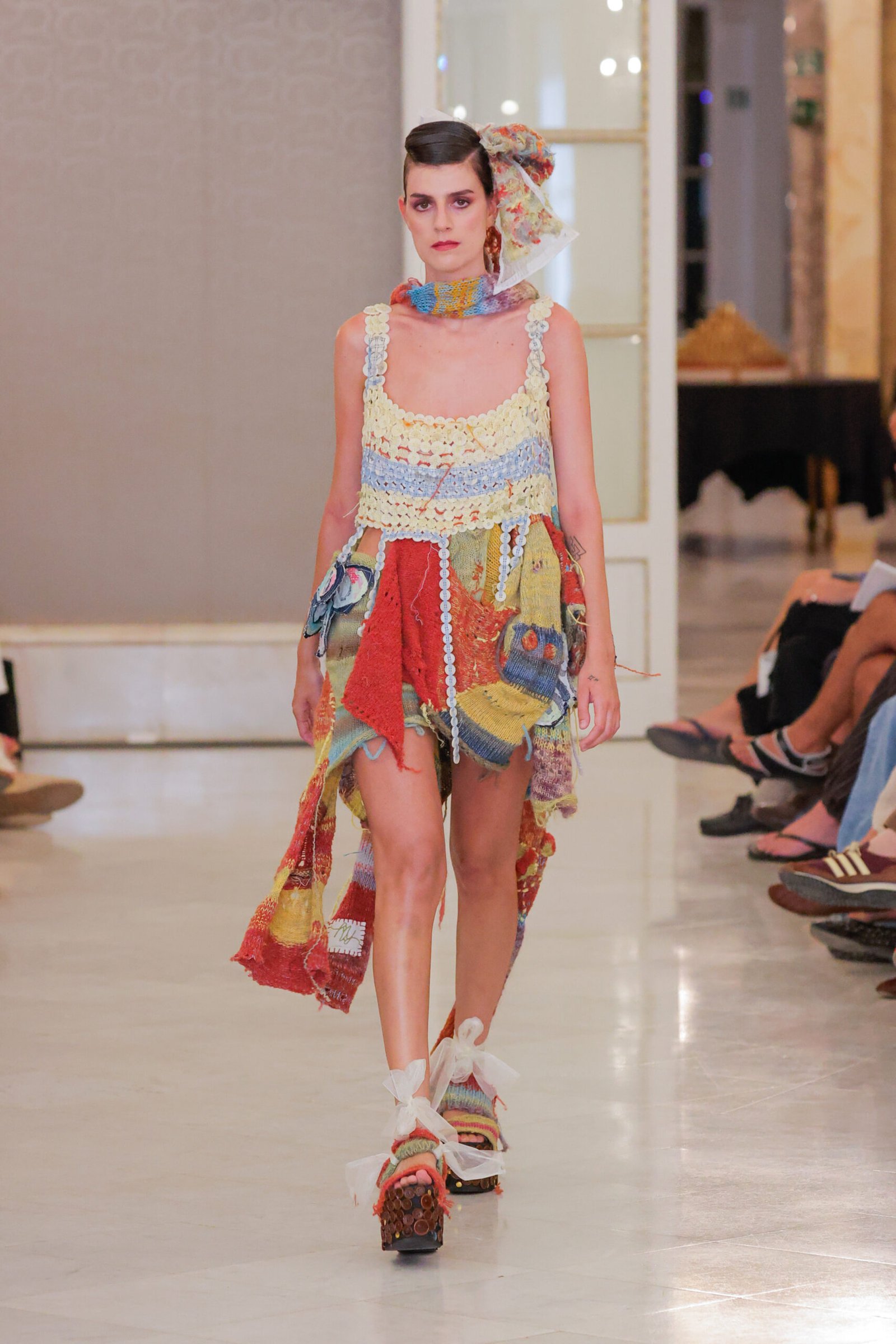
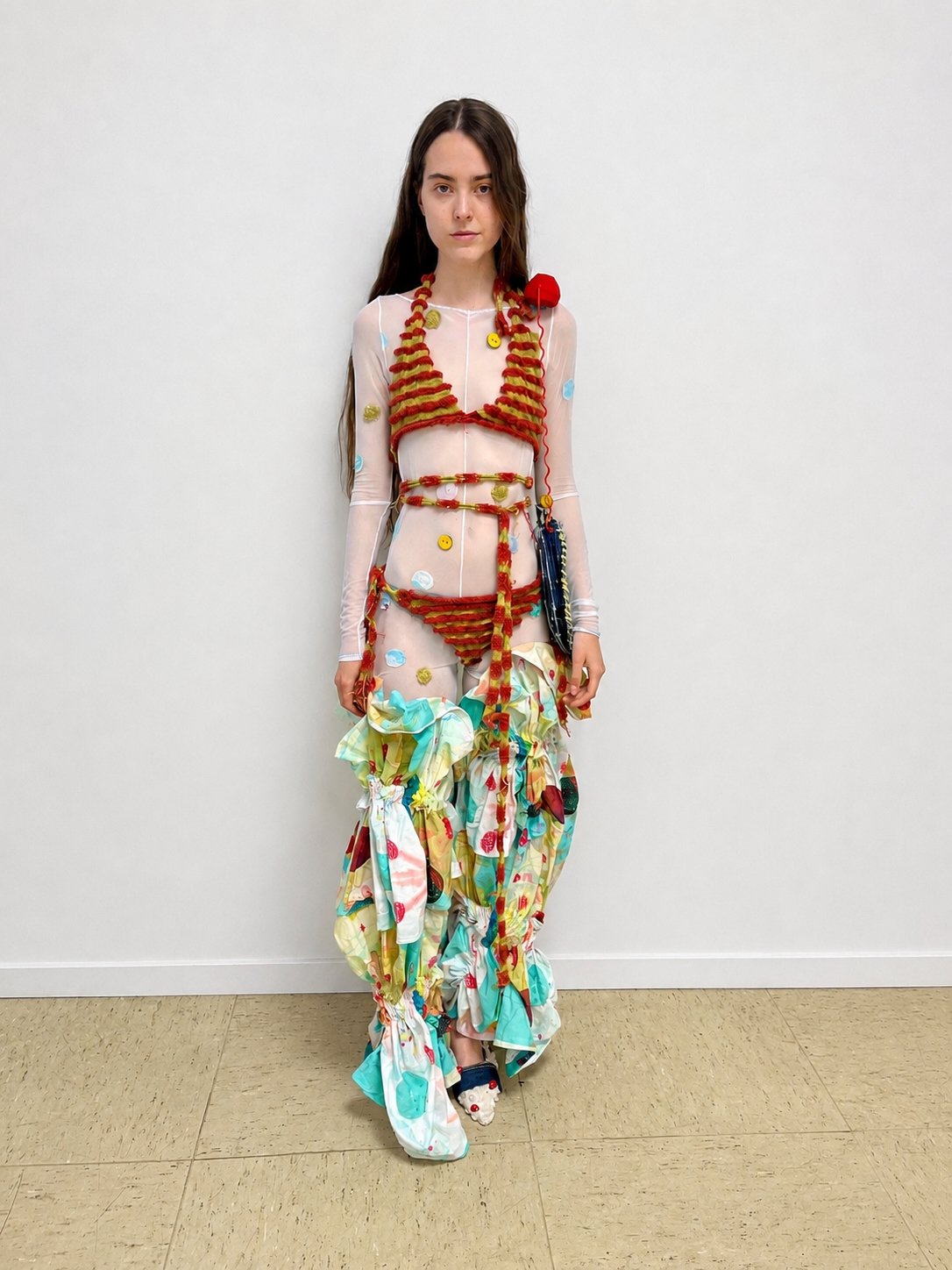
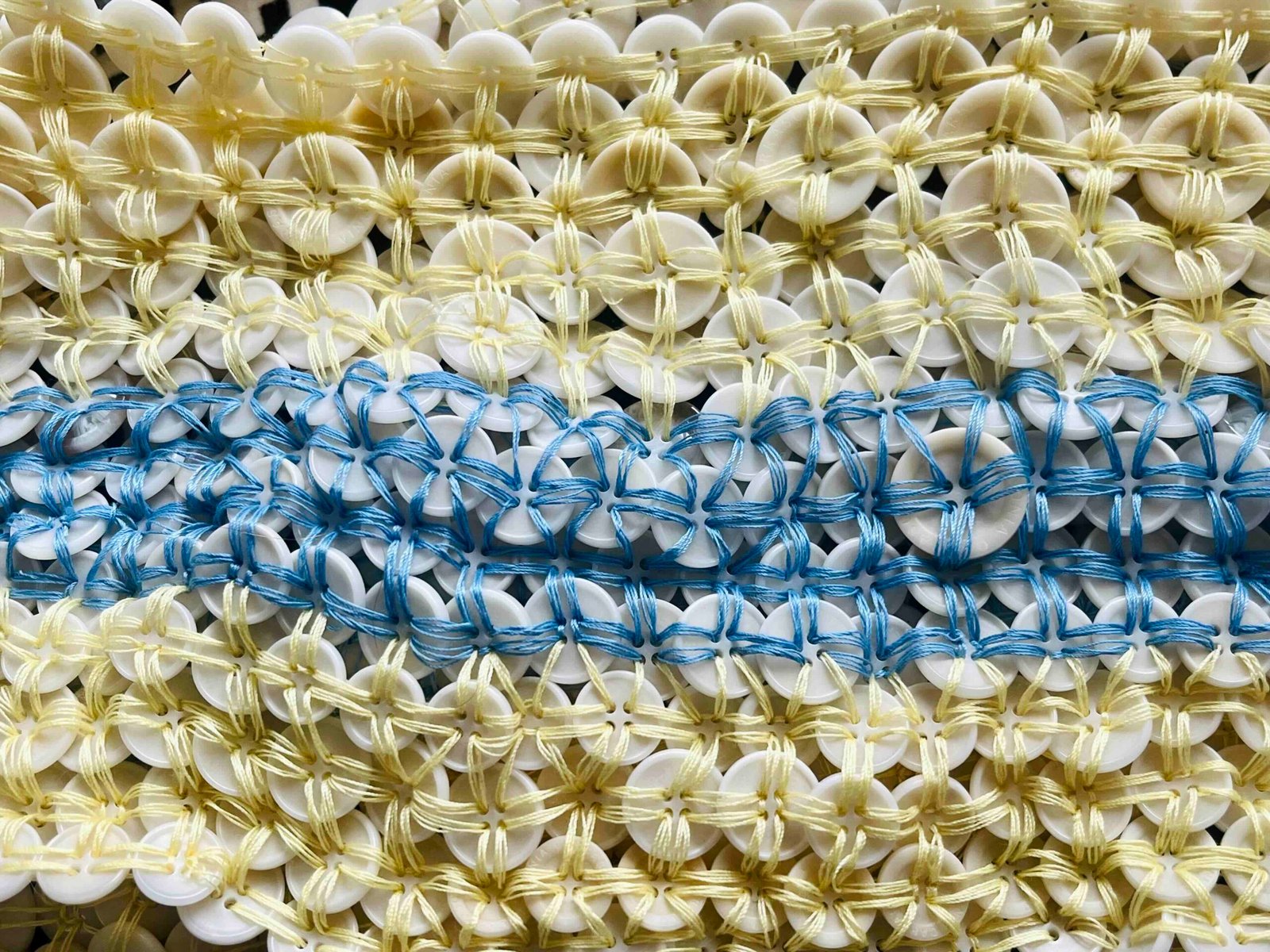
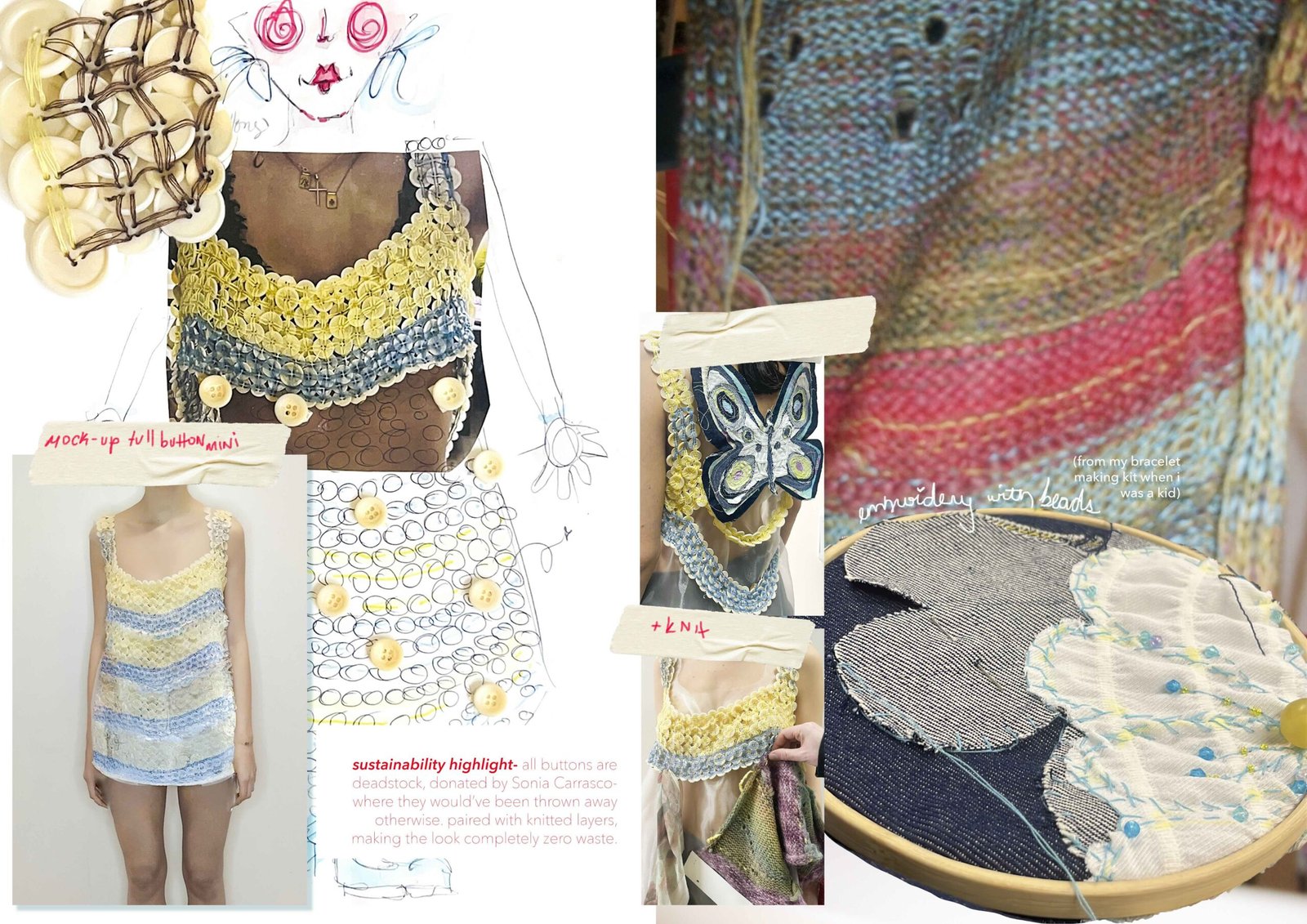
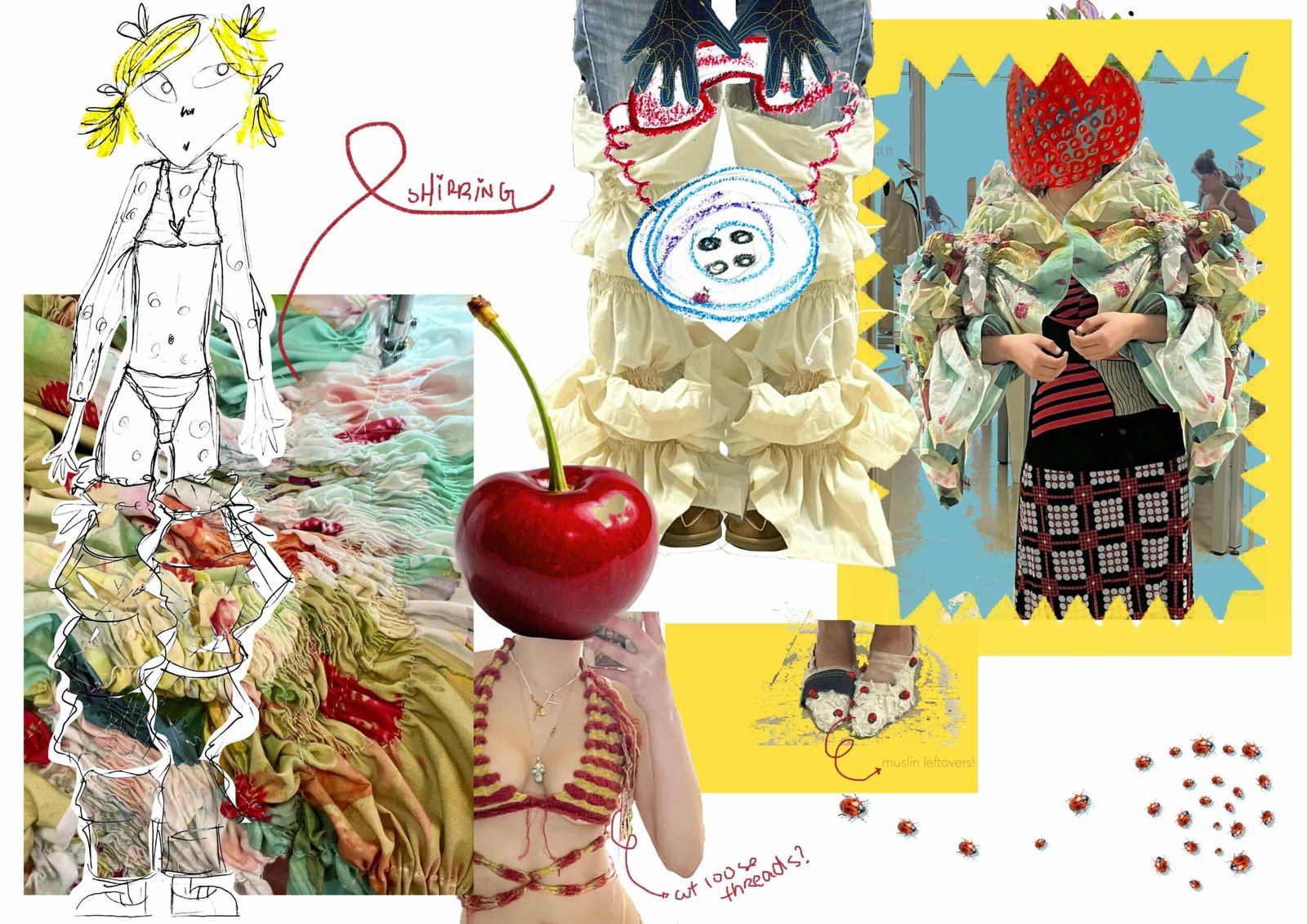
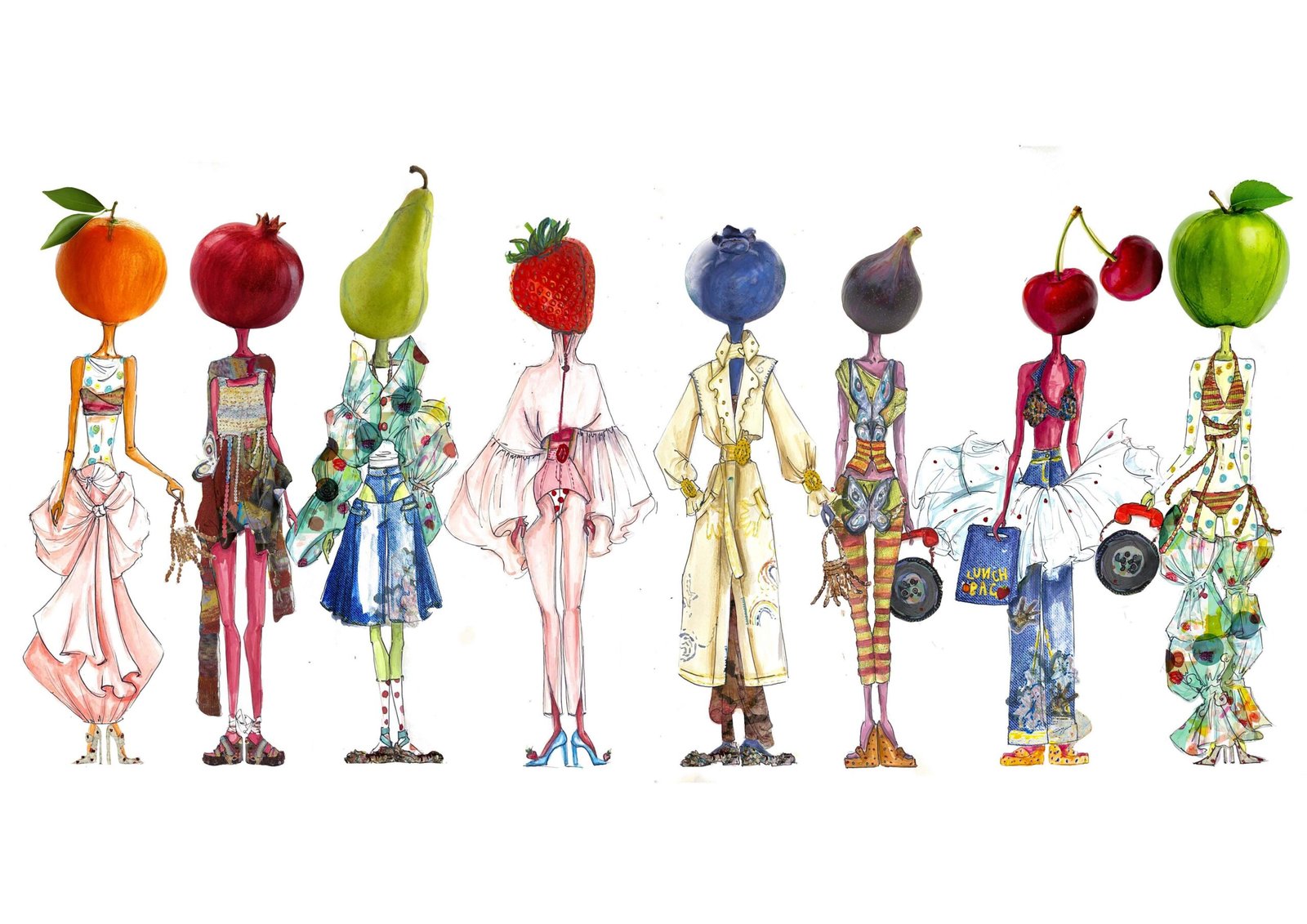
Miranda Sanz’s collection, MINIME, revisits childhood through the memory of being dressed by her mother before gradually discovering her own sense of style. Imagining what she might have designed as a child with the skills she possesses today, the project transforms those early moments of self-expression into garments defined by playful silhouettes, vibrant colours, knitwear, embroidery, and rich surface textures. The collection serves as both an exploration of dress-up and a tribute to the curious, stubborn, and dramatic child she still feels connected to. While concerned by the toxicity that can characterise creative industries, particularly fashion, as well as the combination of intense competition and expectations of unpaid or poorly paid work at the start of a career, Sanz contrasts this with the supportive environment she experienced during her studies and recognises the challenges many emerging designers face when entering the profession.

@emesanzd

Nina Dubrovina

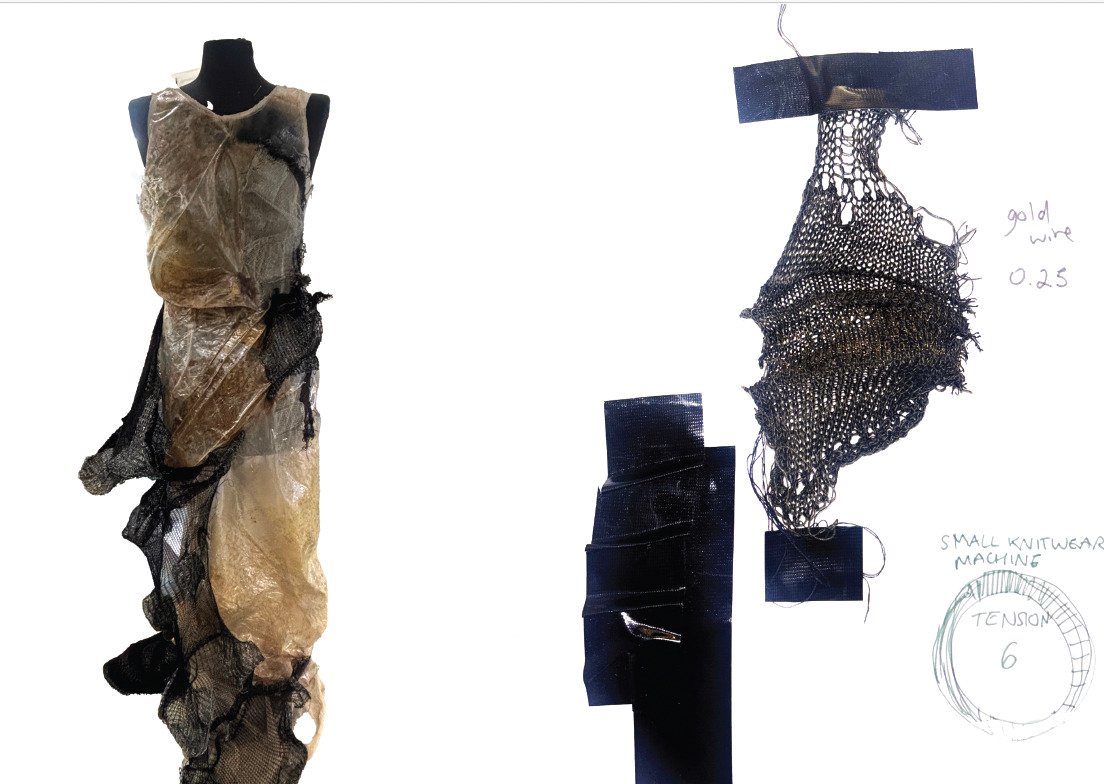
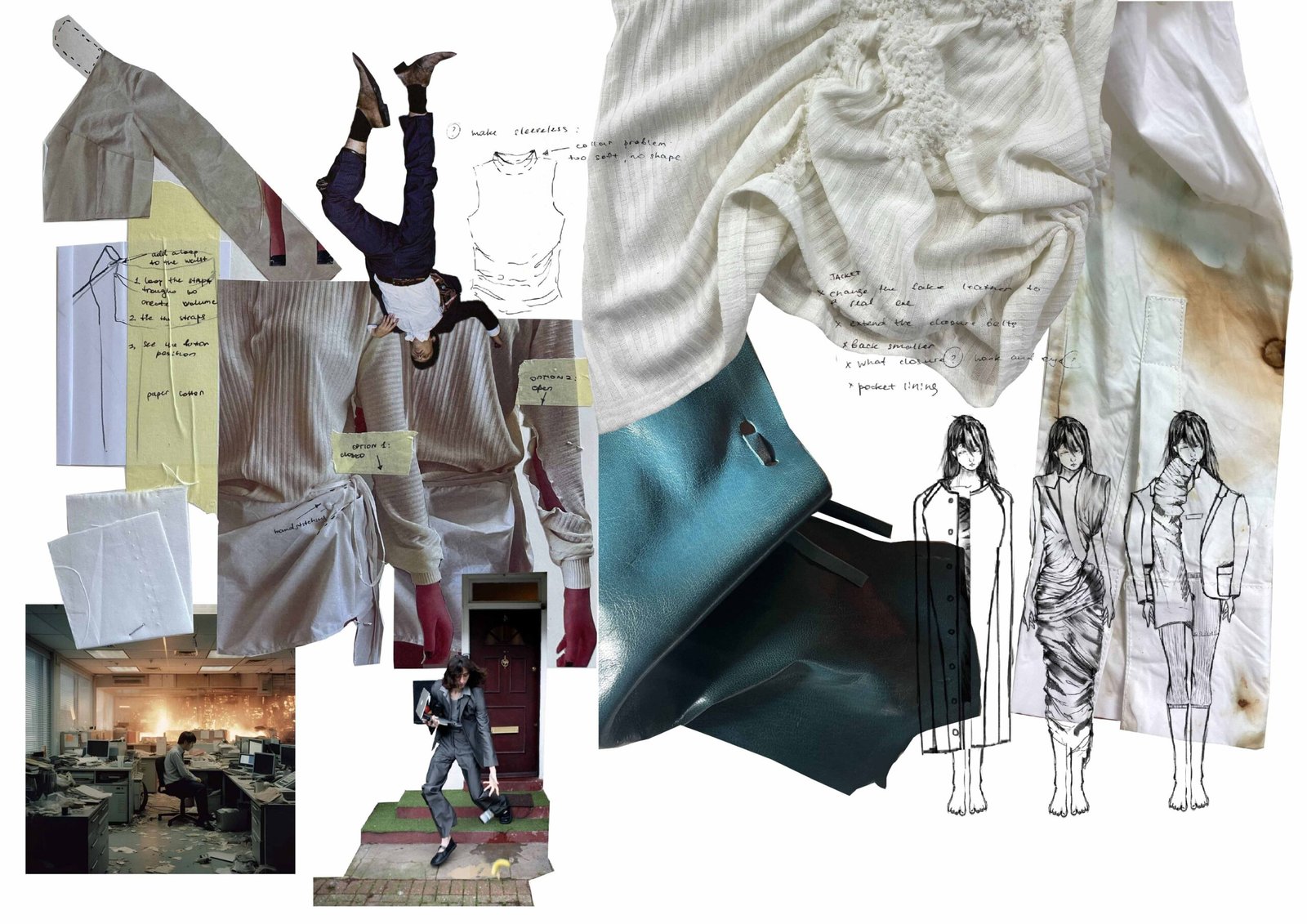
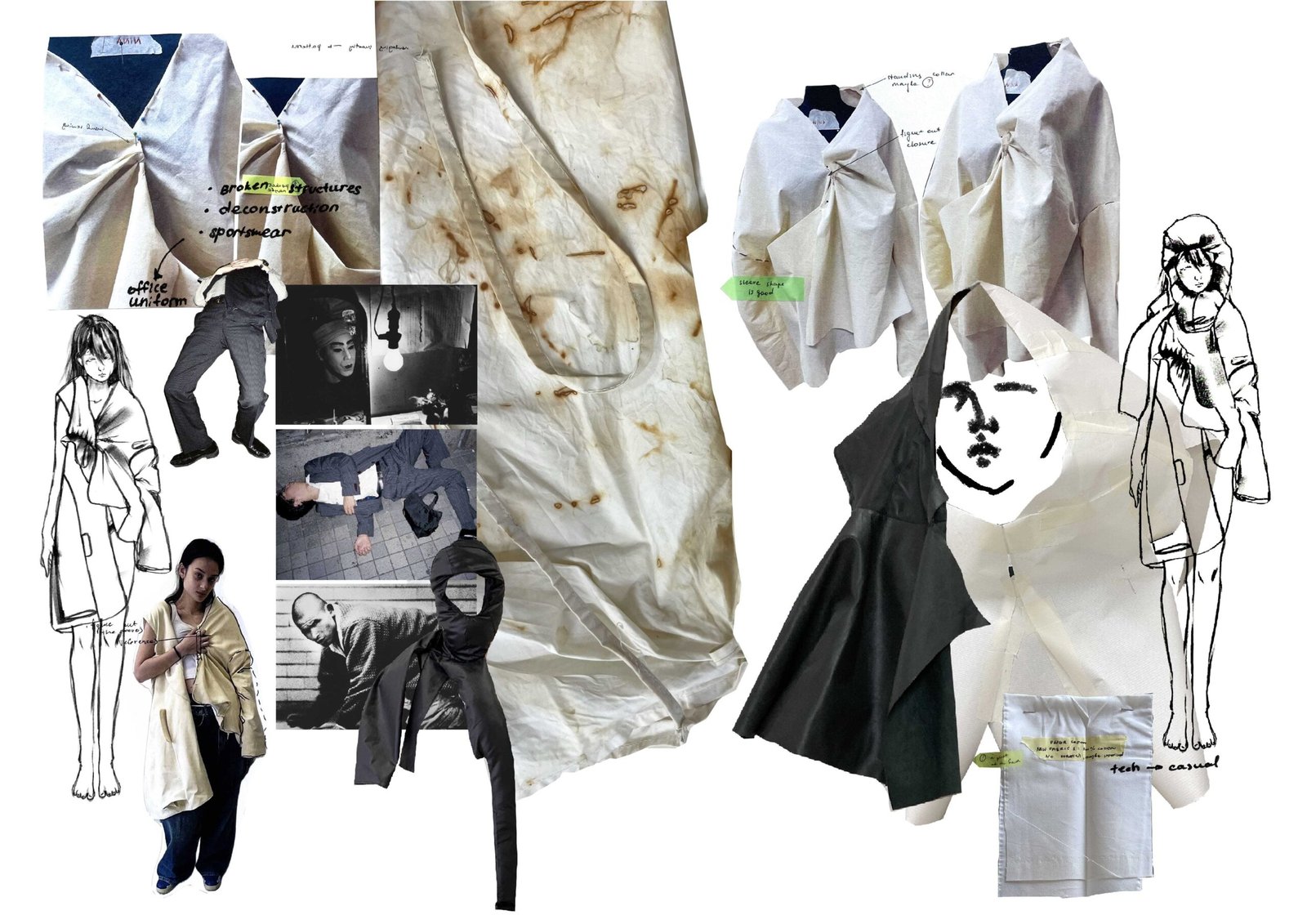
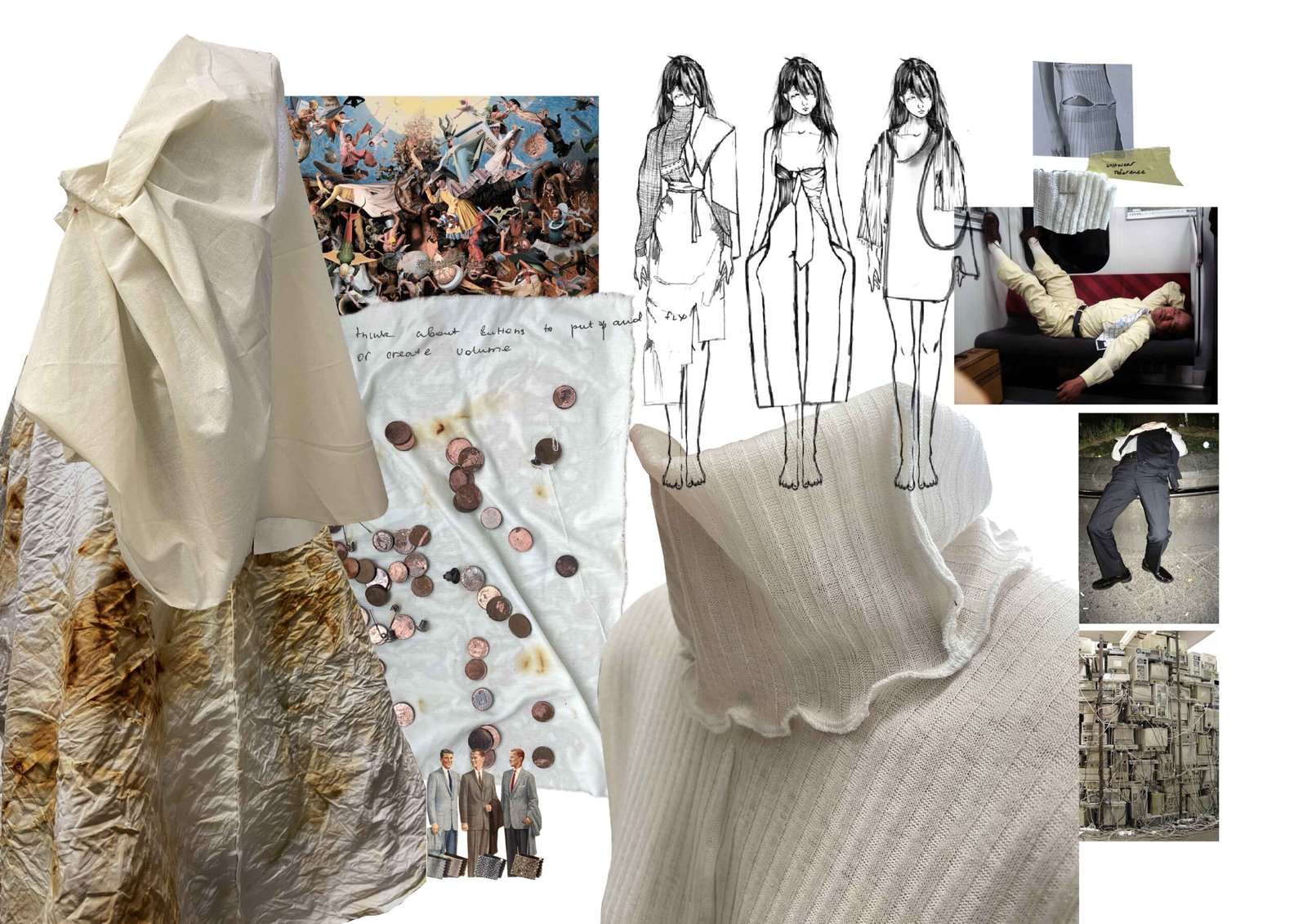
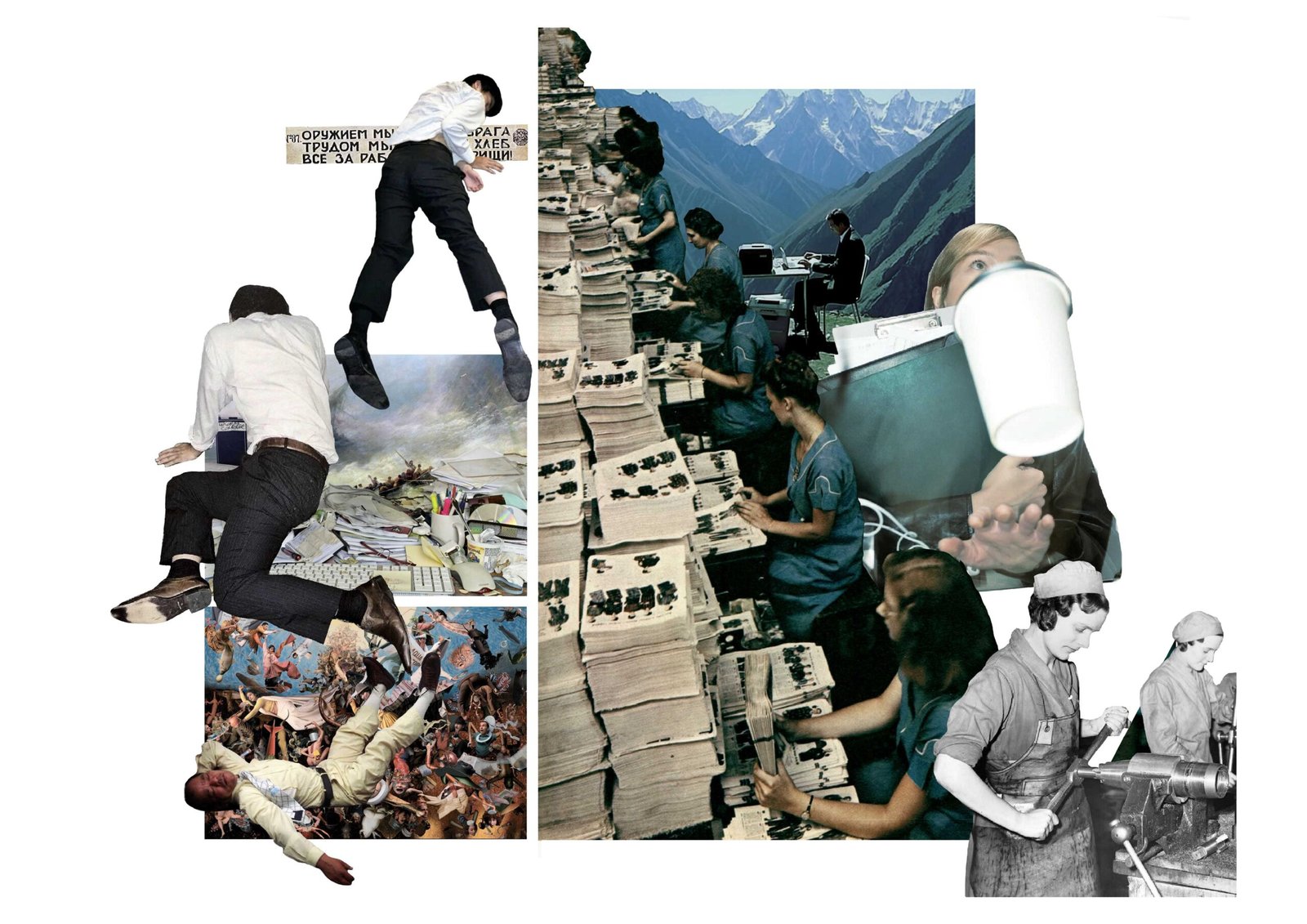
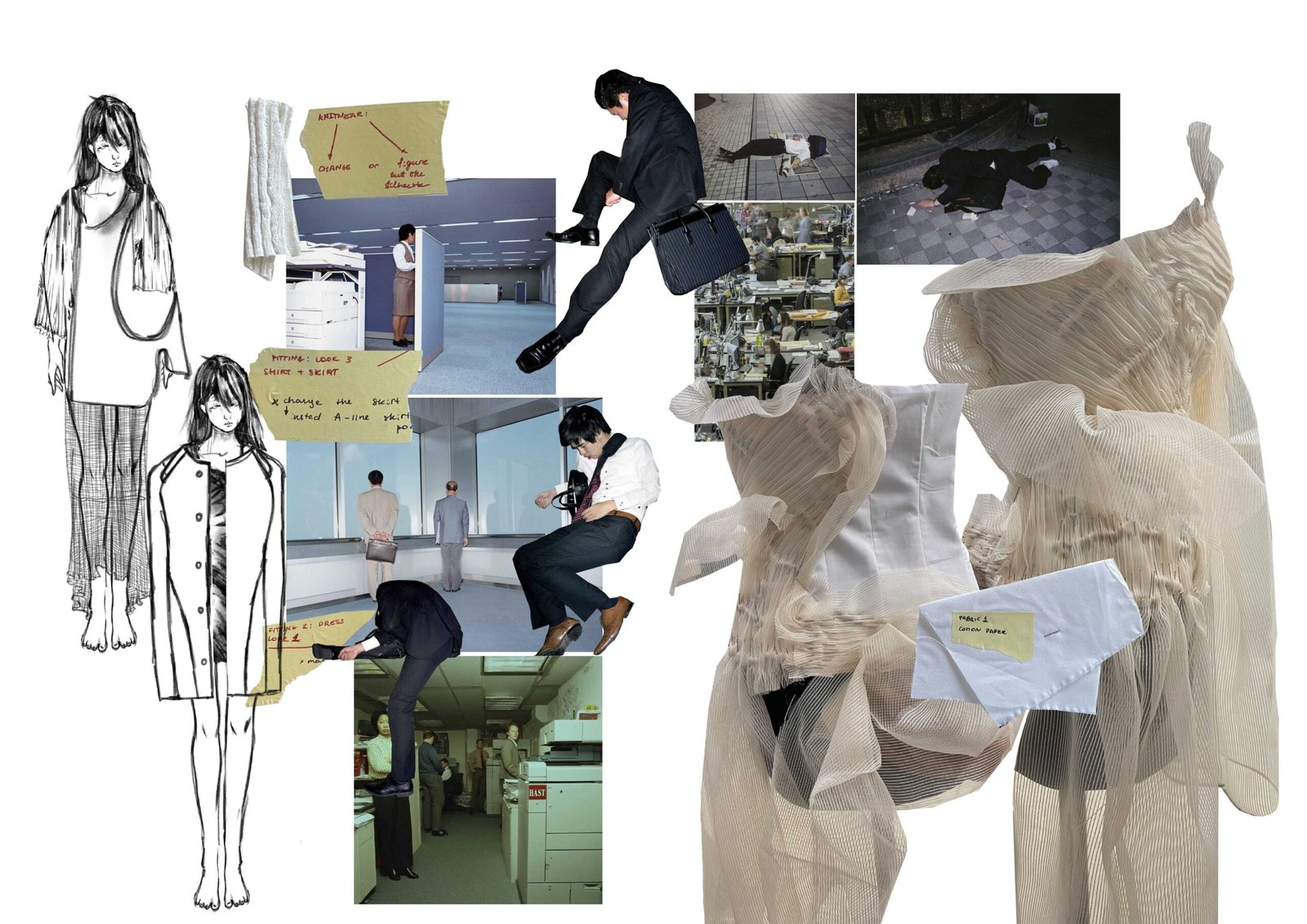
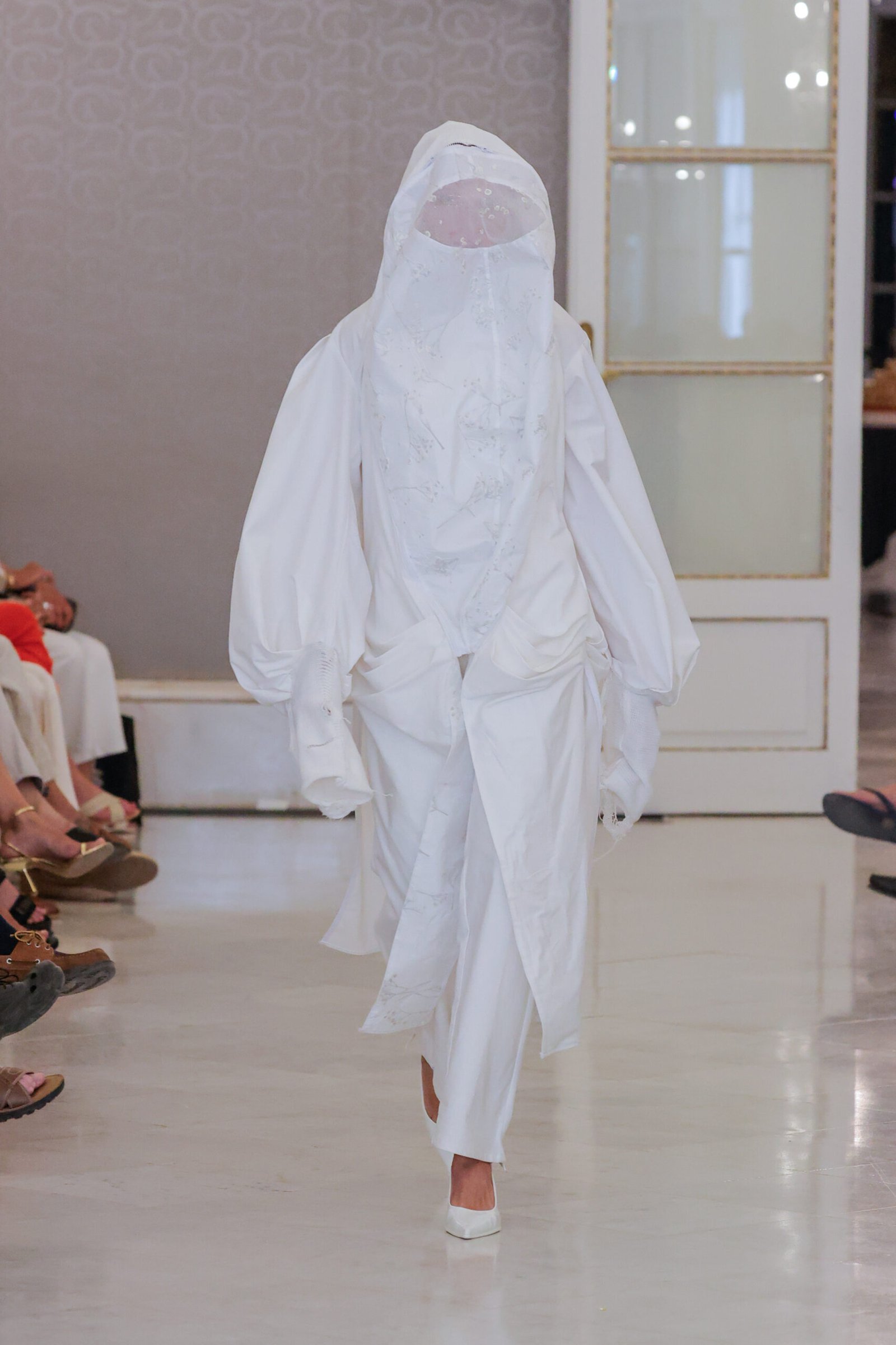
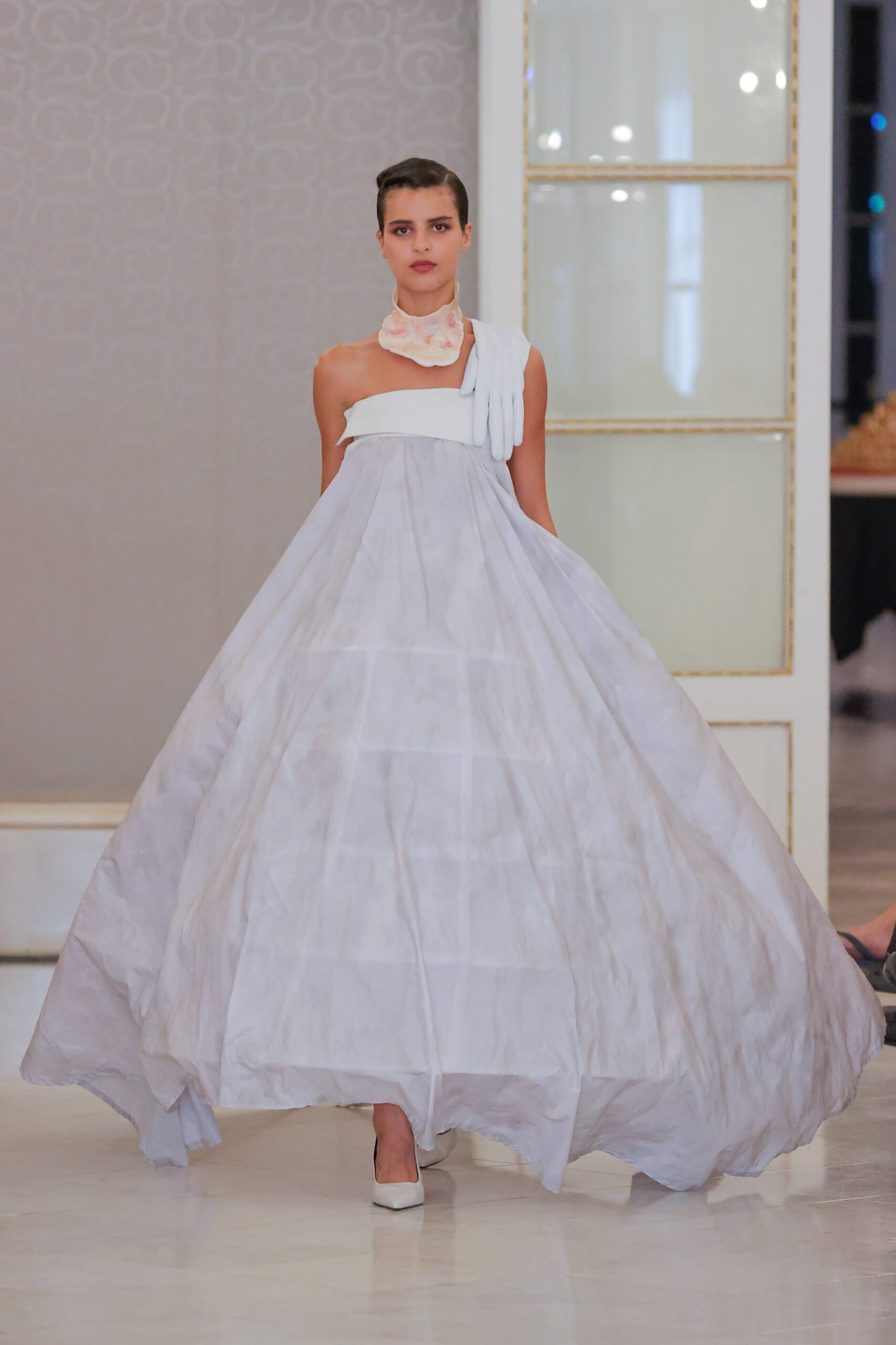
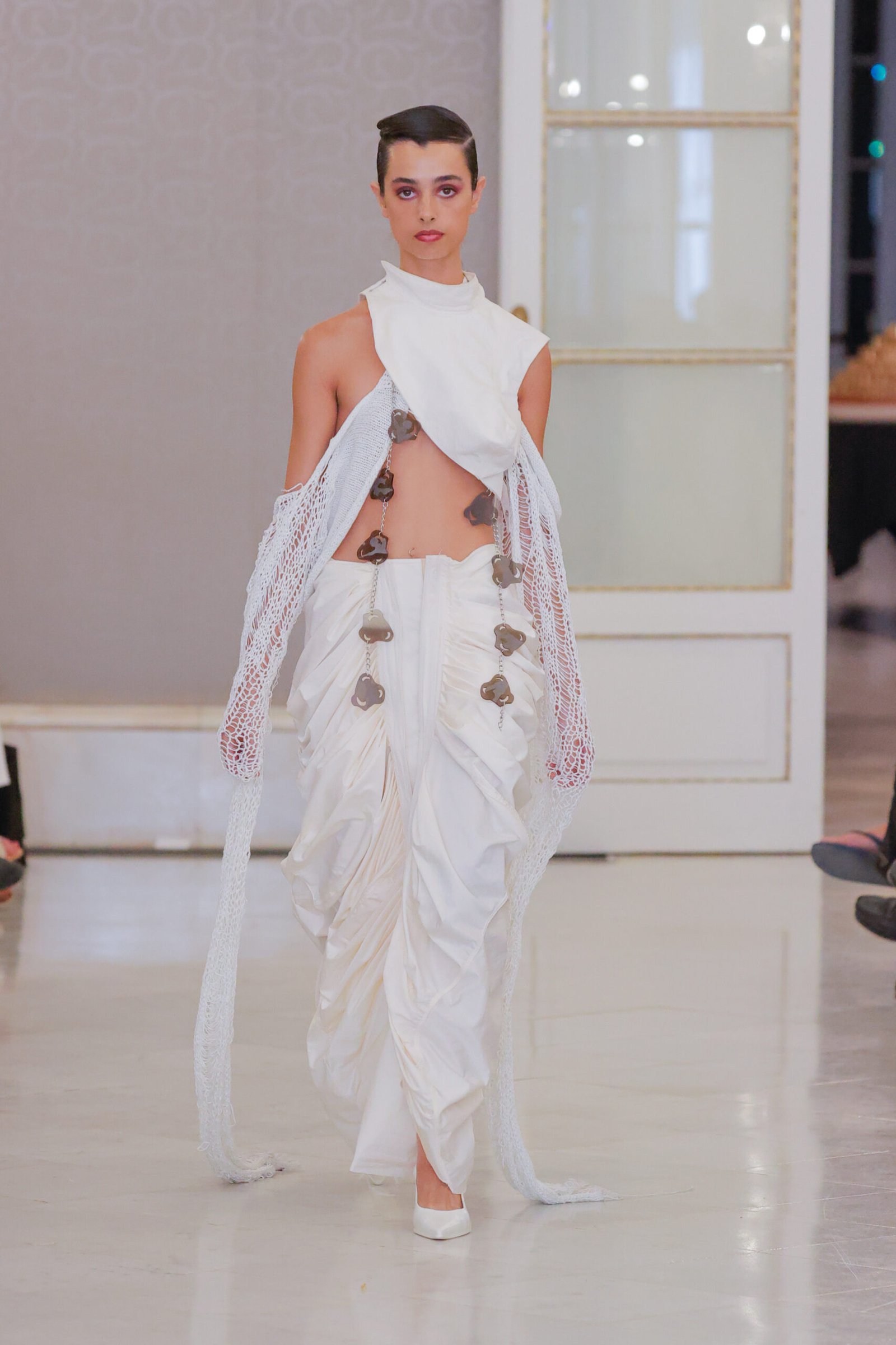
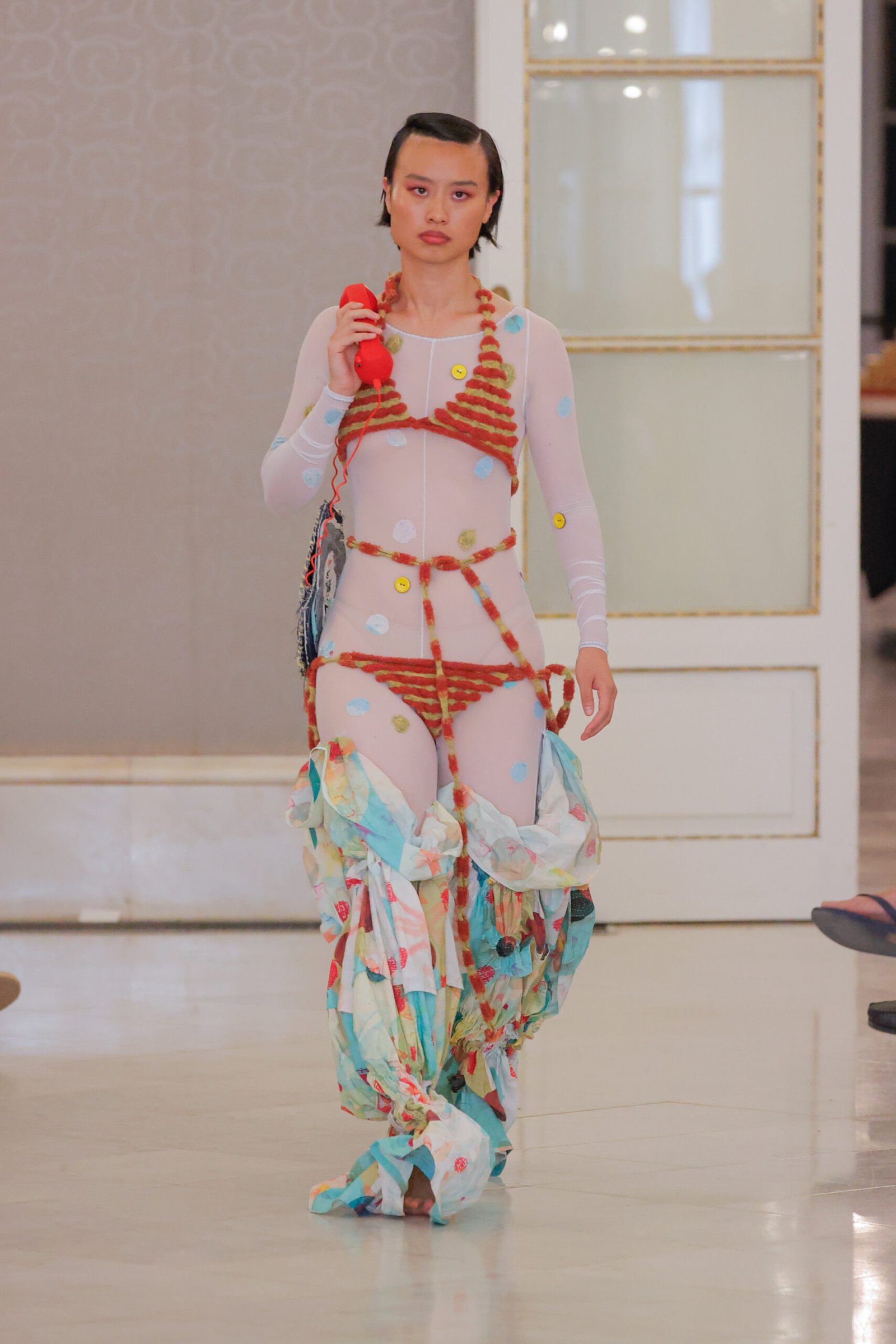
Nina Dubrovina’s collection explores the disconnect between body and identity within the workplace. Corroded metals and raw materials such as paper, cotton, and leather reference the industrial origins of work culture, while gabardine and organza symbolise adaptability and resilience. Knitwear manipulations reject perfectionism, exposing the subtle effects of stress and insecurity, and deconstructed office silhouettes with unfinished edges reflect burnout, competition, and changing perceptions of work after COVID. Although Dubrovina plans to move into law after graduation, she sees opportunities to combine both disciplines. Concerned by overproduction and fashion’s environmental impact, she believes the industry can communicate meaning and value without producing more garments, and hopes to continue researching sustainable and zero-waste approaches while contributing to more responsible and ethical developments.

@ninadu.se

Antía Cortegoso

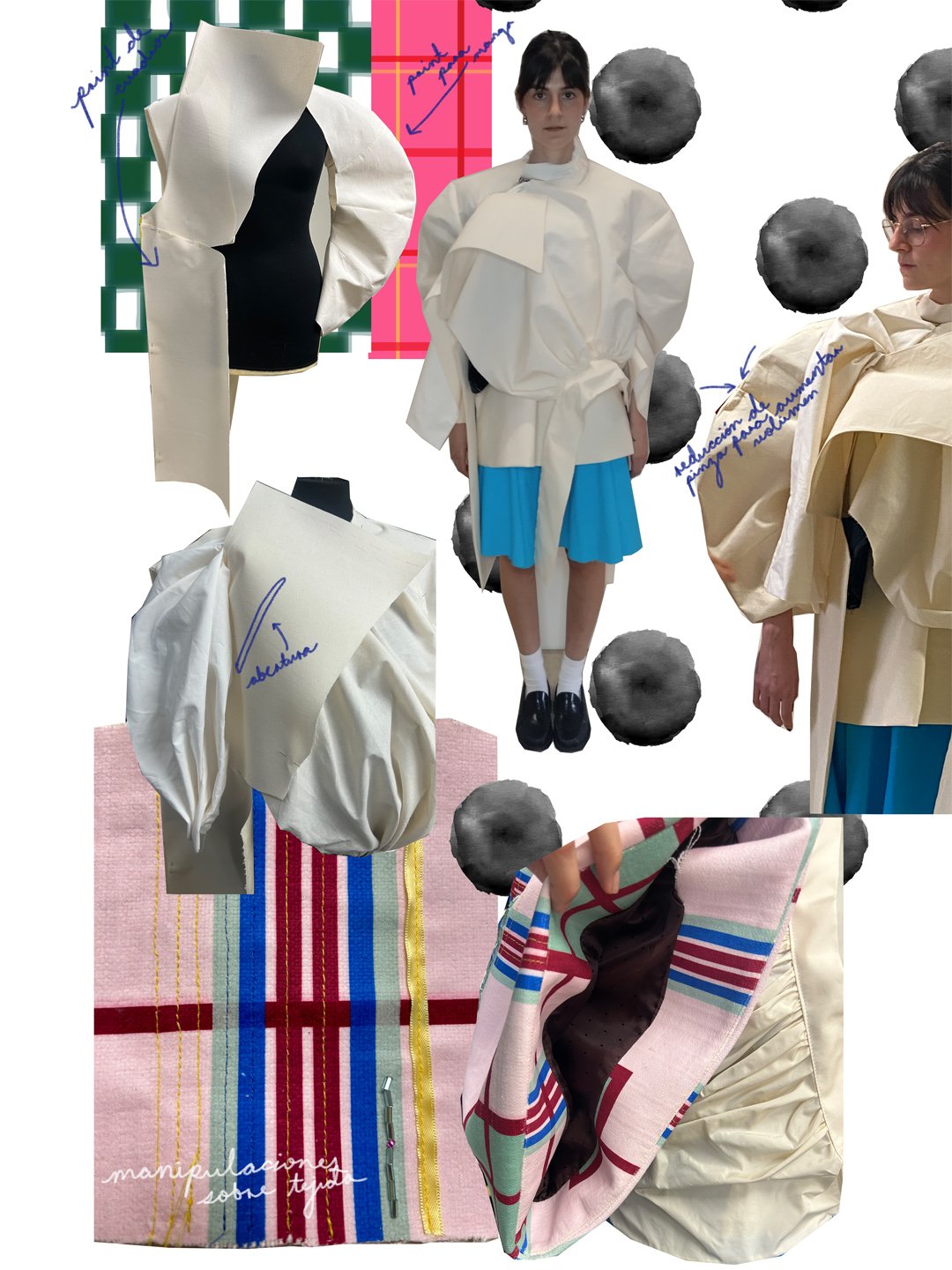
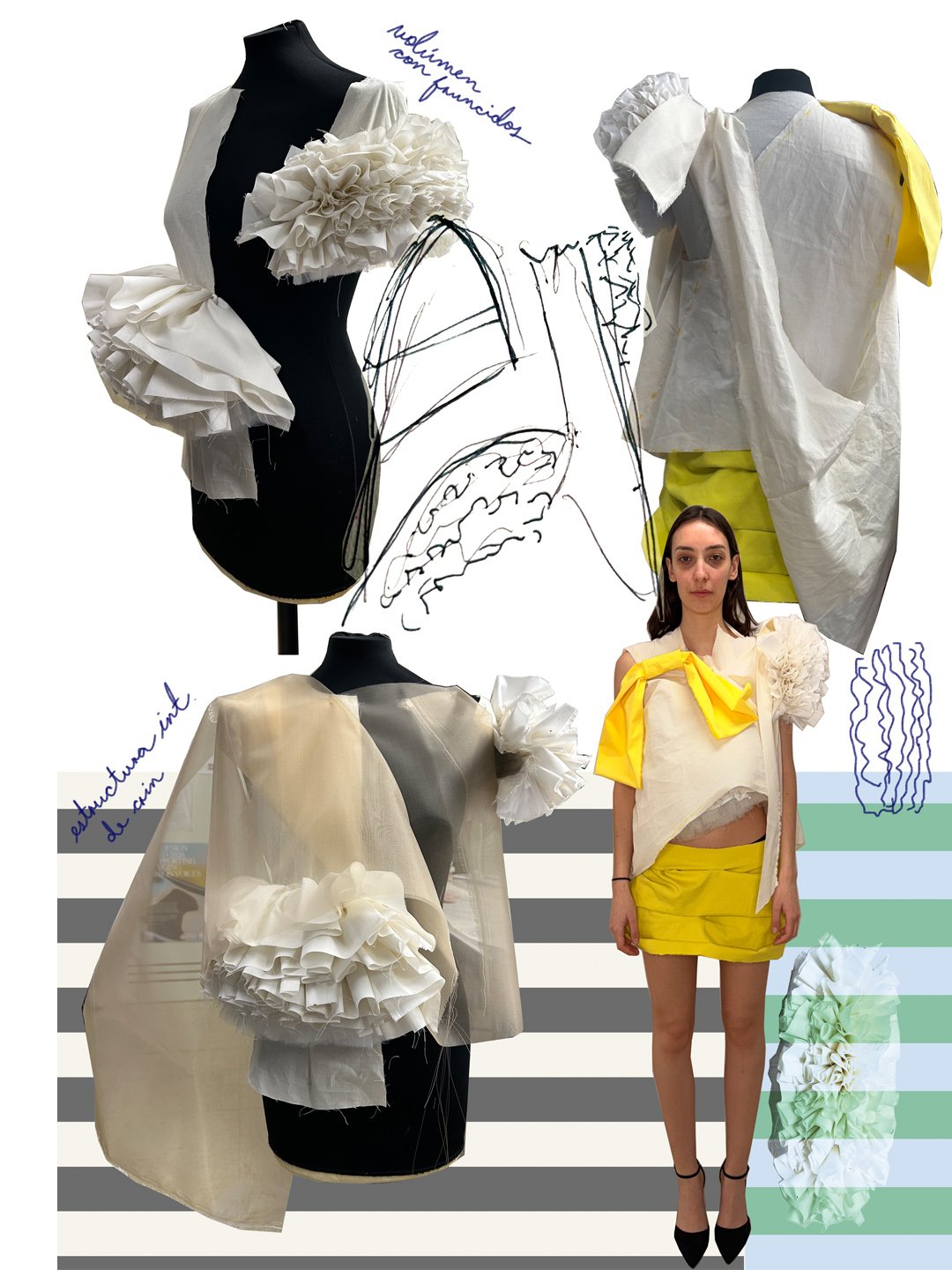
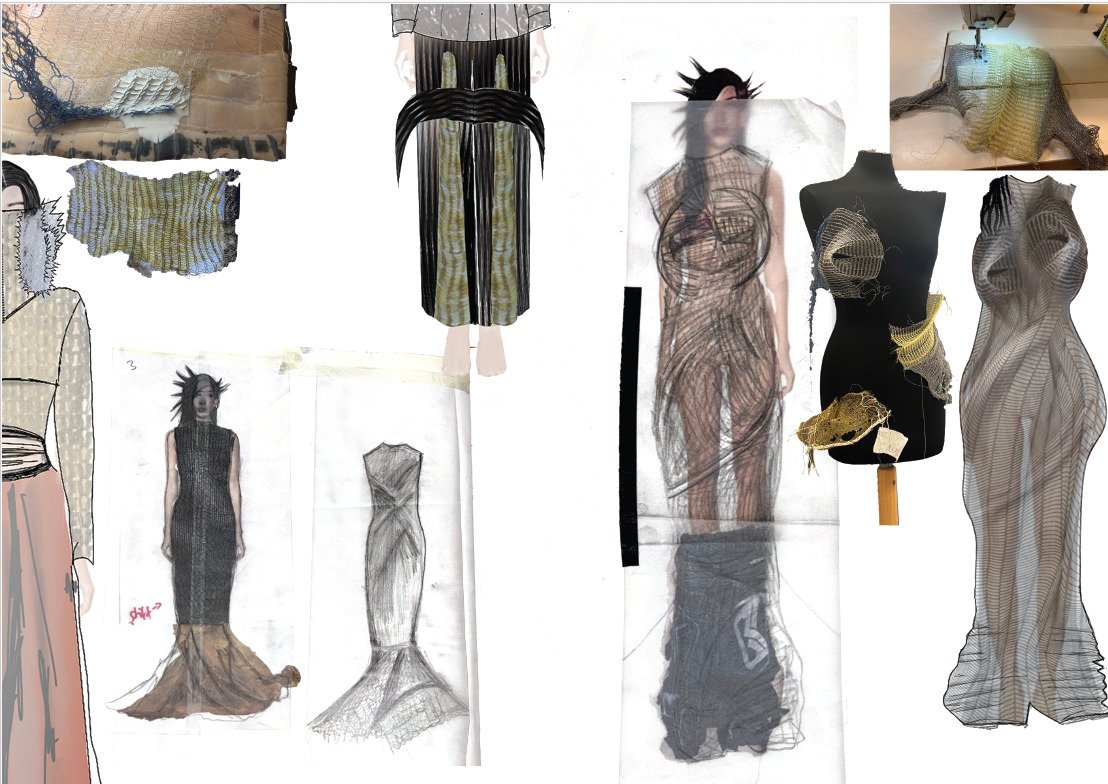
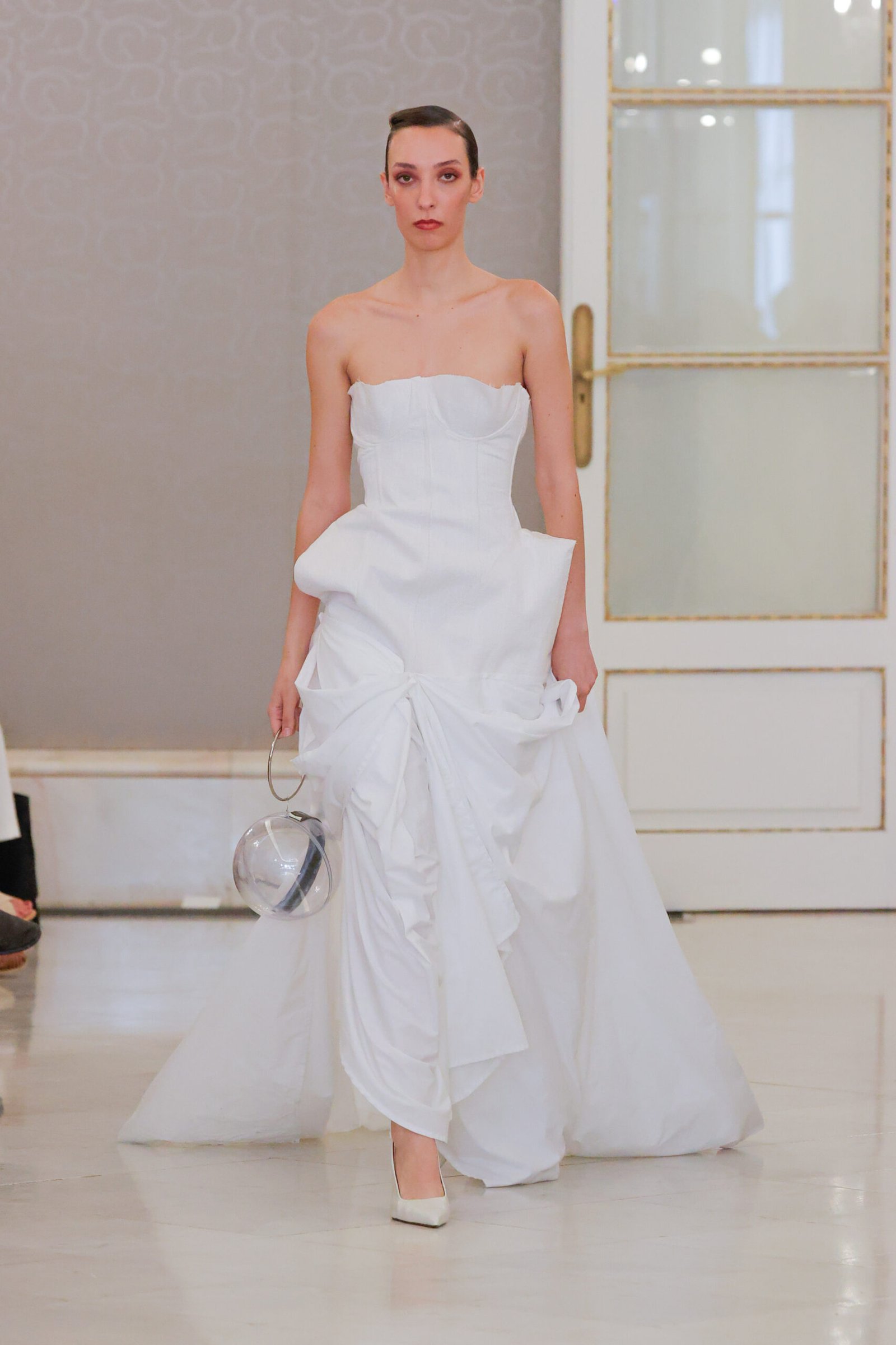
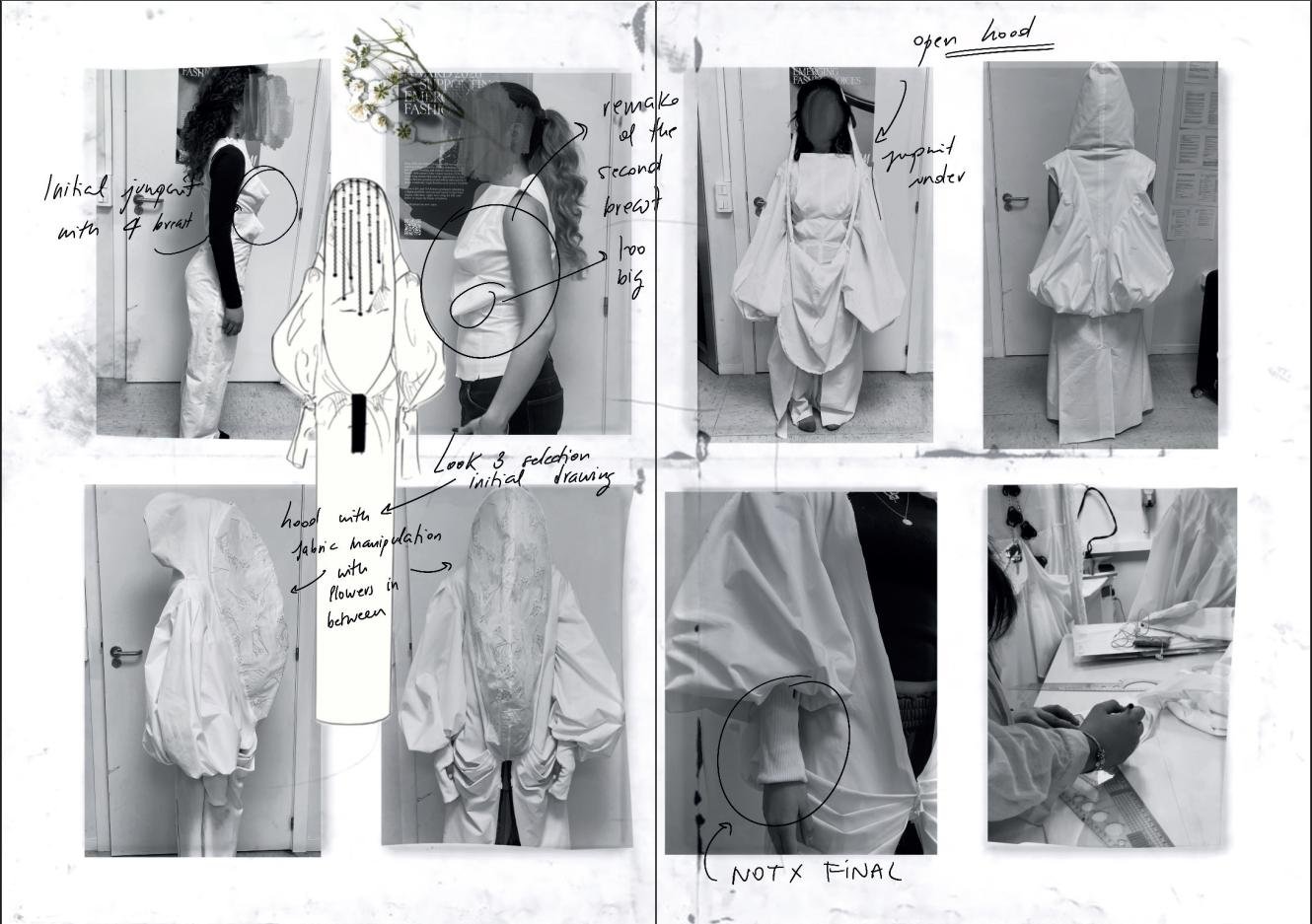
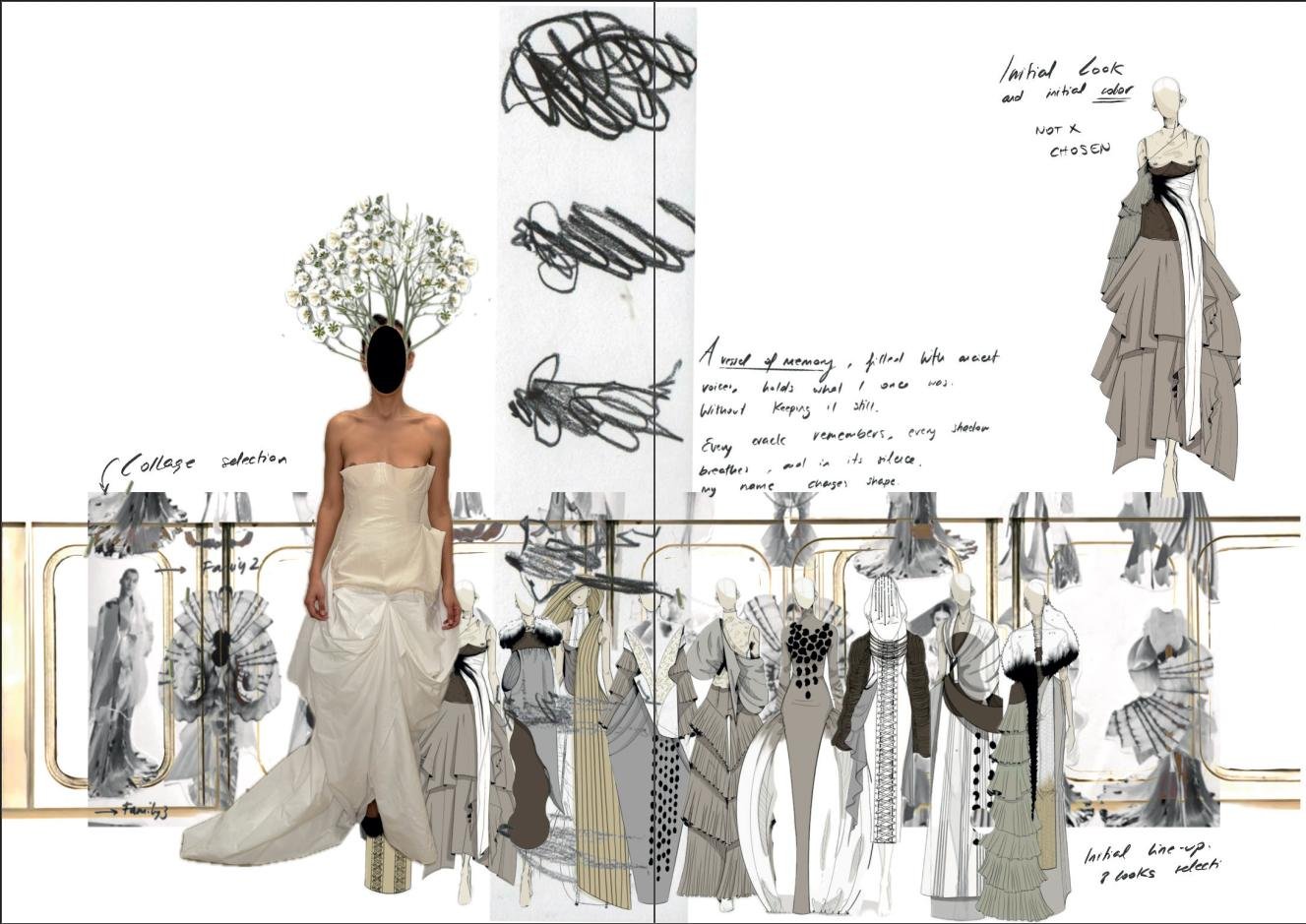
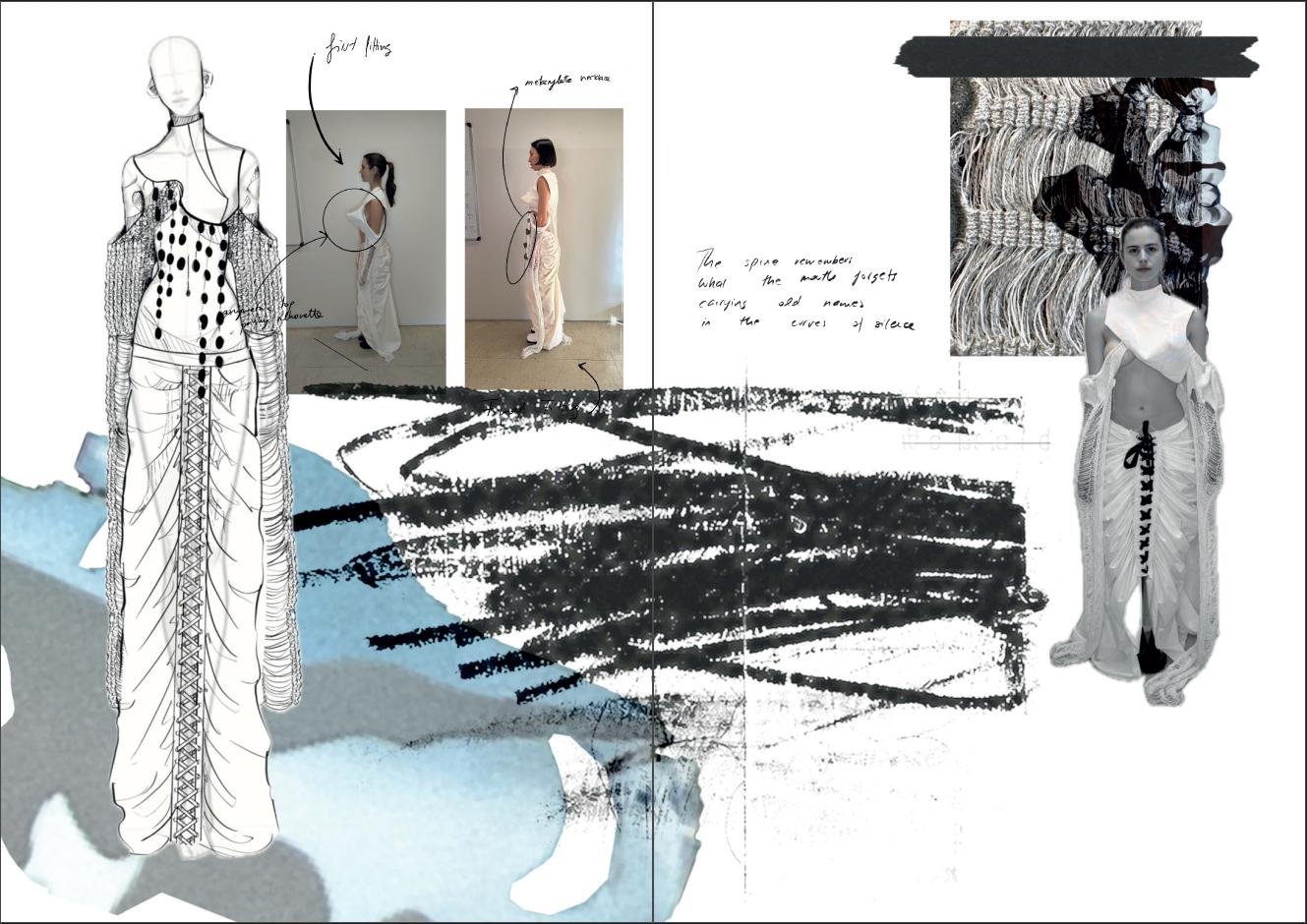
Antía Cortegoso’s collection explores memory as a reflection of personality, examining how people reconstruct the past, inhabit the present, and imagine the future through remembered experience. Research into the way the brain stores memories led her to focus on fragmentation, fluidity, repetition, and continual reconstruction, concepts that shape the silhouettes throughout the project. Each look combines rigid and draped elements to create a dialogue between the tangible and intangible, while exaggerated forms around the female chest and spine emphasise the relationship between body, mind, and the creation of life. As she enters the industry, Cortegoso admits that much of the transition feels intimidating, particularly the prospect of designing for defined audiences or wondering whether her creative world will resonate with others. At the same time, she is excited to continue learning and believes she has a meaningful contribution to make as she develops her practice.

@ann_kor_00

Elisabet Castellví Díaz

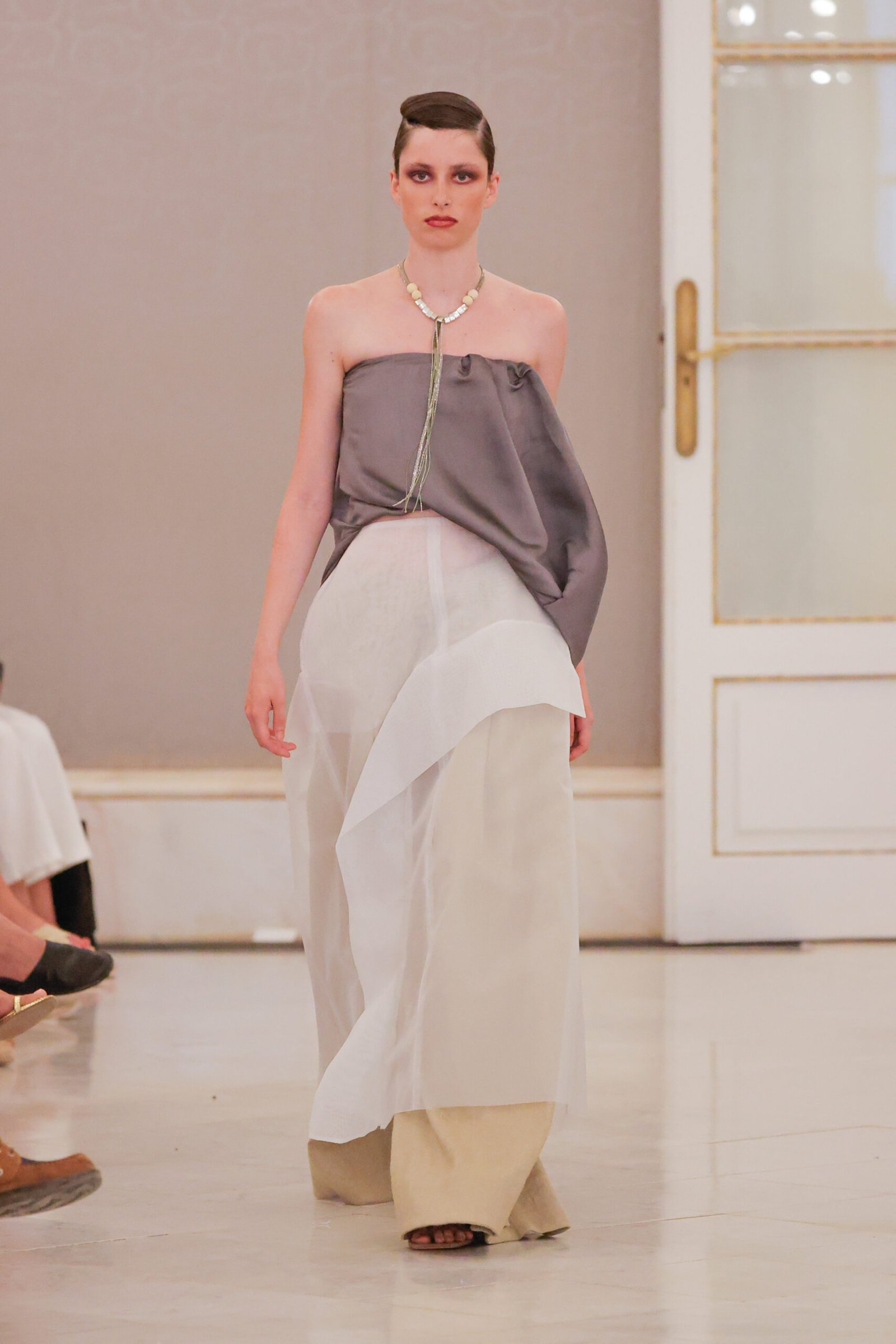
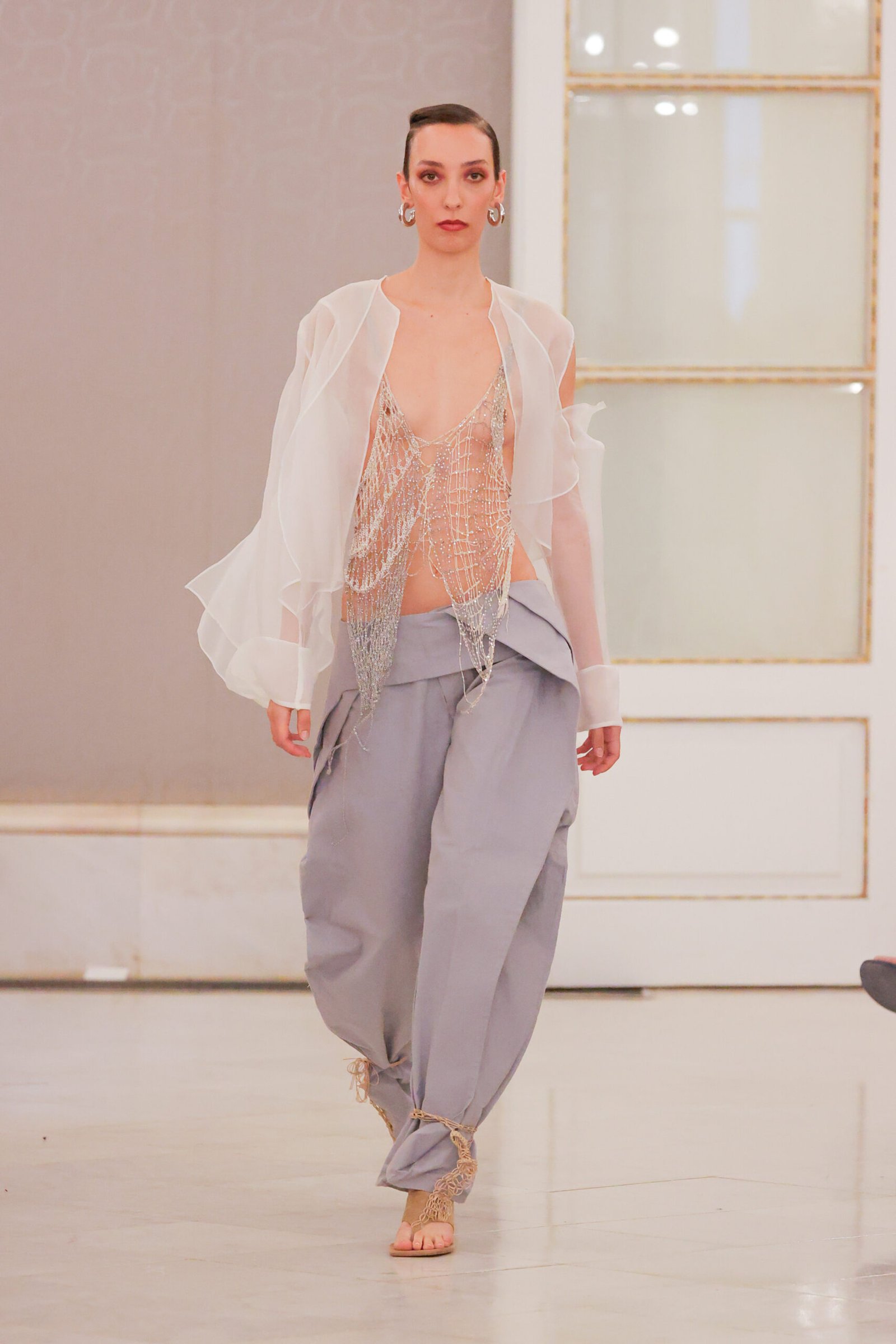
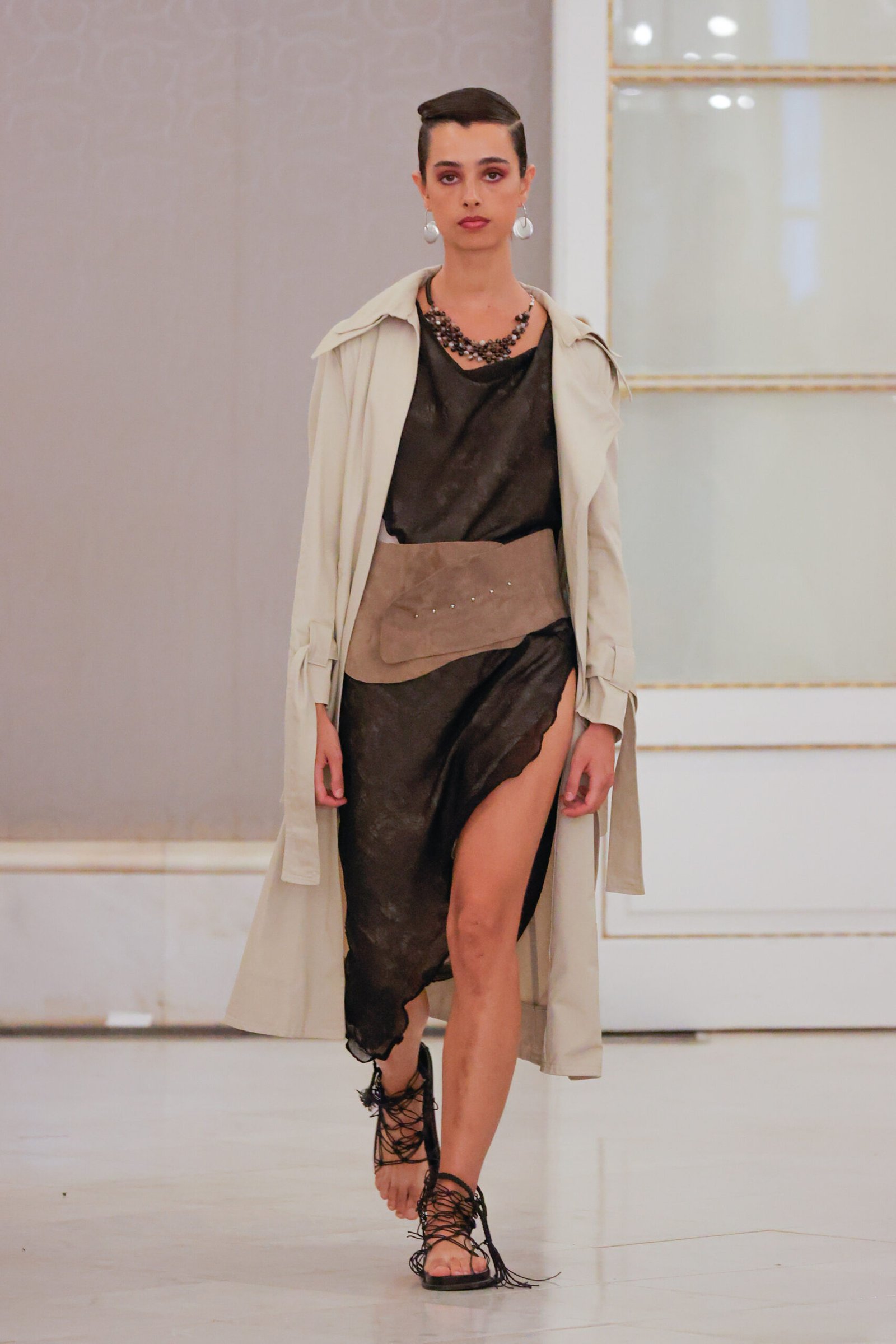
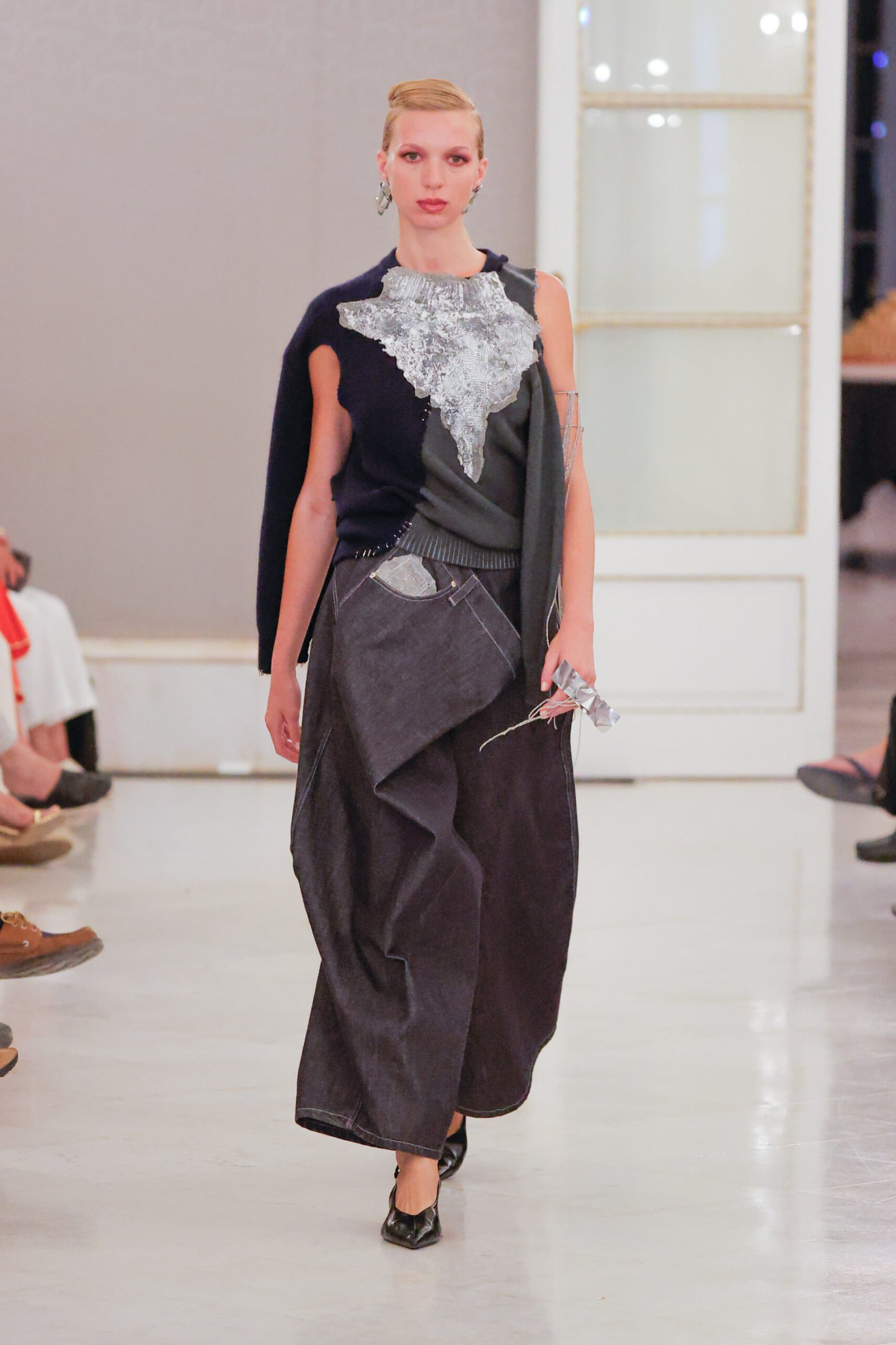
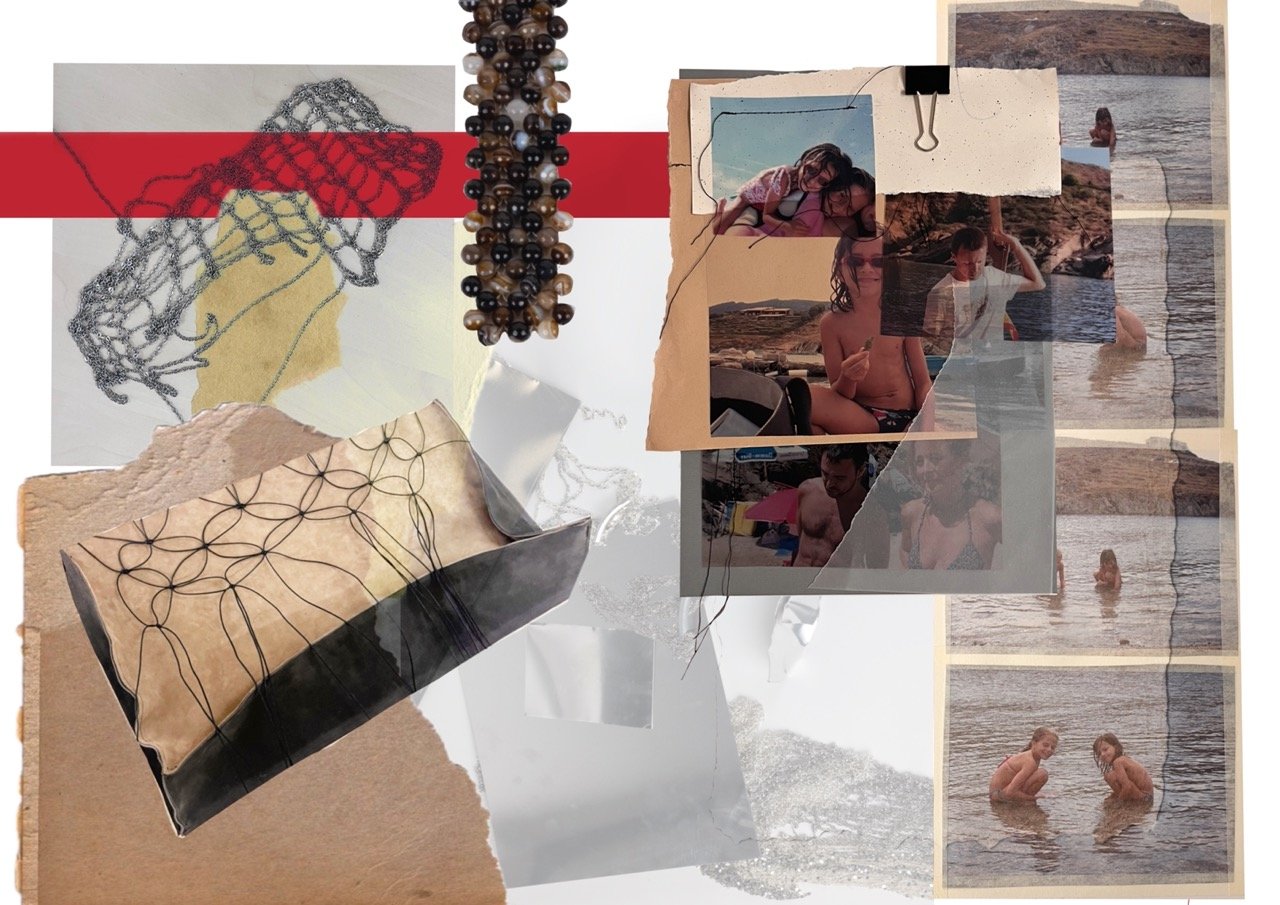
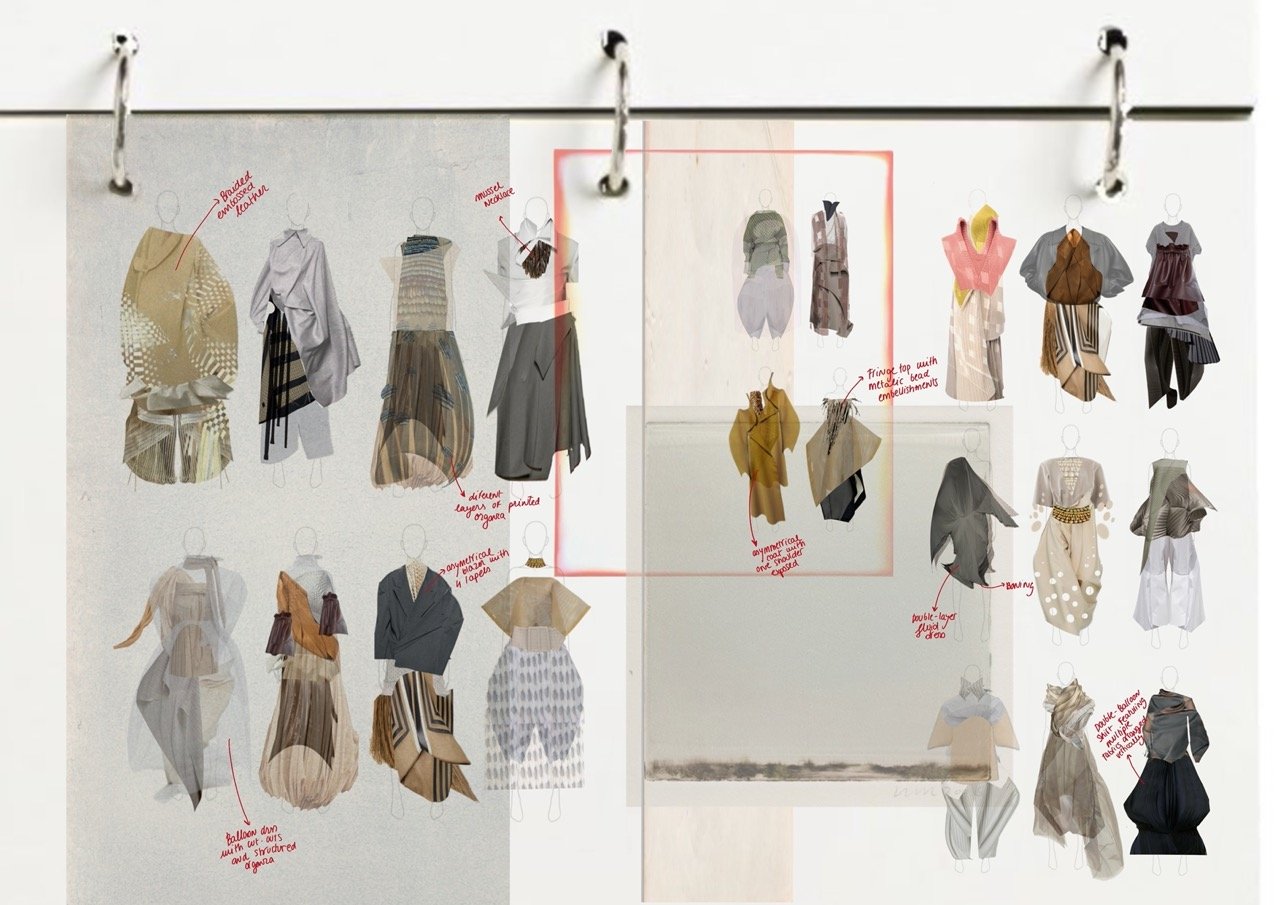
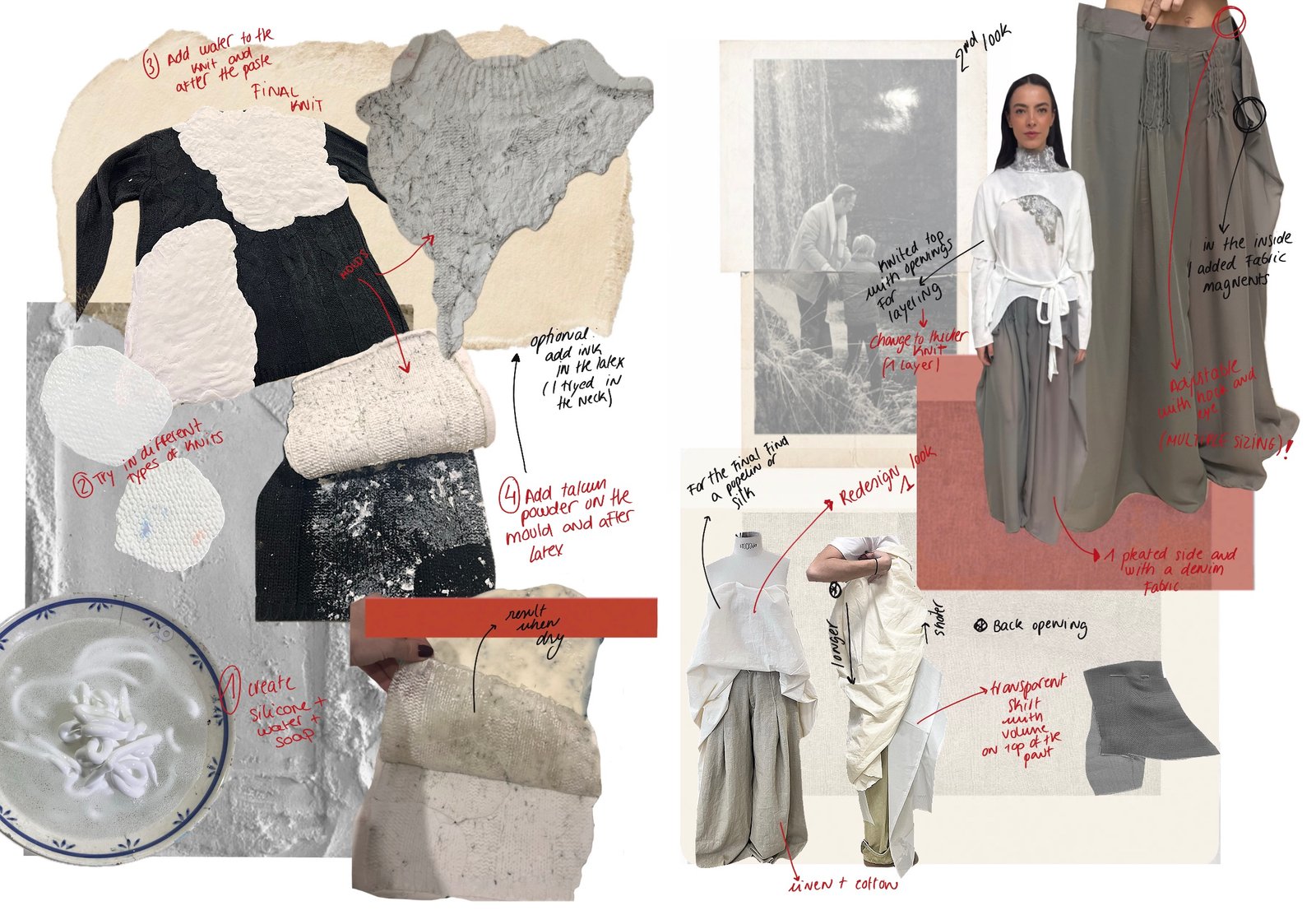
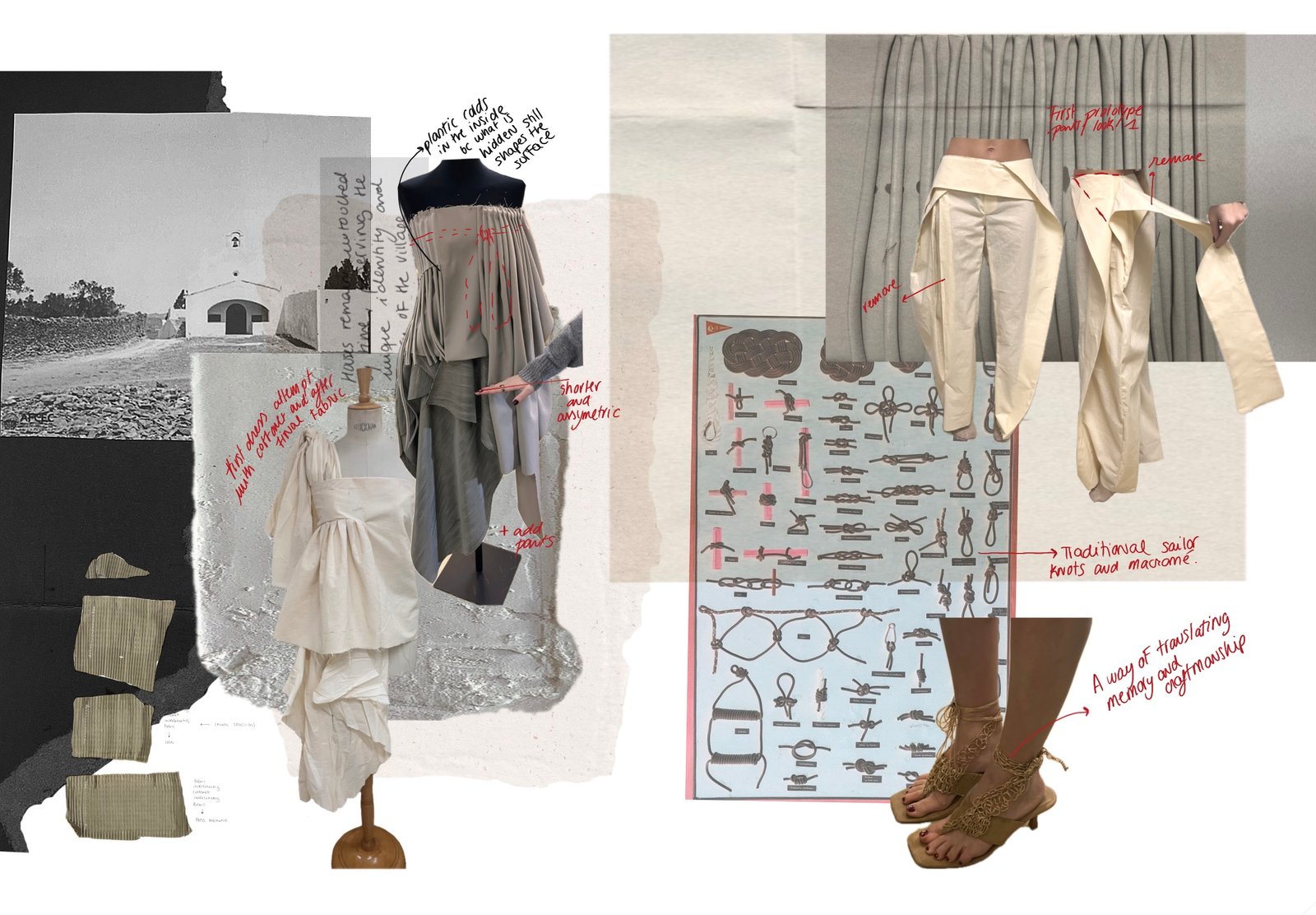
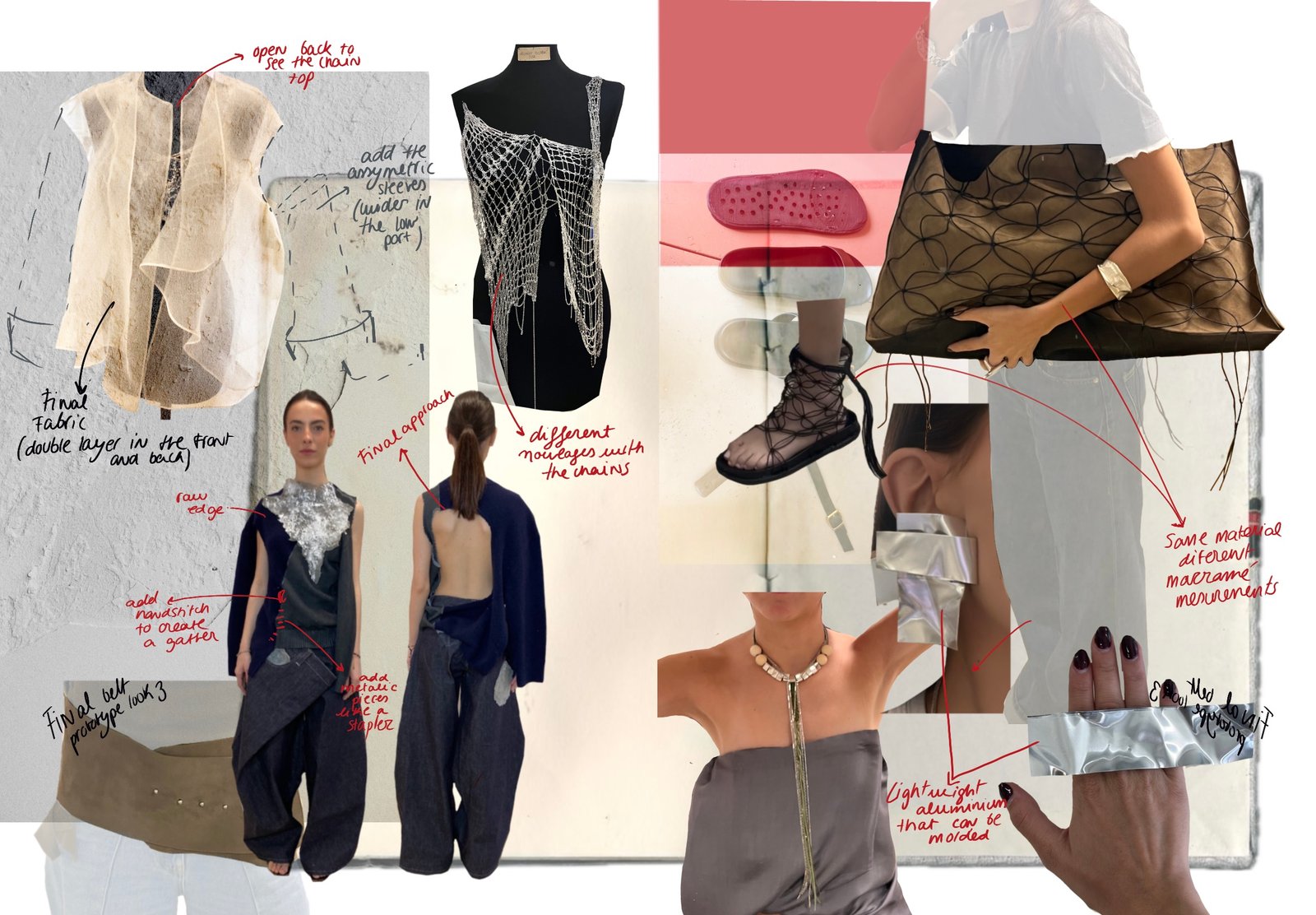
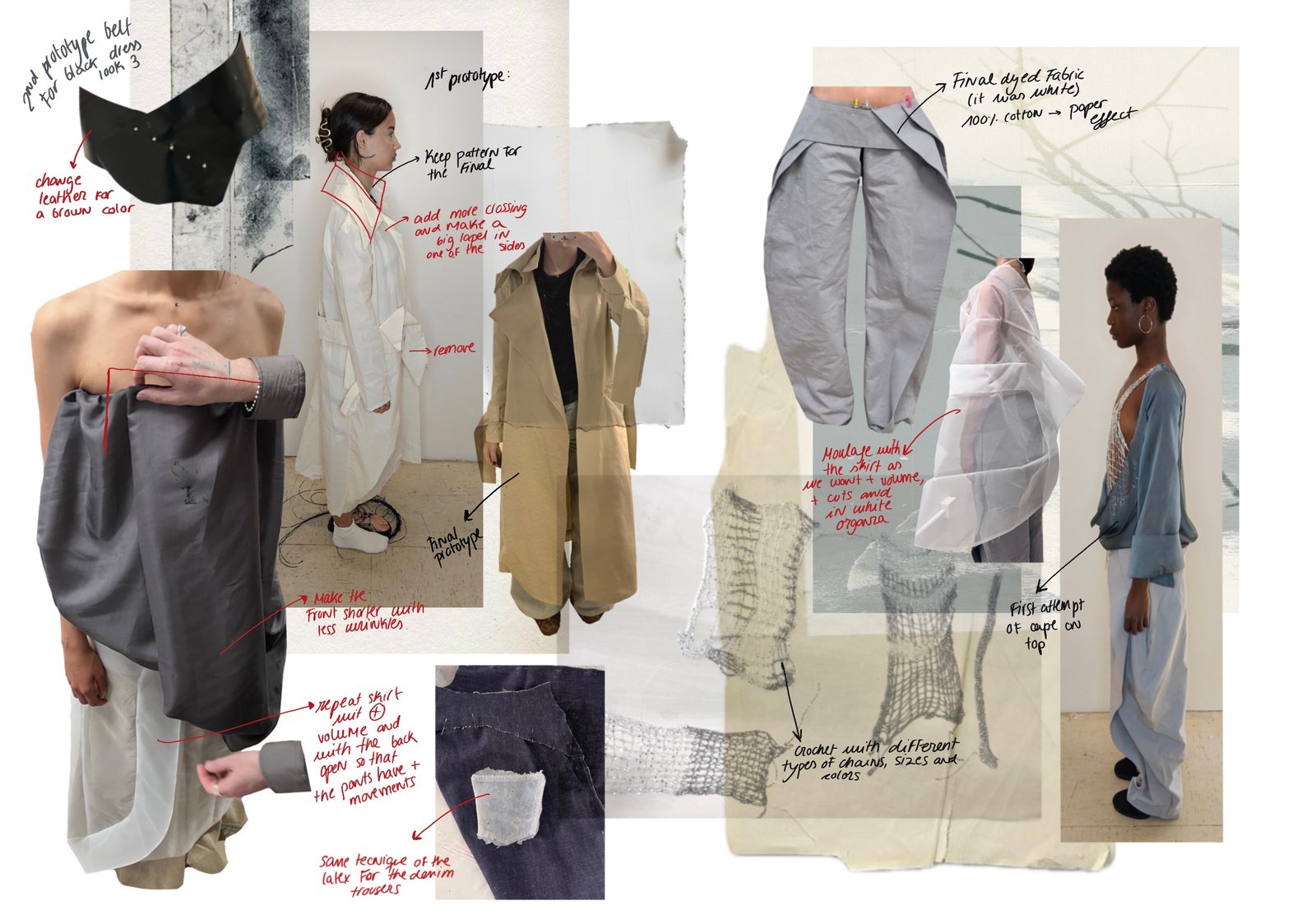
Elisabet Castellví Díaz’s collection, SALITRE, explores reconnection in an increasingly fast and digital world through her personal relationship with Cadaqués, a place associated with calm, family, and return. The project reflects on slowing down and engaging more consciously with the present, balancing structure and fluidity, protection and exposure through layering, transformation, and material contrast. Linen, crochet, and jersey are combined with translucent and synthetic fabrics, while muted colours and textured surfaces evoke memory, time, and the atmosphere of the Mediterranean. Looking ahead, Castellví Díaz is particularly interested in craftsmanship, material development, and design processes that privilege quality over speed. While she finds the pressure for constant productivity and consumption challenging, she is inspired by designers who combine innovation with authenticity and hopes to create work that encourages a deeper connection between people and their garments.

@ecastellvi_

Carla Bricollé

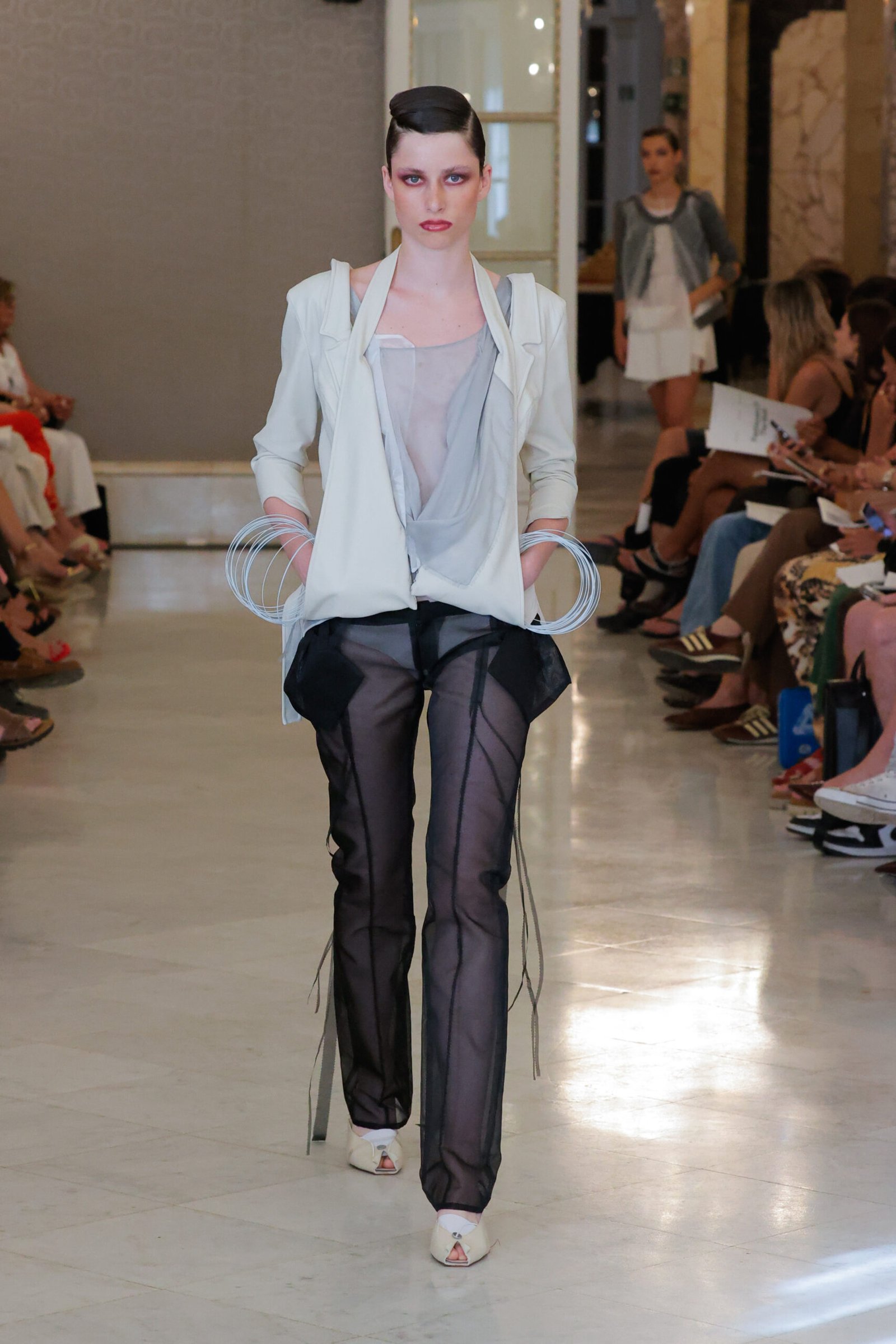
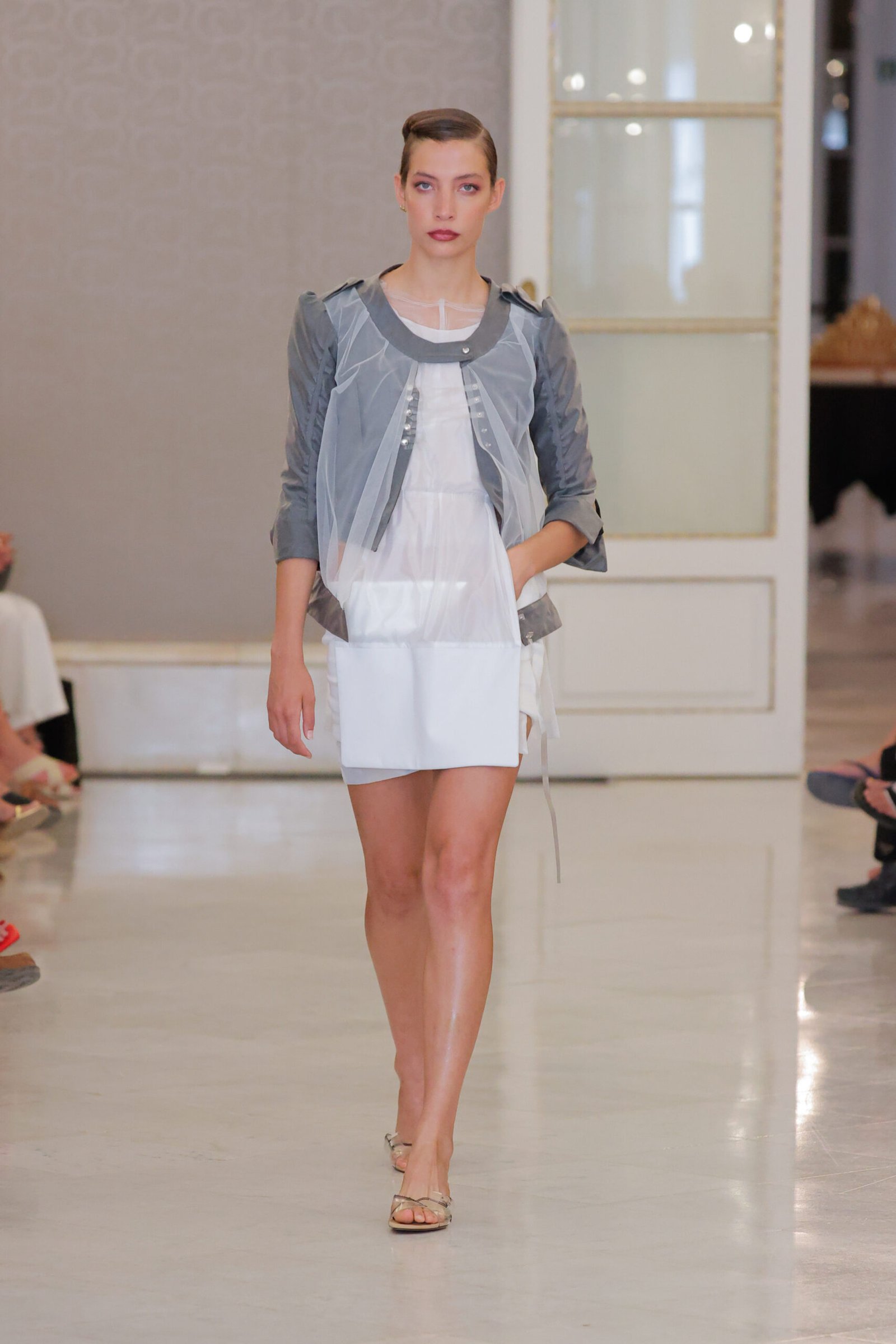
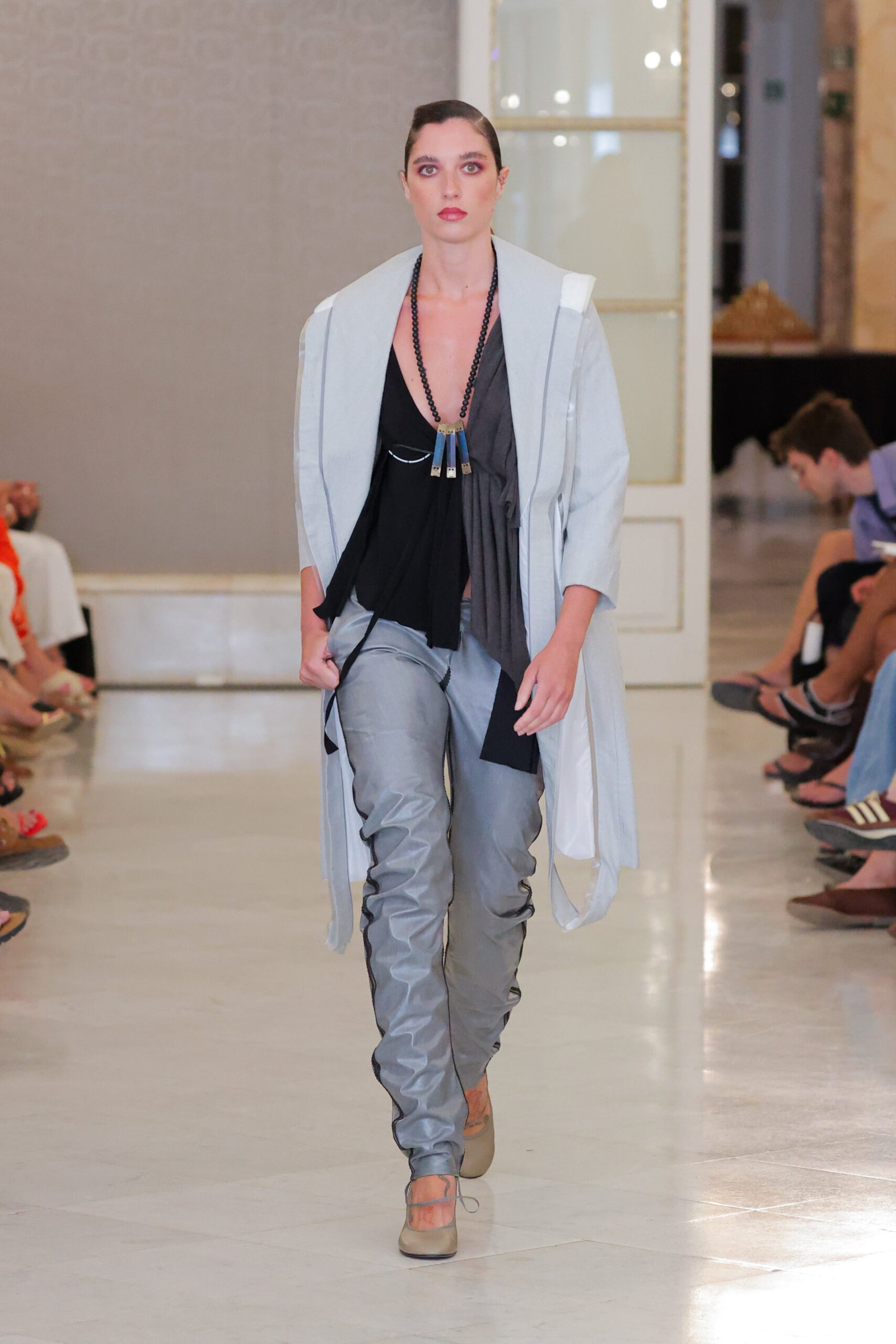
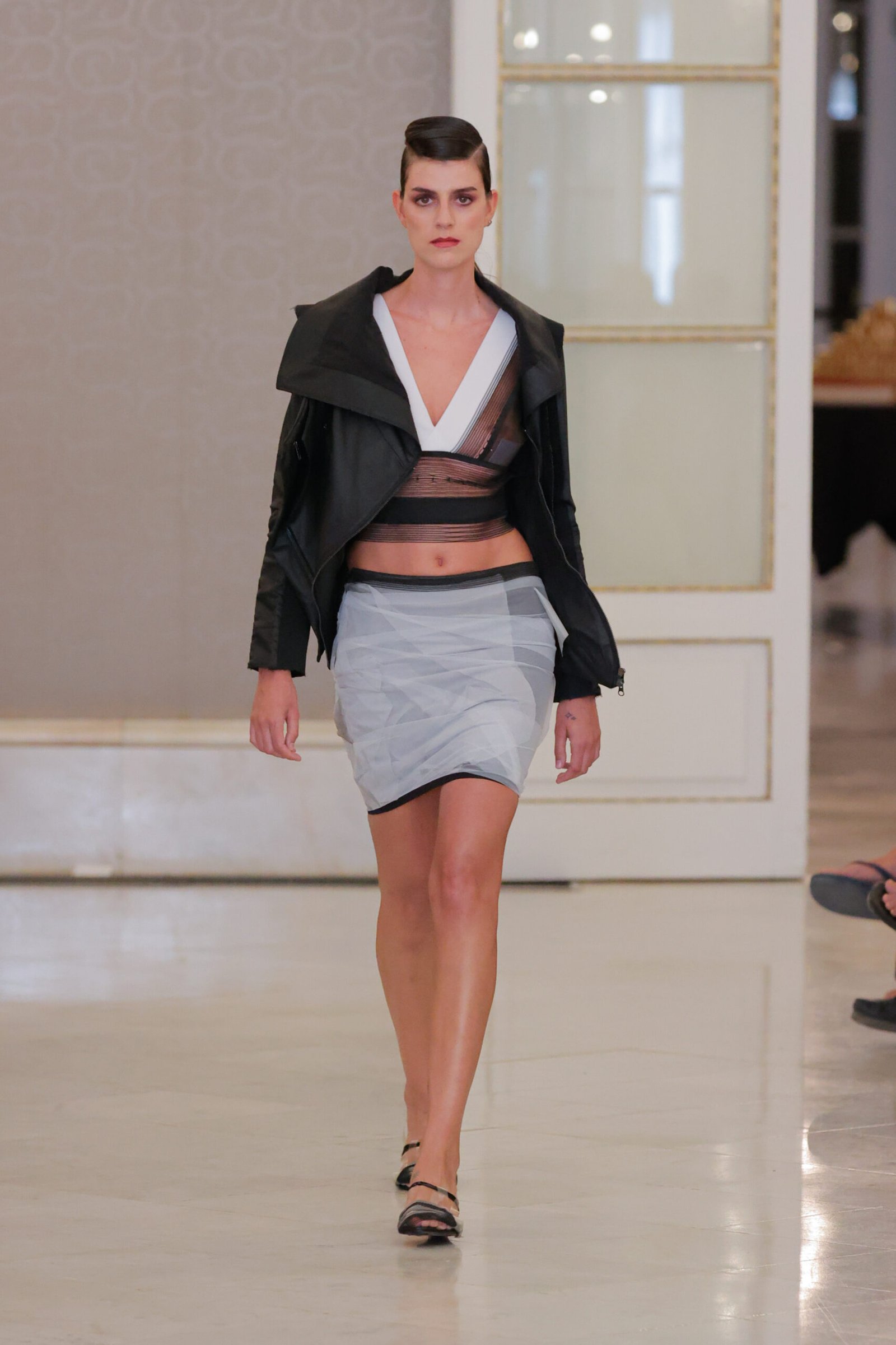
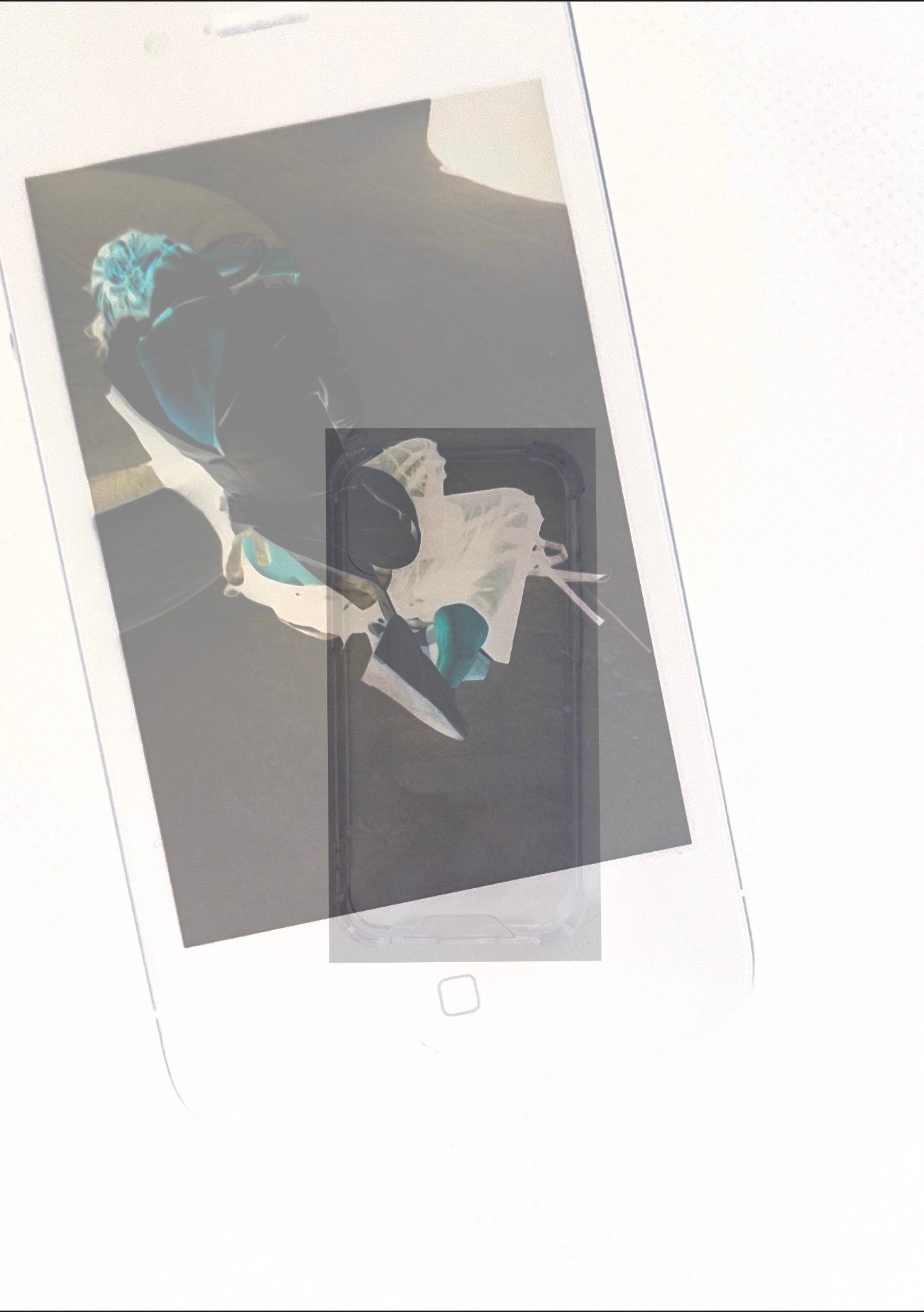
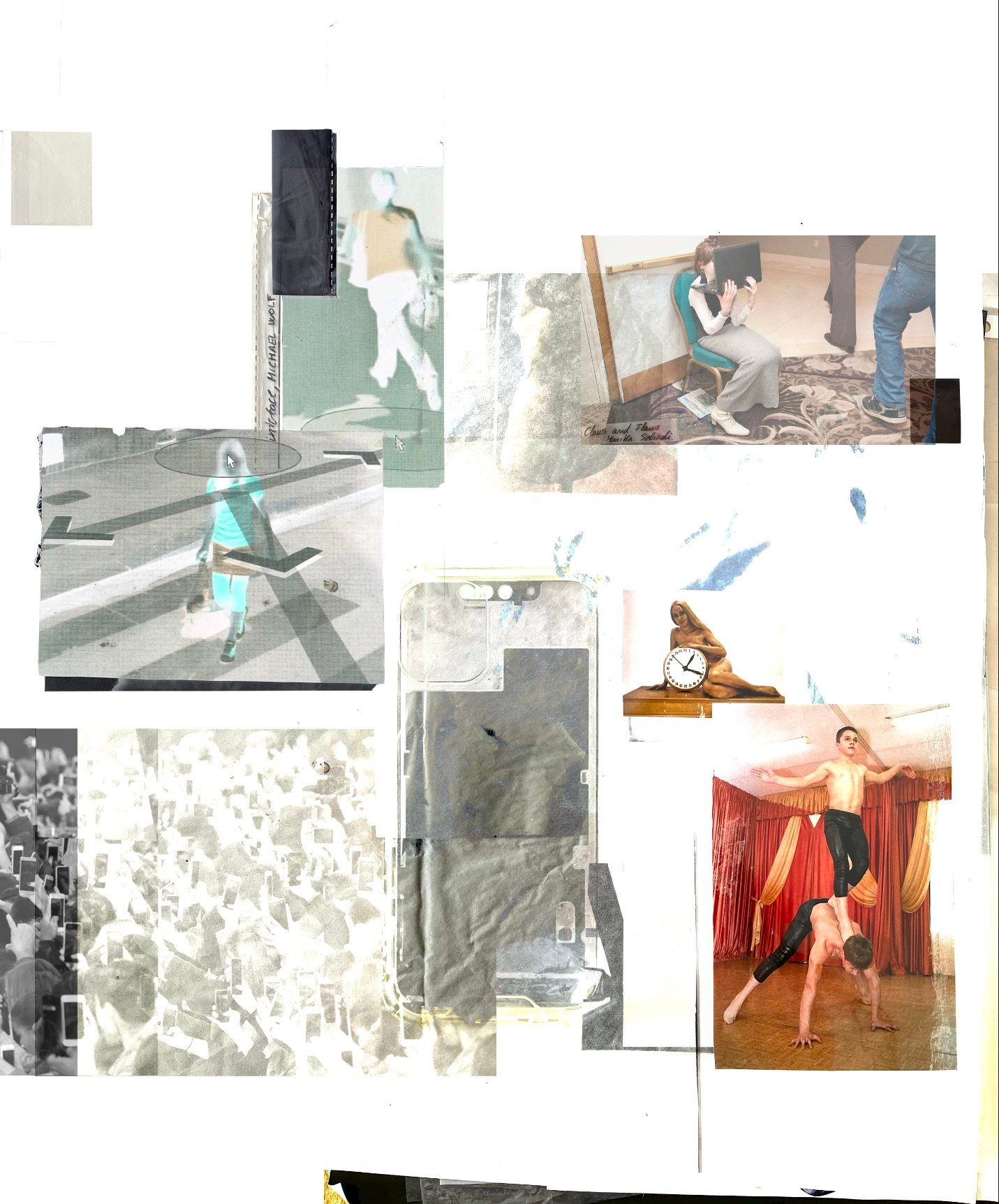
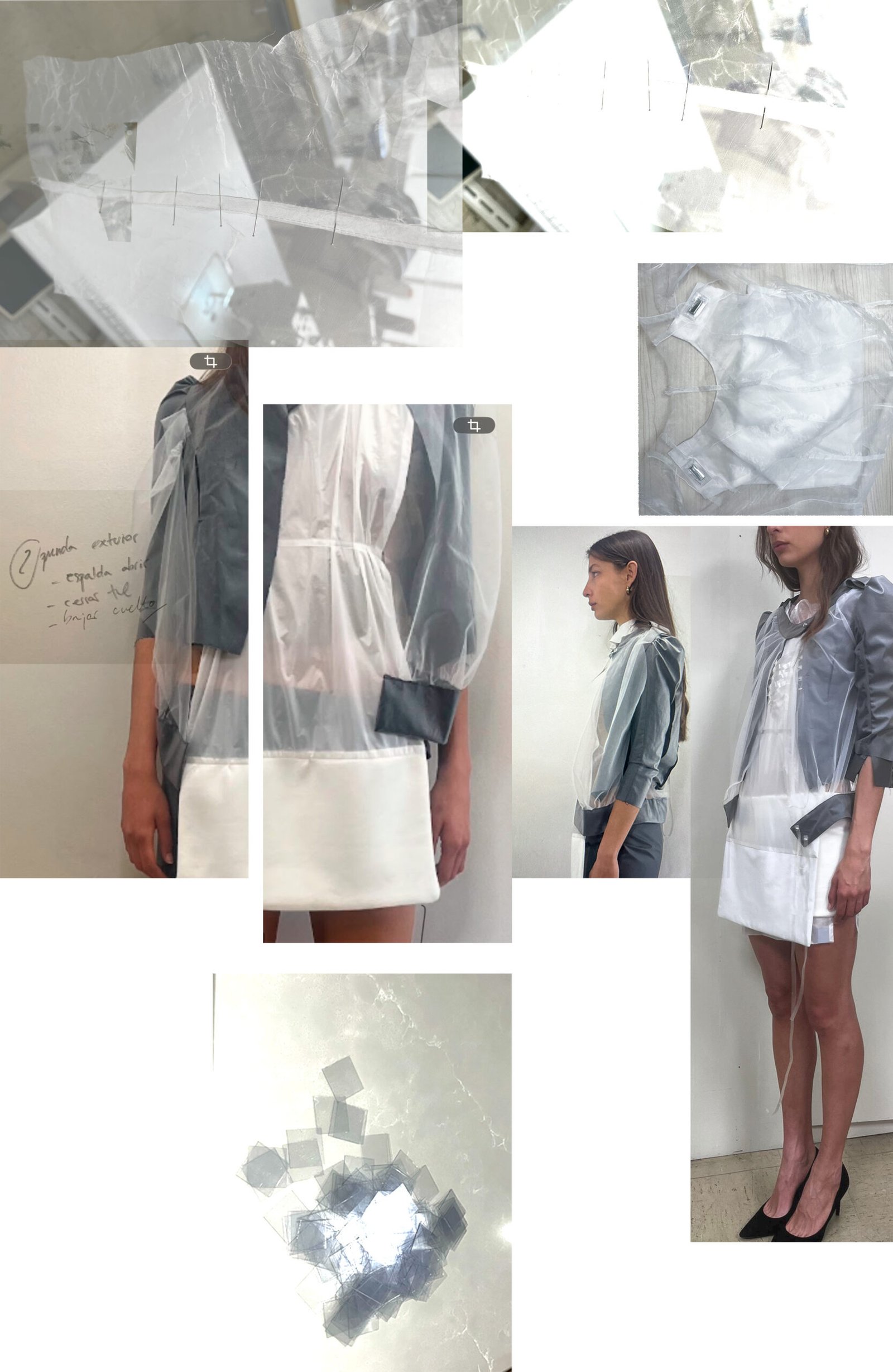
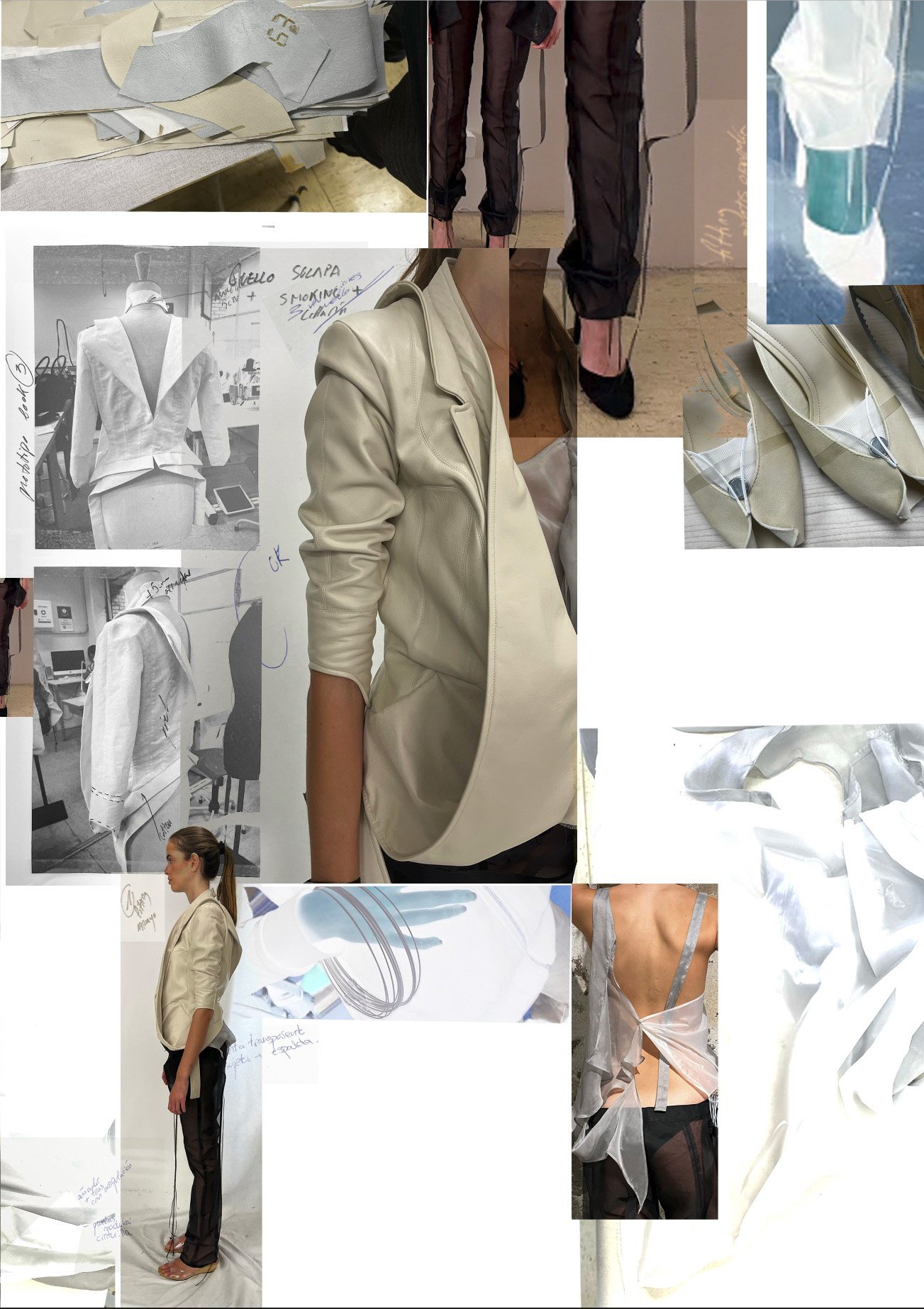
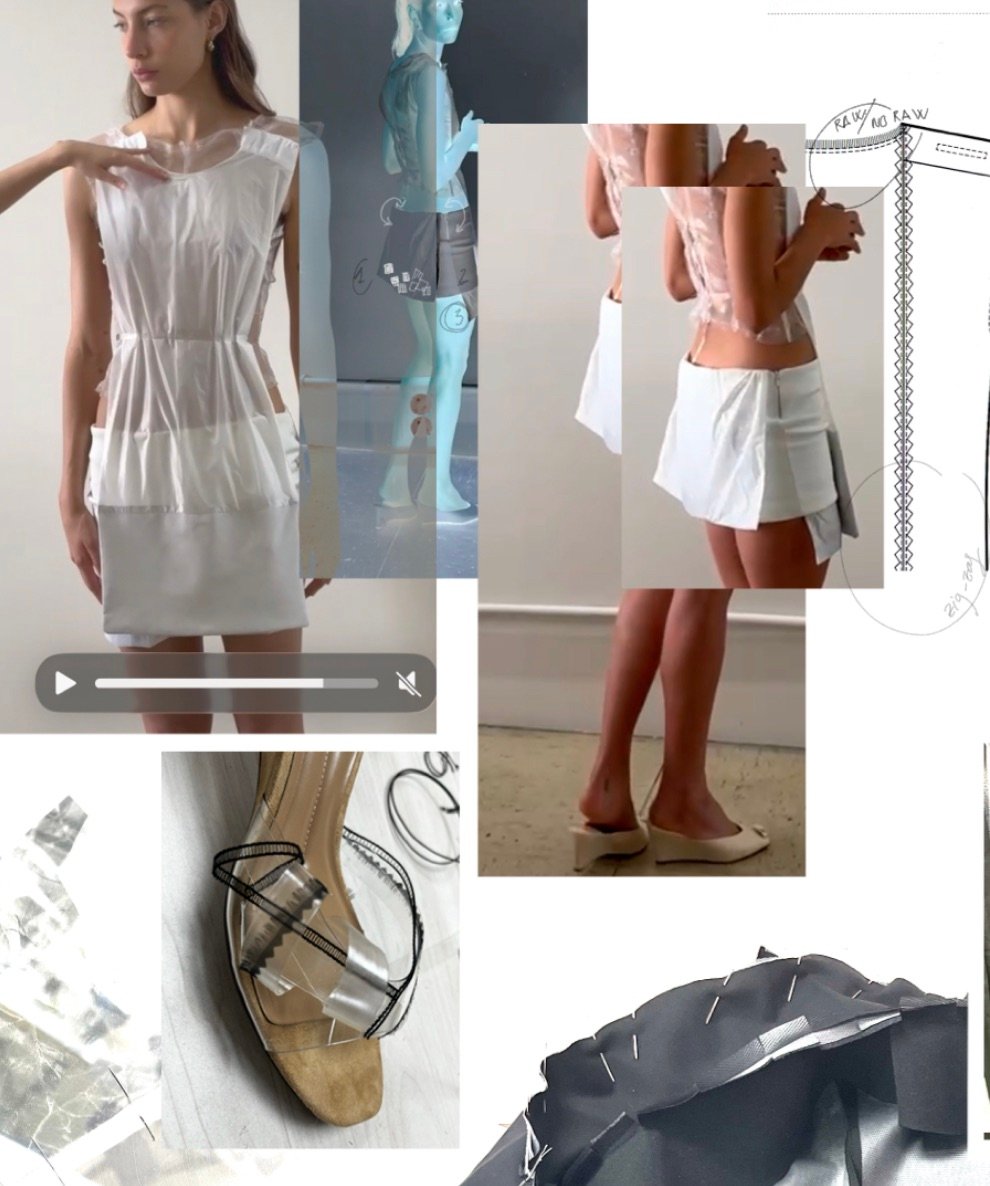
Carla Bricollé’s collection, Still looking | More images, explores how hyper-digitalisation is shaping relationships with image, memory, and identity. Beginning from the observation that contemporary life encourages people to capture and archive every moment, the project examines how digital images not only preserve memories but also construct performative identities that are constantly updated. Through four timeless womenswear looks, the collection investigates the dialogue between the embodied and the digital, questioning the pressure for permanent visibility and perfection. Natural and synthetic materials are combined through transparency, layering, and processes of construction and deconstruction, from pattern cutting to moulage. As she enters the industry, Bricollé is excited by the opportunity to continue developing her creative practice in a professional context, while remaining conscious of issues surrounding recognition, fair pay, and ensuring emerging creatives are properly valued. 

@carlabricolle

Screenshot
Screenshot
Screenshot